



Successful cleanup and reuse efforts underway at the Oak Ridge, Paducah, and Portsmouth sites are vividly illustrating the Office of Environmental Management’s ability to successfully deliver its vision of nuclear restoration and revitalization across the DOE complex, federal and contractor leaders said. March 17, 2026
Office of Environmental Management
March 17, 2026 Estimated Read Time min
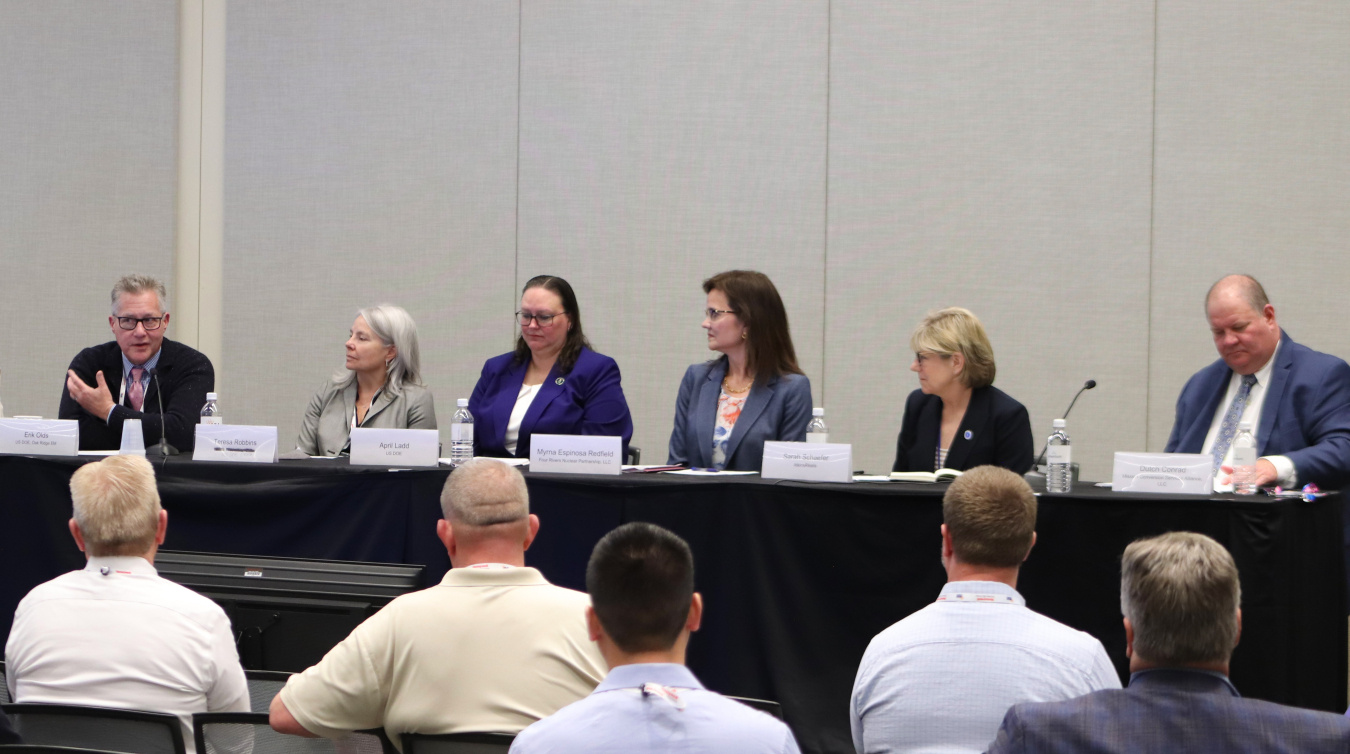
From left, Oak Ridge Office of Environmental Management (OREM) and Acting Portsmouth Paducah Project Office (PPPO) Manager Erik Olds; OREM Deputy Manager Teresa Robbins; Acting PPPO Deputy Manager April Ladd; Four Rivers Nuclear Partnership Four Rivers Nuclear Partnership Program Manager Myrna Redfield; Isotek President and Project Manager Sarah Schaefer; and Mission Conversion Services Alliance President Dutch Conrad participated in a joint panel titled “Enriching America— How Oak Ridge, Paducah and Portsmouth are Helping Power EM’s Most Ambitious Vision Yet.”
PHOENIX – Successful cleanup and reuse efforts underway at the Oak Ridge, Paducah, and Portsmouth sites are vividly illustrating the Office of Environmental Management’s (EM) ability to successfully deliver its vision of nuclear restoration and revitalization across the DOE complex, federal and contractor leaders said last week.
The three sites were initially home to the nation’s first uranium enrichment plants. Today, through EM’s cleanup progress, these sites are still “enriching America” by making land and materials available for reuse and supporting DOE’s goals of ensuring American energy dominance and national security.
“One of the great things is that we are able to learn from the other gaseous diffusion plants in Oak Ridge and Portsmouth,” said April Ladd, acting deputy manager for the Portsmouth Paducah Project Office during a panel session at this year’s Waste Management Symposium. “We looked at what went well at the sites and followed it.”
Of the three sites, Oak Ridge is the furthest into the reindustrialization process. Thanks to successful cleanup of the former East Tennessee Technology Park, companies pursuing advanced nuclear reactor technologies, nuclear fuel development and enrichment are investing more than $10 billion to locate at the site.
Paducah and Portsmouth are quickly gaining momentum. At Paducah, innovative leases are allowing construction of a $1.5 billion uranium enrichment facility on DOE land, while Portsmouth is leading the way on leasing efforts for an AI data center.
The need for strong collaboration among DOE, regulators and communities to achieve mutual benefits was a common theme expressed by panelists. Regulatory decisions are being streamlined to accelerate cleanup progress, and that progress is supporting more transfers and leases to the community that are generating new economic development opportunities.
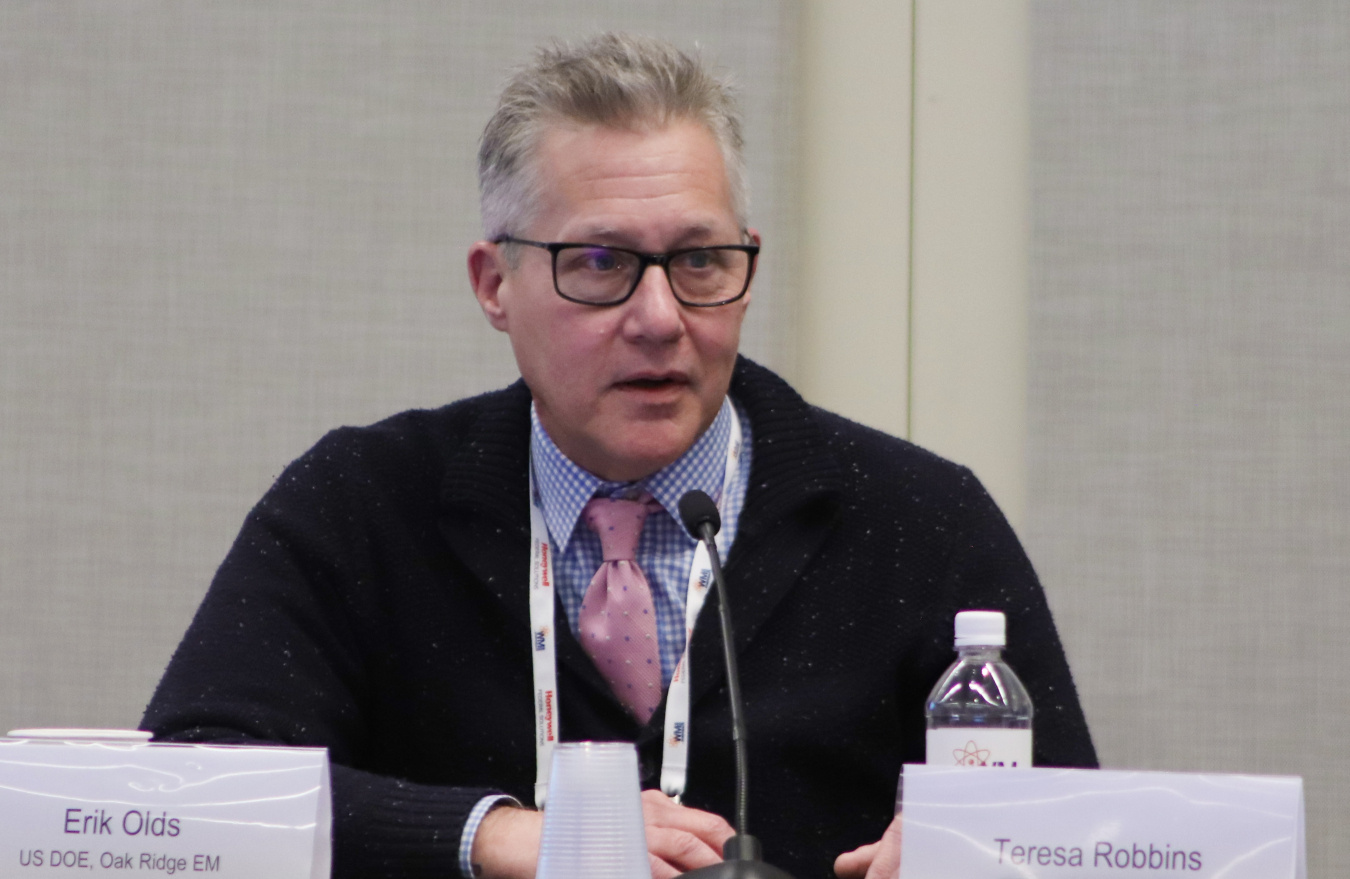
During the panel, Oak Ridge Office of Environmental Management and Acting Portsmouth Paducah Project Office Manager Erik Olds discussed how master planning and having a strong, clear outcome-based vision have been key to EM’s successful reuse initiatives.
The conversation extended beyond land reuse, as panelists from the sites also discussed initiatives underway to reuse materials that are offering major benefits to the nation.
For instance, Isotek, EM’s contractor tasked with eliminating the nation’s inventory of uranium-233 stored at Oak Ridge National Laboratory, is also extracting an extremely rare medical isotope from the uranium-233 before it undergoes processing and disposal, according to Isotek President and Project Manager Sarah Schaefer. The isotope is a crucial ingredient for a promising form of cancer treatment currently in clinical trials. The first treatments using this material are expected to enter the market next year.
The Portsmouth and Paducah sites are home to stockpiles of depleted uranium hexafluoride (DUF6) that resulted from previous enrichment operations at the sites.
While work is underway to process this material for eventual disposal, EM has also worked to identify quantities to provide to companies working to build new enrichment facilities near the Paducah Site, according to Dutch Conrad, president of Mission Conversion Services Alliance LLC, which operates the DUF6 conversion plants at the two sites.
Together, the sites originally built to help power the nation have a bold vision for an encore that is becoming a reality through cleanup and reuse.
-Contributor: Sonya Johnson
To receive the latest news and updates about the Office of Environmental Management, submit your e-mail address.