



What Is Photovoltaic Technology?
Photovoltaic (PV) materials and devices convert sunlight into electrical energy. A single PV device is known as a cell. An individual PV cell is usually small, typically producing about 1 or 2 watts of power. These cells are made of different semiconductor materials and are often less than the thickness of four human hairs. Cells are sandwiched between protective materials such as glass and/or plastic to withstand the outdoors for many years.
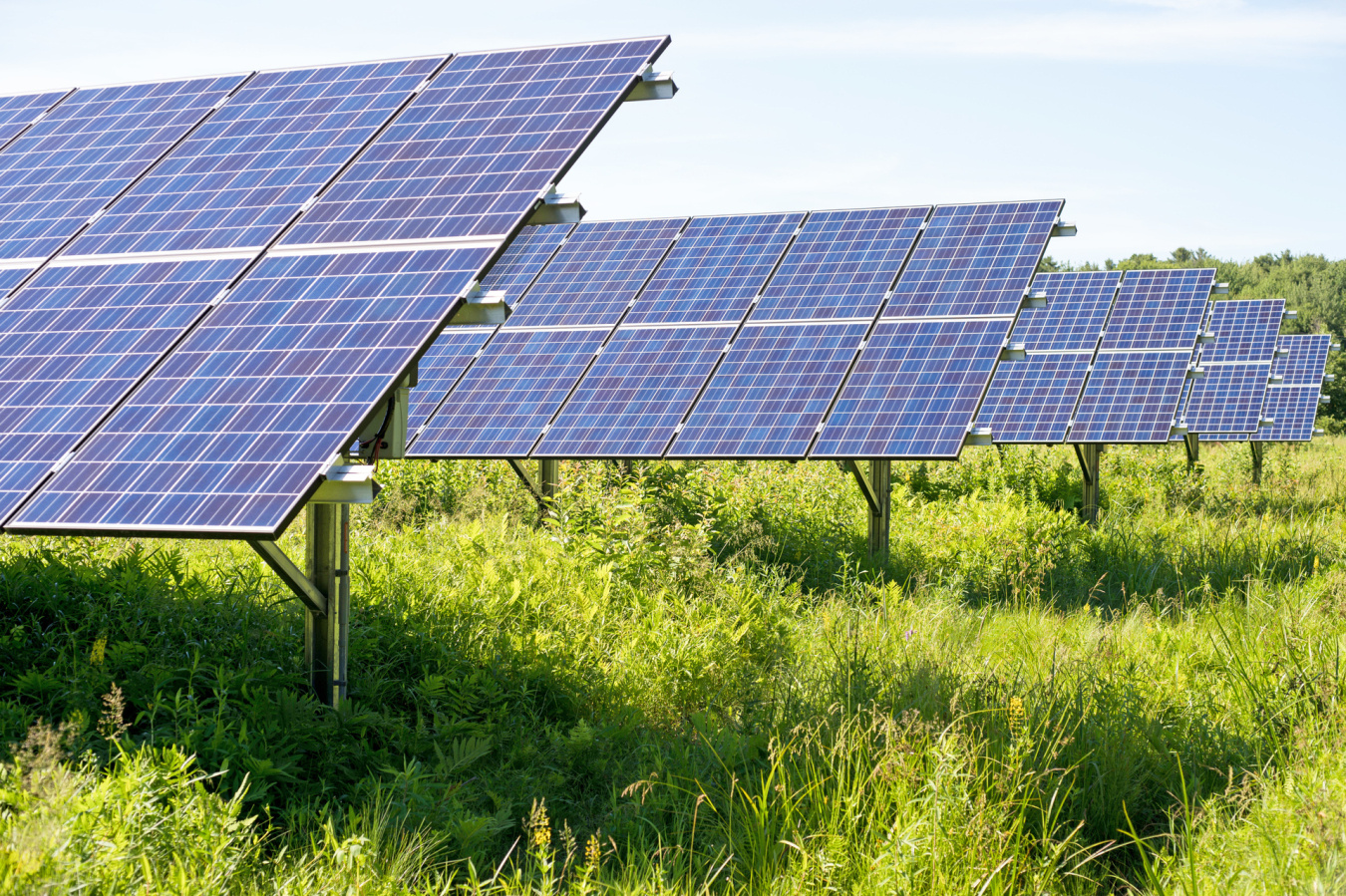
To boost the power output of PV cells, they are connected in chains to form larger units known as modules or panels. Modules can be used individually, or several can be connected to form arrays. One or more arrays are then connected to the electrical grid as part of a complete PV system. Because of this modular structure, PV systems can be built to meet almost any electric power need, small or large.
Learn More
What Is a Photovoltaic System?
PV modules and arrays are just one part of a PV system. Systems also include mounting structures that point panels toward the sun, along with the components that take the direct-current (DC) electricity produced by modules and convert it to the alternating-current (AC) electricity used to power the appliances in your home.
Photovoltaic Technology Basics
Sign up to receive the latest news, updates, and opportunities from the Integrated Energy Systems Office.