



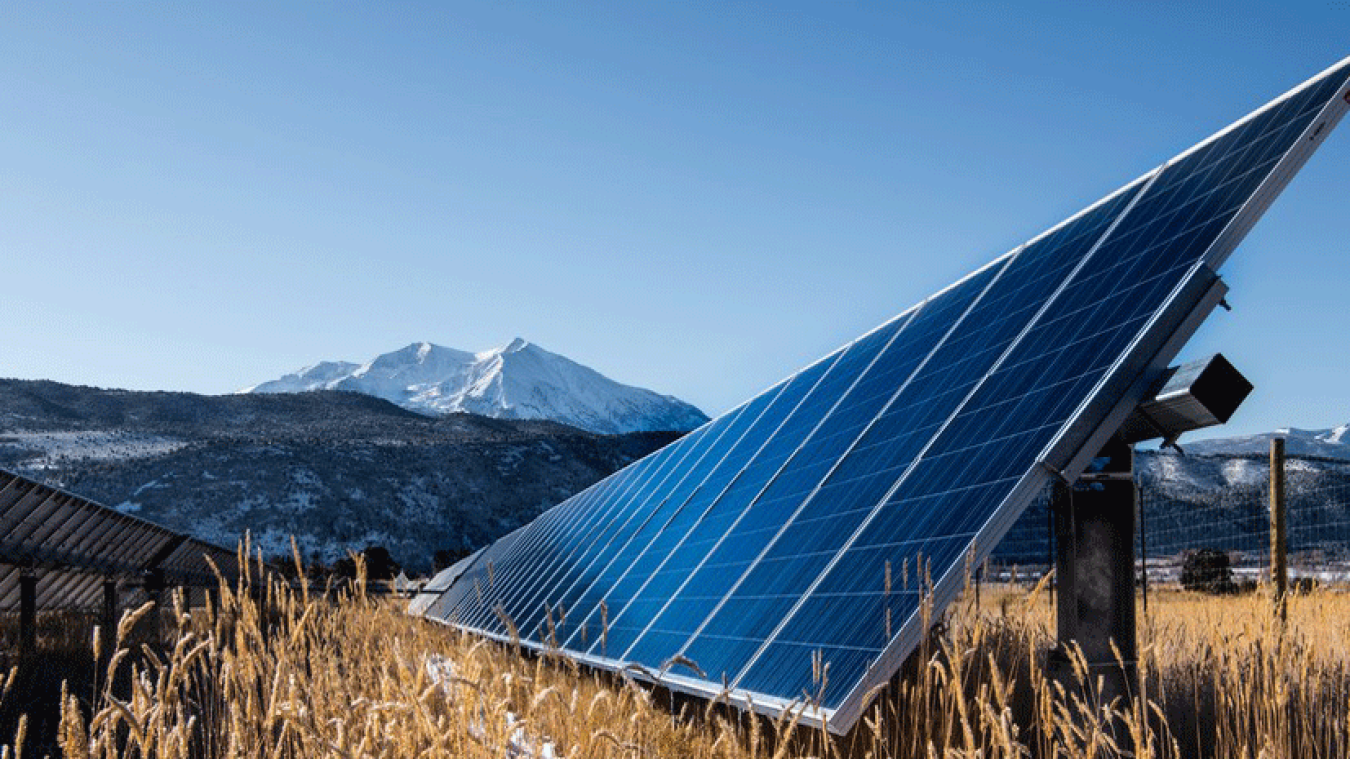
Metering energy generation for any solar photovoltaic system is critical to operations and maintenance. Recording and viewing production data is important to ensure good performance and is a means to assess a system's need for critical maintenance.
Without advanced or standard metering, a site would not be notified if the system is offline or if production drops significantly, which could present serious life-safety concerns. Metering solar photovoltaic (PV) systems in remote locations is even more critical as these assets are located in less-trafficked areas and may receive fewer visits from operations and maintenance (O&M) personnel.
FEMP's resource, Monitoring Platforms for Solar PV, covers how to measure PV performance and optimize it with an O&M plan.
What is a Remote Site Network Connection?
It is a communications link or media (either wired or wireless) to a remote location for the purposes of connecting end-use appliances (e.g., computers, telephones, meters, alarms, and building automation systems) to a physical coupling point where access to the internet can be established.
Establishing a Network Connection Between the Meter and the Internet
The goal should be to establish a connection between the solar PV meter and the internet through a cyber-secure remote site network connection.
The meter systems should have an Authority to Operate (ATO) based on the agency's cybersecurity requirements. Once the cyber-secure meter is connected to the internet, then an agency can retrieve the data.
Some agencies use third-party-owned cloud platforms with a valid ATO while others host metering software and data storage hardware at a regional or headquarters office.
Some agencies have chosen to utilize the meter data storage and display features that are part of an existing building management system (BMS) or the building automation system (BAS). Most BMS or BAS system brands offer this functionality.
Cybersecurity
Agencies should consult with their Cybersecurity Information Security Officer (CISO) and Chief Information Officer (CIO) to ensure compliance with federal and agency requirements.
At some sites, gaining access to the internet can be done by connecting to an existing cyber-secure network established at a building located on the same property.
Power meters don't require high-speed connections as the typical transmission of power data amounts to small file sizes. A power meter has an average file size of 250KB, which is several orders of magnitude smaller than a typical one-minute video file (~100 MB).
Remote Network Option Site Assessment Level of Difficulty Approximate Costs* Key Issues Cellular—Strong Signal Strength Easy to self-perform Easy $200 hardware
$15-$50/monthlyCoverage Cellular—Weak Signal Strength Can self-perform but better results with expert Moderate to complex Possibly multiple $K hardware
$15-$50/monthlyMust have at least a weak signal Satellite Easy to self-perform Moderate $2,500 hardware
$500/monthlyMonthly data limits with one vendor.
Many areas with no coverageMicrowave** Vendor or consultant required Complex Highly variable hardware costs
$200/monthlyPoint-to-point so could be limited depending on topography. Certification of radio equipment and frequency ranges Power Line Easy to self-perform Easy Variable hardware costs and low monthly utility transmission fees Coverage during storms; coordination with utilities and power line owners Radio Relay System Vendor or consultant required Complex Highly variable hardware costs
less than $200/monthlyPoint-to-point so could be limited depending on topography. Certification of radio equipment and frequency ranges Dark fiber cabling Vendor or consultant required Easy to Moderate Variable hardware costs
less than $200/monthlyDepends on the presence of existing dark fiber Fiber optic cabling** Vendor or consultant required Complex Highly variable hardware costs
$200/monthlyDepends on the presence of existing poles or nearby building *Prices shown on retailer websites. Costs change often so new prices should be obtained from vendors to do a current comparison.
**Can be used to connect to an offsite service provider or to an onsite building that has existing internet access.
Identifying Network Options for a Given Site
Any site evaluation should start with a thorough investigation of what (if any) cell signal can be found nearby the remote solar PV array.
This evaluation can be self-performed though there can be benefits to hiring a professional. A simple phone app can be used, however, to get a more accurate assessment of cell signal strength, use a handheld cell signal meter (approximate cost: $200).
Nearby hills may affect cell service. If there are hills near a solar array, walk to the top of each hill and check for a signal. A simple rule of thumb applies to cell signals; a weak signal can be boosted and made effective, but even the best boosters will not help if there is no signal.
Strong Cell Signals
Strong cell signals are easy to work with and present low-cost solutions. A strong signal is indicated by the fact that all features of a smartphone can be used without interruption. In this case, a cellular modem and cell plan can be purchased to connect the meter. Nearly all meters have digital inputs and outputs that can then be connected to a cellular modem. Some meter and inverter manufacturers sell modems that are pre-configured to work with your existing equipment.
Moderately Strong Cell Signals
Moderately strong cell signals are also easy to work and present low-cost solutions. A moderate signal is indicated by the fact that smartphone features such as voice calls can be used but not consistently; some calls are dropped unexpectedly. In this case, a simple low-cost (approximate cost: $100) non-powered antenna can be used to increase signal strength. As in the strong signal case, a cellular modem can be connected to the existing meter. Any cellular modem would need to have antenna input ports.
Weak Cell Signals
A weak signal is present as evidenced by very poor smartphone connectivity or by the use of a handheld cell signal meter. Handheld cell signal meters are more accurate in detecting the presence and strength of a signal. Weak signals will require powered signal-boosting equipment and most likely professional installation. With a cell booster installed, a cellular modem and cell plan can be purchased to connect to the power meter.
Weak Cell Signals Shadowed By Local Hills
In cases where cell signals are only detected in neighboring hills, a tower will likely need to be installed with a power-boosting antenna.
Satellite service can be the next best choice.
If there is no cell signal on a subject site, satellite service is a good second choice in terms of ease, cost of installation, and ongoing subscription fees. Multiple companies offer services that can be easily found through a simple internet search.
Each of the satellite internet service company websites offers a lookup feature. These web tools allow users to enter an address and check service availability.
Evaluate the satellite service providers' monthly subscription fees and data limits. As noted above, power meter data files are small, thus the data limits are generally well above what would be required. However, if the intent is to provide connectivity to computers and other devices in addition to the power meters, then higher service costs might be justified.
Commercial accounts are currently costing up to $500/month. Installation varies between the service providers and will change based on site conditions.
Do-It-Yourself Option
If you have a building on-site with internet connectivity but do not have connectivity to your nearby solar PV system, there are several DIY satellite hardware options that are easy to setup and low cost. These would establish a connection between the solar PV system meter and a neighboring building.
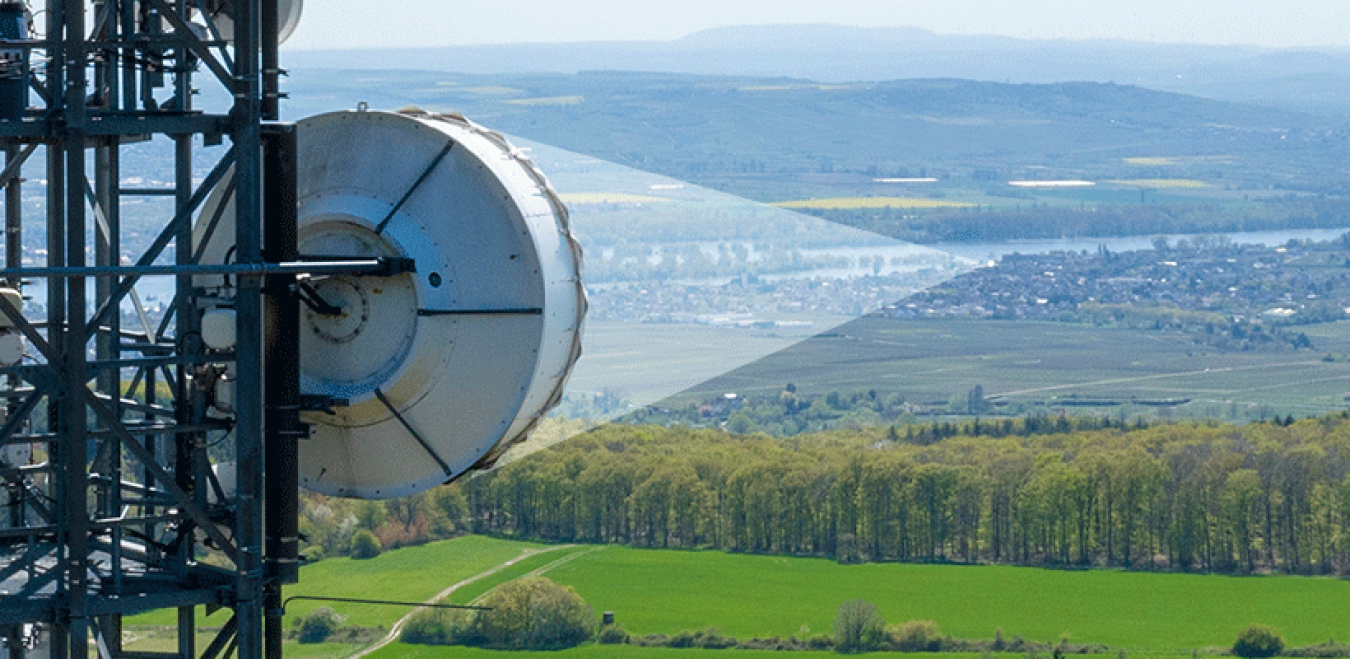
Connecting through microwave technology involves a matched pair of radios that are a point-to-point line-of-sight setup.
One radio is located at the point of connection to an internet service provider (ISP) and the second nearby the solar PV array. This technology is available in a wide variety of data transmission capacities and can broadcast with higher power systems up to 30 miles.
Installing a larger microwave radio system to reach longer distances and to connect with an internet service provider (ISP) will require support from an independent telecommunications contractor who can design, install, and maintain the system in accordance with agency cybersecurity requirements.
The agency will need to advise the contractor regarding how to select and connect to an ISP. The agency should consult with the CISO and/or CIO to ensure that the radio frequencies for the radio relay system are pre-approved and allowable.
Power-line communication (also known as power-line carrier or PLC) carries data on a conductor that is also used simultaneously for alternate current (AC) electric power transmission or electric power distribution to consumers.
A wide range of power-line communication technologies are needed for different applications, ranging from home automation to Internet access which is often called broadband over power lines (BPL). Most PLC technologies consist of one type of wires (such as premises wiring within a single building), but some PLC technologies can cross between two levels (for example, both the distribution network and premises wiring).
Typically, transformers prevent propagating the signal, which requires multiple technologies to form very large networks. Various data rates and frequencies are used in different situations.
A number of difficult technical problems are common between wireless and power-line communication, notably those of spread spectrum radio signals operating in a crowded environment. Radio interference, for example, has long been a concern of amateur radio groups.
The agency will need to advise the contractor regarding how to select and connect to a PLC and how to design, install, and maintain the system in accordance with agency cybersecurity requirements.
Connecting through basic radio relay technology involves a matched pair of radio nodes that are a point-to-point line-of-sight setup. One radio node is located at the point of connection to an ISP and the second node nearby the solar PV array.
This technology is available in a wide variety of data transmission capacities and can broadcast with higher power systems up to 30 miles, with the node spacing based on topography and line-of-sight .
Installing a larger radio relay system to reach longer distances and to connect with an ISP will require support from an independent telecommunications contractor who can design, install, and maintain the system in accordance with agency cybersecurity requirements.
The agency will need to advise the contractor regarding how to select and connect to an ISP. The agency could tie its new radio relay system to an existing on-site radio relay system or utilize existing on-site radio relay system. The agency should consult with the CISO and/or CIO to ensure that the radio frequencies for the radio relay system are pre-approved and allowable.
Coaxial cabling can transmit large amounts of data over long distances (approximately 60 miles) without the use of a repeater.
Coaxial cabling systems can be durable and are unaffected by temperature and moisture; however, these systems are adversely affected by nearby electrical fields and harmonics. Installation costs are likely low if the coaxial cabling are located near the buildings or the on-site renewable power generation.
To accomplish this, support from an independent telecommunications contractor or site utility manager/communication manager will be needed. The contractor would need to gain legal access to hang wires on the utility poles (through a rental agreement with the electric utility), design the system and install the cabling and establish connections and fiber optic networking equipment in accordance with agency security and cybersecurity protocols.
If there is a building on-site with internet connectivity, coaxial cabling can be used to connect the solar PV power meter. Poles between the building and the solar PV system may need to be installed.
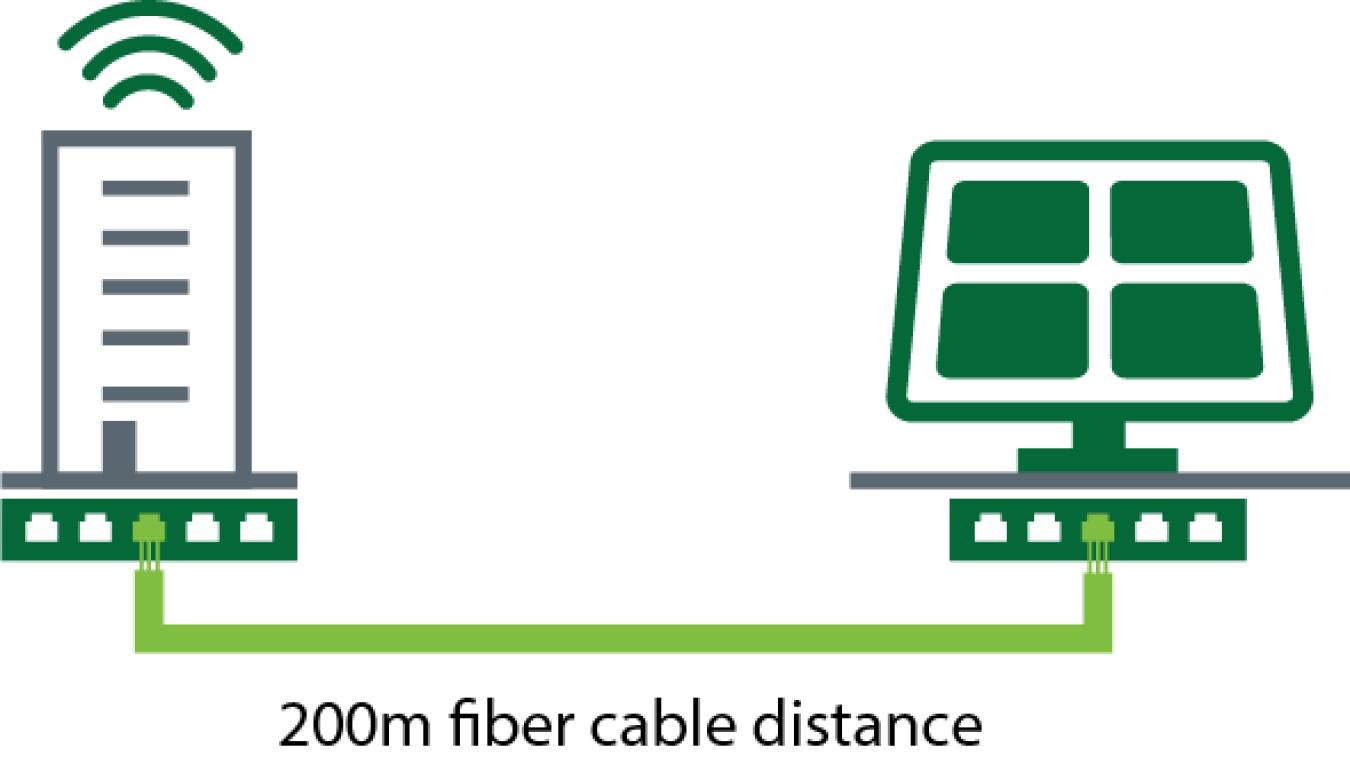
Fiber cabling can transmit large amounts of data over long distances (approximately 60 miles) without the use of a repeater. Fiber optics systems can be durable and are unaffected by temperature, moisture, and nearby electrical fields. Installation costs are likely high but with lower recurring subscription fees.
For a site that is served by an electric utility, the same utility poles could be used to hang fiber cabling to a remote site. To accomplish this, support from an independent telecommunications contractor will be needed. The contractor would need to gain legal access to hang wires on the utility poles (through a rental agreement with the electric utility), design the system and install the cabling and establish connections and fiber optic networking equipment in accordance with agency security and cybersecurity protocols.
If there is a building on-site with internet connectivity, fiber cabling can be used to connect the solar PV power meter. Poles between the building and the solar PV system may need to be installed.