



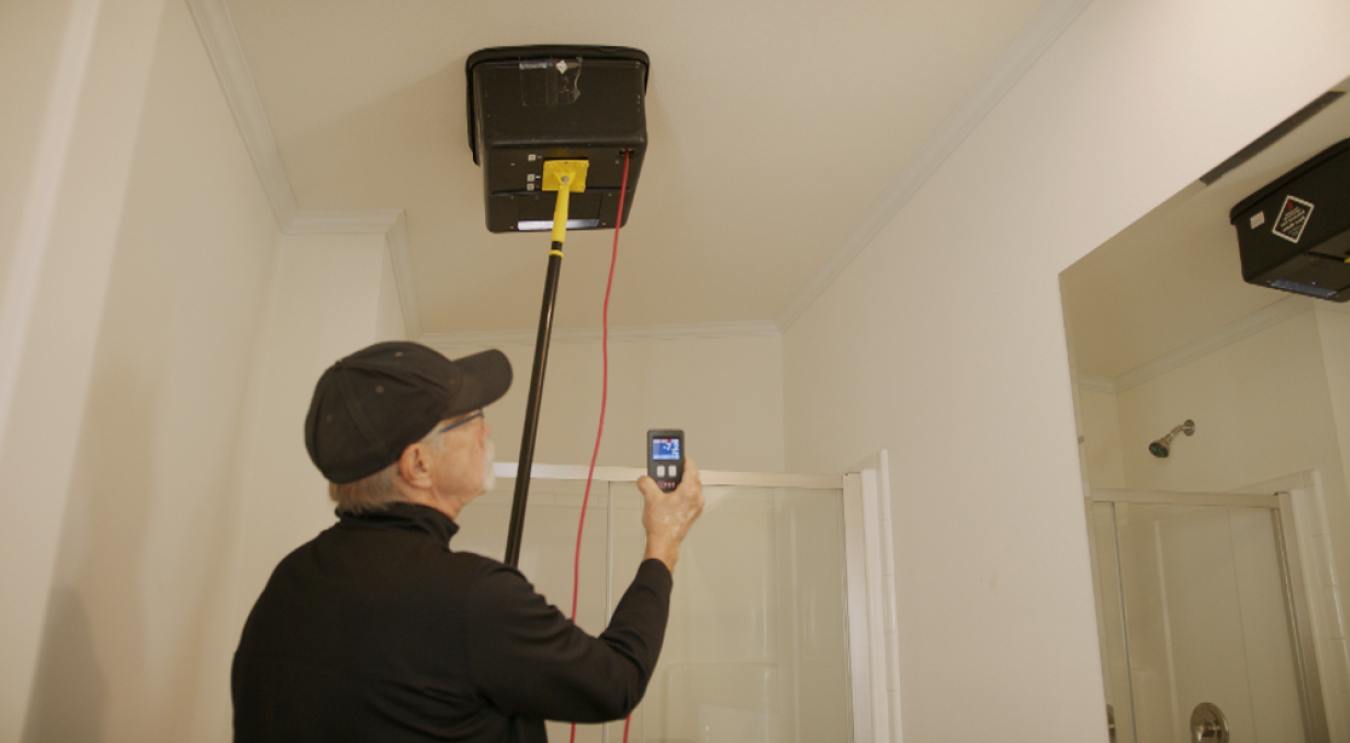
Measuring bathroom fan airflow in a new manufactured home—part of the simple duct and air leakage protocol developed for new manufactured homes.
Overview
Manufactured housing represents one of the most affordable paths to home ownership for American households. The heating, ventilating, and air-conditioning (HVAC) systems installed in manufactured housing are often low-cost systems that are expensive to operate due to leakage-prone ductwork. This Slipstream project facilitates feasibility assessments and conducts proof-of-concept and field testing of various HVAC-related innovations to improve the performance of manufactured homes and increase heat pump adoption, thereby improving energy performance well beyond that mandated by current HUD codes.
| Project Type | Problem to Solve | Solution | Location | Timeline | Partners |
| Residential new construction | Increasing manufactured home HVAC performance without raising purchase price | Improvements to HVAC systems in manufactured homes | Nationwide | July 2020–June 2024 |
|
Project Goals
The goal of this project is to increase the adoption of advanced HVAC technology in the manufactured housing industry, resulting in improved energy efficiency, durability, and indoor air quality without significant production cost increases. The project identifies the most promising innovations based on market drivers, energy impact, and cost-effectiveness, demonstrating these HVAC innovations through proof-of-concept testing to further show feasibility in manufactured homes.
Impacts
The innovative approaches examined within this project have the following impacts: (1) duct- and air-leakage testing enable field technicians to identify and resolve HVAC and building shell issues before occupation, reducing energy use for occupants, and (2) partial installation of heat pumps in the factory enables proper sizing and adoption of efficient space-conditioning technology. Shipping homes from the factory with tighter building envelopes and ducts prepared for heat pump installation is a tremendous opportunity for improving the energy performance of manufactured homes.
Technology Impact
Obtaining consistently tight ducts that maintain their tightness over time—or eliminating the need for ductwork entirely—would enable significant energy savings and improved occupant comfort in manufactured housing. Further, modern inverter-driven air-source heat pumps are significantly more efficient than older heat pump technology and vastly more so than the electric-resistance heating systems that ship with many manufactured homes. They are also capable of operating under much colder conditions than previous generations of heat pumps.
Market Impact
Improved airtightness and heat pump deployment in manufactured housing could potentially result in a 57% reduction in space-conditioning primary energy, or 10.3 Tbtu of aggregate savings for the estimated 800,000 manufactured homes that will be produced between 2023 and 2030.
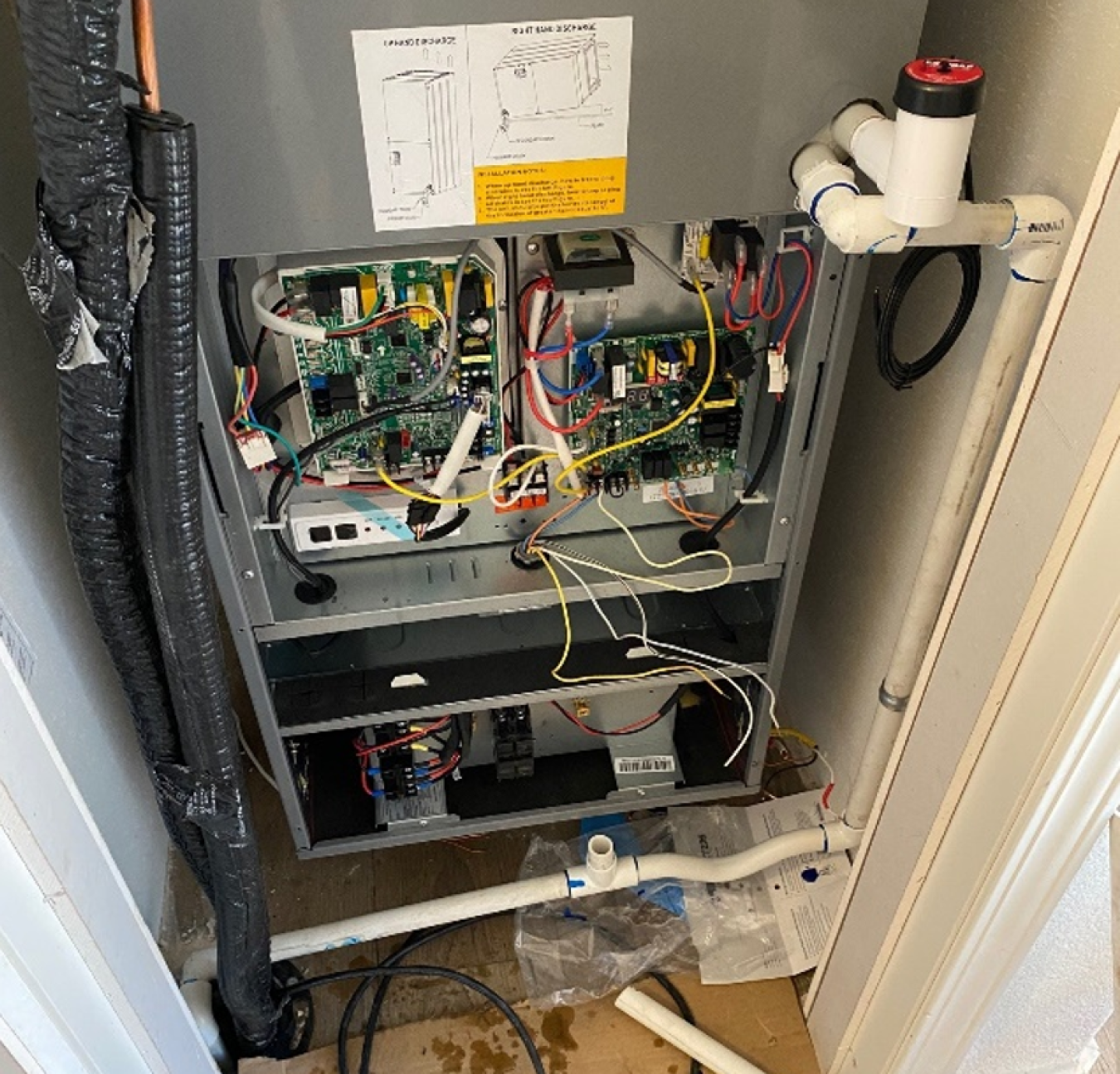
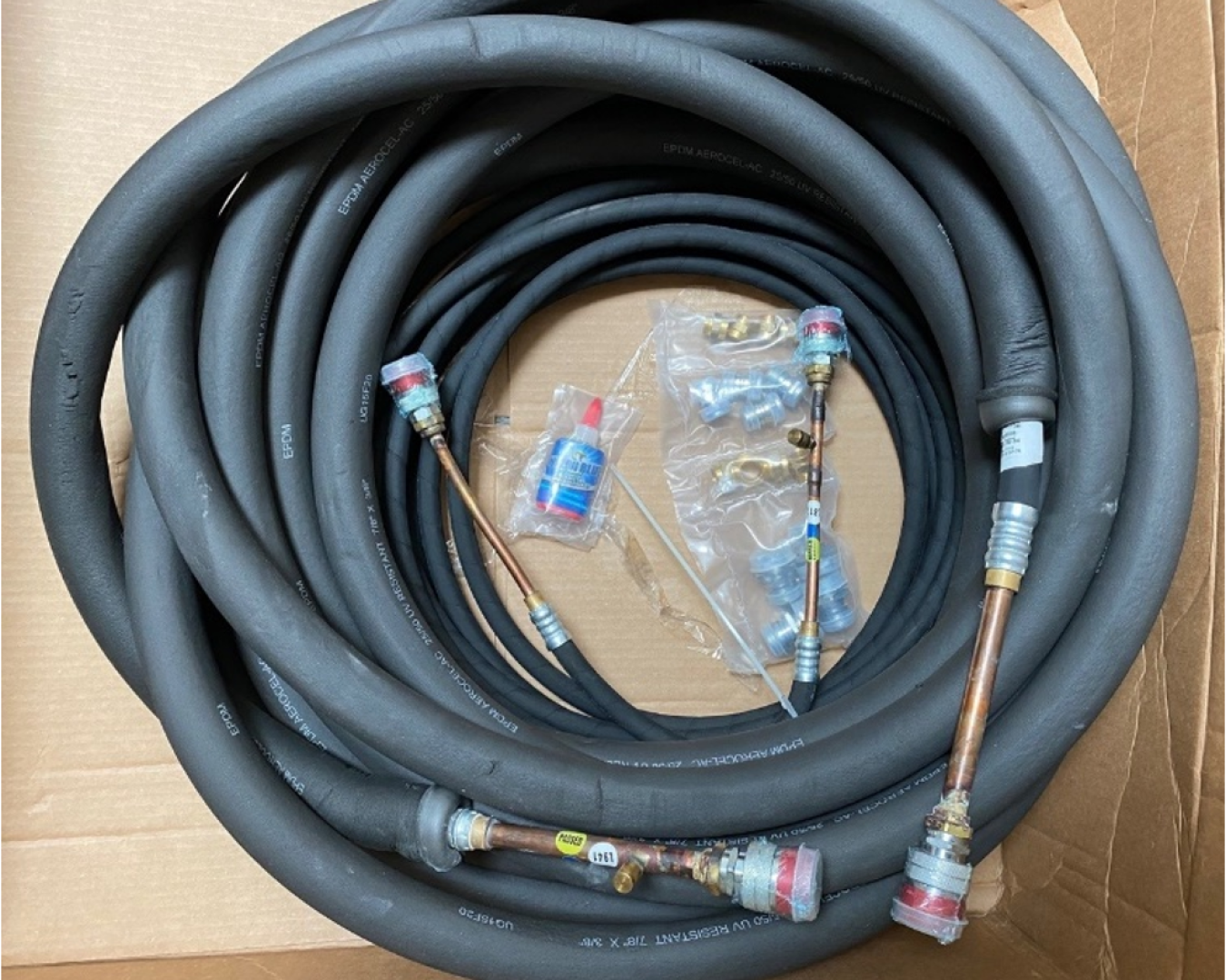
A partially installed heat pump and pre-charged “plug-and-play” line sets, two innovations identified through this project that allow for field installation of outdoor units after manufactured homes are delivered to the site, reducing the need for an HVAC contractor.
- HVAC innovation feasibility report (November 2021)
- Energy modeling and cost effectiveness report (November 2021)
- Factory duct-leakage testing “how-to guide” (December 2022)
- Heat pump prep “how-to guide” (March 2023)
- Quality assurance (QA) field protocol technical report (November 2023)
- QA field protocol “how-to video” and website (December 2023)
- Updated modeling economics technical report (April 2024)
- The manufactured housing industry, retailers, and consumers lack awareness of heat pumps and their benefits.
- Partial factory installation of heat pump systems helps enable home manufacturers to qualify for DOE Efficient New Homes tax credits.
- Locating ducts under the floor instead of the attic can reduce HVAC energy use by 10–20% in manufactured homes in the South.
- Published data on manufactured housing airtightness in most regions is limited.
- Continue engagement with the manufactured home industry to support the adoption of heat pump preparation in the factory and QA field protocols, as well as support for plants to adopt regular duct testing.
- Begin the conversation between HVAC manufacturers and manufactured home manufacturers to expand HVAC options for manufactured homes.
- Collect and publish field data to characterize the current state of manufactured homes.
General Inquiries: abc@ee.doe.gov
About the ABC Initiative
The Advanced Building Construction (ABC) Initiative, led by the Building Technologies Office (BTO), integrates energy efficiency and advanced technology solutions into industrialized construction processes to drastically increase the speed and scale of high-performance building retrofits and new construction.
.....
Page last updated: May 12, 2025