



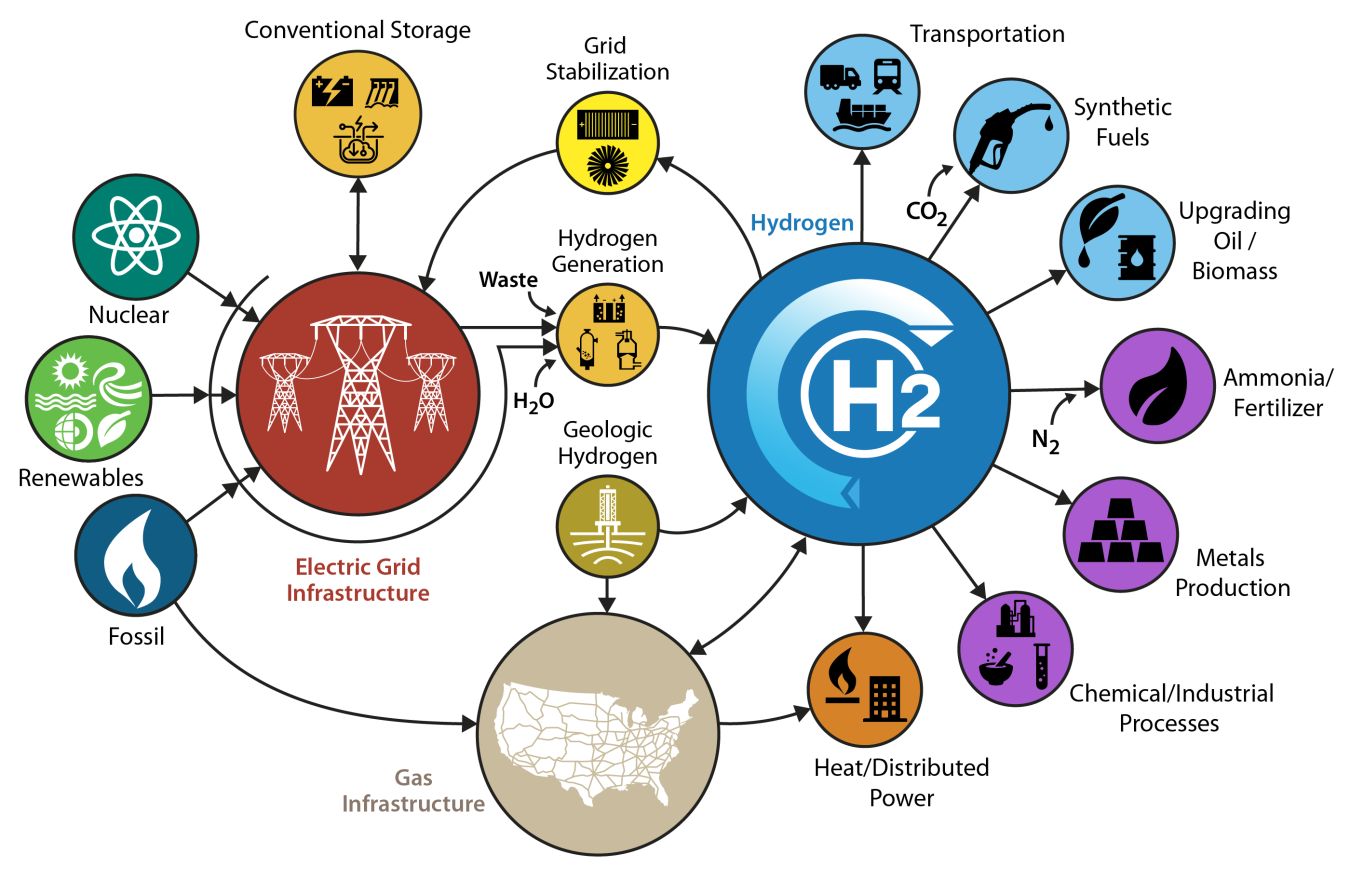
Hydrogen is the universe's simplest element—it consists of only one proton and one electron. Hydrogen can store and deliver usable energy, and most of the hydrogen used today is produced from compounds that contain it.
Why Advance Hydrogen Production Technologies?
With approximately 10 million metric tons (MMT) hydrogen currently produced in the United States each year, the primary demand for hydrogen today is for petroleum refining and ammonia production. However, hydrogen can be used across multiple sectors in other chemical and industrial processes, integrated energy systems, and transportation. Emerging hydrogen markets within these sectors include data centers, ports, steel manufacturing, and medium- and heavy-duty trucks.
How Hydrogen Production Works
Hydrogen can be produced through various pathways using abundant domestic resources—including fossil fuels, such as natural gas and coal; through splitting of water; and from biomass through biological processes. Learn more about hydrogen production processes.
Technical Targets
Download the hydrogen-related sections of the Multi-Year Program Plan for full details about technical targets.
Learn More
Sign up to receive Alternative Fuels and Feedstocks Office news, events, our newsletter, and funding opportunities.