



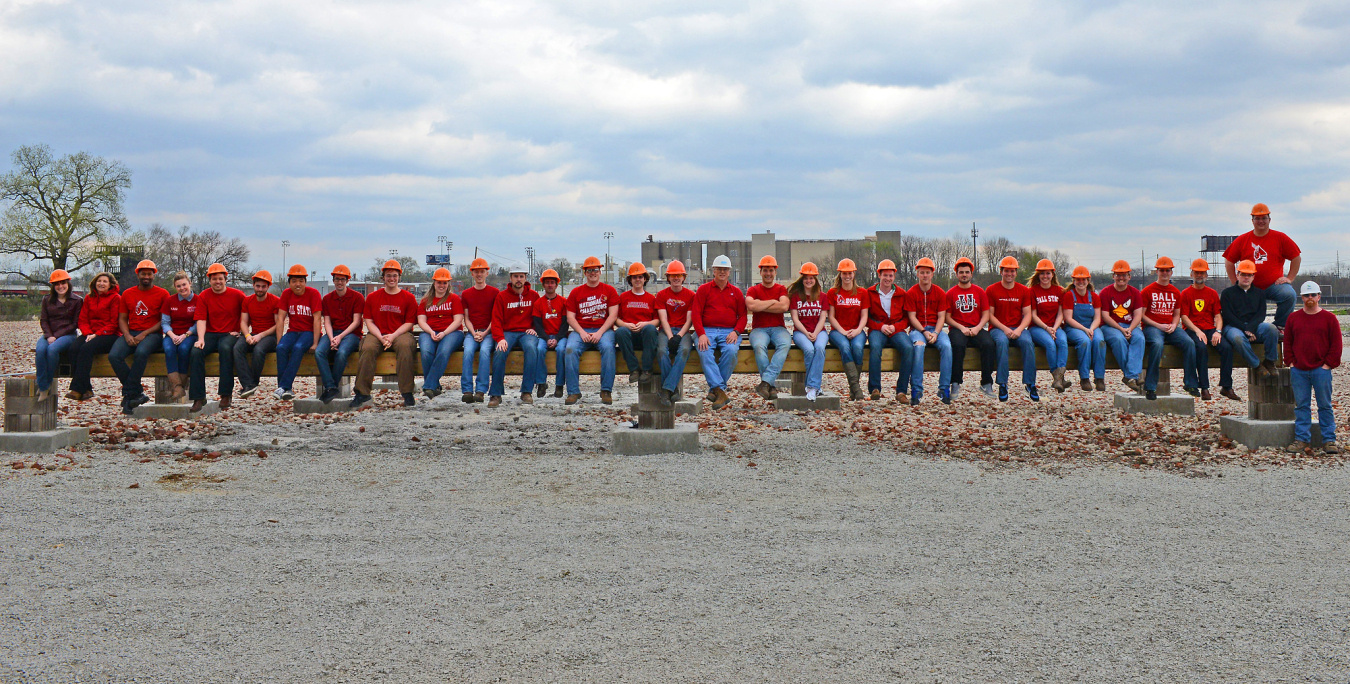
Twenty teams competed in the 2013 Build Challenge with 19 finalists exhibiting their constructed houses in Irvine, California, after two years of competition.
2013 Build Challenge Finalist Teams
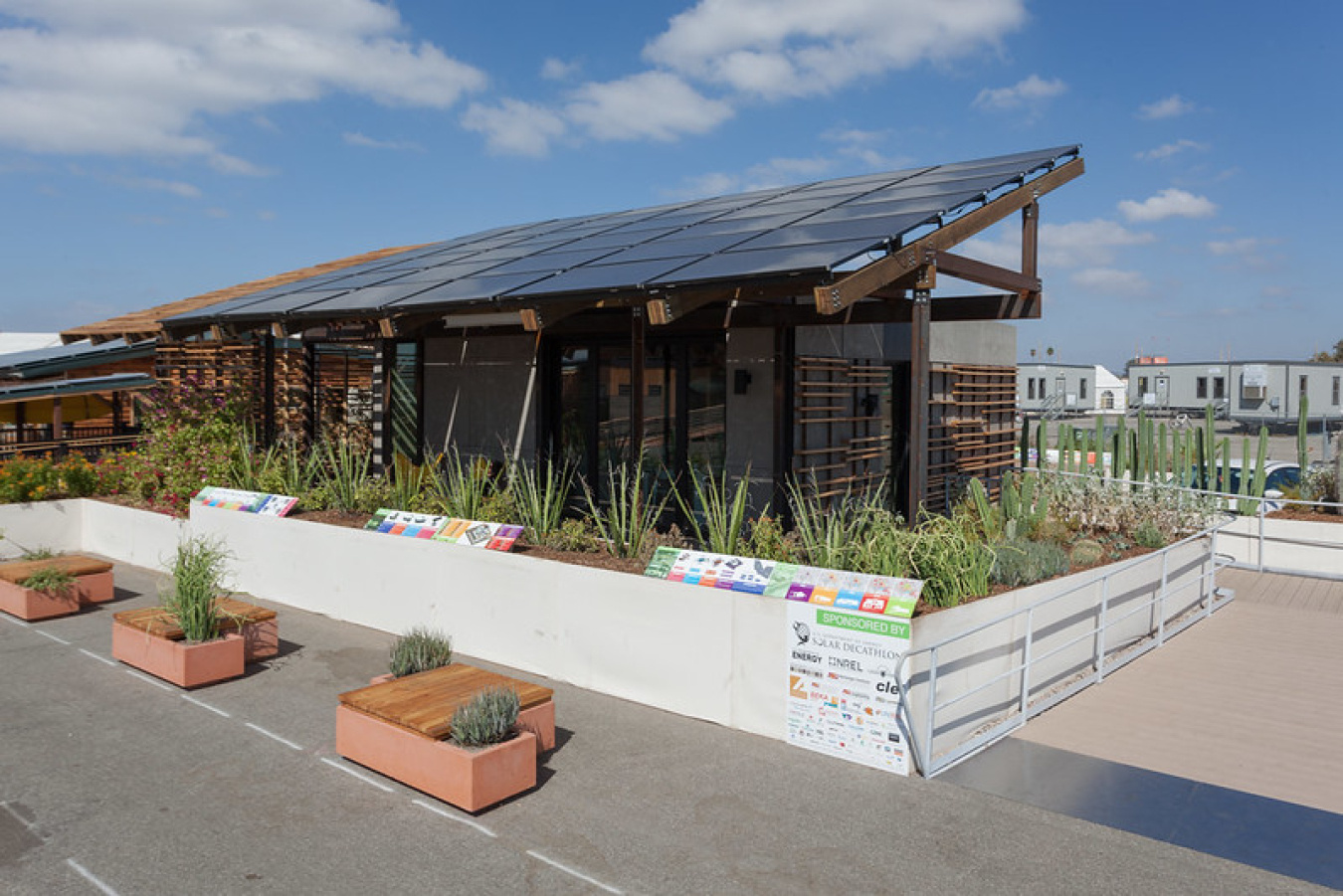
Arizona State University and The University of New Mexico designed a house that celebrates its unique equilibrium with the desert environment. It is intended to grow and adapt with its users by creating microclimates that mediate between the landscape and the interior environment. With independent modules that can be combined in various configurations and a prominent canopy that provides a shaded outdoor extension of the house, this house is built for a community-oriented, indoor-outdoor lifestyle. Fiber-cement board highlights the material warmth of the wooden shade structure as it reflects the Southwestern sunsets. Tanks also store collected rainwater, which is used to irrigate the landscape.
Computer animated walkthrough, video presentation, and photos.
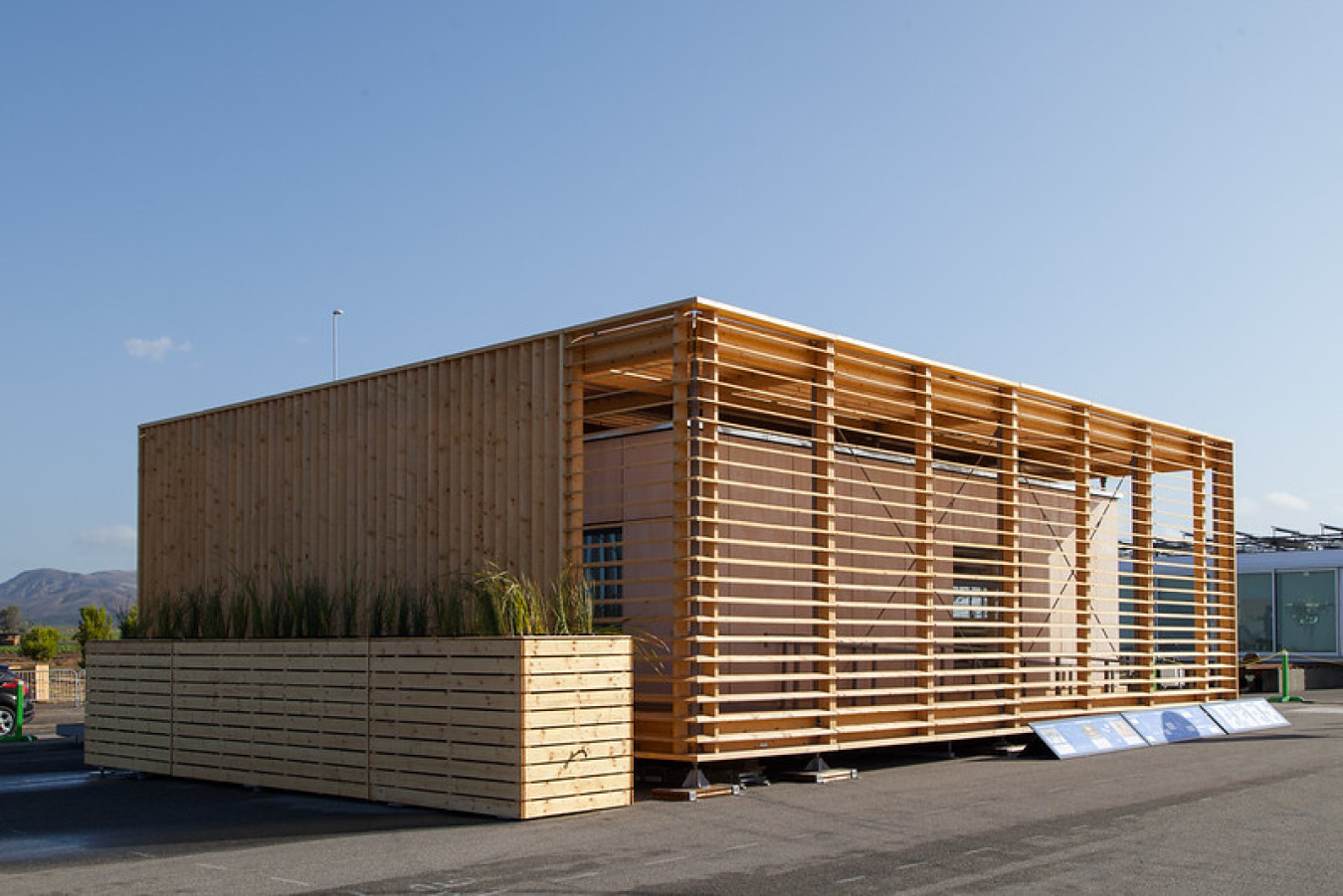
Czech Technical University designed the AIR House for the generation of 50+-year-olds who are empty-nesters and nearing retirement. Many of the team members' parents fall into this demographic, which inspires a compelling conversation about senior housing. The AIR House, a prototype for an affordable (A), innovative (I), and recyclable (R) house, is designed for the Czech tradition of spending weekends in the countryside. Czech seniors can use the AIR House as a weekend getaway during their pre-retirement years and as a permanent residence after retirement. Wood fiber insulating material regulates moisture levels and provides acoustic and thermal insulation and a radiant chilled ceiling system provides comfort and stability to the interior environment.
Computer animated walkthrough, video presentation, and photos.
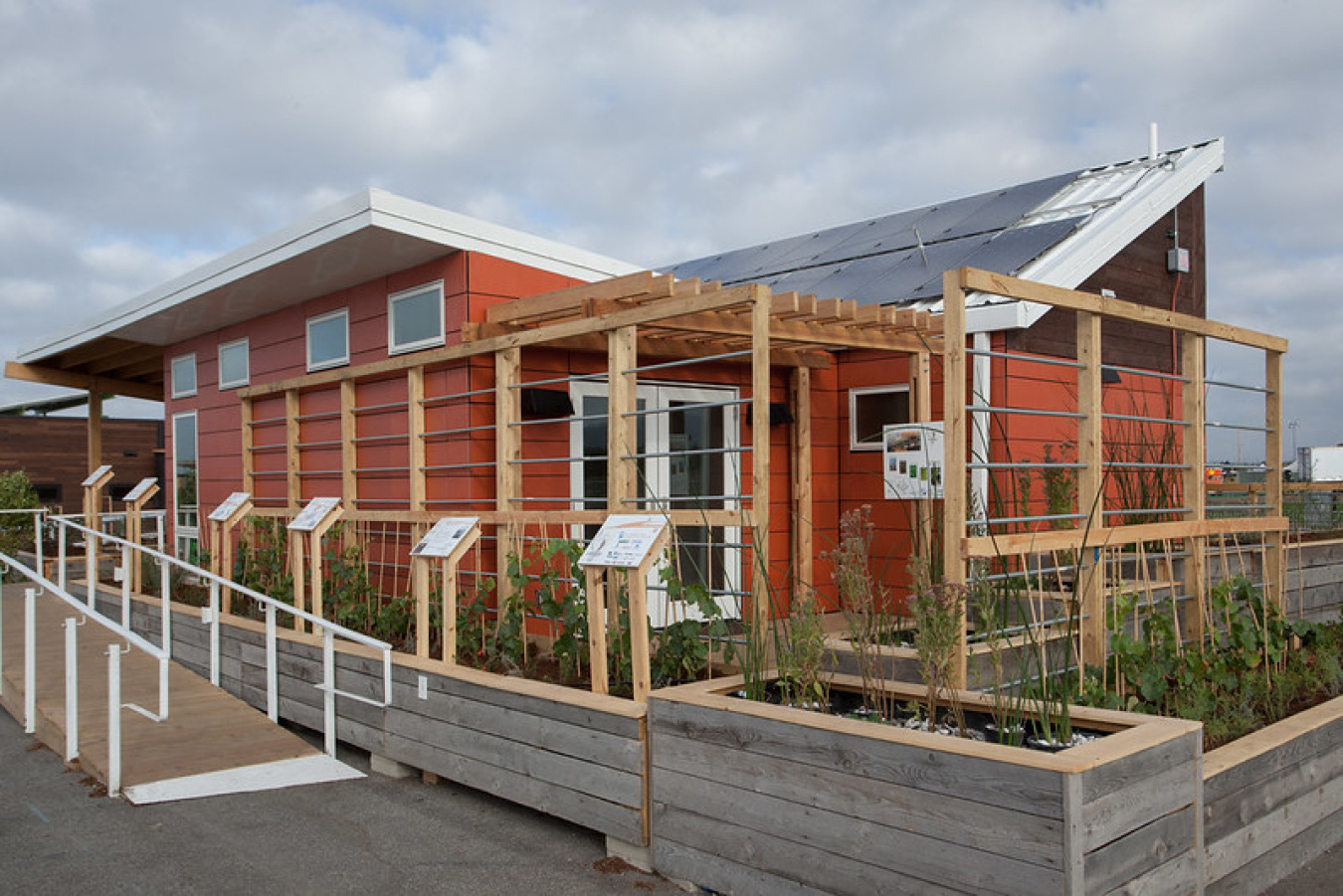
University of Louisville, Ball State University, and University of Kentucky designed the Phoenix House, which helps families rebuild communities in the wake of a natural disaster. The house can be assembled rapidly using a prefabricated main living core and a secondary bedroom module. The house uses durable, low-maintenance, reclaimed materials and an open floor plan with a vaulted ceiling to maximize space. Designed to be self-sustaining, the Phoenix House recycles much of its own water. Exterior cladding made of a fiber cement panel rain screen and reclaimed wood siding is built for high durability and low maintenance. A motion-controlled, light-emitting diode lighting system maximizes energy efficiency.
Computer animated walkthrough, video presentation, and photos.
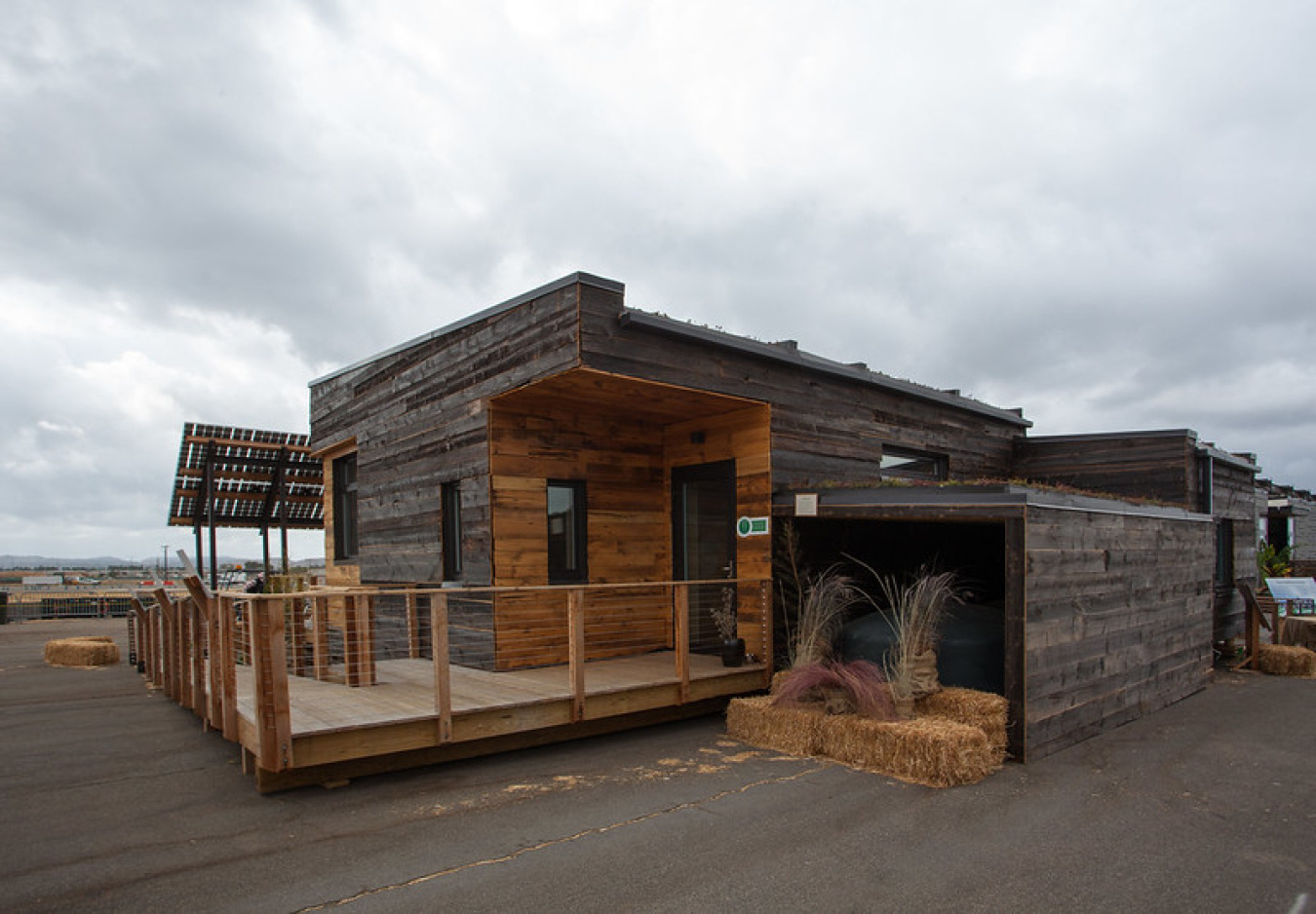
Middlebury College created InSite, a house that reconnects people with their community and emphasizes economic feasibility. InSite offers the privacy and comforts that appeal to 21st-century homebuyers by balancing public and private spaces. It is targeted to young Vermont families and was designed as one piece of a larger human and natural ecosystem. InSite can be integrated into an existing walkable community—suggesting a model of living applicable on any scale. Reclaimed wood materials come from the local region and are historically suited to the local climate. A lush green roof also contributes to the thermal envelope of the house and helps manage storm-water runoff.
Computer animated walkthrough, video presentation, and photos.
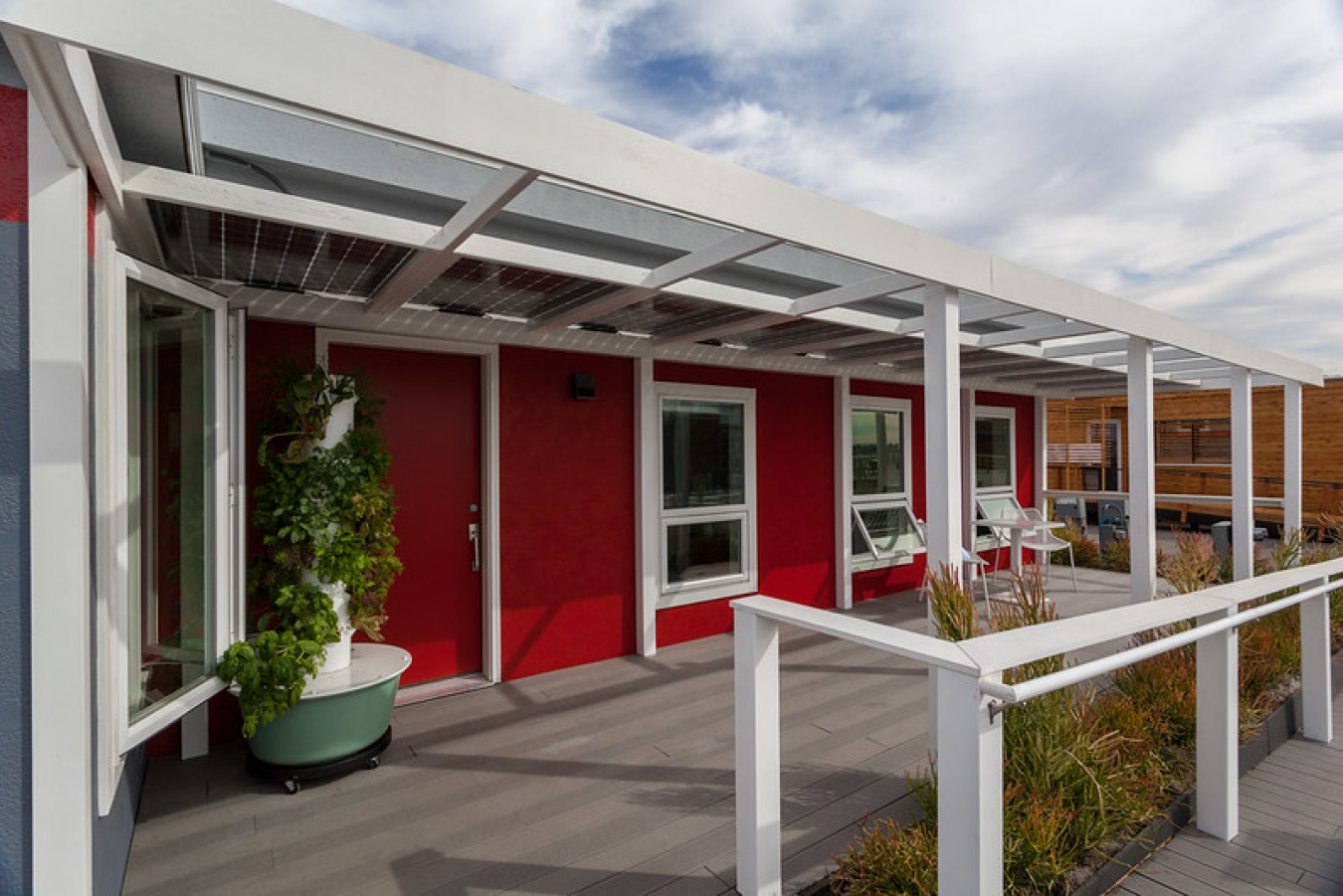
Missouri University of Science and Technology designed Chameleon House for the 2013 Build Challenge to epitomize an adaptable living environment. With versatile features that form a chameleon skin—and spaces designed to maximize flexibility, comfort, and convenience—the Chameleon House flexes easily to meet as many market and regional needs as possible. Seasonally transitional exterior siding panels alternate between a light, reflective side and a dark, absorptive side. A south-facing solarium also expands the floor plan to an outdoor living space.
Computer animated walkthrough, video presentation, and photos.
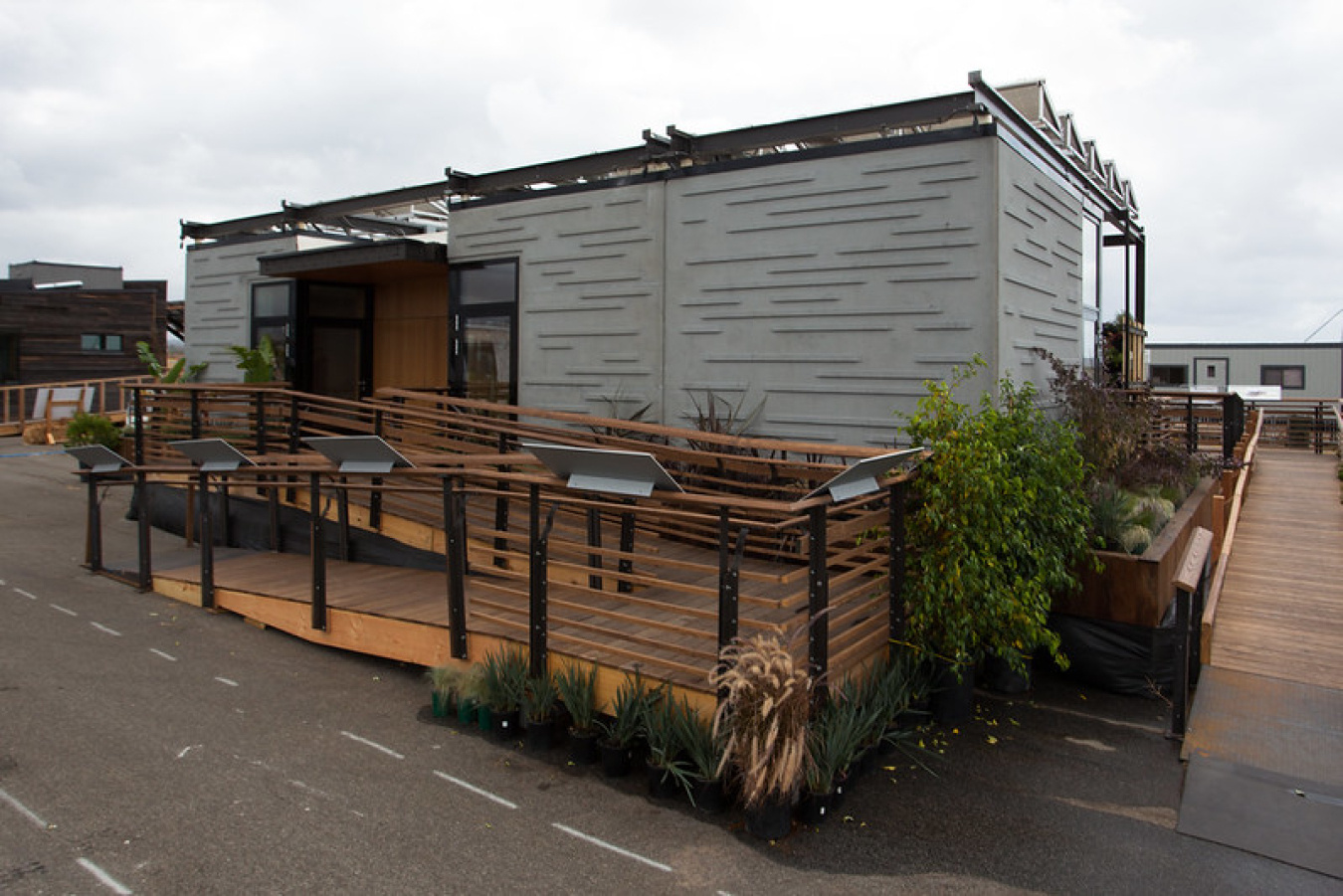
UrbanEden, the University of North Carolina at Charlotte's entry, is a series of four connected indoor and outdoor spaces that create a unique urban living environment. The interior adapts to maximize comfort year-round and opens to a private, plant-filled exterior living area. Innovations in concrete and glass technology, combined with the creative use of simple technologies, nurture a healthy urban lifestyle. The pre-cast geopolymer cement concrete structure reinvents a historic building material to provide a sound barrier to city noise. A system of embedded "capillary" tubes circulates cool water through the high-mass, pre-cast concrete walls and up to a heat exchanger mounted on the roof, removing heat accumulated in the walls and resulting in cooling without the use of compressors or refrigerants.
Computer animated walkthrough, video presentation, and photos.
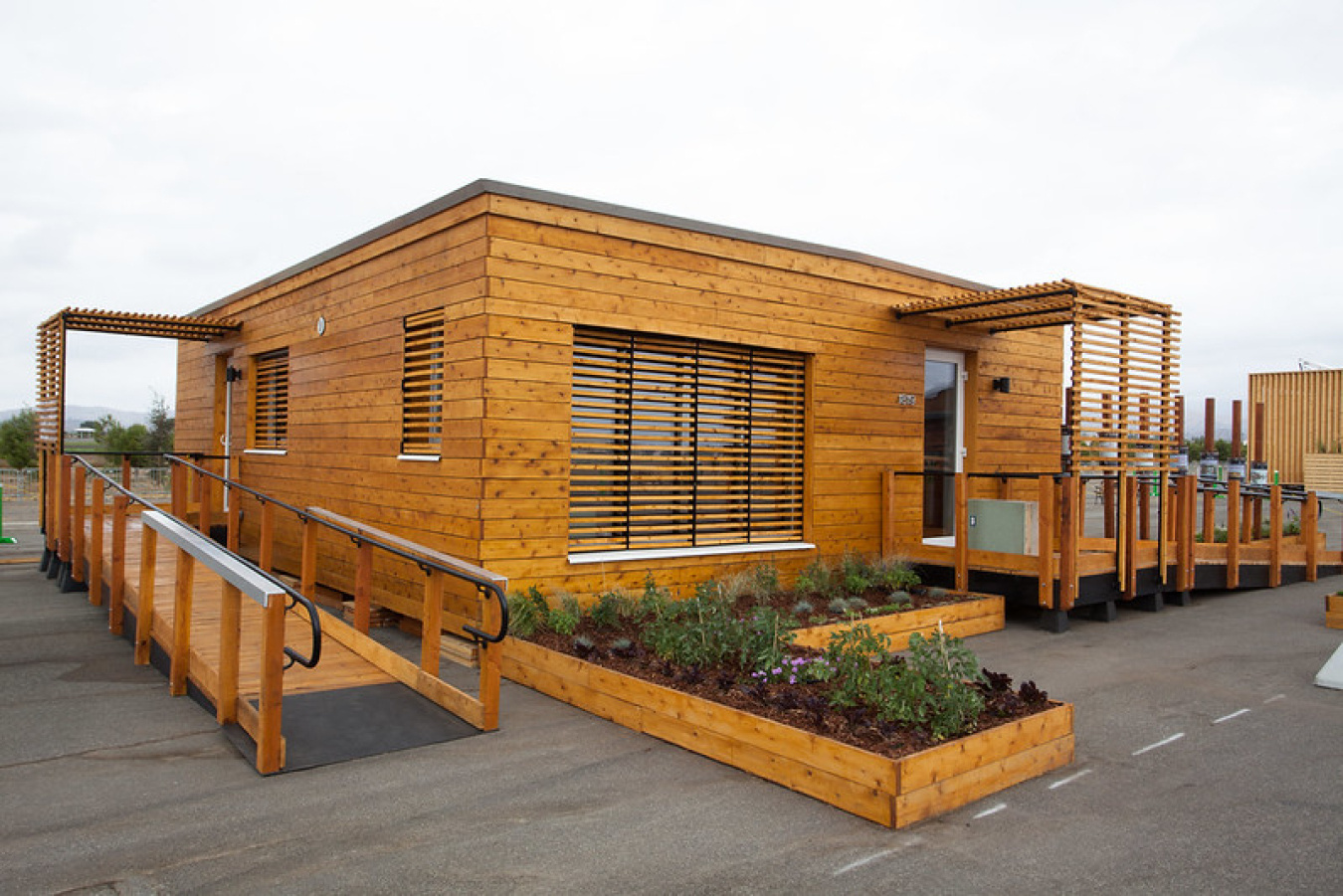
Norwich University's mission at the 2013 Build Challenge was to show that high-performance, efficient dwellings can be affordable and beautiful. The Delta T-90 House accommodates New England's unique seasons and is designed to be affordable for those earning 20% less than the Vermont median income. By maximizing the building envelope first and then using simplified mechanical systems as a supplement, the design prioritizes passive functionality and reduces primary energy demand to minimize lifetime operational costs. The locally harvested northern white cedar rain screen draws from the traditional wood siding found in barns and utility buildings across New England. Thick, 16-inch walls with deep-set windows minimize heat loss and reinforce a spirit of protection and strength.
Computer animated walkthrough, video presentation, and photos.
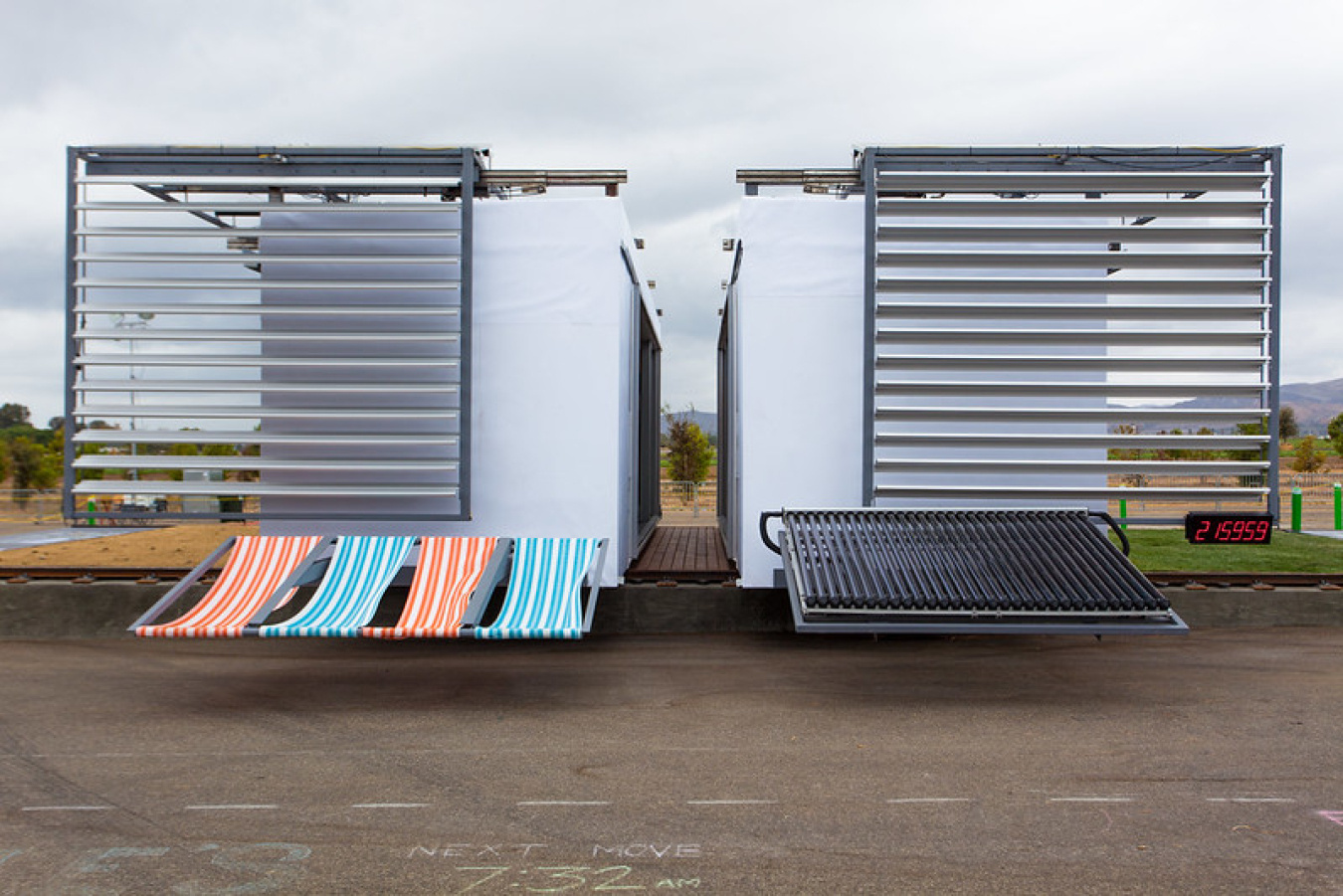
DALE, the Dynamic Augmented Living Environment, was the 2013 entry for the SCI-Arc/Caltech team. Made of two movable, prefabricated modules that open to allow the outdoors in, DALE celebrates the active California lifestyle and fosters thrivability through its dynamic architecture. Two prefabricated modules move across a rail system and open easily to create an outdoor living space that triples the inhabitable square footage. A vinyl exterior skin provides a tight, waterproof body glove and replaces traditional sheathing and finish.
Computer animated walkthrough, video presentation, and photos.
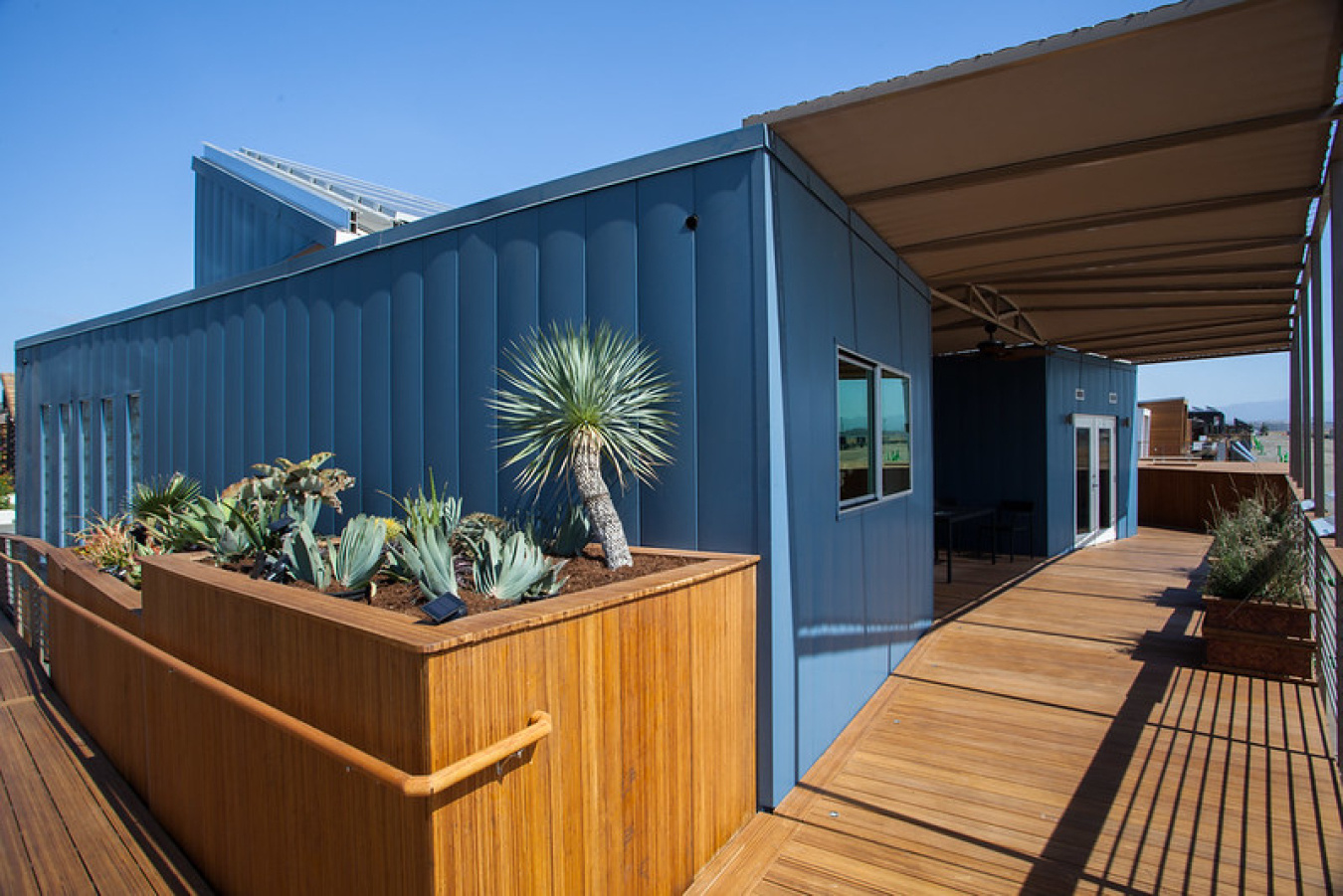
Radiant House is driven by three E's: efficiency, economics, and elegance. The house incorporates bamboo and takes it to a new level by using the material for structural wall and joist systems. Radiant House is an elegant, adaptable, and affordable house with a versatile great room, a large deck and patio area, and clean separation between private and public spaces. The radiant heating and cooling system embedded in the ceiling drywall uses radiant panels to heat the house with hot water or cool the house with cold water—ensuring a uniform environment. An application custom-written by the Santa Clara University team monitors the entire house; provides a real-time display of energy performance; and controls the temperature, lights, sliding doors, windows, and blinds.
Computer animated walkthrough, video presentation, and photos.
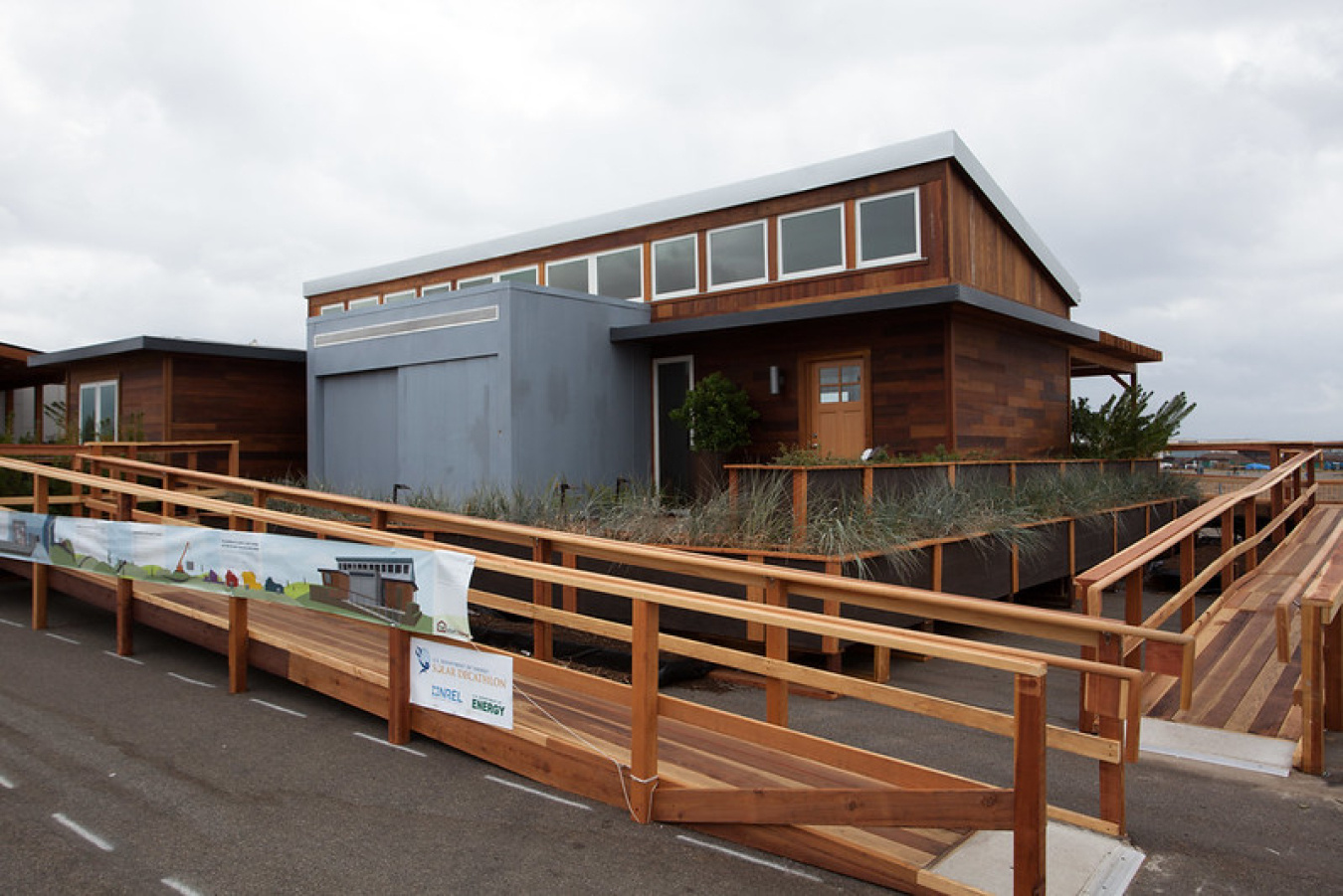
Stanford University designed the Start.Home to provide energy efficiency at the push of a button. With modular architecture and advanced controls to optimize each component, the house aims to spark a revolution by lowering the entry barrier for an ultra-efficient house. The CORE mechanical room integrates the Start.Home power generation and controls into one centralized "engine" with modular additions to extend the control system to each living space. Exterior redwood siding and interior Douglas fir hardwood floors were salvaged from old homes in the California Bay Area. And a heat-recovery ventilator works with an efficient heating/cooling system, automated windows, phase-change materials, energy-efficient ceiling fans, and a tri-zone ductless mini-split system to provide year-round comfort and natural ventilation.
Computer animated walkthrough, video presentation, and photos.
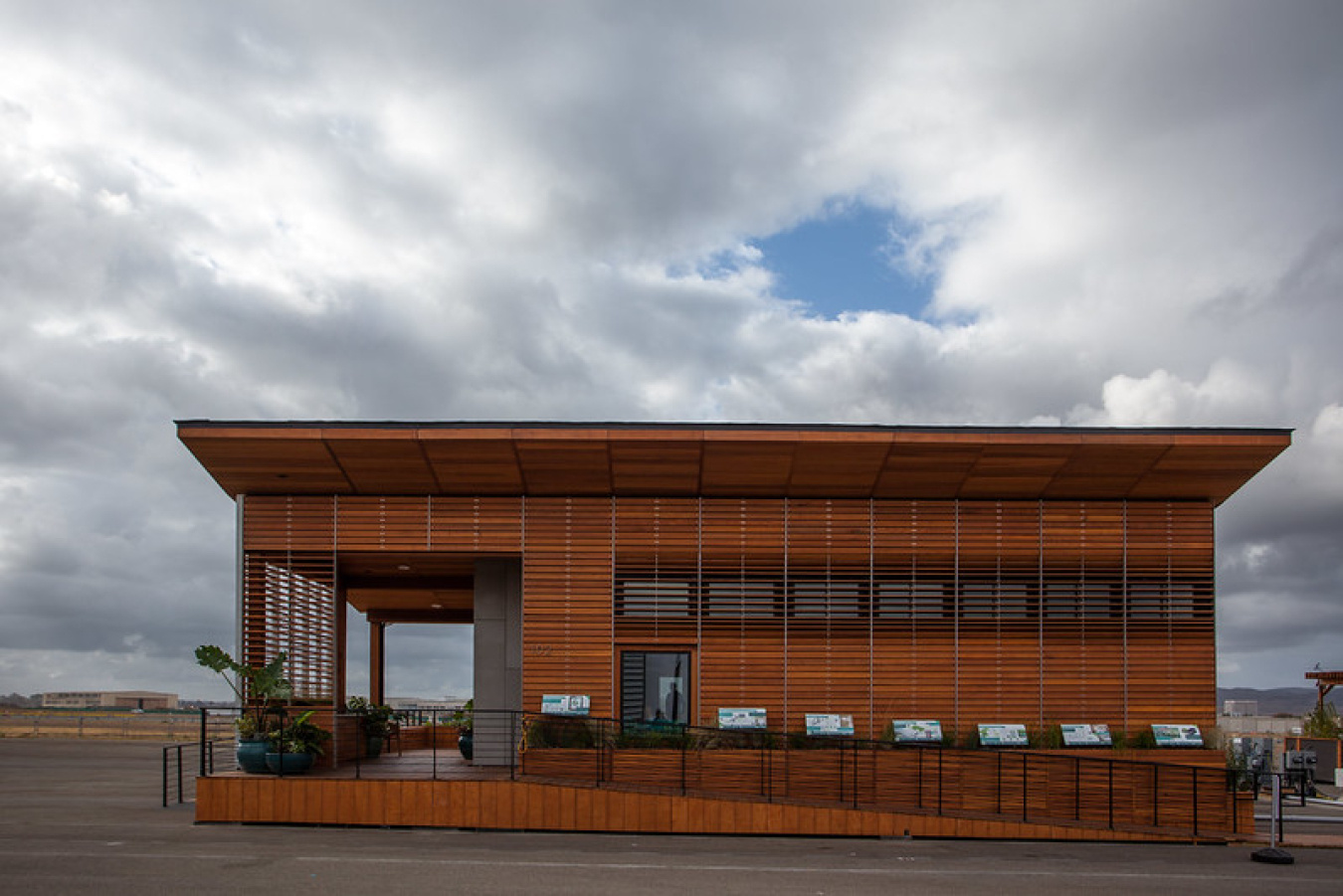
The Stevens Institute of Technology house adapts to its occupants' needs and provides them with feedback on ways to reduce energy use. Its L shape maximizes views of, and access to, the generous outdoor living space. The architectural design splits the house into separate "dry" and "wet" modules to allow for an energy-efficient distribution for the plumbing system. The misting system collects condensate from inside the house and uses it to mist the exterior HVAC unit, increasing its efficiency. In addition, the smart energy management system monitors weather patterns, the habits of occupants, and their energy use to create a comfortable and energy-efficient living environment.
Computer animated walkthrough, video presentation, and photos.
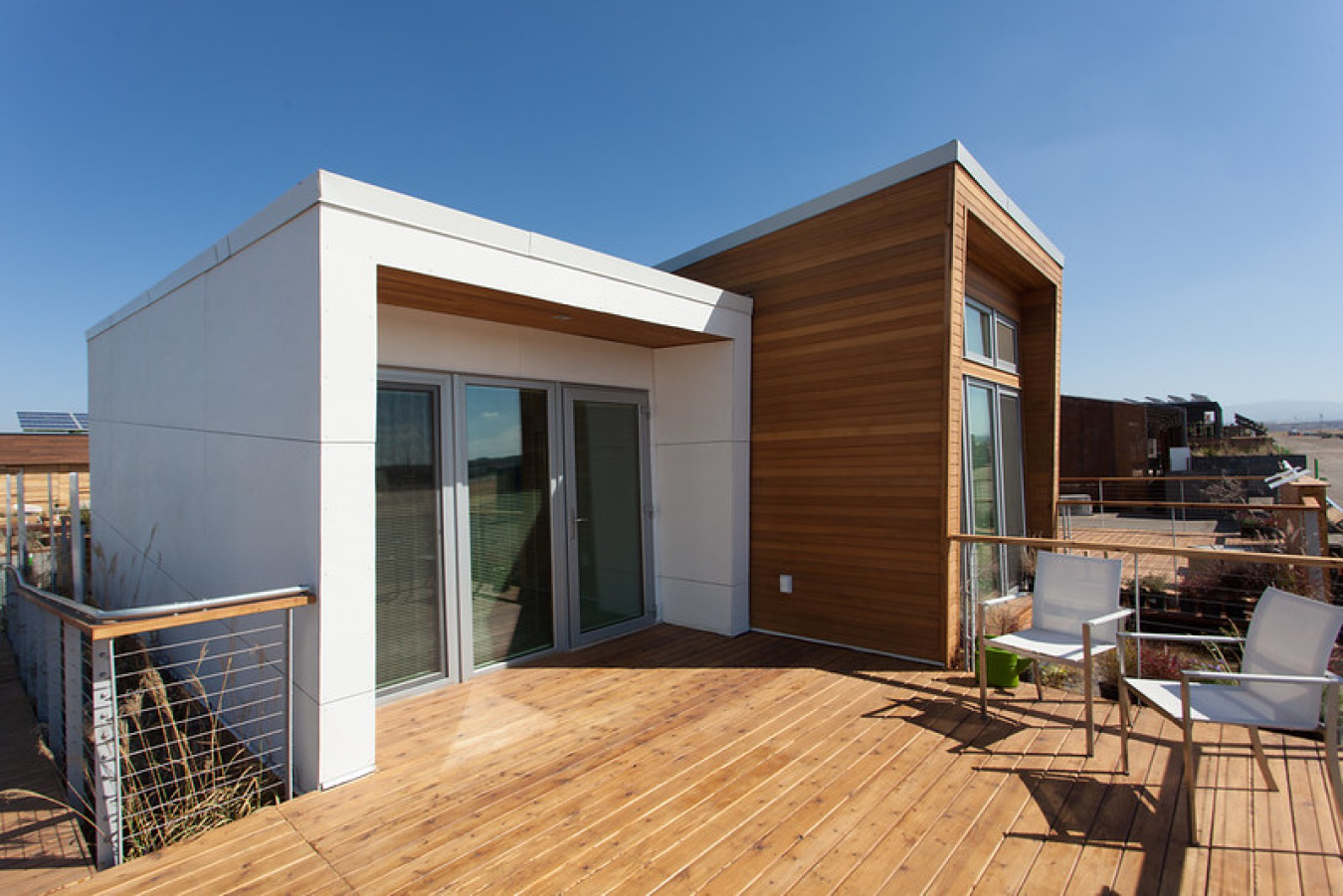
Borealis, the University of Calgary's entry to the 2013 Build Challenge, addresses the housing needs of professionals working in remote locations, such as the northern regions of Alberta, Canada. This modular house is easy to transport and assemble, it's affordable, and it provides a comfortable home away from home. The three-module design features a core shared module with a kitchen that separates two private modules that can be configured as work or rest spaces. Light-emitting diode fixtures are used throughout the house to achieve ultra-high efficiency and use 10 times less energy than traditional incandescent bulbs.
Computer animated walkthrough, video presentation, and photos.
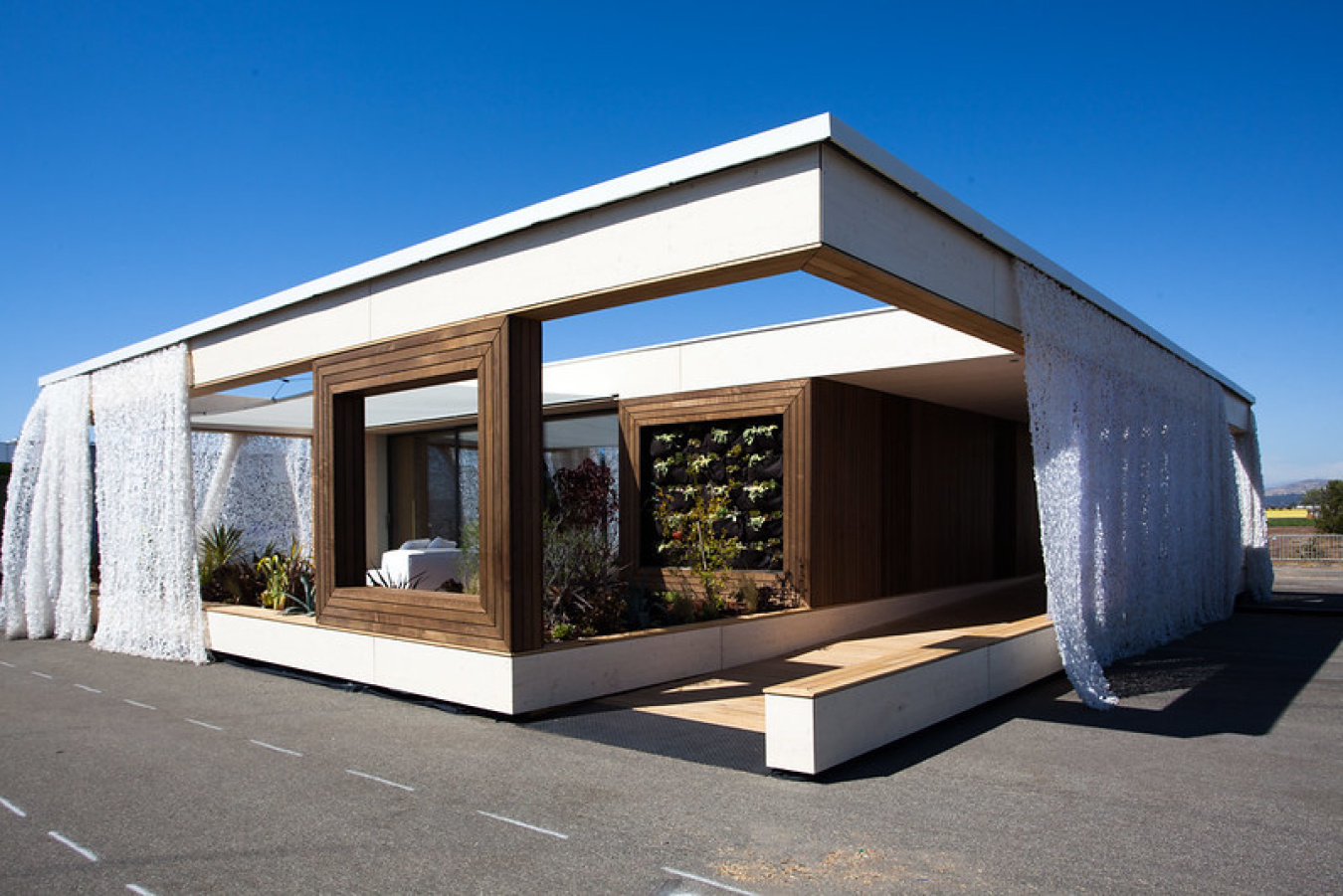
In developing LISI, Team Austria was guided by a vision for a healthy future and a concept that could adapt to many lifestyles and climates. Changeable architectural elements create a variety of sensory conditions—closing to form a protective cocoon for occupants and opening to allow them to expand their space. Generous storage, completely integrated into the walls, frees the primary indoor space from clutter. An energy-recovery ventilation unit acts as a heat and humidity exchanger between exhaust air and fresh intake air to keep the living spaces comfortable and healthy.
Computer animated walkthrough, video presentation, and photos.
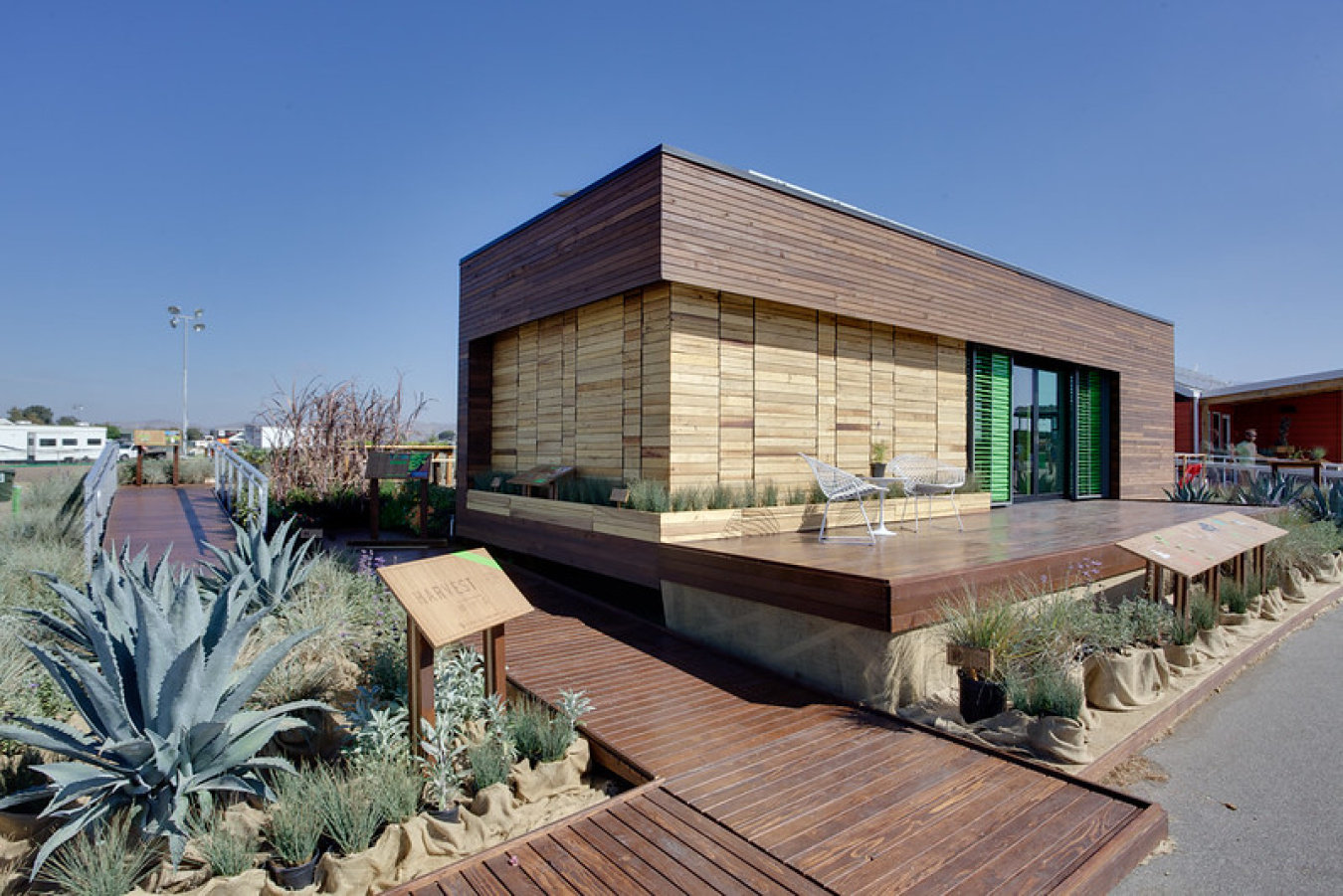
HARVEST HOME harvests and replenishes natural resources. A habitat for renewal and regeneration, the house features sophisticated control and biomedical systems to serve returning U.S. military veterans and help them adjust and flourish in the civilian community. Integrated landscaping balances edible and native plants and blurs the interior and exterior environments to create a healthy and beautiful space. Careful attention to natural ventilation enables the house to capture breezes, creating a comfortable environment with abundant fresh air. Through a distributed network of activity sensors, the biomedical suite takes measurements unobtrusively to provide physical-therapy data and analyze the living habits of the homeowner.
Computer animated walkthrough, video presentation, and photos.
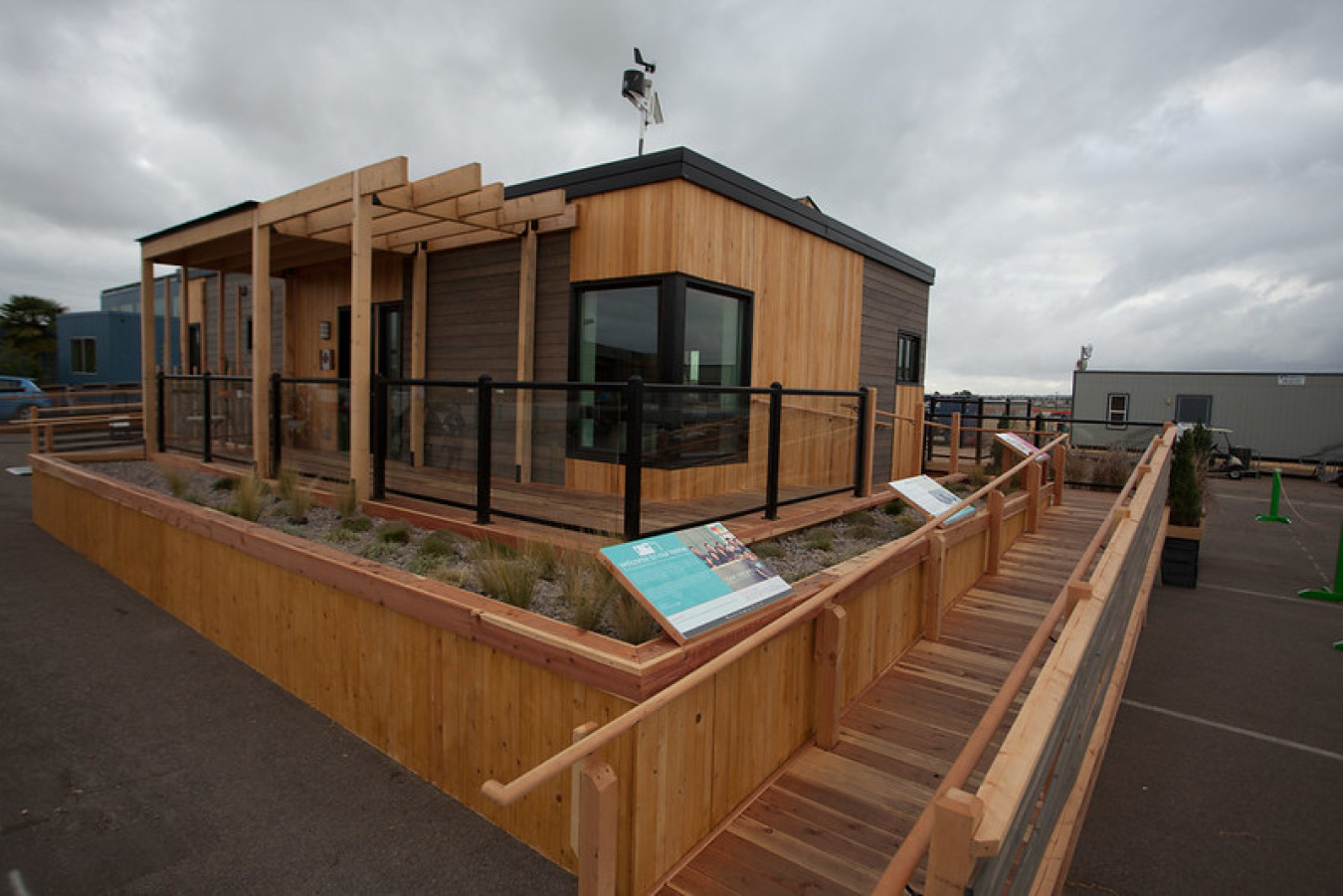
Team Ontario entered the competition with ECHO, a functional and livable starter house that strikes a balance between engineering and architecture. The house generates more energy than it uses and easy-to-use building controls and reconfigurable furniture maximize convenience and comfort. A unique wall structure, along with vacuum insulation panels, enables the house to withstand harsh Ontario weather with an insulating capacity more than twice that of a conventional home. A predictive shading system also uses daily weather forecasts from the Internet to run computer simulations and determine the optimal shading placement on southern glazing.
Computer animated walkthrough, video presentation, and photos.
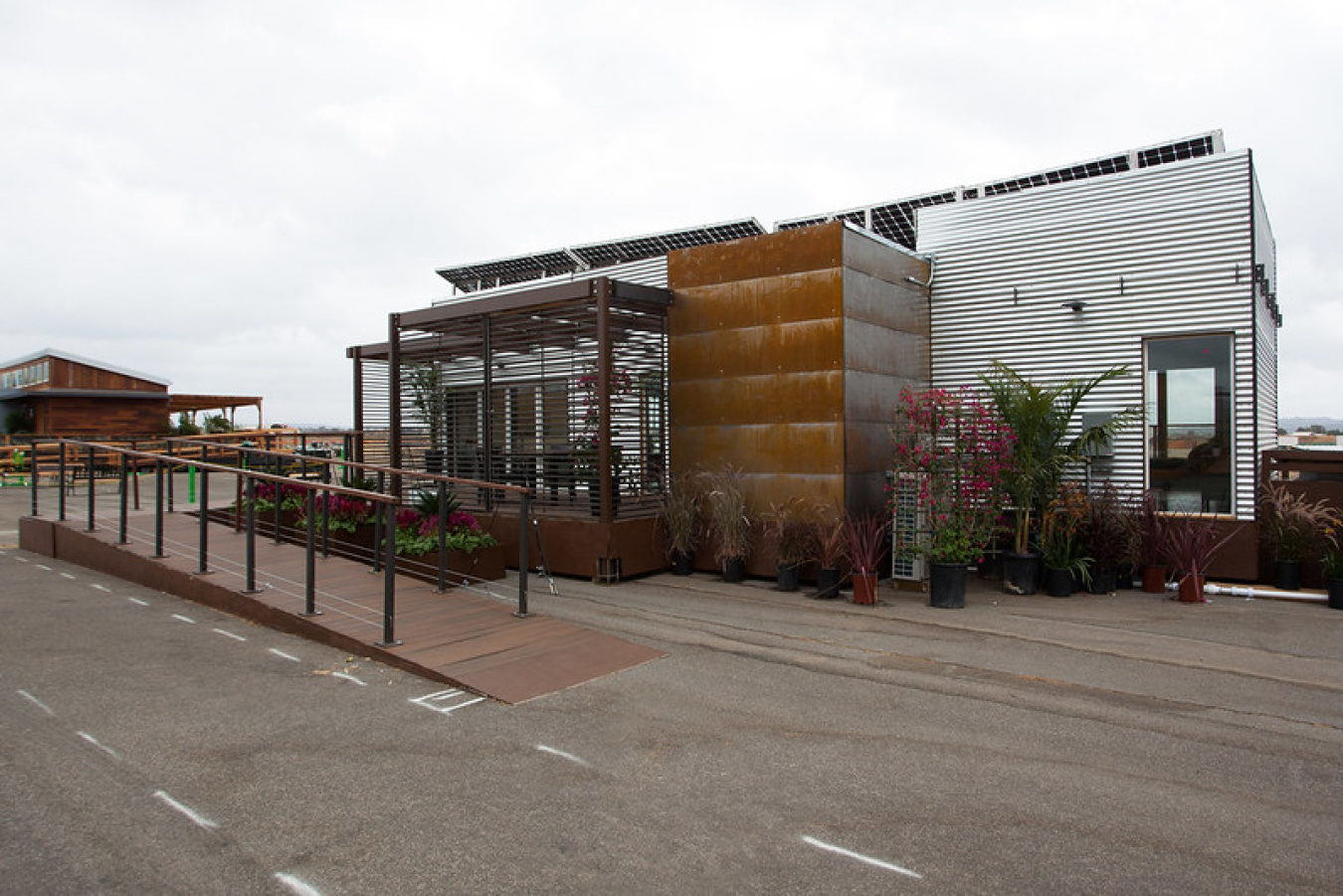
Team Texas created ADAPT, a house that reflects the nature of El Paso. Built at the confluence of two nations and three states, the house honors the myriad cultures present in Far West Texas and uses innovative technologies to model flexibility, utility, and high efficiency in a new suburban environment. The house emulates the indigenous Pueblo Indian adaptions to the Chihuahuan desert and flexible interior spaces blend together with an aesthetic of flow and movement, with large windows that provide sweeping views of the deck, yard, and skyline. An adjustable-height foundation system enables the house to be transported easily and rest on and connect to six steel beams while the walls of the house are made of a strong fiber composite material that is a powerful insulator and highly resistant to fire.
Computer animated walkthrough, video presentation, and photos.
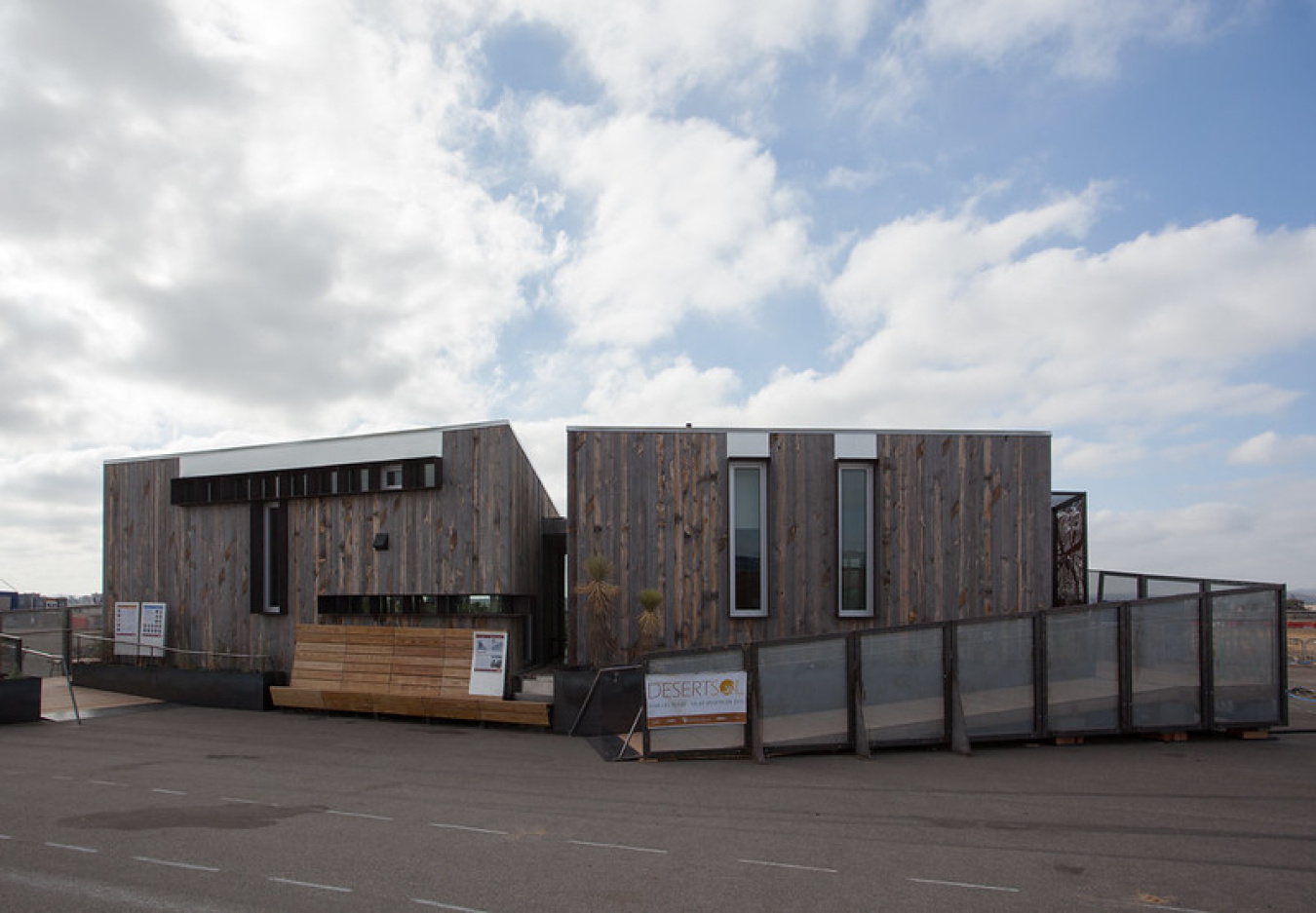
The University of Nevada Las Vegas designed its DesertSol house to reflect the spirit of the Mojave Desert. The ultra-efficient house is envisioned as a vacation home for a seasonal retreat—a basecamp for desert adventures that responds to its unique environment. A water feature captures water from the occasional desert downpour and uses it for irrigation and spot cooling on the outside deck with a cool tower, which uses less water than conventional misters. A home automation system ensures the house operates at peak efficiency and allows the lights, appliances, and thermostats to be controlled from an easy-to-use interface on a mobile device. Layers of closed-cell, open-cell, and continuous rigid insulation ensure that the house is air-tight and highly heat-resistant and prevents thermal bridging.
Computer animated walkthrough, video presentation, and photos.
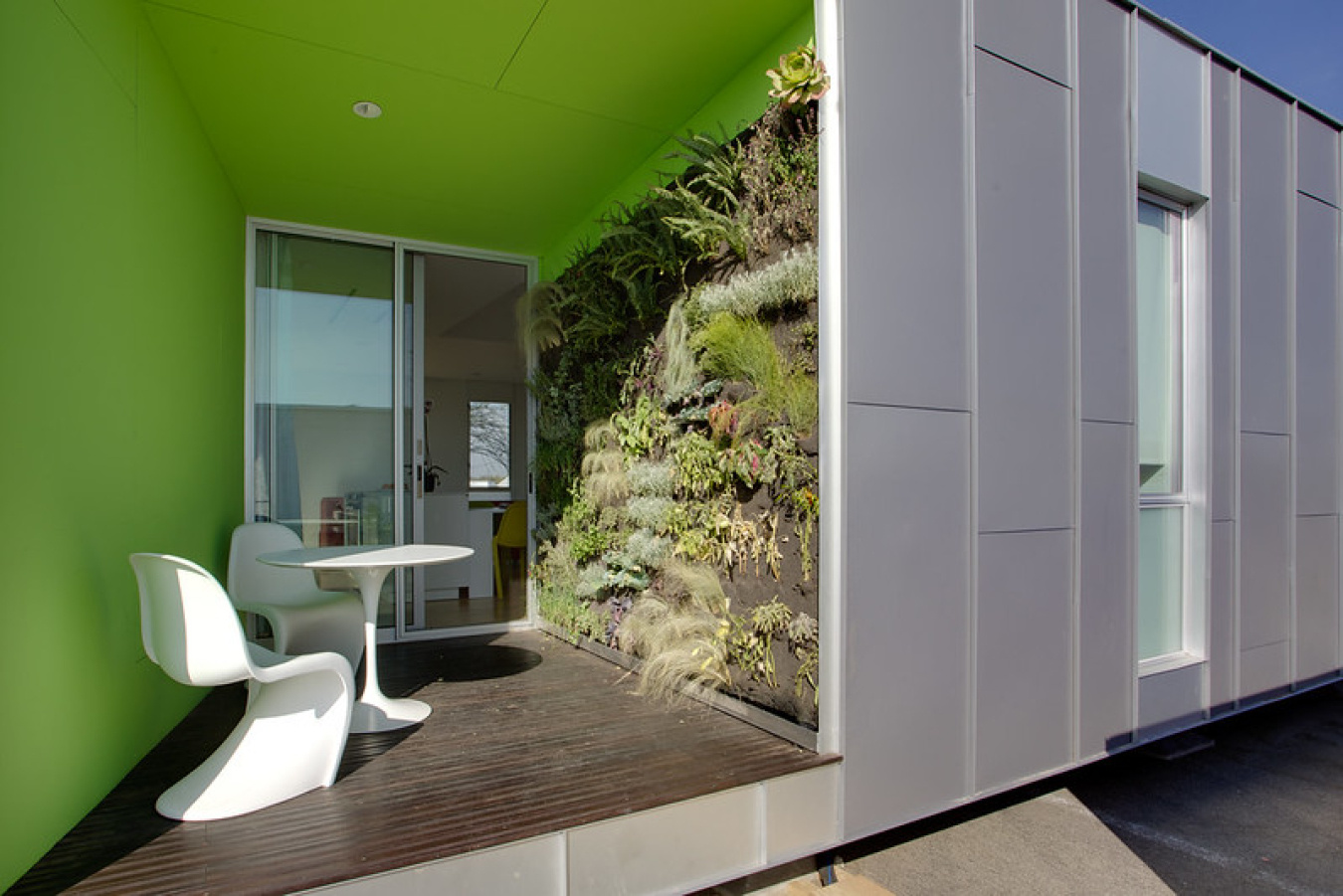
The University of Southern California created fluxHome to celebrate the cultural and technological changes of the 21st century. The house combines a transformable envelope system with customizable components and smart-home technology to allow it to be configured in a multitude of lifestyle scenarios. Vertical gardens and lawns filter the air and allow users to grow their own vegetables and herbs with minimal water via a drip irrigation system. Ambient light-emitting diode lighting and daylighting used throughout the house minimize energy loads, while innovative light shelves and window hoods provide shading.
Computer animated walkthrough, video presentation, and photos.
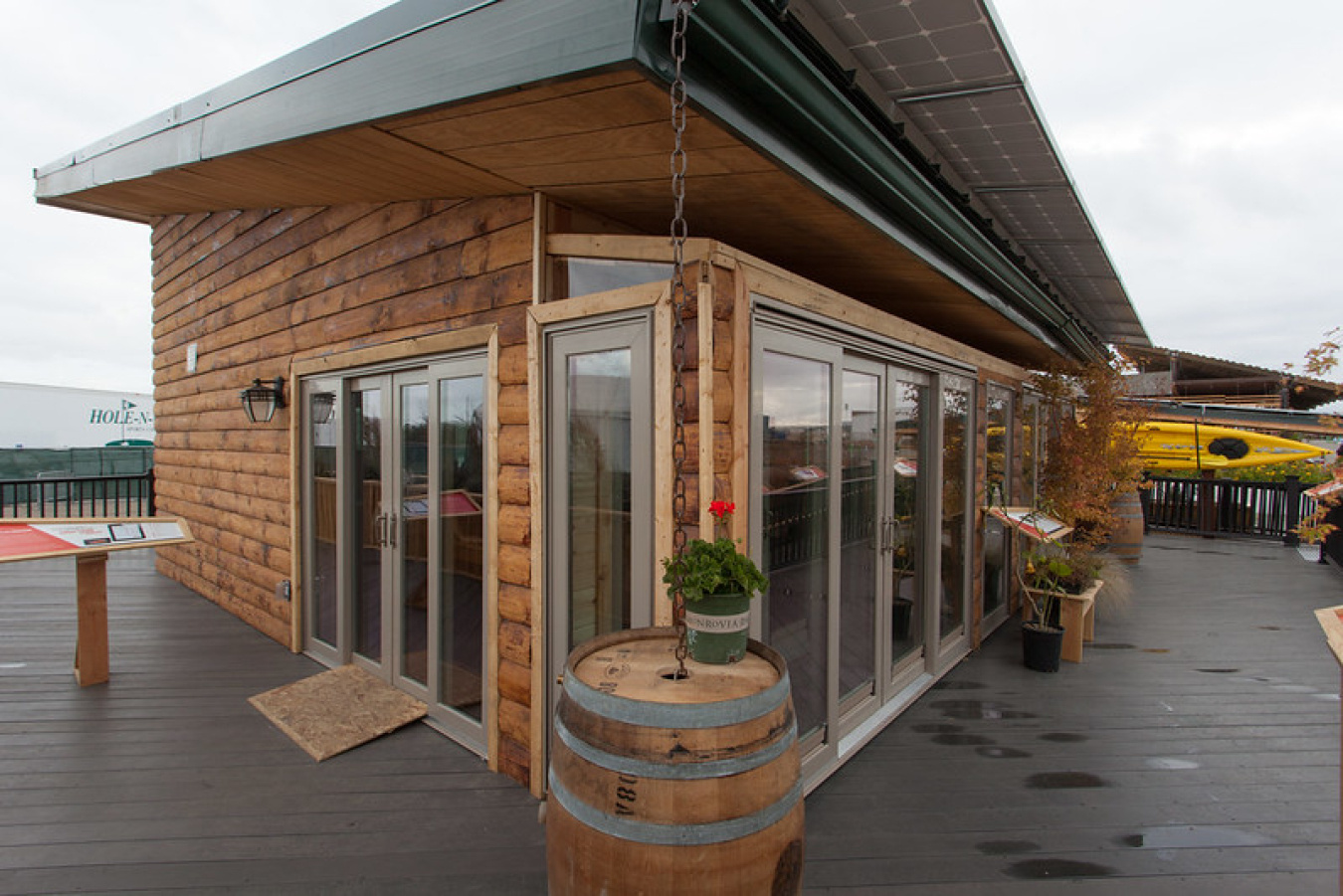
West Virginia University presented Preserving Energy with Appalachian Knowledge, or PEAK, which invites residents to embrace a new Appalachian way of living with contemporary, mountaineer design that blends subtly with automated smart systems. PEAK integrates innovative technologies and passive design techniques to maximize energy efficiency and support new design practices and approaches. Walls, floors, and ceilings made of structural insulated panels provide higher insulation levels while maintaining a rustic "log cabin" aesthetic. The kitchen's state-of-the-art smart appliances reduce energy consumption by communicating with one another and making decisions to reduce power use. An integrated health-monitoring system with floor-integrated scales and accompanying wrist bands calculates body mass index and helps monitor blood pressure and other health factors, integrating holistic health into the home environment.
Computer animated walkthrough, video presentation, and photos.
2013 Build Challenge Participants
This team withdrew from the competition before the exhibition but met other rigorous competition requirements through multiple deliverable submissions.
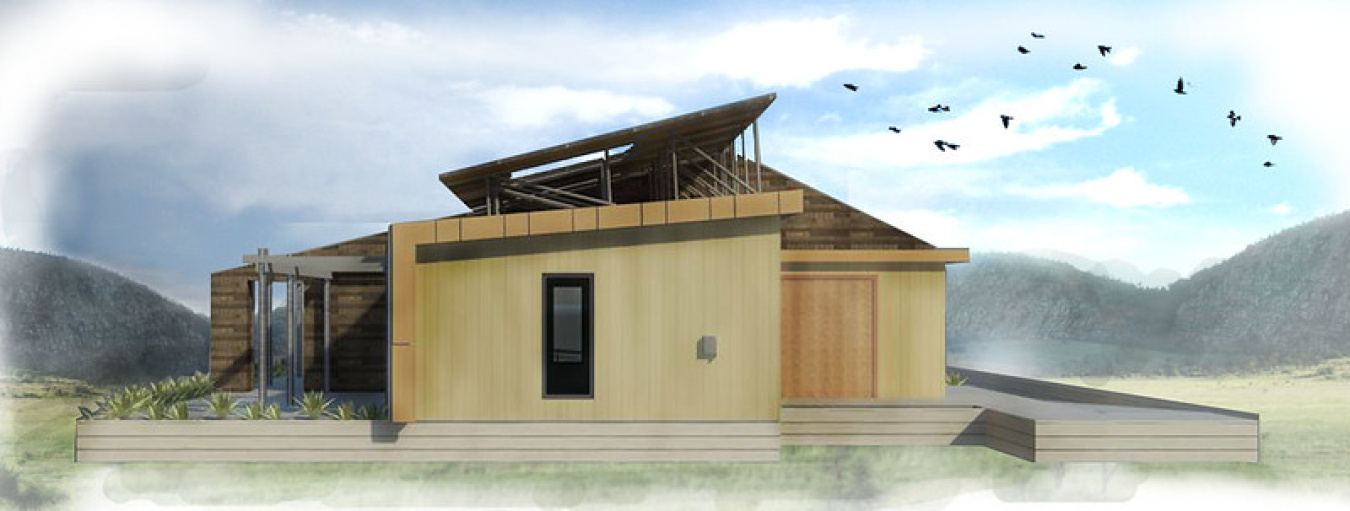
Tidewater Virginia's 2013 entry paid homage to the Emancipation Oak, the historic tree where the first Southern reading of the Emancipation Proclamation took place, on the campus of Hampton University. The Canopy House is named after the tree's safe, protective canopy. The accessible architecture and layout accommodate wheelchair-bound occupants, with features such as adjustable bathroom and kitchen fixtures, grab bars, high color contrast, and acoustic panels.