



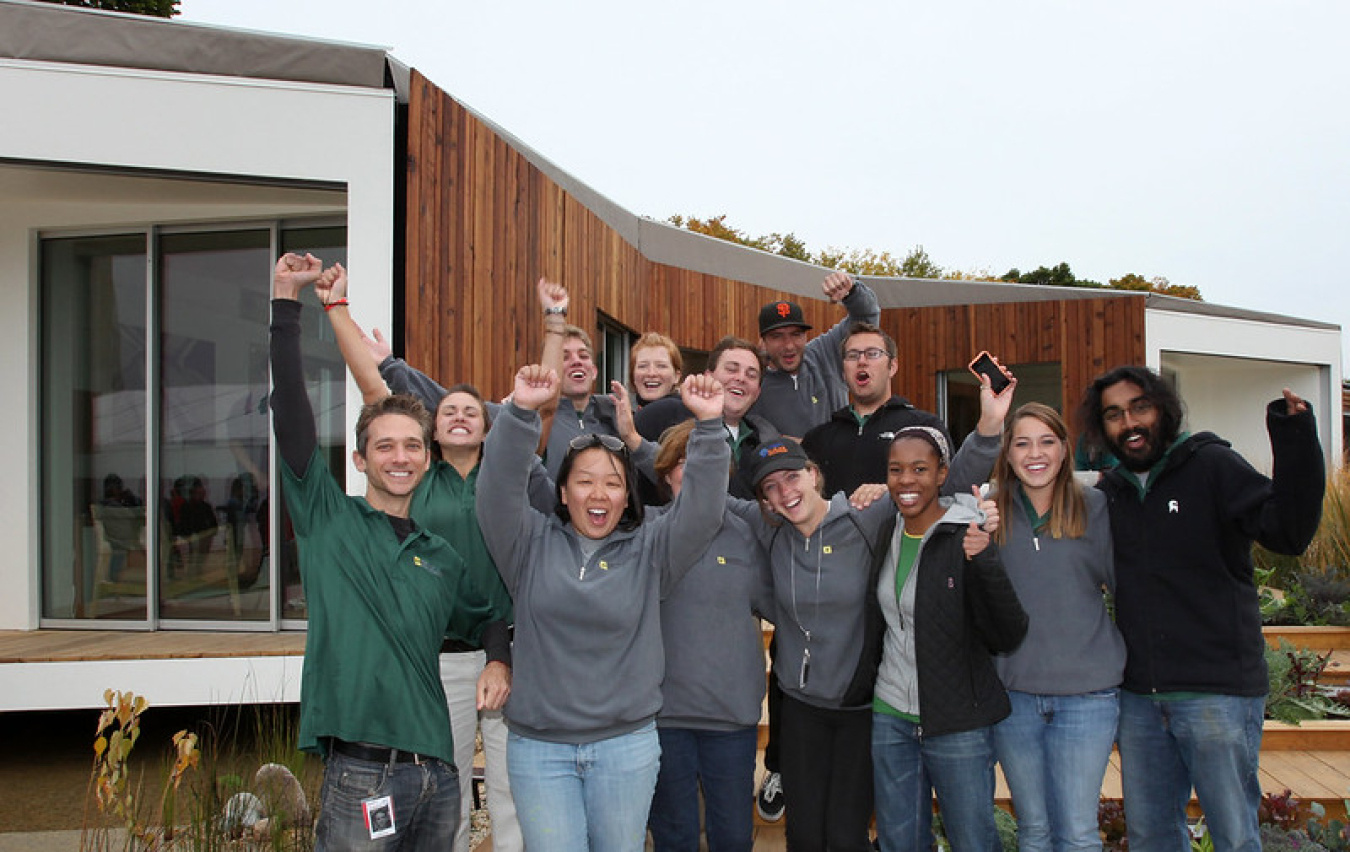
Twenty teams competed in the 2009 Build Challenge in Washington D.C.
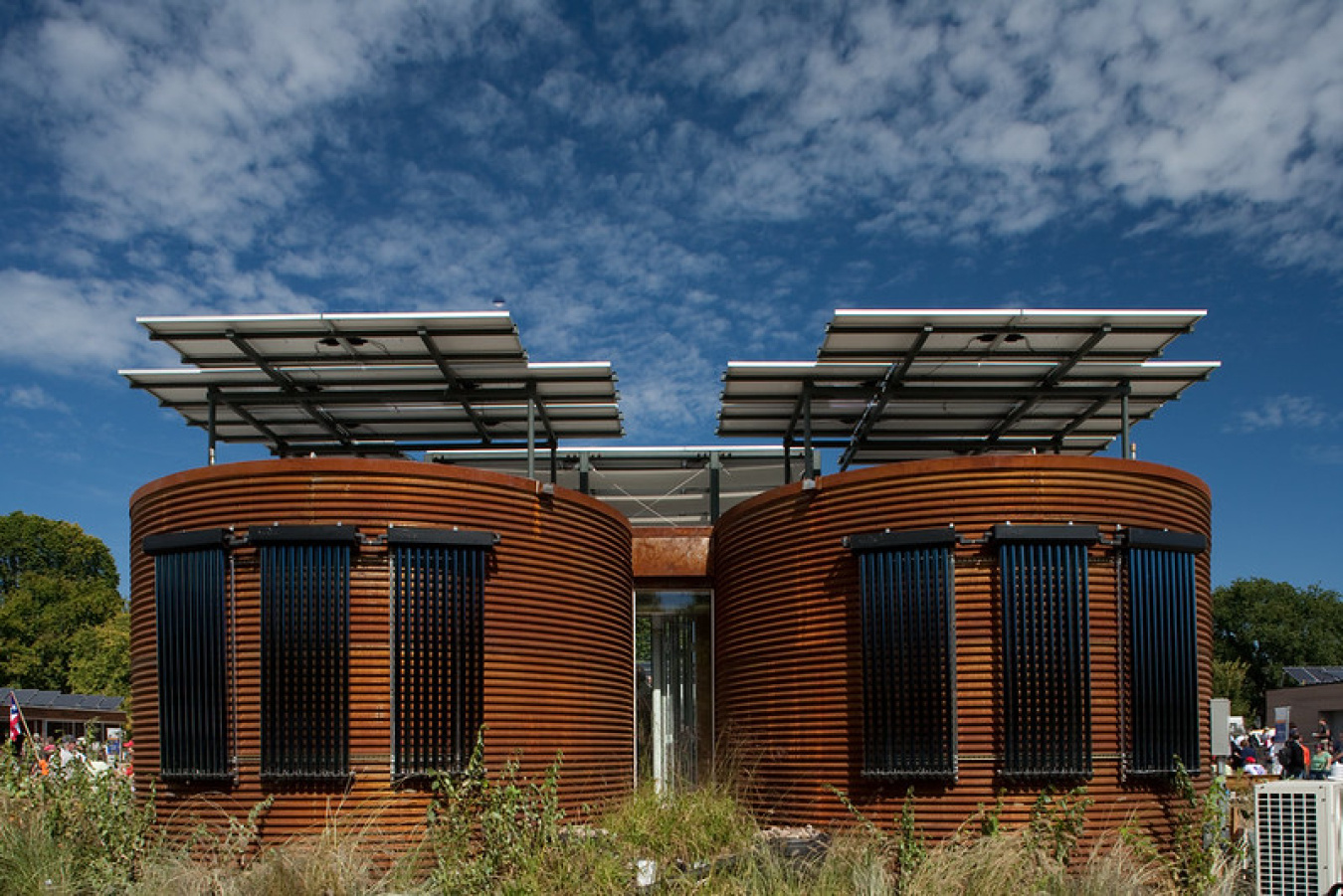
Cornell's entry is Silo House, which consists of three cylinder-shaped modules that interconnect to form a modern structure. The circular shapes reflect the silos that dot the rolling hills of upstate New York, and the team calls the overall effect "post-agrarian," a reminder of vanishing farmland. Each of the house's silos—kitchen, bedroom, and living room—is 16 ft (4.9 m) in diameter, with about 130 ft2 (12.1 m2) of floor space. The heating, cooling, and ventilation system uses two loops, one for heating and one for cooling, to allow for instantaneous switchover.
Virtual tour and photos
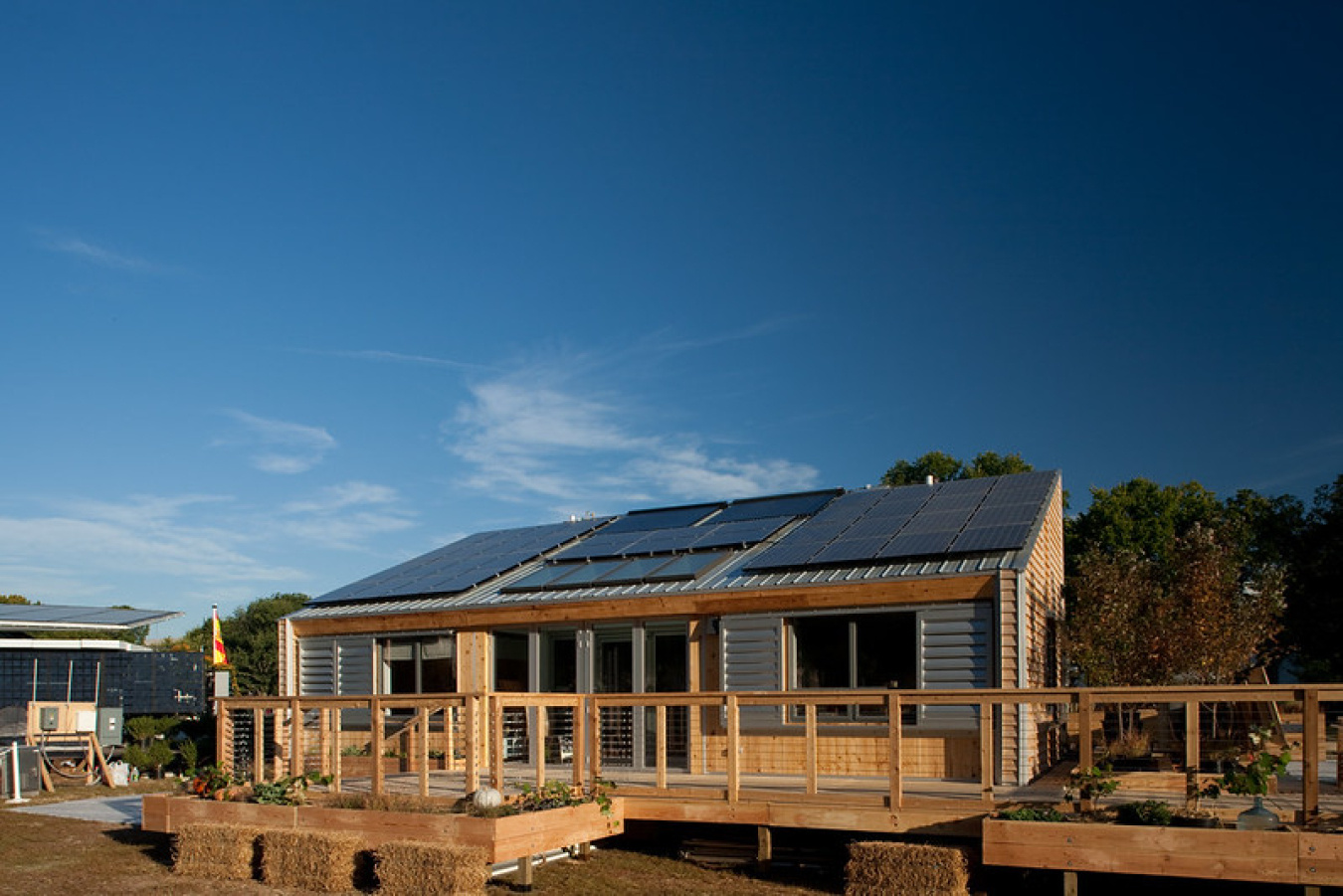
The team's Interlock House is designed specifically to appeal to seniors and meets all regulations for accessibility under the 1990 Americans with Disabilities Act. The house is also designed to "interlock" into existing communities instead of taking over undeveloped land. The "heart" of the house is an enclosed sun porch on the south side, where occupants can relax—as befits a retiree—during all seasons. The house is insulated with spray polyurethane foam manufactured from soybean oil. This closed-cell foam expands and hardens to seal the building envelope and prevent air drafts and moisture infiltration.
Virtual tour and photos
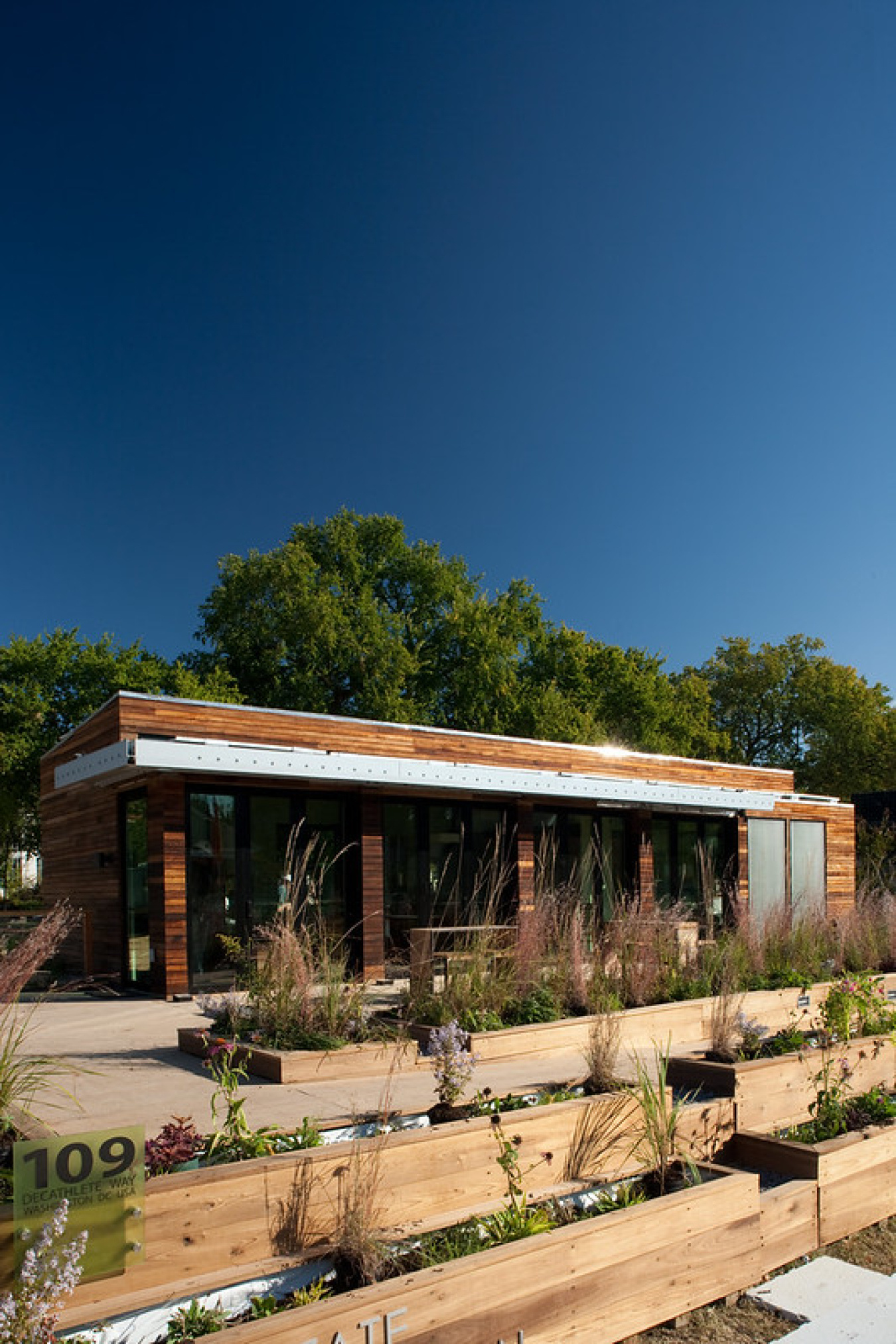
Penn State's Natural Fusion team made a big effort to maximize daylighting in their design, including southern windows to capture daylight and warmth in the winter, and clerestory windows above the awning for additional daylighting. A "water bladder" system is also embedded in the floor that acts as thermal mass and can be emptied for transport, which reduces fuel use.
Virtual tour and photos
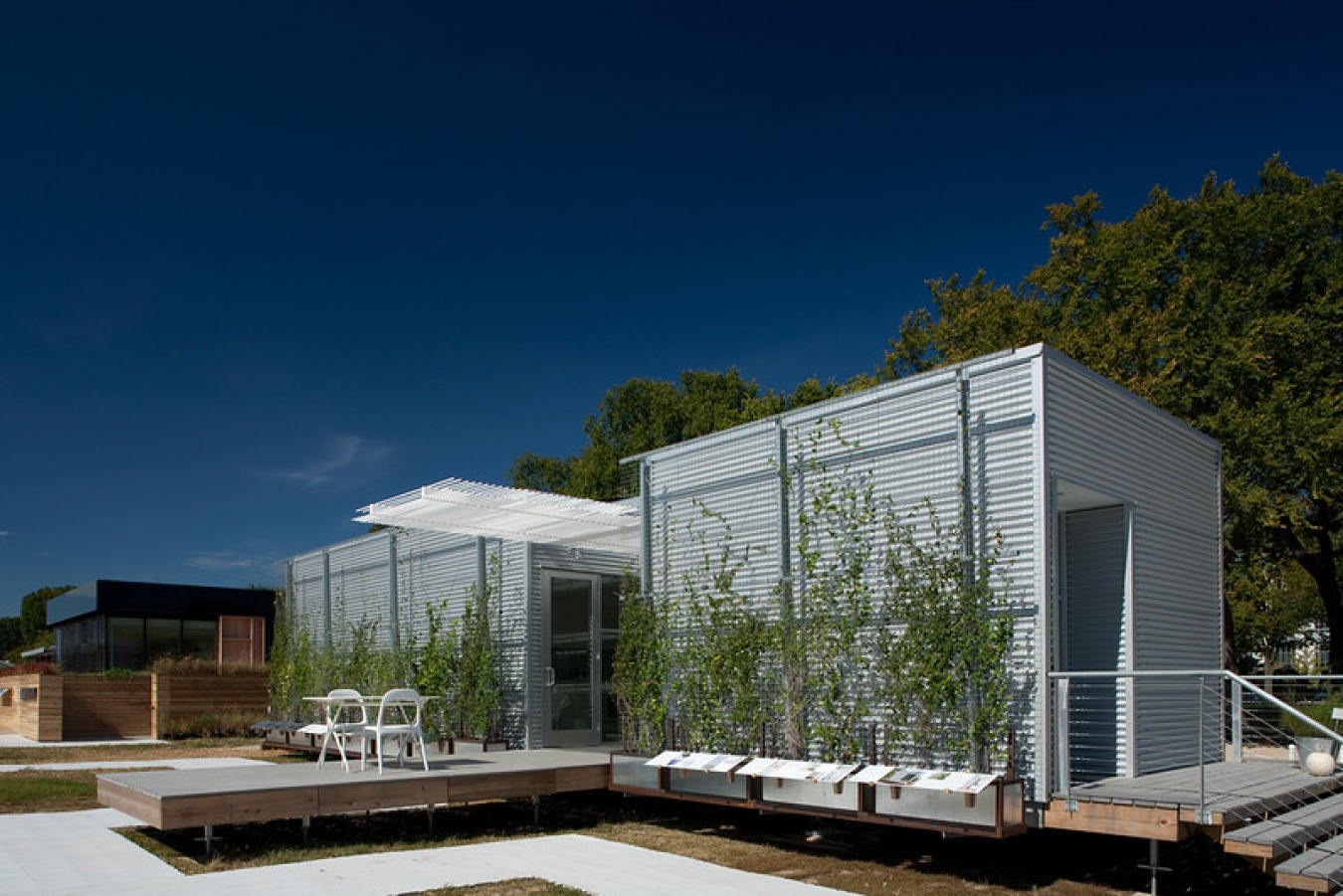
Houston's Rice University team offers the ZEROW HOUSE, a modern interpretation of a row house that incorporates affordable, practical energy-saving solutions. Instead of building a house just for the competition, the team designed a home they could give back to the community. The team has already negotiated an agreement with Project Row Houses, a local community development organization, to give the ZEROW HOUSE a permanent home in Houston's Third Ward after the competition. Team members chose appliances that minimize electricity use and reduced the house's total energy use for lighting fixtures to the equivalent of three 100-watt light bulbs. The house receives the majority of its natural lighting from the "light core," a glass-encased volume inserted into the house that acts as an exterior extension of the living space. A "light cove" provides a wash of light along one wall achieved with state-of-the-art LED (light-emitting diode) strips attached to the walls and ceilings. The team believes that a dynamic integration between architecture and engineering makes the house feel larger than its 520 ft2 (48.31 m2).
Virtual tour and photos
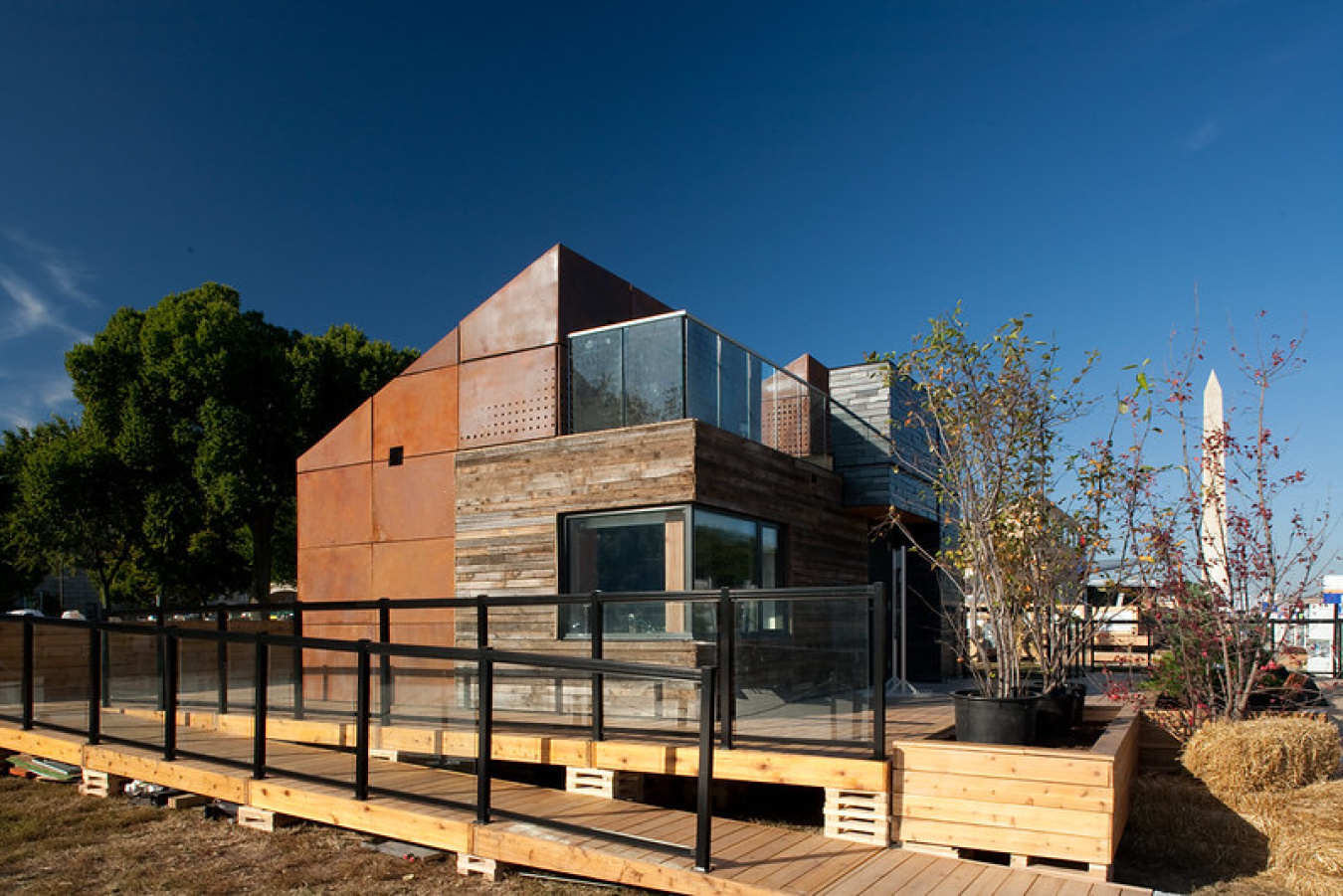
The Team Alberta house is designed in the rustic image of Western Canada on the outside, with "post and beam timber frame" construction, and high-tech on the inside, with nearly all systems—heating, cooling, lighting, and even entertainment—operated by a programmable logic controller. The Team Alberta house includes a vaulted-ceiling living room and kitchen area, a stone-clad core area for the bathroom and mechanical systems, a bedroom and home office space, a rooftop deck, a keyway dividing the bedroom/home office from the more public areas of the house, and even a yoga space.
Virtual tour and photos
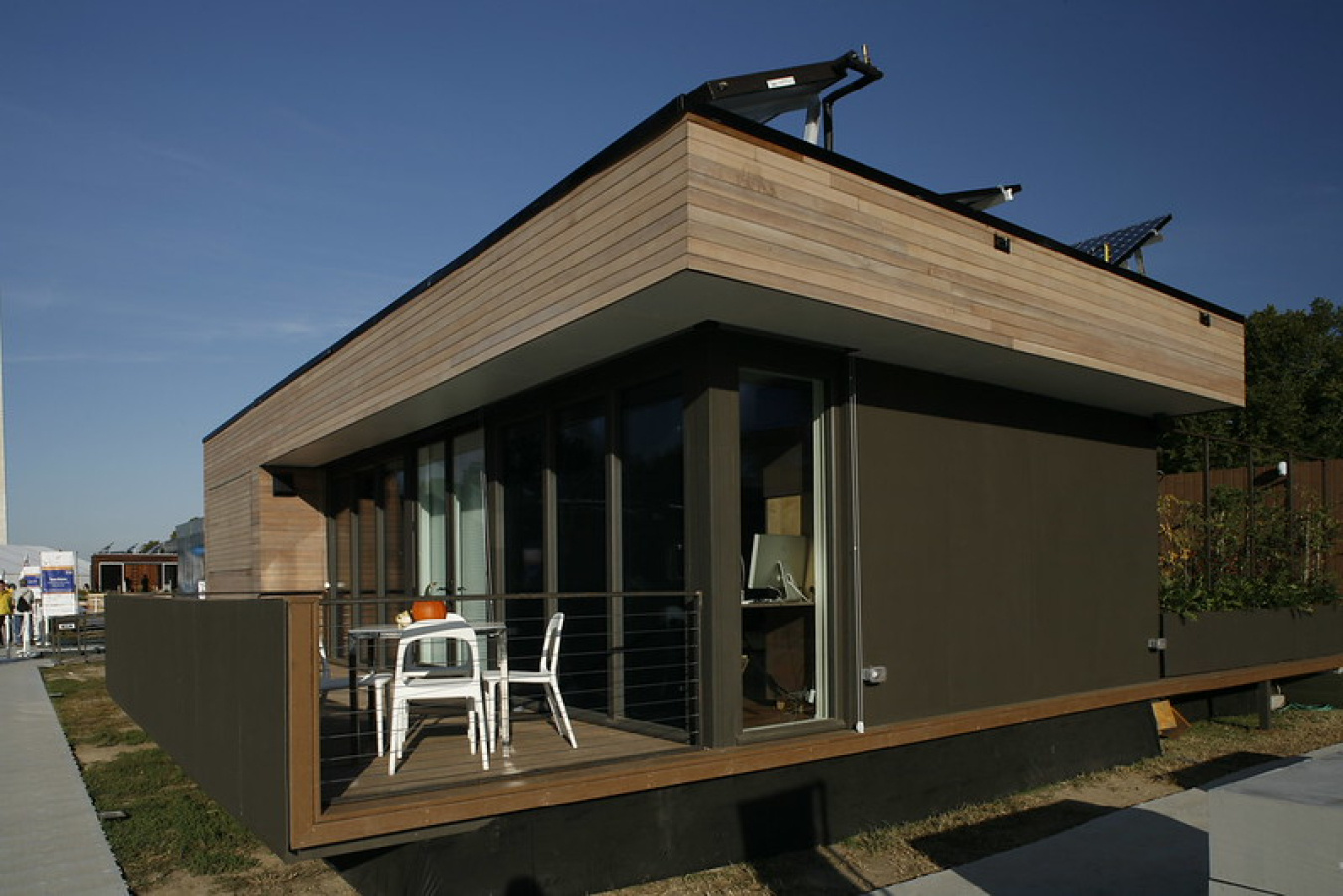
Curio.House, the home designed by Team Boston, is designed to trigger curiosity about how well-designed homes can help save energy and money. The team has satisfied that curiosity by incorporating an energy monitoring system into its home. This system provides real-time feedback so homeowners can take control. By knowing exactly how much energy they are using and when they are using it, they can choose to adjust their habits to reduce their energy bills. "Heat glass" technology, in a traditional-looking window, also captures low-angle winter sun energy in an embedded thermal mass to provide warmth throughout cold New England nights.
Virtual tour and photos
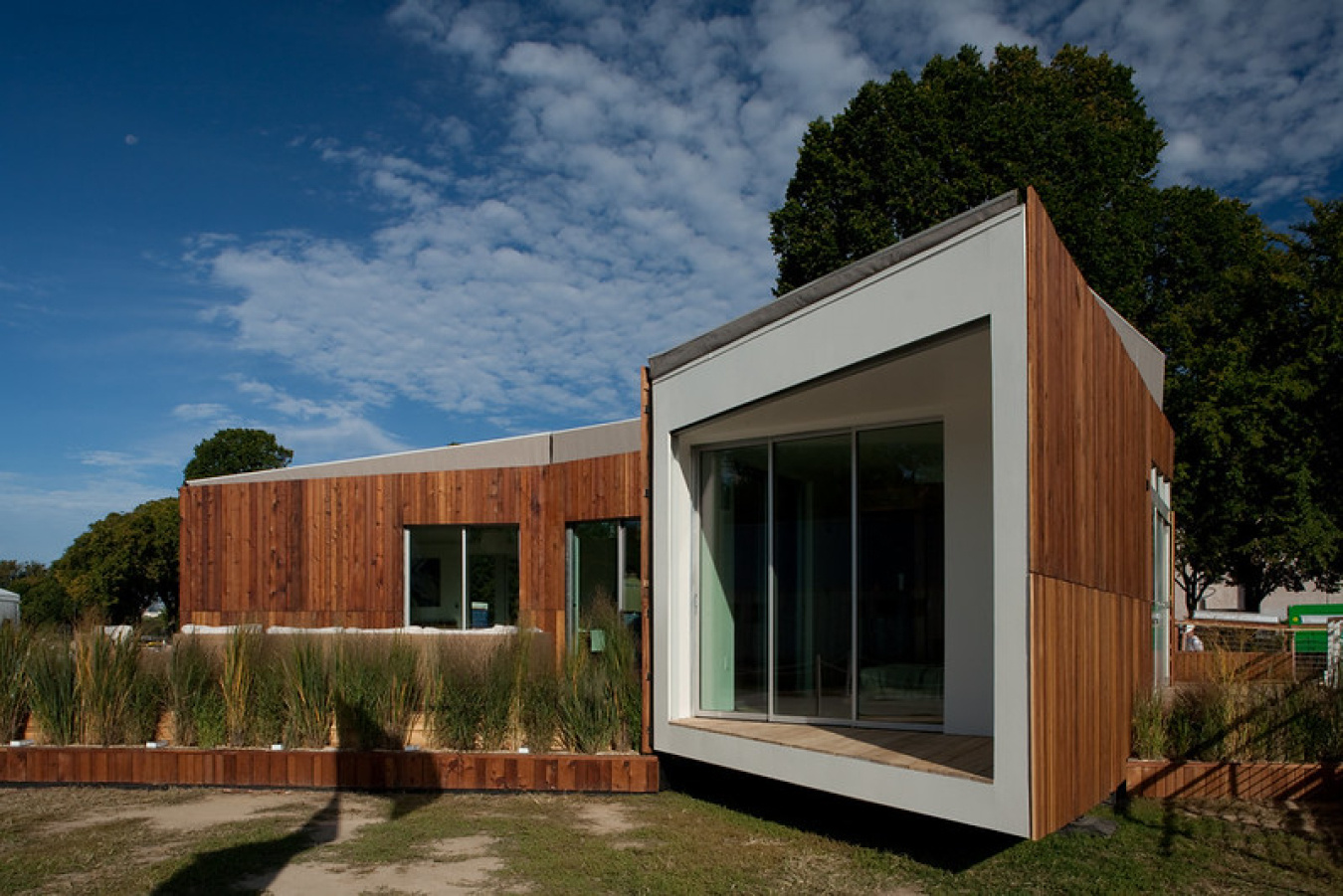
Refract House, as the team refers to its creation, takes full advantage of the sunny California climate. The team designed a unique system to get guests interested in the technology before they even enter the house. Information panels pose questions about the technologies, and guests can text a code or scan a barcode with their phones. They then receive answers as well as more information sent directly to their device. A monitoring system displays the house's performance and works with an iPhone application to let users control temperature and lighting from anywhere.
Virtual tour and photos
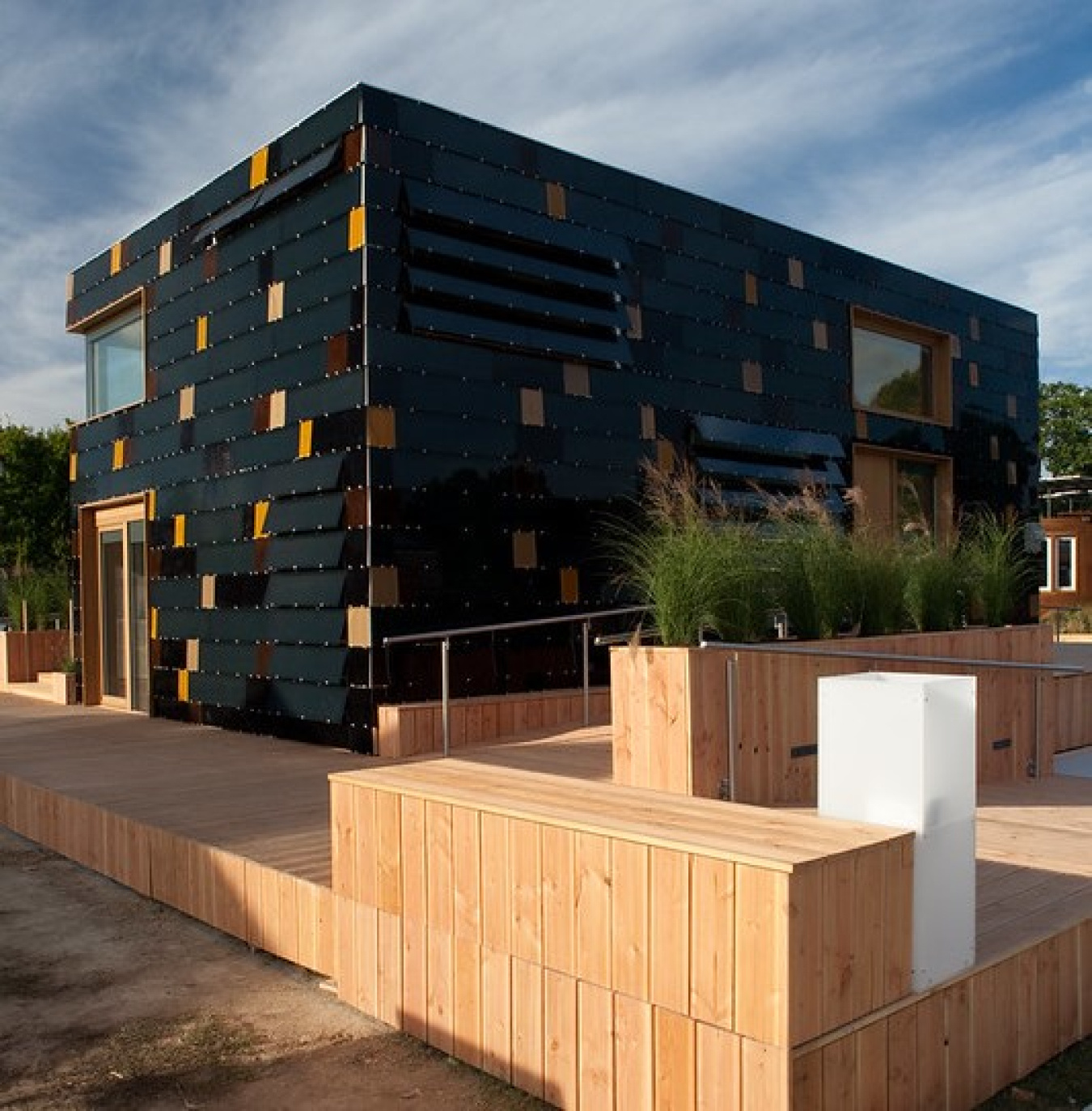
The Team Germany philosophy was to "push the envelope with as many new technologies as possible." Team Germany started with a "focus on the façade," creating a house that is essentially a two-story cube. The façade's highly insulating, custom vacuum insulation panels plus phase-change material in the drywall maintain comfortable temperatures. Automated louver-covered windows block unwanted sunlight, and the house has a bed and other furniture and appliances that fold away or serve multiple purposes. A boiler integrated into the heat pump system allows the system to provide domestic hot water as well as heating and cooling.
Virtual tour and photos
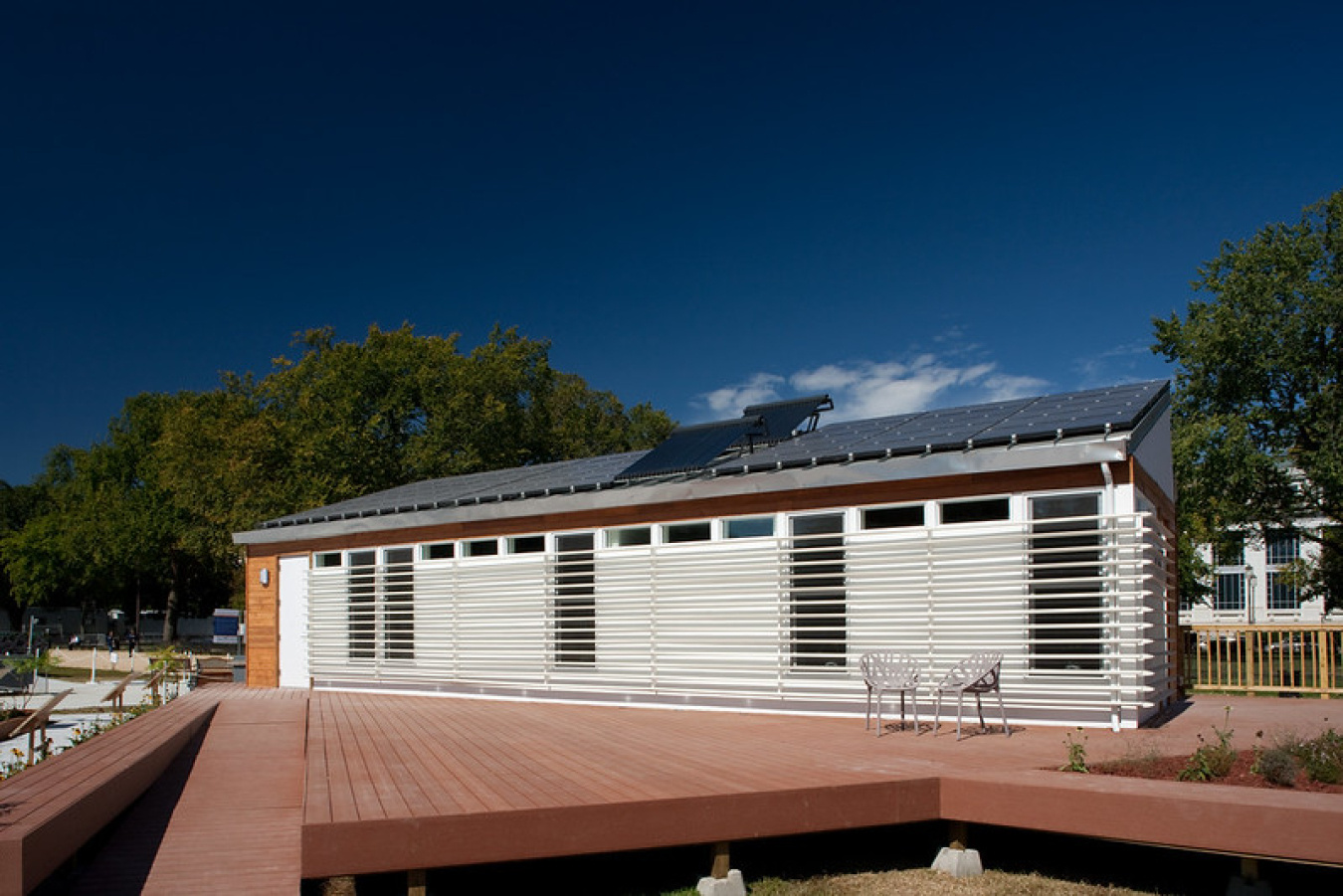
The Show-Me House consists of a single module that is 15 by 50 ft (4.6 by 15.3 m). It is capped by a hinged roof, which is roughly 14.5 ft (4.4 m) at its highest point. Structural insulated panels in both the roof and walls provide an impressive R-40 insulation value. The Chameleon Home Automation System, designed by the Missouri team, controls the interior environment. Residents program the system with an interface that is accessible via touch screens throughout the house. Sensors within the structure of the house activate heating or air conditioning to ensure indoor comfort. Chameleon can also control humidity, automatically run appliances at the most efficient time of day, turn lights on and off, and even open and close windows.
Virtual tour and photos
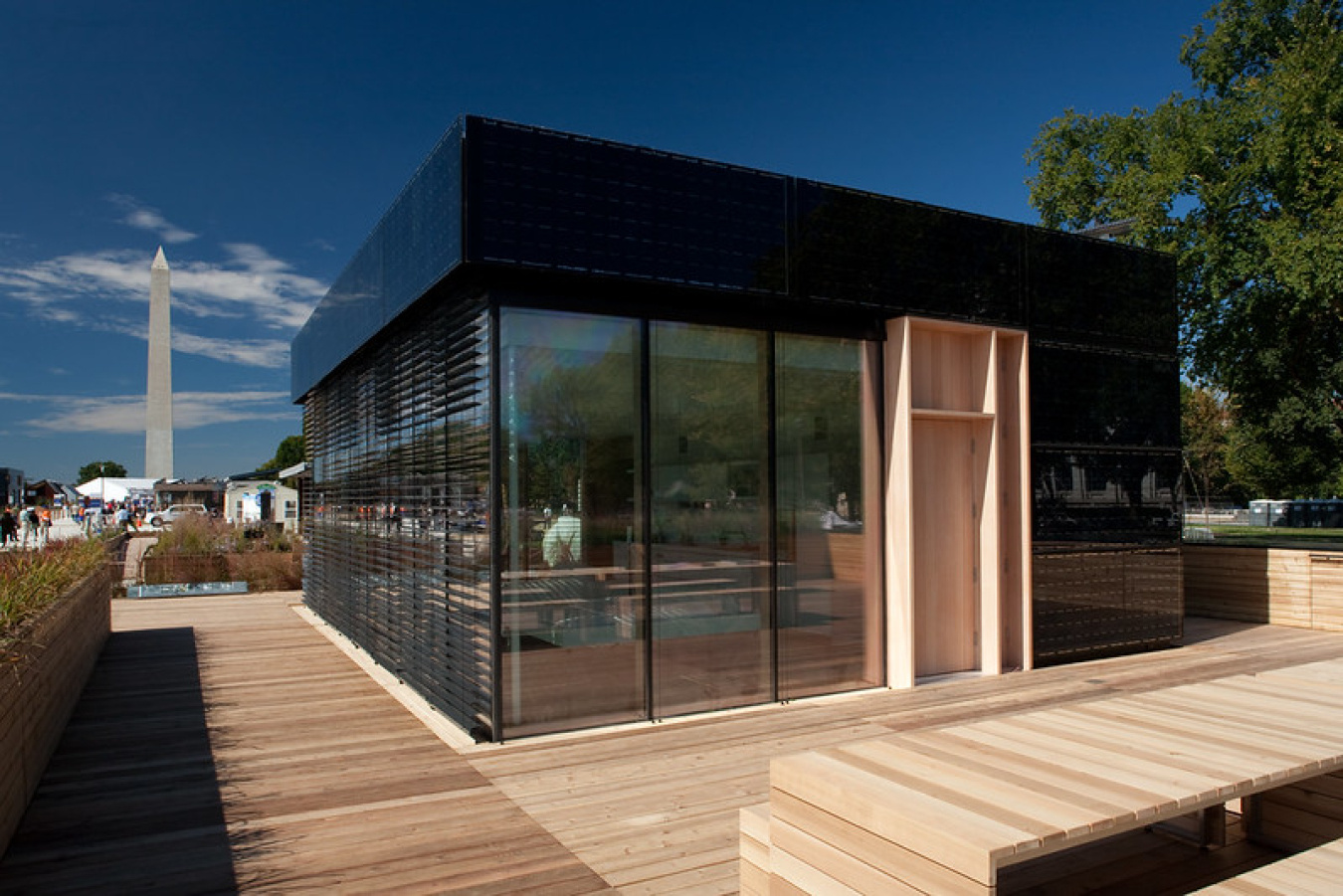
North House is designed to be a "celebration of the small home" and to be light and airy with a strong connection to the outdoors. As such, it features highly insulated, quadruple-glazed, floor-to ceiling windows on three sides and one large multifunctional room in which nearly everything folds away when not needed. Salt hydrate phase-change material is used in the floor and an extensive computer "living interface system" allows residents to easily see and control their energy use and includes desktop, embedded, and mobile components. External automated coverings on the glass hold in heat at night and keep it out in summer and R-60 insulation is used.
Virtual tour and photos
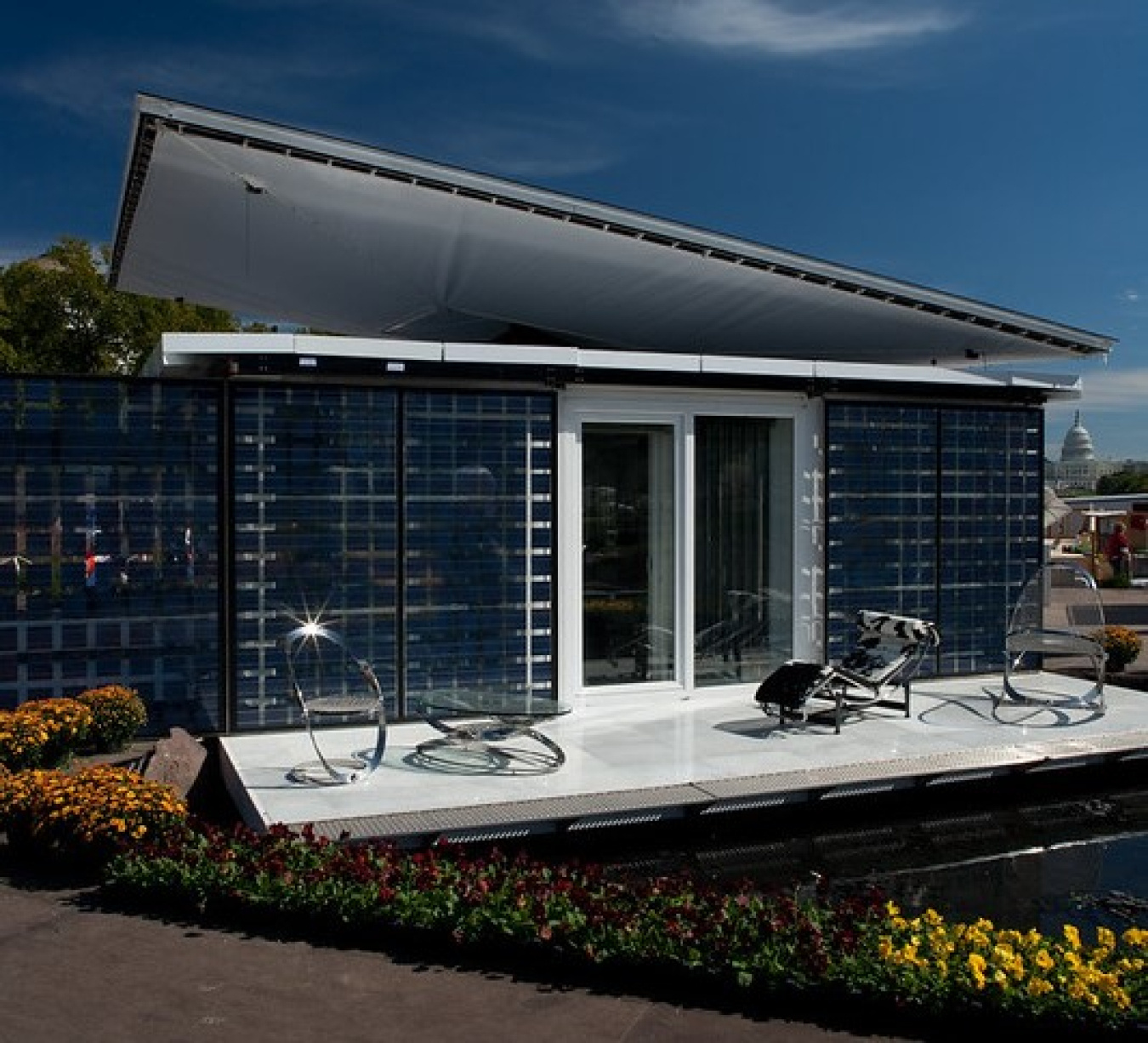
The team characterizes its house style as "very, very modern." Team members call it the "Black and White House, but with an orange touch of color" because it meets the yin and yang of high efficiency and comfortable living. There is a separate kitchen-bath-utilities module and a sunroom for passive solar heating, but otherwise, all the living and sleeping area is provided by a single large, multifunctional space. A combination of daylighting, partially reflected through skylights in the house's pyramid top, and LED (light-emitting diode) lights, programmed to simulate dawn or dusk or be turned on by an alarm clock, give this house a special feel.
Virtual tour and photos
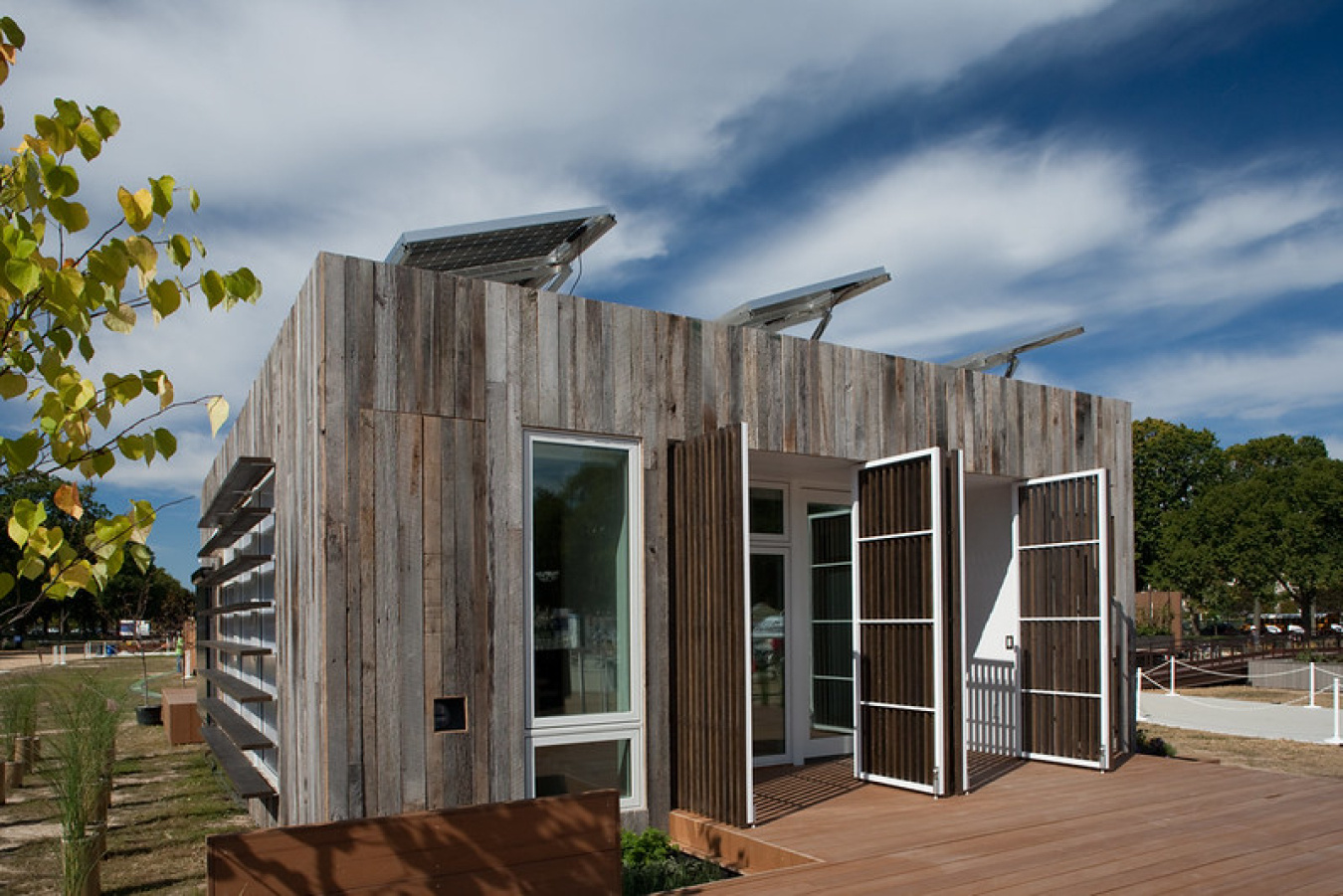
Ohio State's "Ohio-centric" house features local materials, local appliances, and a façade of reclaimed barn wood to honor the heritage of the state. The layout features an open interior space, a "blank canvas" that transforms from kitchen to dining room to entertainment room to bedroom as needed. An operable rain screen, part of the house façade, and louver window shades on the southern façade allow occupants to admit sun and heat into the house in winter or shade the interior space in summer.
Virtual tour and photos
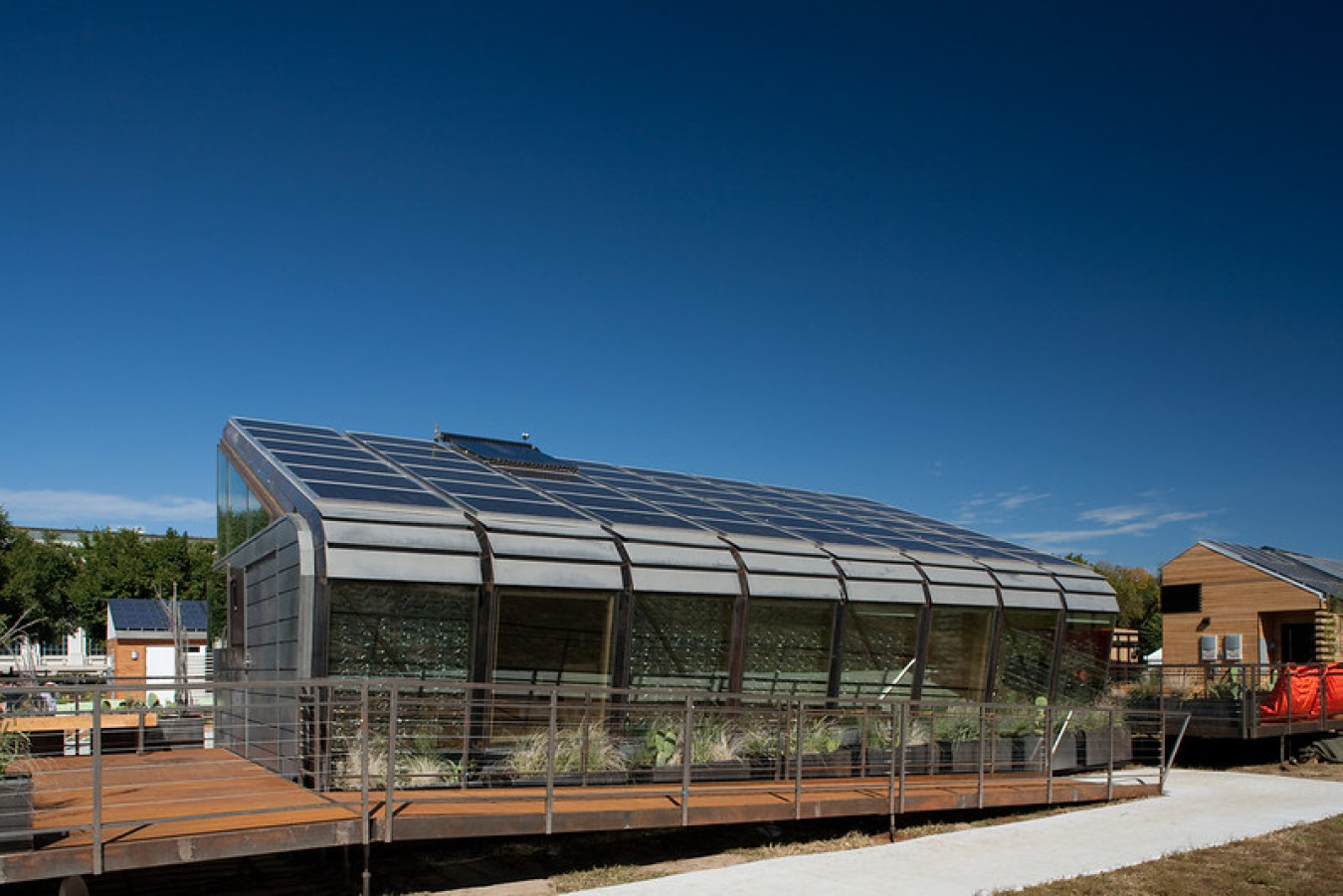
In nature, seedpods protect and nourish seeds as they begin to grow. The University of Arizona’s SEED [pod] is designed to be customizable for different tastes and climates. It incorporates both passive and active strategies to reach homeostatic conditions—a constantly changing balance of inputs and outputs to achieve a stable and comfortable climate. The team members emphasize that they achieved energy efficiency and comfort in the SEED [pod] by working with nature, looking first to passive lighting, heating, and cooling strategies. Passive strategies include natural ventilation, efficient volume management, strategic insulation placement, and shading strategies. To reduce heating and cooling needs, the team designed a vacuum-formed clear plastic water wall to fit within the south wall. The wall acts as a "heat sink" by deterring heat from entering the house during the day and releasing it slowly after the sun goes down. In addition, the water wall allows natural light through, and the water acts as a light filter.
Virtual tour and photos
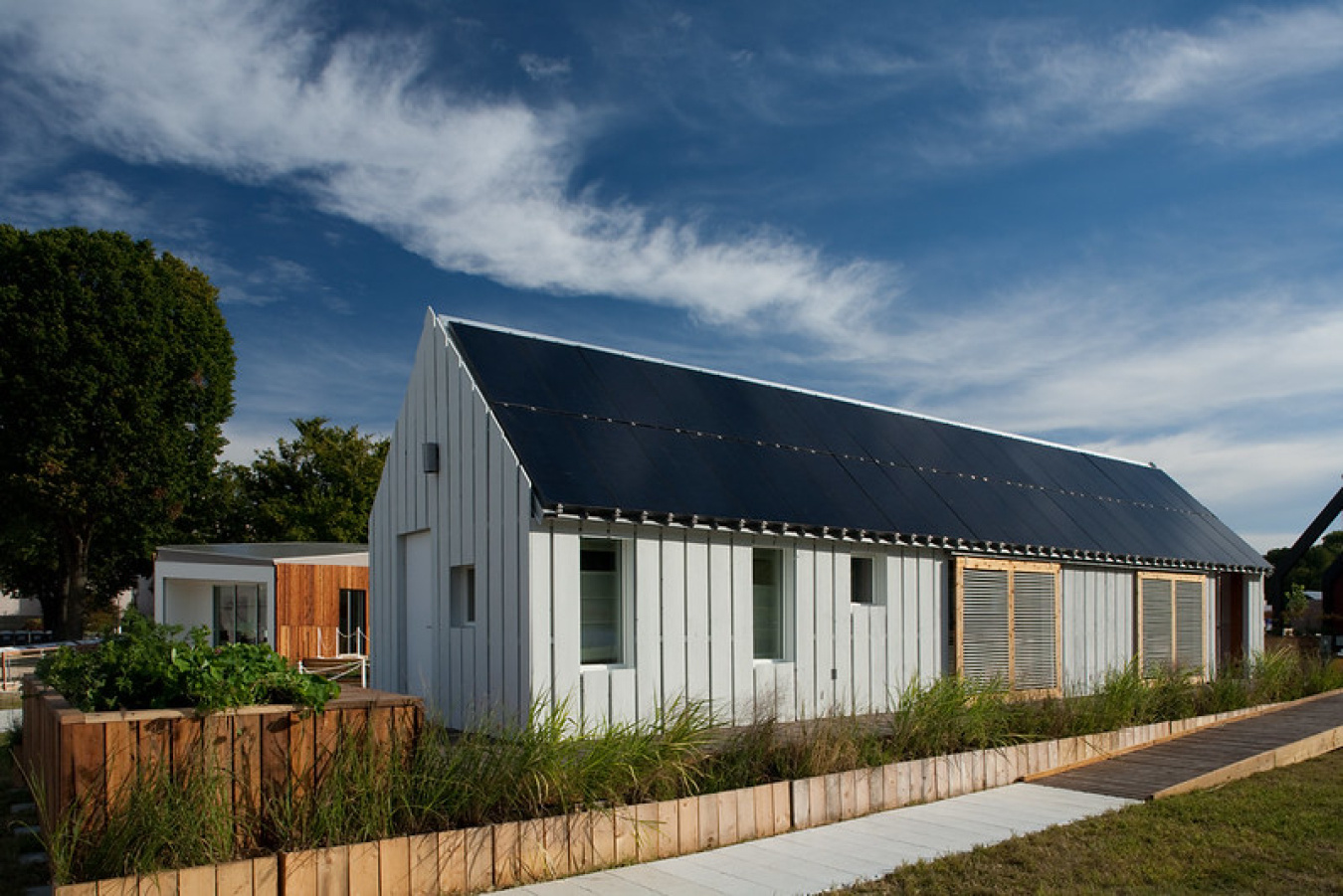
The team’s Gable Home produces up to four times the energy it needs yet looks like a traditional home. It has 100-year-old barn wood and features a familiar gable roof profile. Inside, the newest structural bamboo combined with optimized windows, insulation, and appliances mean it can be heated with a single hair dryer. Laminated bamboo was used for structural elements, as it is stronger than wood, and a high-efficiency, small air volume heating, ventilation, and air conditioning system was custom-designed for the small needs of the house.
Virtual tour and photos
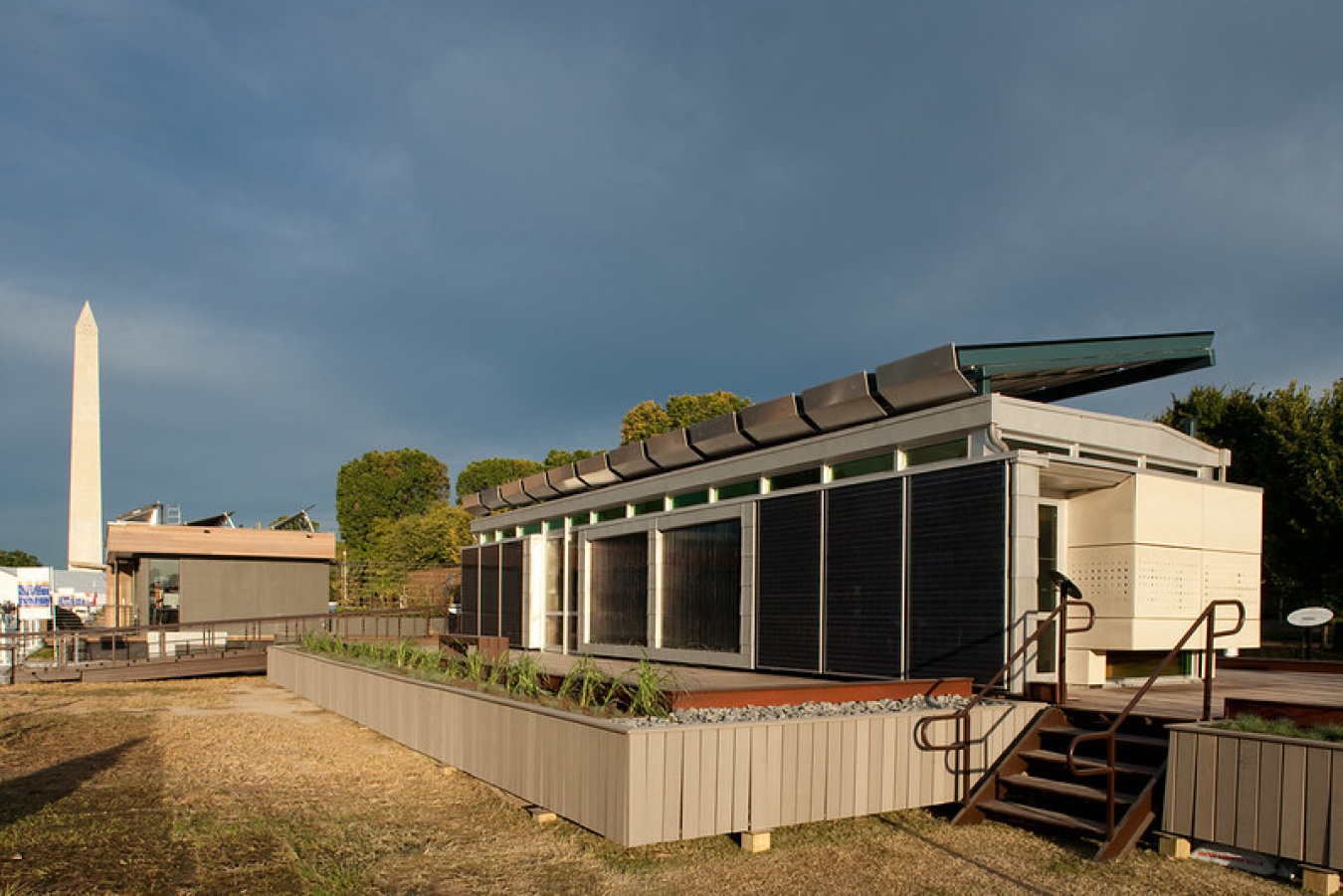
The s•ky blue house is constructed with active energy-efficient systems and technologies and is described by team members as eclectic, historic, and modern at the same time, a combination of human-made and natural energy sources, each individually and collectively controlled. The s•ky blue house embodies Kentucky's historic and indigenous breezeway house design—a rectangular building with a central open space that naturally ventilates the house on sultry summer days. The house features a unique computer monitoring system that is informed by a weather-monitoring system developed at the university. Lighting strategies also balance natural and artificial light through an adaptive and controllable system.
Virtual tour and photos
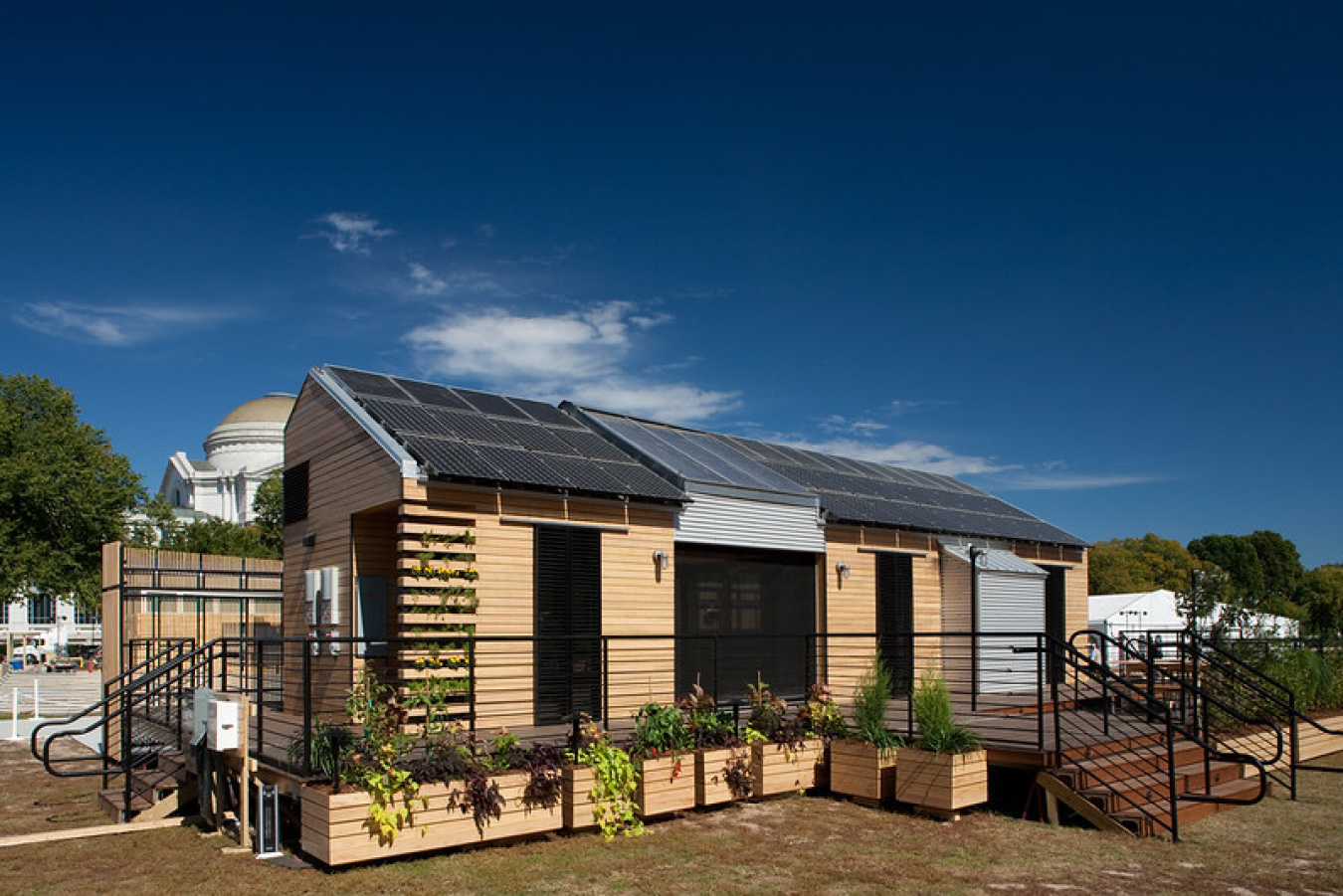
BeauSoleil, which means "sunshine" in Cajun French, is the name of the house designed and built by the team from the University of Louisiana at Lafayette, first-time competitors in the Build Challenge. With a focus on the culture and lifestyle of south Louisiana, BeauSoleil combines traditional, local design concepts with the latest innovations in energy efficiency technology. BeauSoleil's exterior cladding is a rain screen system, which allows air to circulate between the siding and the wall to minimize heat gain. Walls are made of 6.5-in. (16.5-cm) structural insulated panels, which provide double the insulation of stud walls and reinforce the strength of the building envelope.
Virtual tour and photos
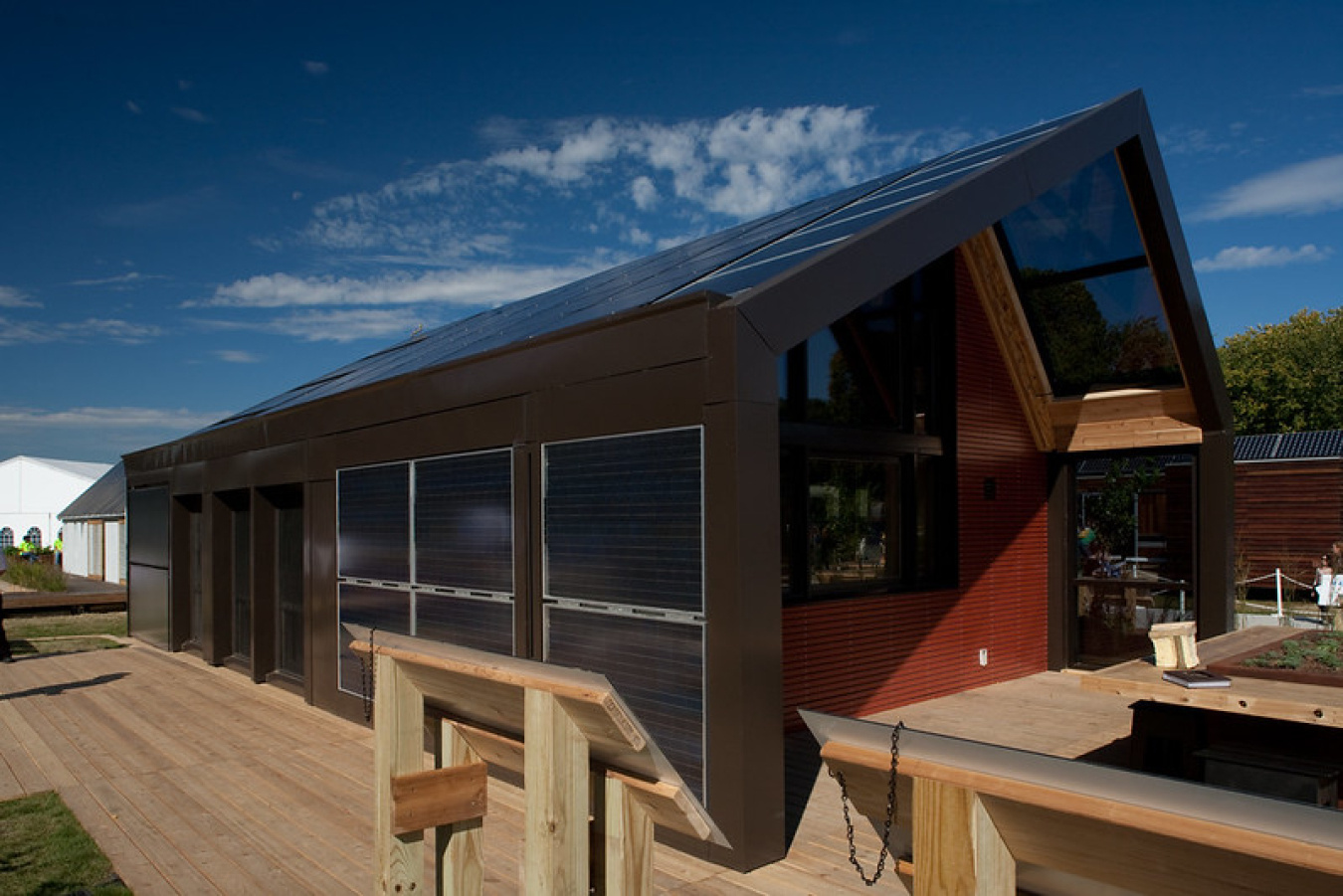
The University of Minnesota's 2009 team created a house with an iconic new look to meet the challenges of heat loss in an extremely cold climate. The gabled roofline, resembling a "real" house, is one of the features designed to appeal to a large group of consumers who might not want to live in a "futuristic" house. Windows are triple-paned, filled with gas, and have special insulating shades. The wall and roof insulation have high R-ratings of R-50 and R-70, respectively. Radiant, under-floor heating uses hot water to heat the house in winter and recharge an innovative desiccant dehumidification system in the summer.
Virtual tour and photos
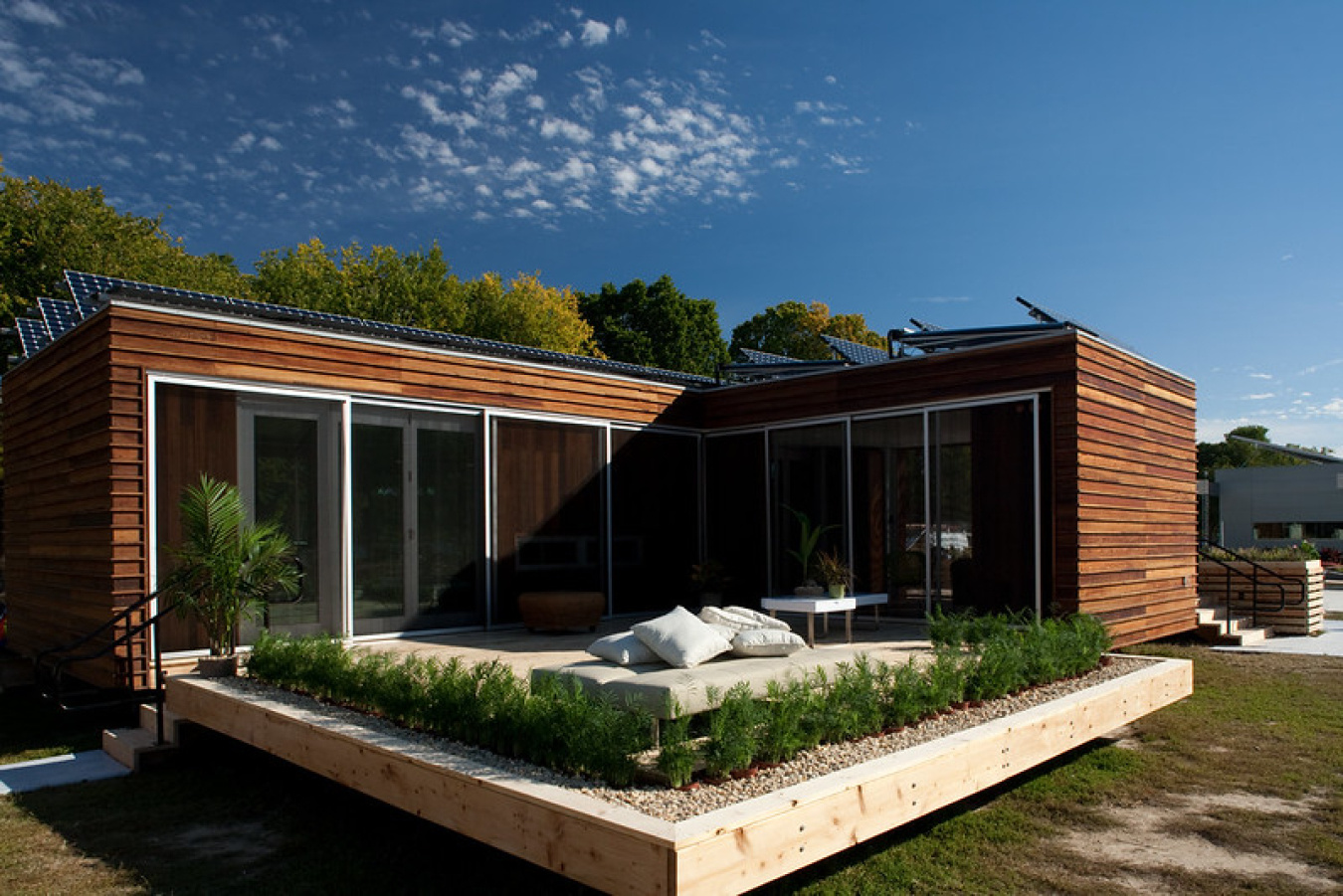
The Puerto Rico team planned its house as a model energy-efficient dwelling for the Caribbean. The L-shaped 2009 entry clearly looks to the outside and responds to the opportunities and challenges of the Caribbean climate. The two legs of the L are connected by an outdoor patio, but only one leg is mechanically conditioned. The other is enclosed largely with special screens that allow occupants to look out and cooling breezes to pass through but block nearly 90% of the sun's rays. The conditioned leg uses those screens as well but also has sliding glass doors that can be closed off when conditions warrant.
Virtual tour and photos
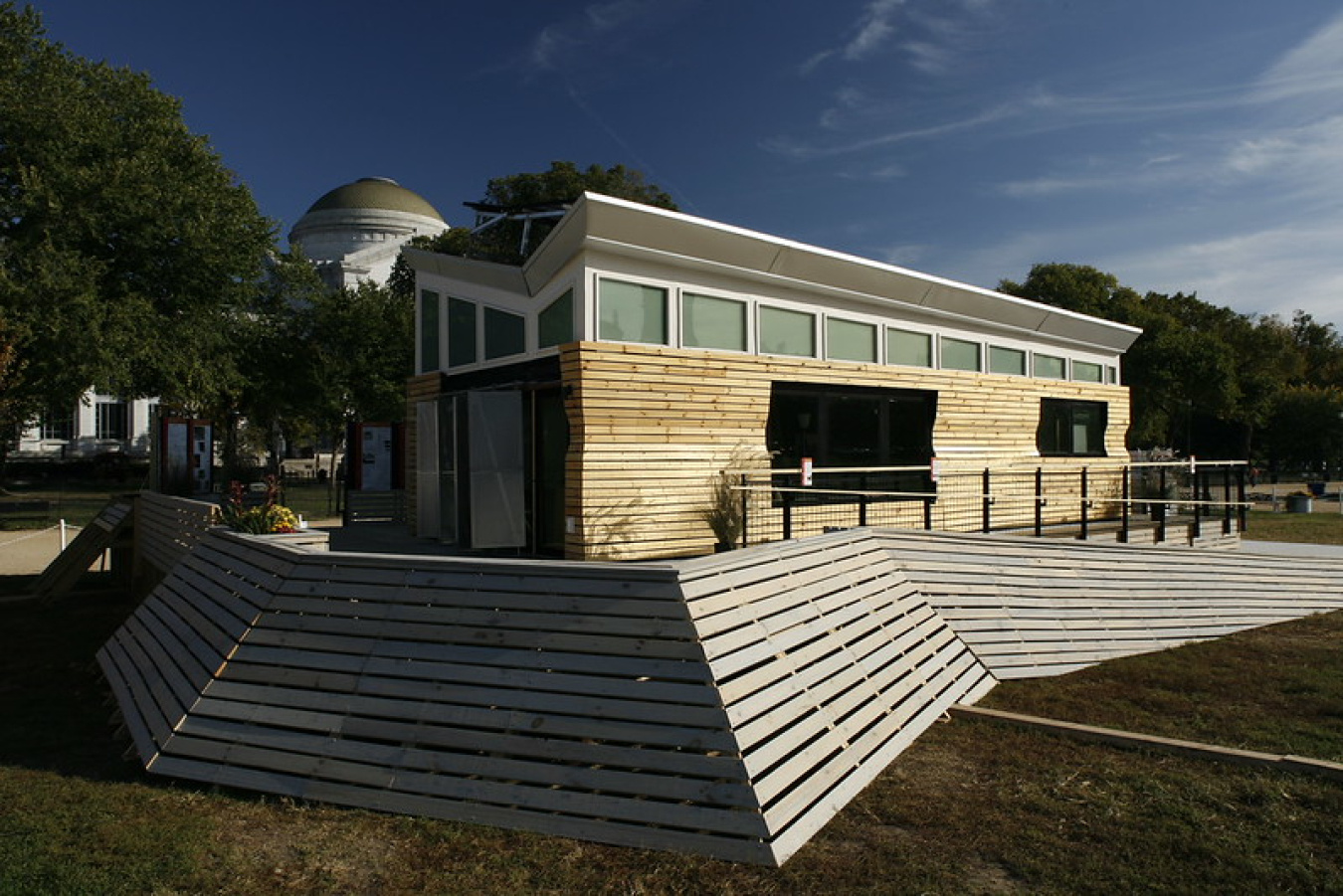
The University of Wisconsin-Milwaukee's Meltwater house incorporates numerous waste materials from the construction of the Aldo Leopold Foundation headquarters. Their house not only is designed to mimic the glacial-carved lines of their rolling landscape but also is built with materials gleaned from construction "waste"—including some timber planted by Aldo Leopold himself. The butterfly roof channels water to a reflecting pool, which irrigates plants on the deck. After the competition, a cistern system will be used to water marsh and prairie grasses planted nearby.
Virtual tour and photos
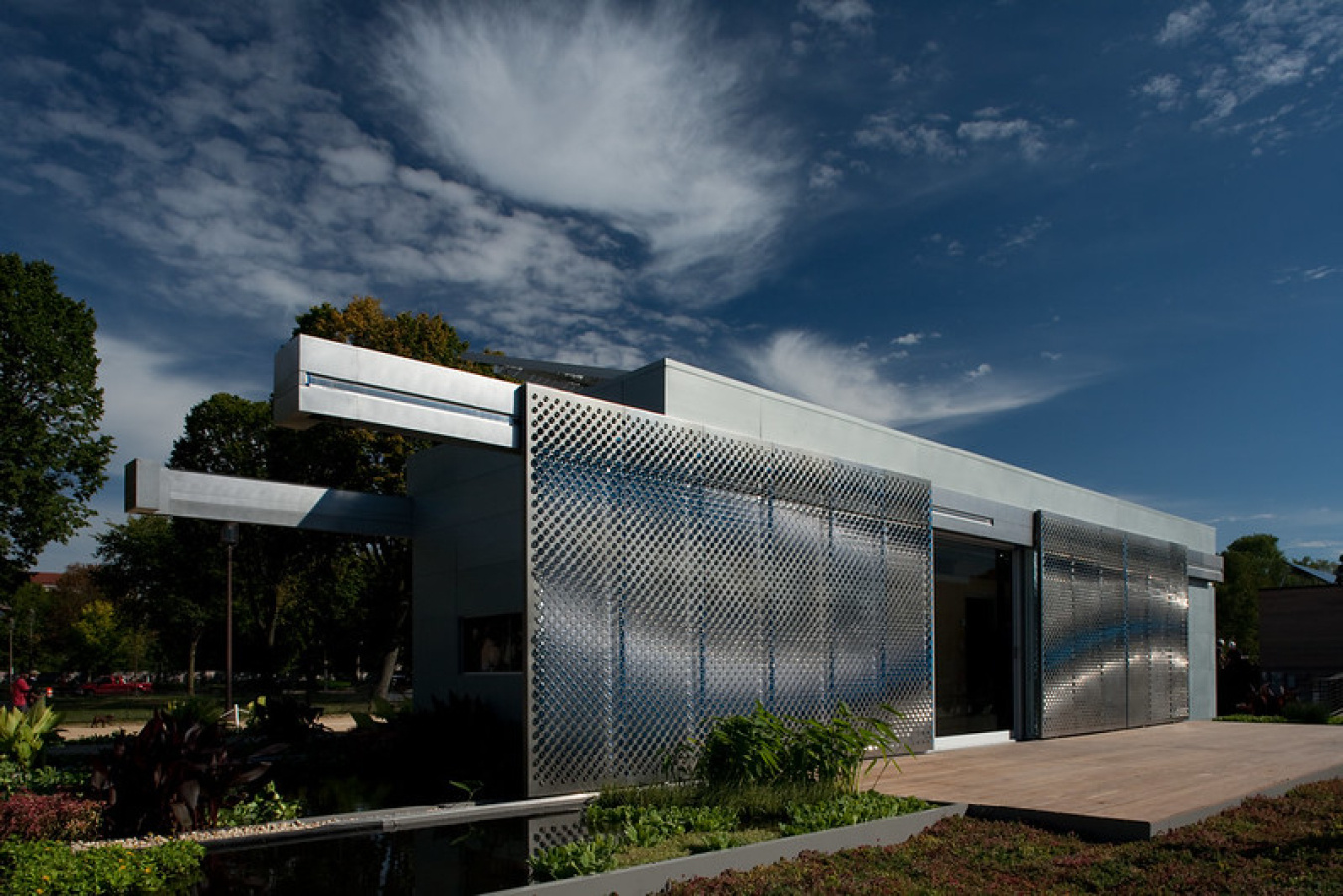
The central theme of the Lumenhaus is light. A pavilion design features sliding north and south walls made of glass. These glass walls can be opened to allow air and light in and expand the footprint of the house onto the decking and outdoor space. Responsive architecture features include the ability to operate the heating, cooling, lighting, insulation, and sunshading with a computer or iPhone, which receives environmental condition data from sensors inside the house and a weather station outside the house. A cement slab floor, heated by an efficient geothermal heat loop and heat pumps, also provides radiant, evenly heated floors.
Virtual tour and photos