



Eighteen teams competed in the 2005 Build Challenge in Washington, D.C.
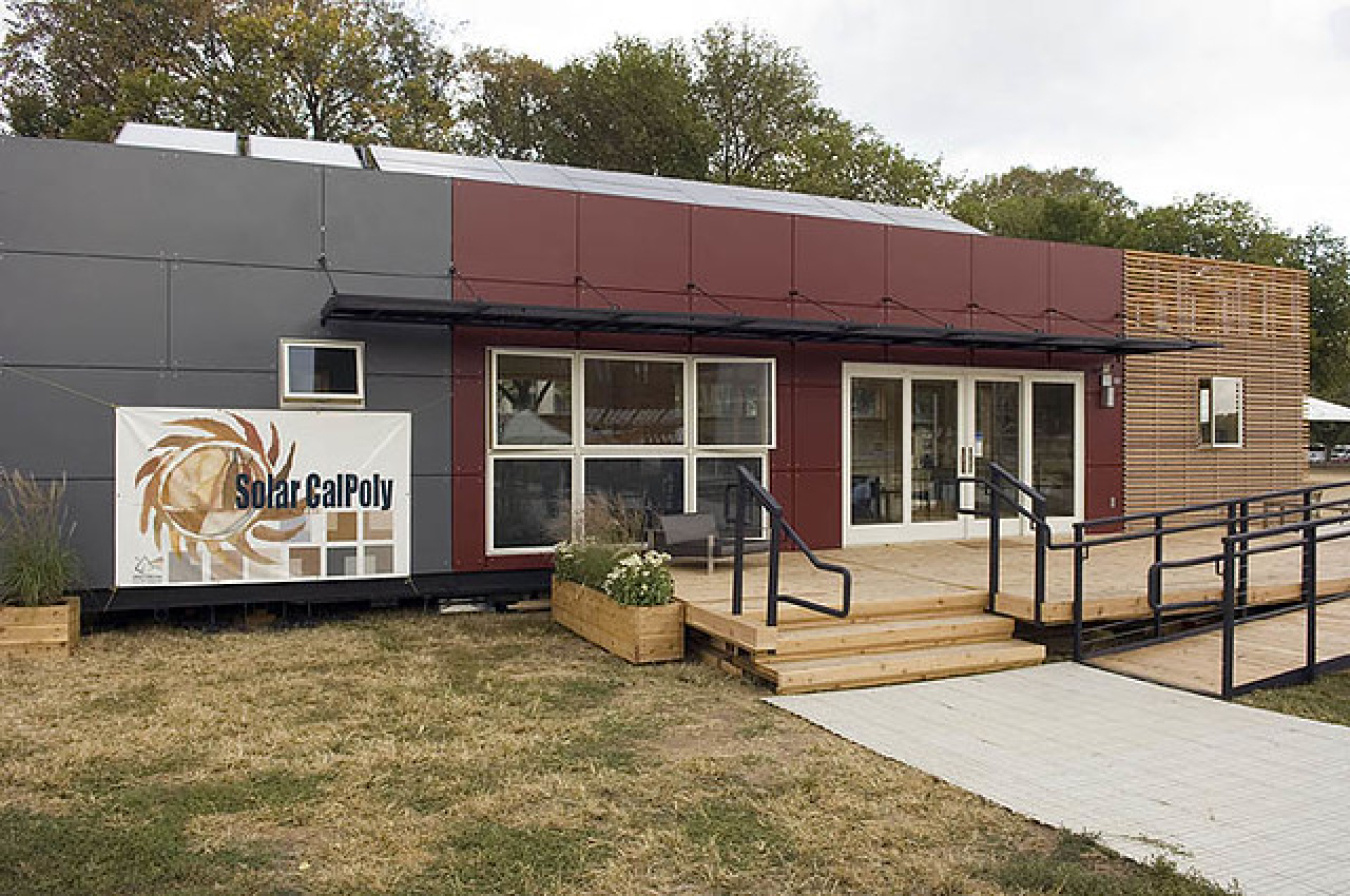
The 2,394 miles that separate the university from the National Mall in Washington, D.C., is, literally, the groundwork for this team’s philosophy. The greatest land distance any team will travel to the competition, along with the desire to fit everything in one truck, led to what the students fondly call the "one truck solution."
Although the constraints of the competition deliberately require all teams to minimize, Cal Poly students decided to take the simplicity concept as far as they could. While some schools chose to automate their homes as much as possible, Cal Poly took the opposite approach. This means making a house that is "switch-rich"—plenty of operable windows, shading devices, and user-friendly controls—and relies less on mechanical equipment for heating, cooling, and lighting. The students say this will allow people to "sail" the house, adjusting the "trim" according to conditions of sun, wind, and temperature.
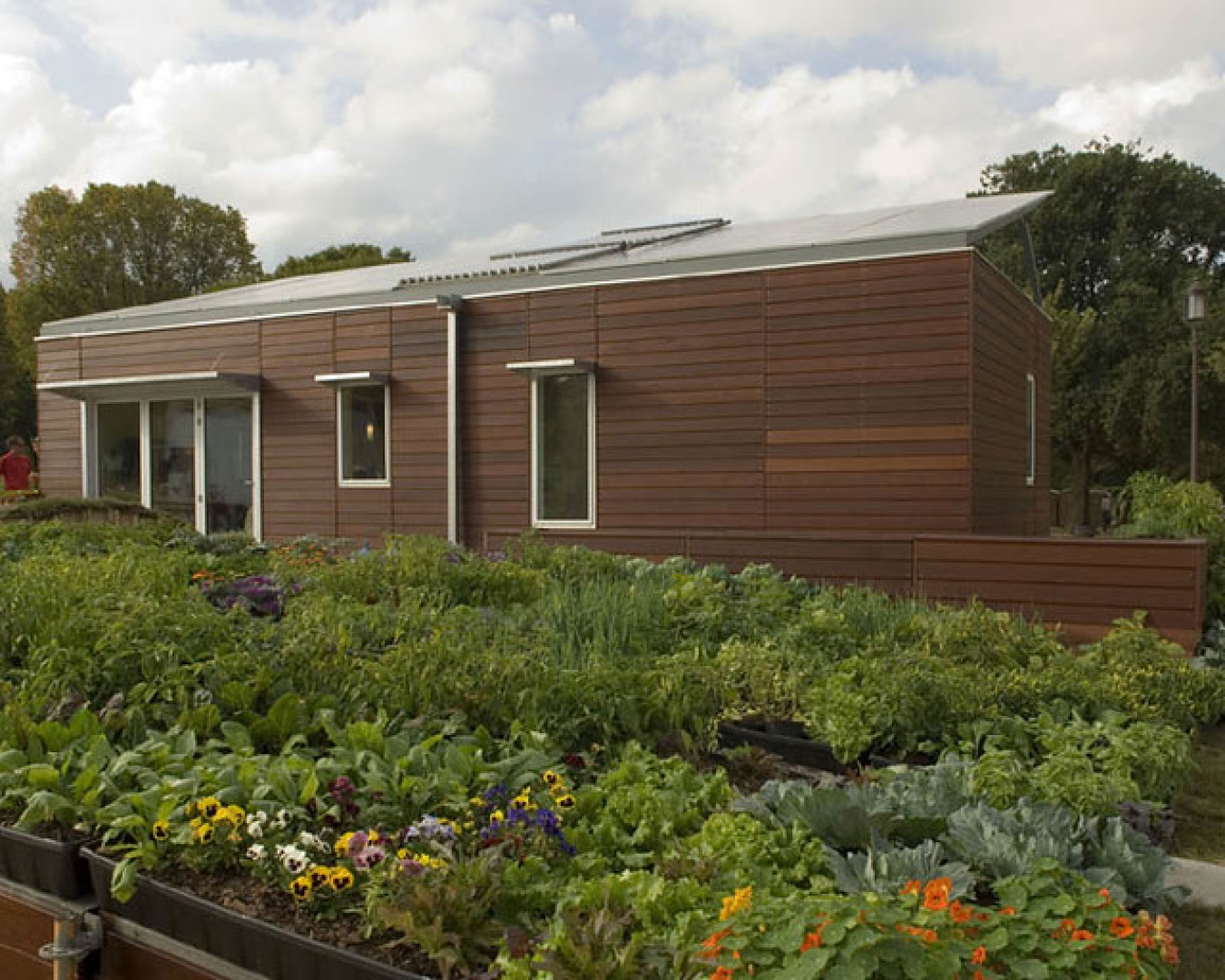
The Cornell house features a custom-designed energy recovery ventilator (ERV). The key component of Cornell's ERV is a rotary wheel composed of silica gel—the same material used in the little packets found inside food and other packaging. In summer, for example, the silica gel absorbs humidity from the fresh air intake before it reaches the air handler. It is then wheeled around to be regenerated, transferring the humidity to the exhaust along with extracted heat. This preconditioning can dramatically reduce the energy consumption of the heating and cooling system. The team also made sure their modular designs complied with HUD guidelines for manufactured housing and sought to create an affordable house that could sell for $50,000 to $100,000.
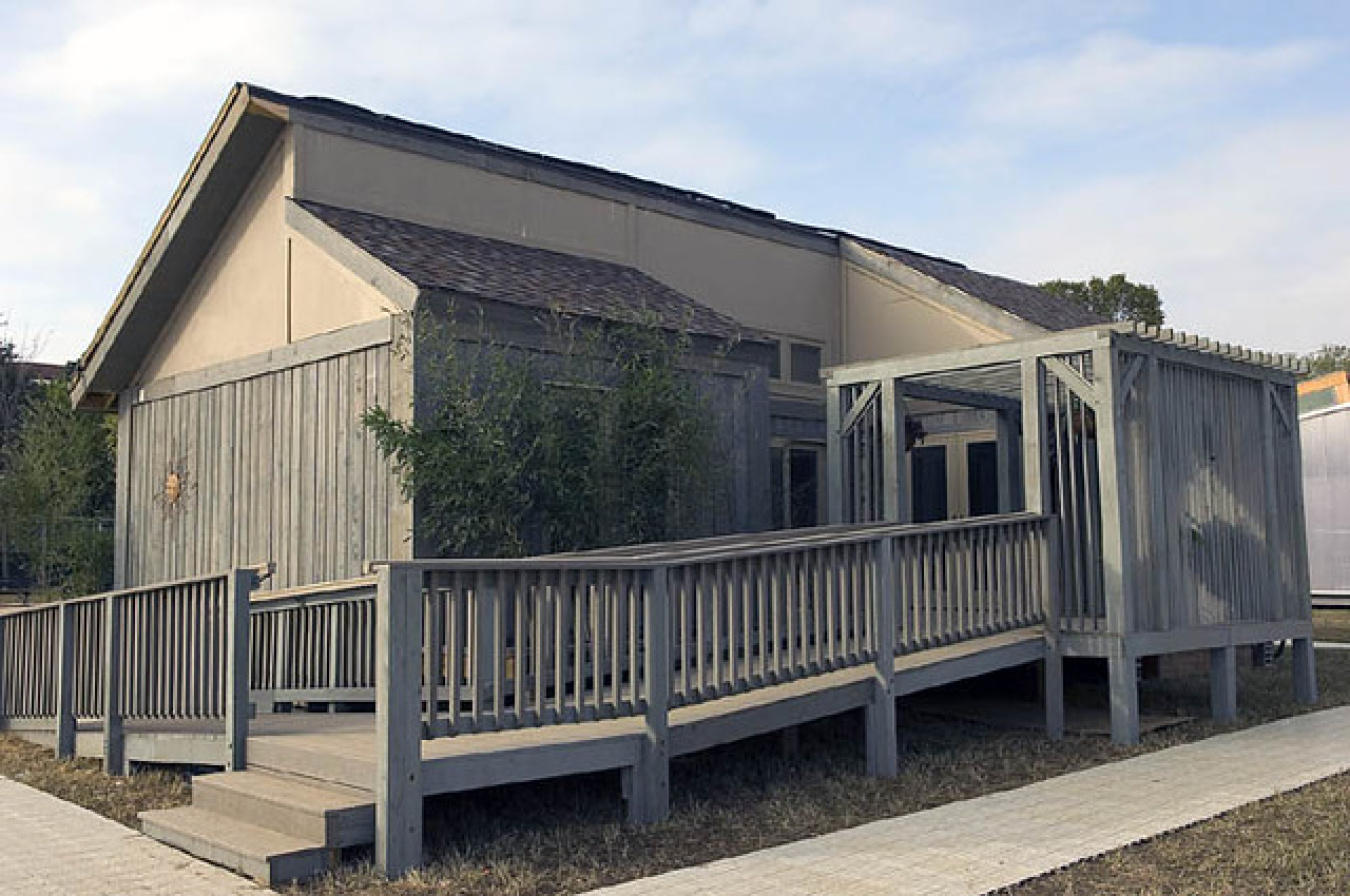
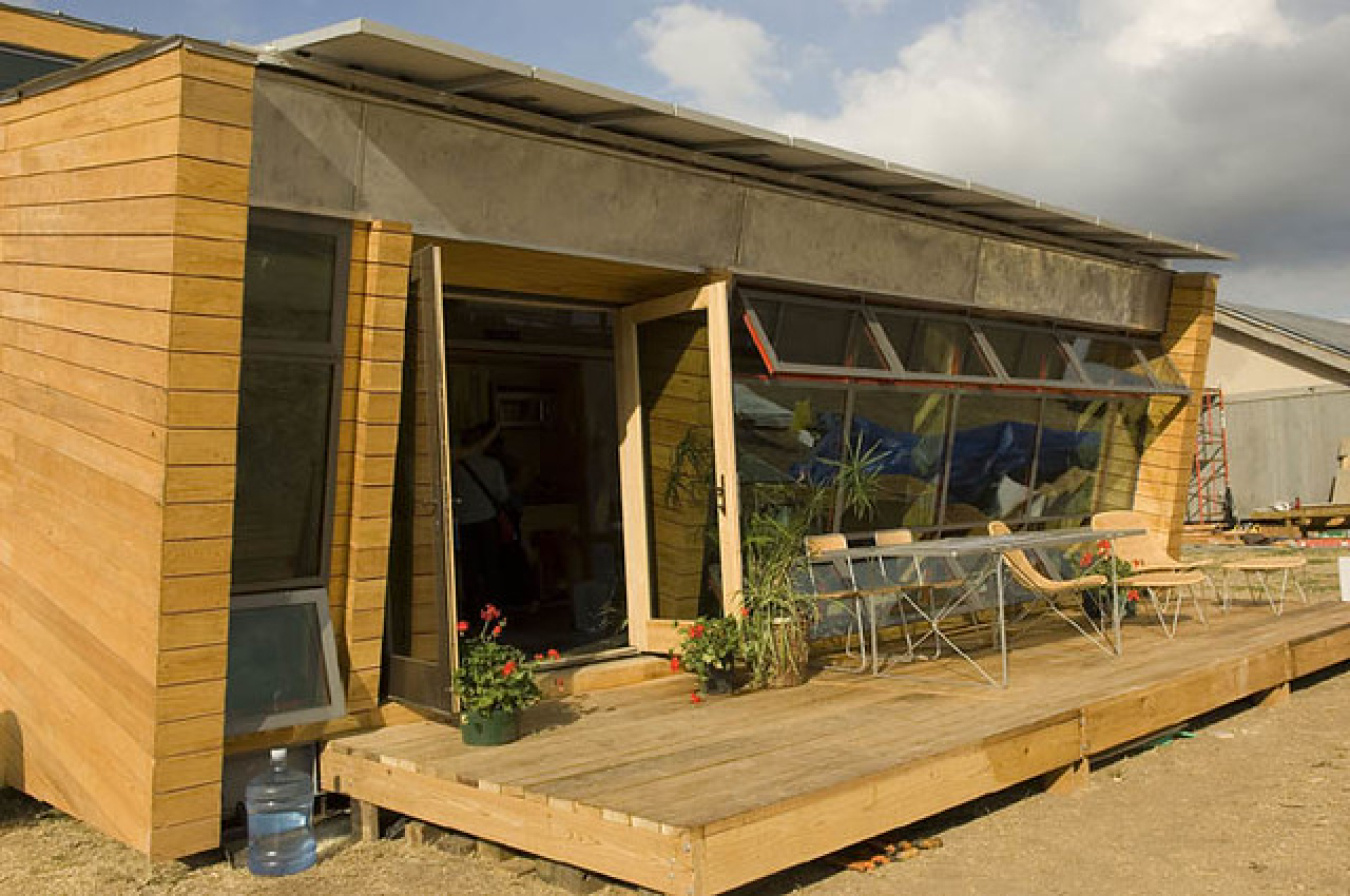
From the outset, the team thought carefully about how to blend the American Arts & Crafts Movement design principles with the challenges presented by the competition. Because many of the historically important structures in Neosho, Missouri—home to Crowder College—are built in the Arts & Crafts style, the students have adopted many of the principles pioneered by Gustav Stickley and later expanded on by Frank Lloyd Wright. The students settled on a modified bungalow design constructed of "pods" that detach and fold down for easy transportation and assembly. For their flooring, trim, and cabinetry, the students are using hardwood from the Pioneer Forest in the heart of the Missouri Ozarks.
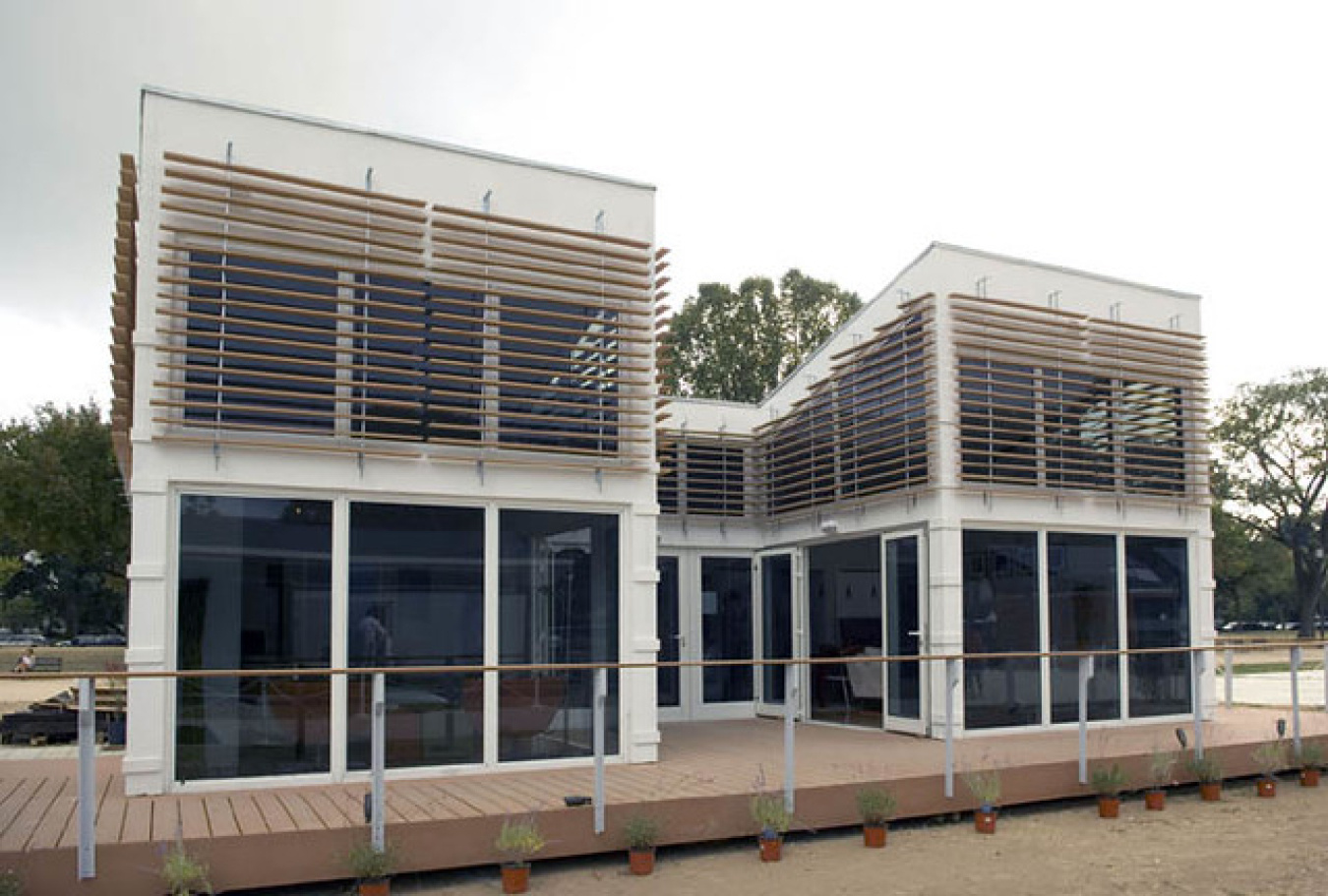
The Florida team's house, at first, appears to be a U-shaped house. But look a little deeper, and listen a little more carefully to the designers, and the house may appear as though it is a square-shaped house. It is the courtyard or entryway space that takes Florida's house from U to square. The walls separating the interior of the house from the courtyard are glass, so it can be difficult to tell where one space begins or ends. Double-swing glass doors can literally extend the interior space, as the courtyard and the living room become one big room. Somewhat unusual for an energy-efficient house, the Florida house is about one-third glass. Operable windows and the use of blinds are a return to the historical ways of heating and cooling.
The Pittsburgh home has its north and south walls tilting 12 degrees to the south, with the tilted north wall made of sheets of polycarbonate, a strong, insulating, translucent plastic, with embedded glass beads. The two-story "service" space it encloses contains all the home's mechanical systems and the bedroom.
To let in natural light and winter sun, the south wall enclosing the "great room" living and office space is all glass, with manually operated shades. The east and west walls are solid insulated panels clad with wood to keep out rain, cold, and unwanted summer sun. The concrete floor of the great room stores heat from both sun and in-floor radiant heat pipes in the winter and keeps cool in the summer.
Video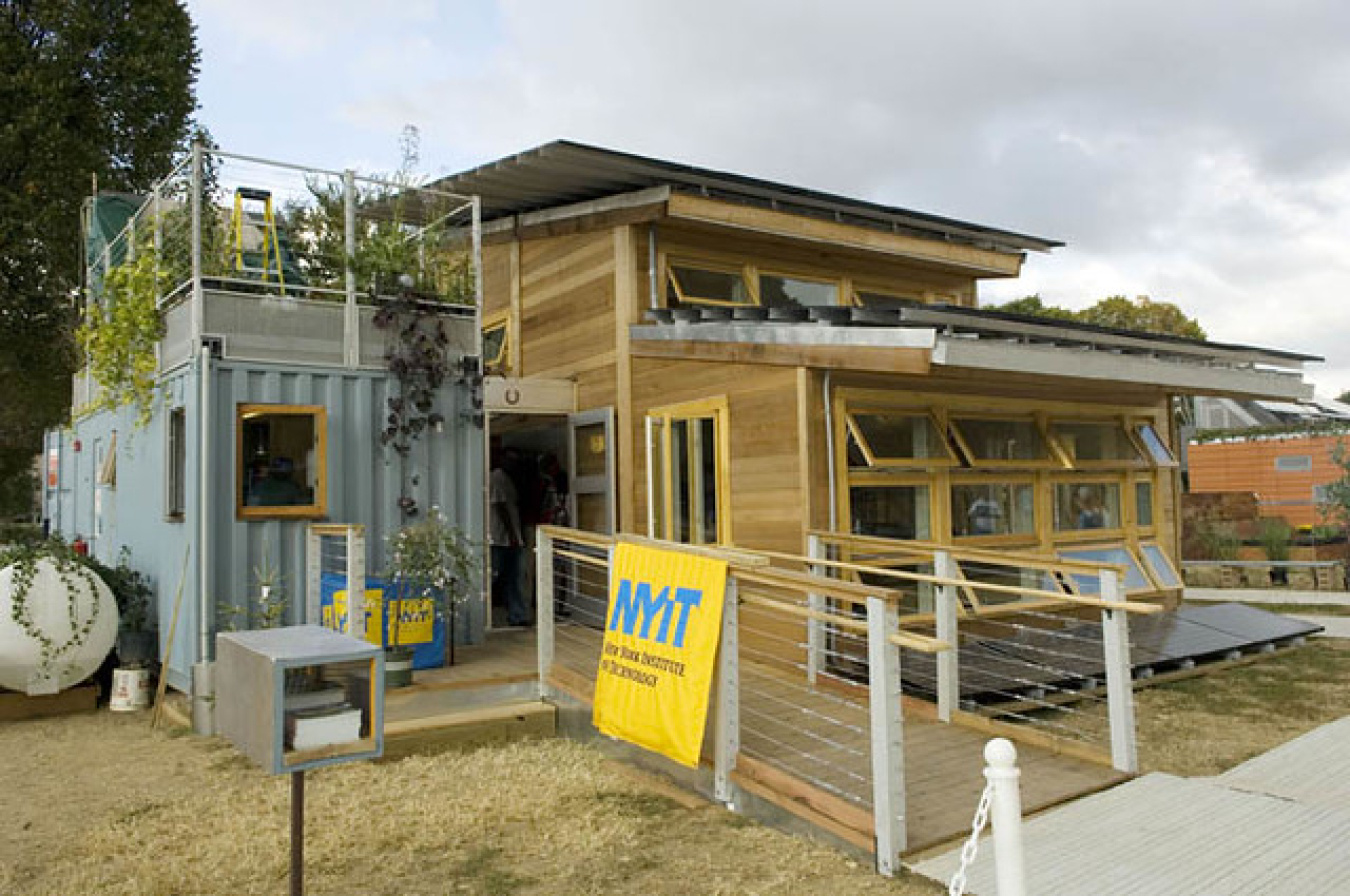
Students from the New York Institute of Technology (NYIT) became intrigued with the idea of packages—and the possibilities therein. Such was their interest that they eventually decided to use a shipping container as an integral part of their house, named "Green Machine/Blue Space." This describes the two main house structures, which are joined by an enclosed sunspace.
The Green Machine structure (the shipping container) contains most of the home's mechanical systems, as well as the kitchen, bathroom, and a roof garden for growing food and collecting rainwater. The Blue Space houses areas for sleeping, relaxing, and working. Soybean insulation and wheat straw building panels were also used.
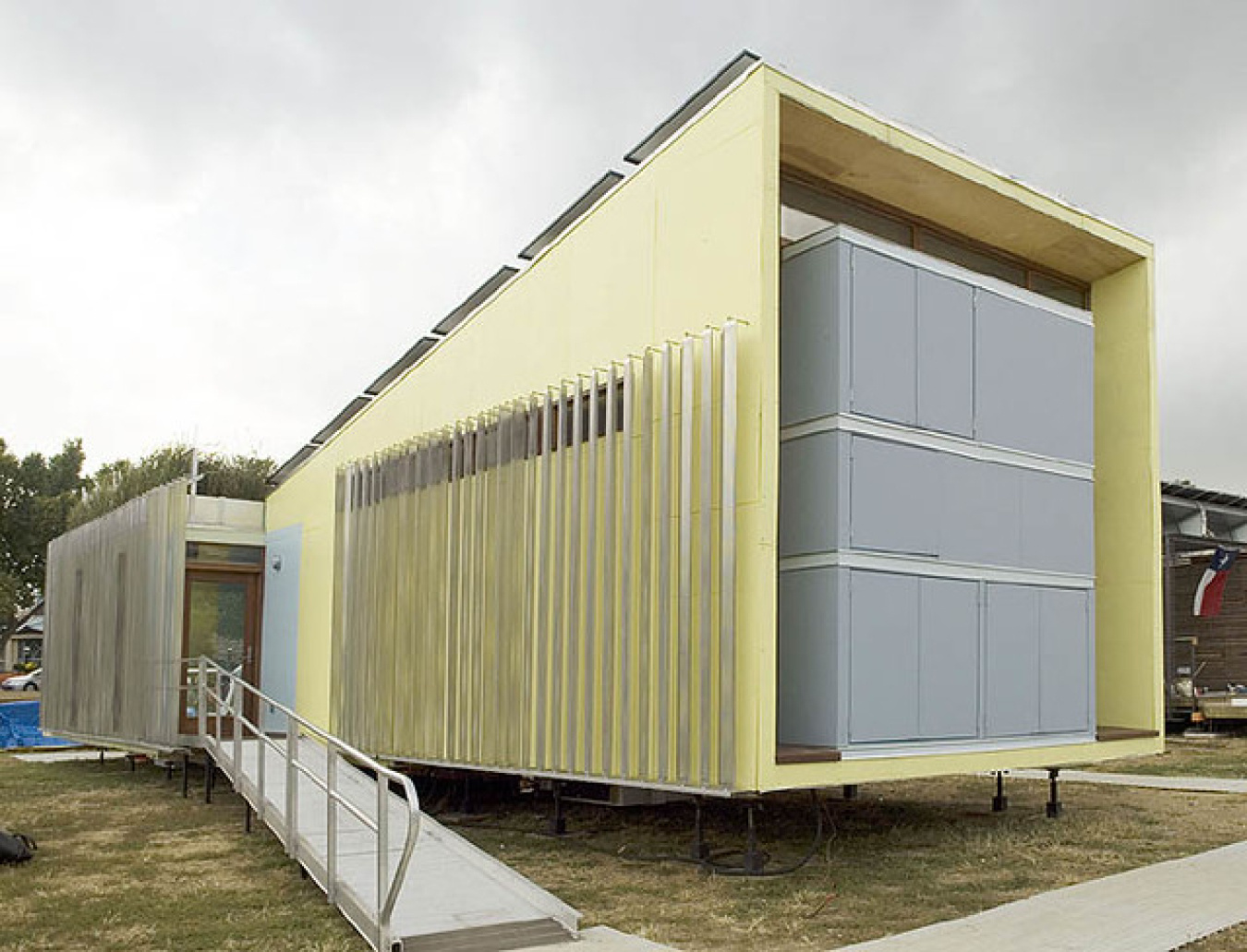
The Rhode Island team sought new directions for energy use and function. They designed the bedroom to convert to a home office with a Murphy bed on one wall matched by a "Murphy office" on another. The convertible theme carries over to the living room side of the house. A large window wall can slide away to open the living area up to merge with the balcony deck, creating a "sidewalk café" to enjoy in nice weather.
Key energy management features of the house are a louvered metallic skin to keep heat out in summer and use of phase-change material to store heat and cold. These and other features are designed to allow the house to operate with no boiler or chiller. The vertical aluminum louvers, backed with extruded polystyrene insulation, rotate. Architecture student Renee Moldovansky thinks the louvers give the house a "chameleon look”.
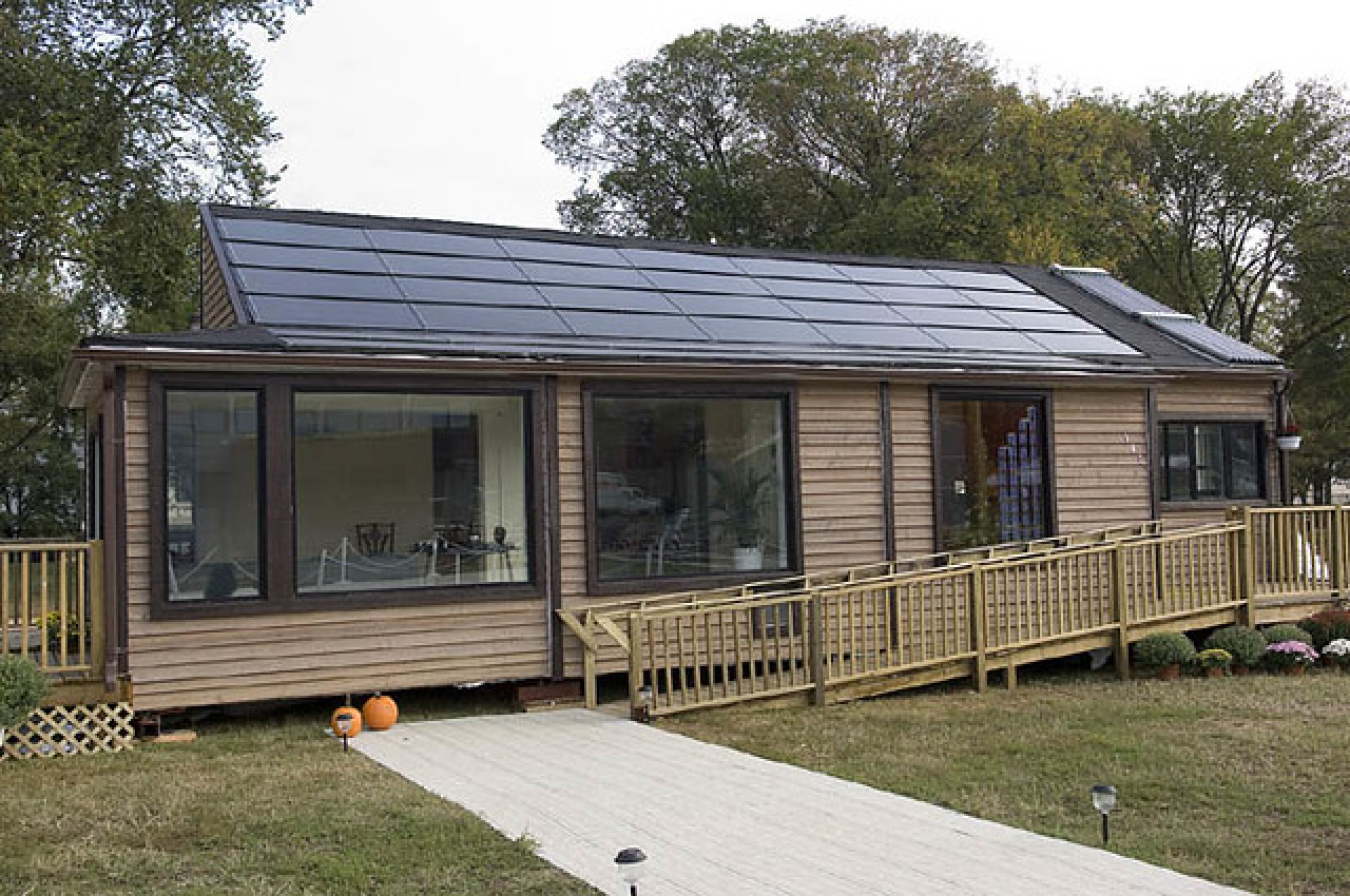
The Canadian team, made up of building, electrical, civil, and mechanical engineering students from Concordia University and industrial and architectural design students from L'Université de Montréal, set out to design a high-tech house in which most of the technology is invisible, seamlessly integrated through a special home automation system. The automation system monitors the home's temperature and links to controls throughout the house. To help with designing the automation system and other aspects of the house, team members designed their own software to simulate the thermal behavior of the house. The software combines all the unique components of the house, including the automated blinds and the thermal storage.
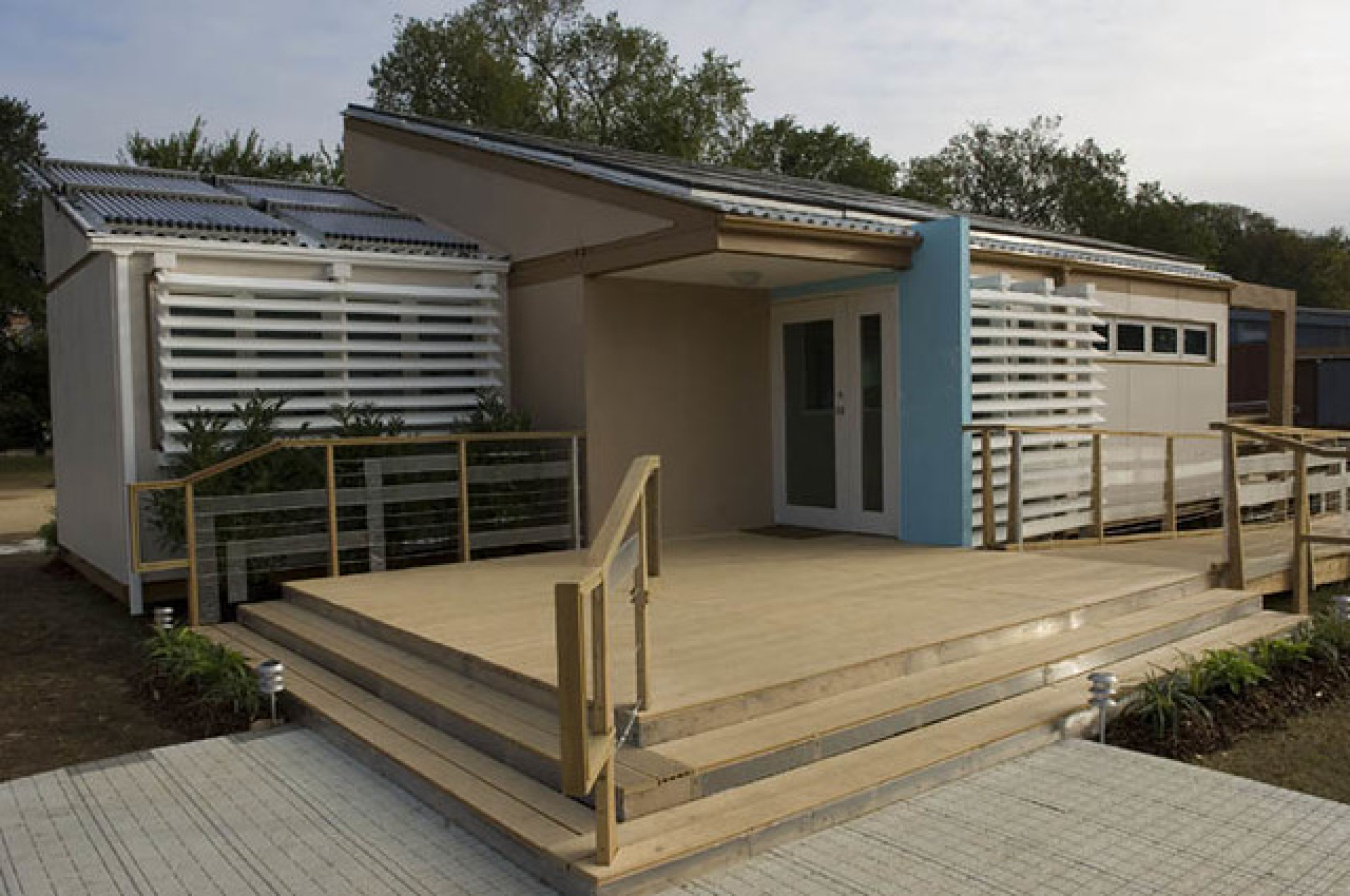
Students and faculty of the University of Puerto Rico team want visitors to know that "my house is your house." Their house is open and inviting by design—it's all part of capturing the warmth and hospitality of island life. You'll see this in the style of the house, from the horizontal design elements, to the shallow roof pitch, to the luminaries used for lighting.
The team also wanted to use as many conventional materials as they could—to make the house "buildable" and something the consumer can use today. There are a lot of new materials and systems on the market, but they can be expensive; so, wherever possible, the team worked with items at hand. The students see their experience as a continuum of learning and growing, from their first meeting in the fall of 2003, to their coursework focusing on rigorous design and building-specific requirements, to fundraising and actually building the house.
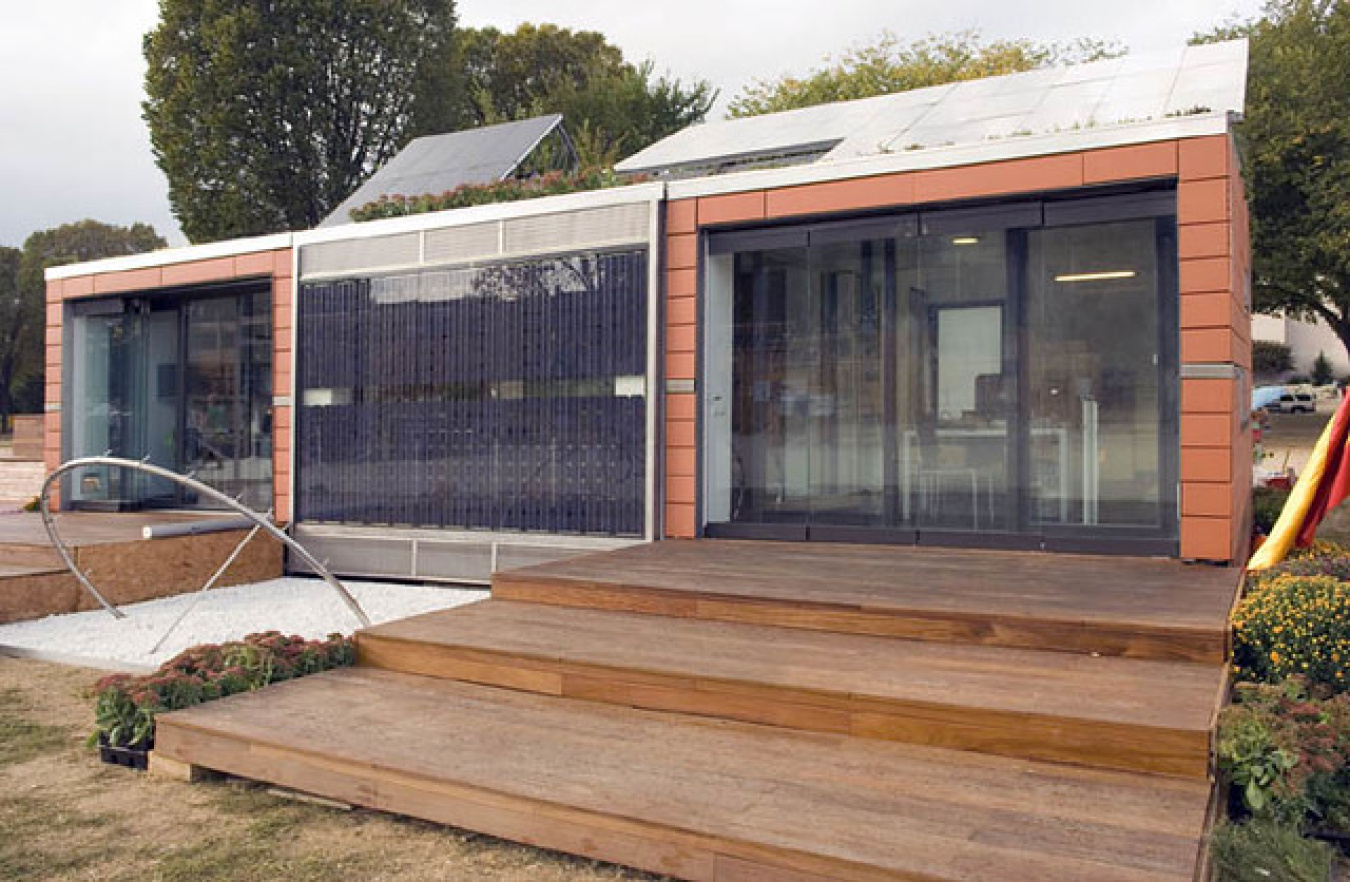
Although the Madrid home has its share of high technology, the primary design objectives were to make it attractive and comfortable so that it would appeal to anyone. The team believes you shouldn't have to be in love with gadgets to enjoy this flexible Mediterranean-style home with a great interior-exterior connection. Many of the controls are designed to work automatically.
The most distinctive feature of the Madrid home is its versatility. A set of moveable walls allows it to be divided into three (bedroom/office, dining room/kitchen, living room) or five spaces, or to be totally open. The living room also moves to create an internal patio: this Spanish courtyard configuration enhances ventilation and makes a very enjoyable living space. Although all the team members are Madrid Polytech students, all of Europe seems to have adopted the team. Advance construction of the home in Madrid was widely covered by the media, including more than 40 newspaper stories, 4 hours of radio interviews, and 15 television appearances. The house was the most visited exhibit at the Real Estate Fair of Madrid in May. It was also the centerpiece of a course for 20 students from universities throughout Europe during the summer.
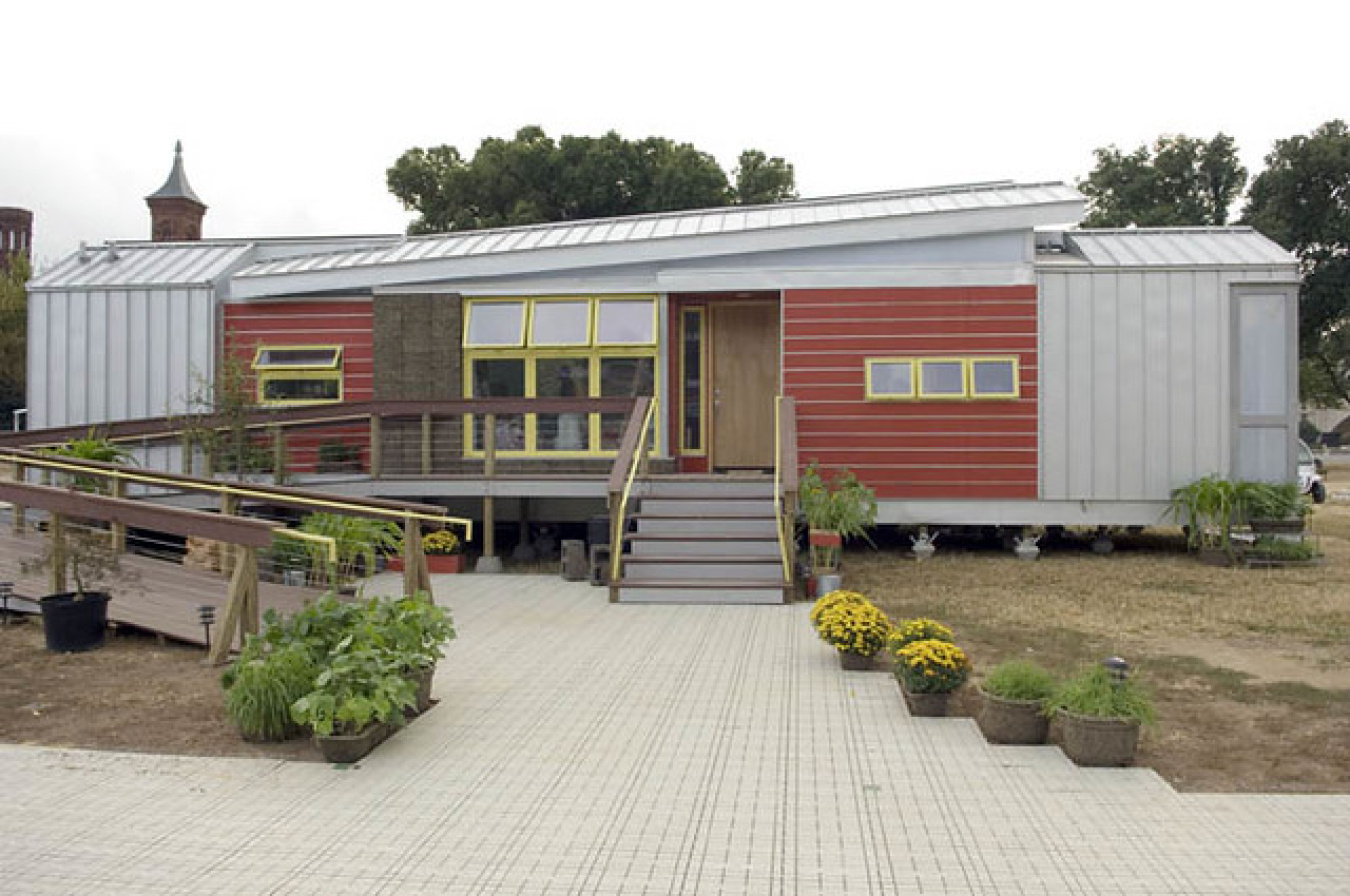
The materials used in the University of Colorado's home read like a health food restaurant menu. Soy, corn, sunflower, canola, coconut—these are just some of the natural "ingredients" in many components and furnishings (and even tableware) featured in this unique modular home. The Colorado team is especially eager to unveil the innovative, biobased structural insulated panels—BIO-SIPs—used for the walls. BIO-SIPs merge two commercially available products: strong but lightweight Sonoboard, made of recycled cellulose materials by Sonoco Company, and BioBase 501, a lightweight foam insulation made of soybean oil by Biobased Systems.
Using natural materials was one of the team's five major design goals, along with innovation, energy efficiency, modularity, and accessibility. The result is an attractive home built almost entirely of recycled and natural materials—one that can go almost anywhere to complement almost any lifestyle.
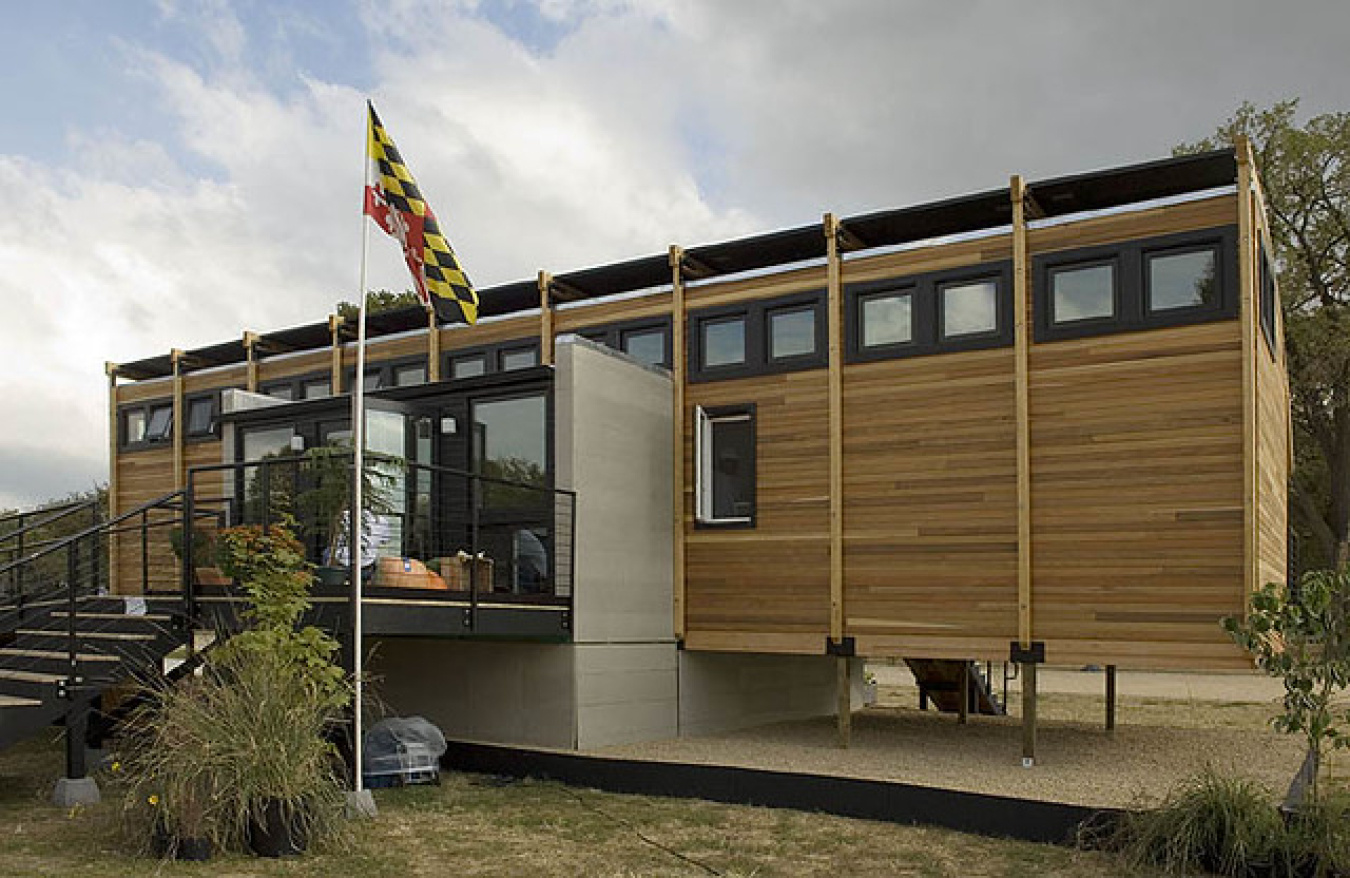
Student Luming Li, the architect of the design they chose, originally envisioned a house "floating" over a field of water, describing it as "anchored to the earth, yet touching it lightly." To marry that vision with the practicality of transporting the house to the National Mall, the students chose to rest the house on a field of stone. Their iterative design process led to a final design with "very clean and simple" lines.
The roof also incorporates curved roof joists, furthering the "fluidity" of the home's exterior. Inside, a radiant heating system warms the concrete floors, which also generate passive heat. To make the interior spaces comfortable, the team is using an energy recovery ventilator combined with a small central cooling unit.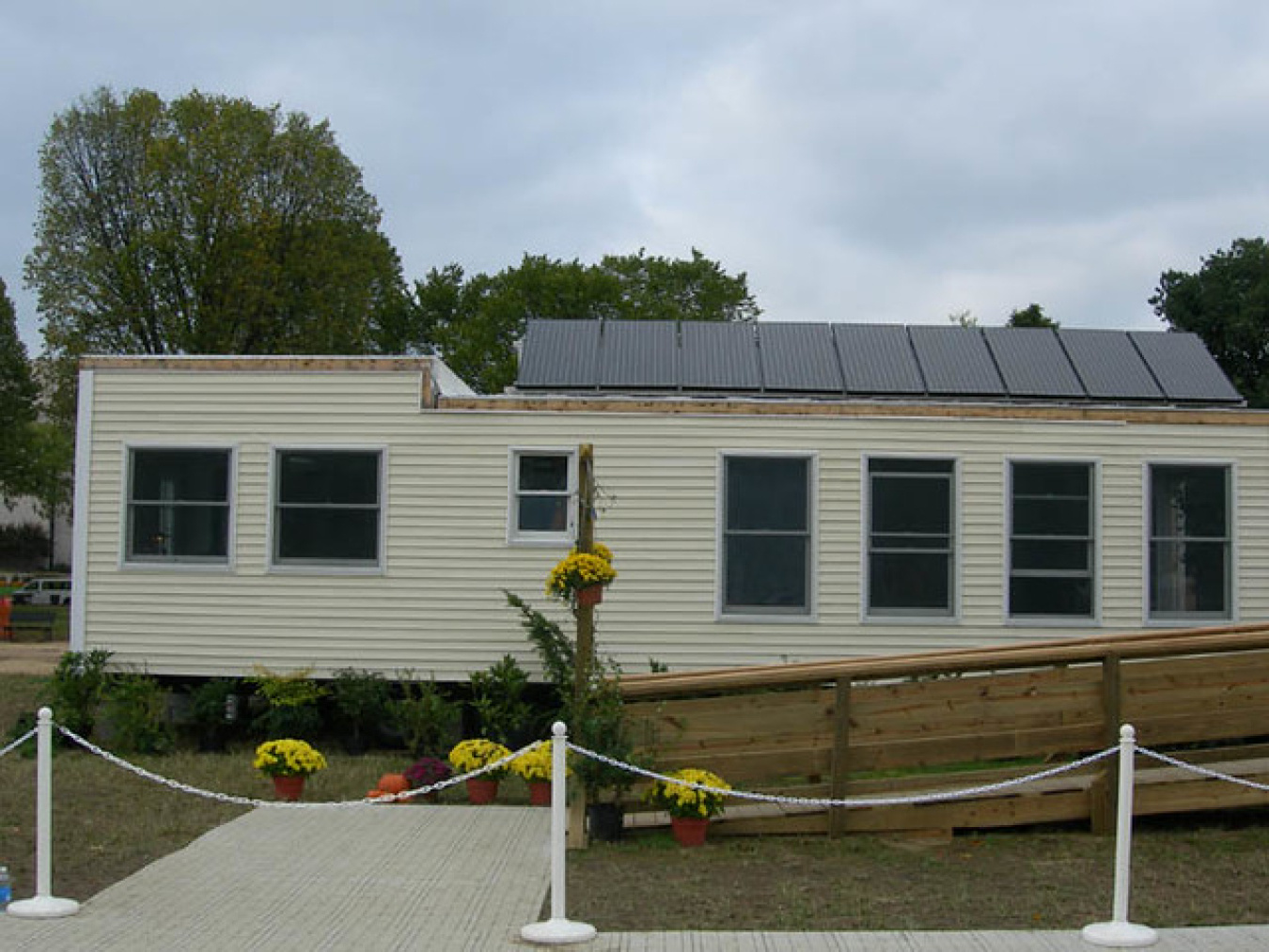
The overarching objective and guiding force for the project was to build it as a Habitat for Humanity house. When the competition is over, the house will be moved from the National Mall to the northeast area of Washington, D.C., where it will be permanently installed as a Habitat-provided house.
The UMass Dartmouth home uses a computerized control system to draw heat and cooling from phase-change materials. The materials, which are made from blocks of cloth, are in containers under the front windows. Lighting is a combination of compact fluorescents and passive lighting, including light "tubes" to bring light down from the roof. The home was deliberately designed, however, to use off-the-shelf components as much as possible and deemphasize cutting-edge technology.
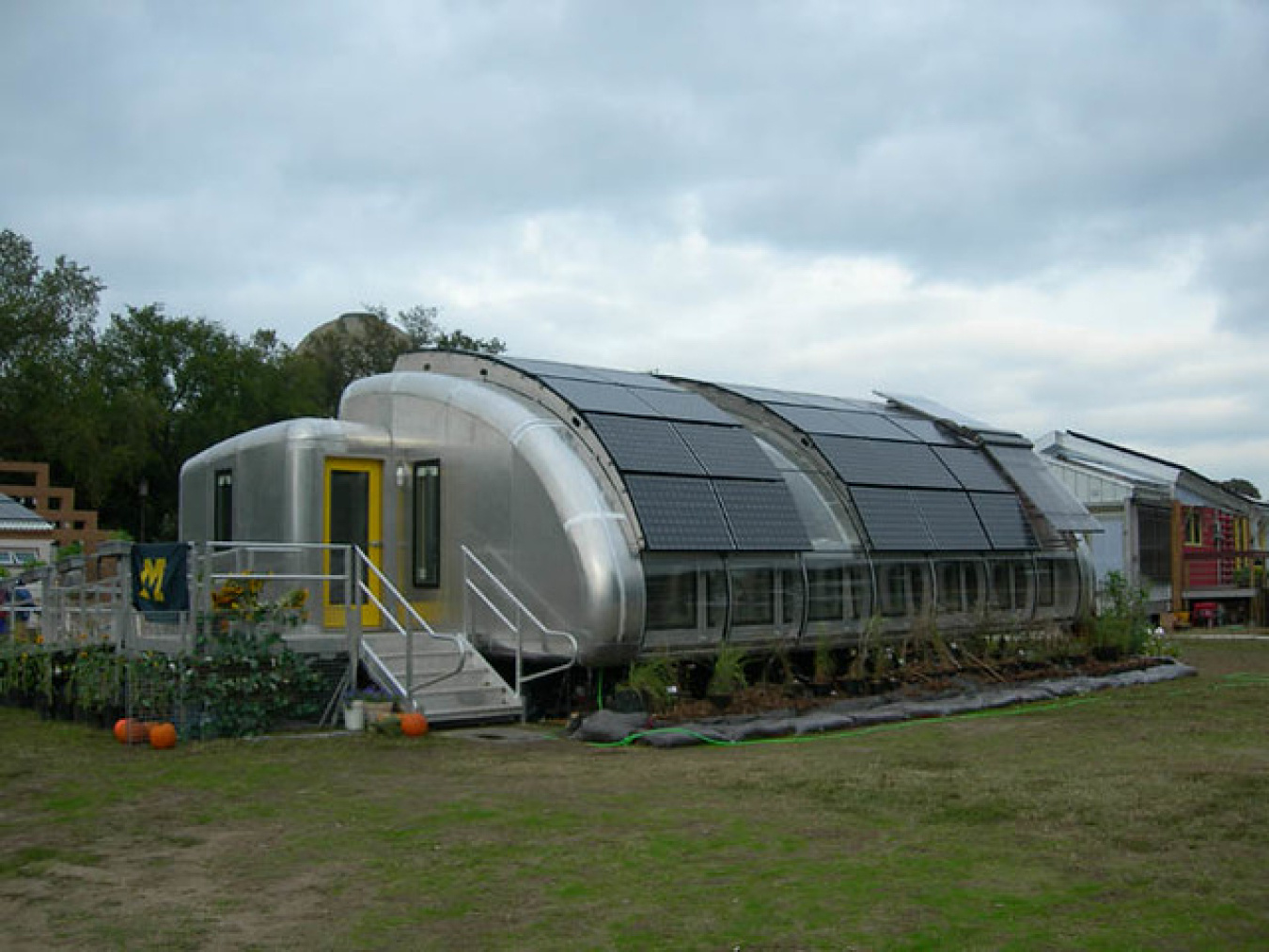
At the 2005 competition, the University of Michigan team hopes its house design, which can be mass-produced with less waste and lower costs, will serve as a prototype building. Inspired by monocoque designs from the aircraft and automobile industries (in which the external skin of an object supports some or most of the load on the structure), the team chose aluminum for the house's exterior.
To give the house broad appeal for future mass marketing, the students discussed the notion of domesticity—how average homeowners interact with their living spaces. They didn't want visitors to think, "That's a real neat idea, but I wouldn't want to live there." Modular construction allows consumers to add more space or otherwise customize the house.
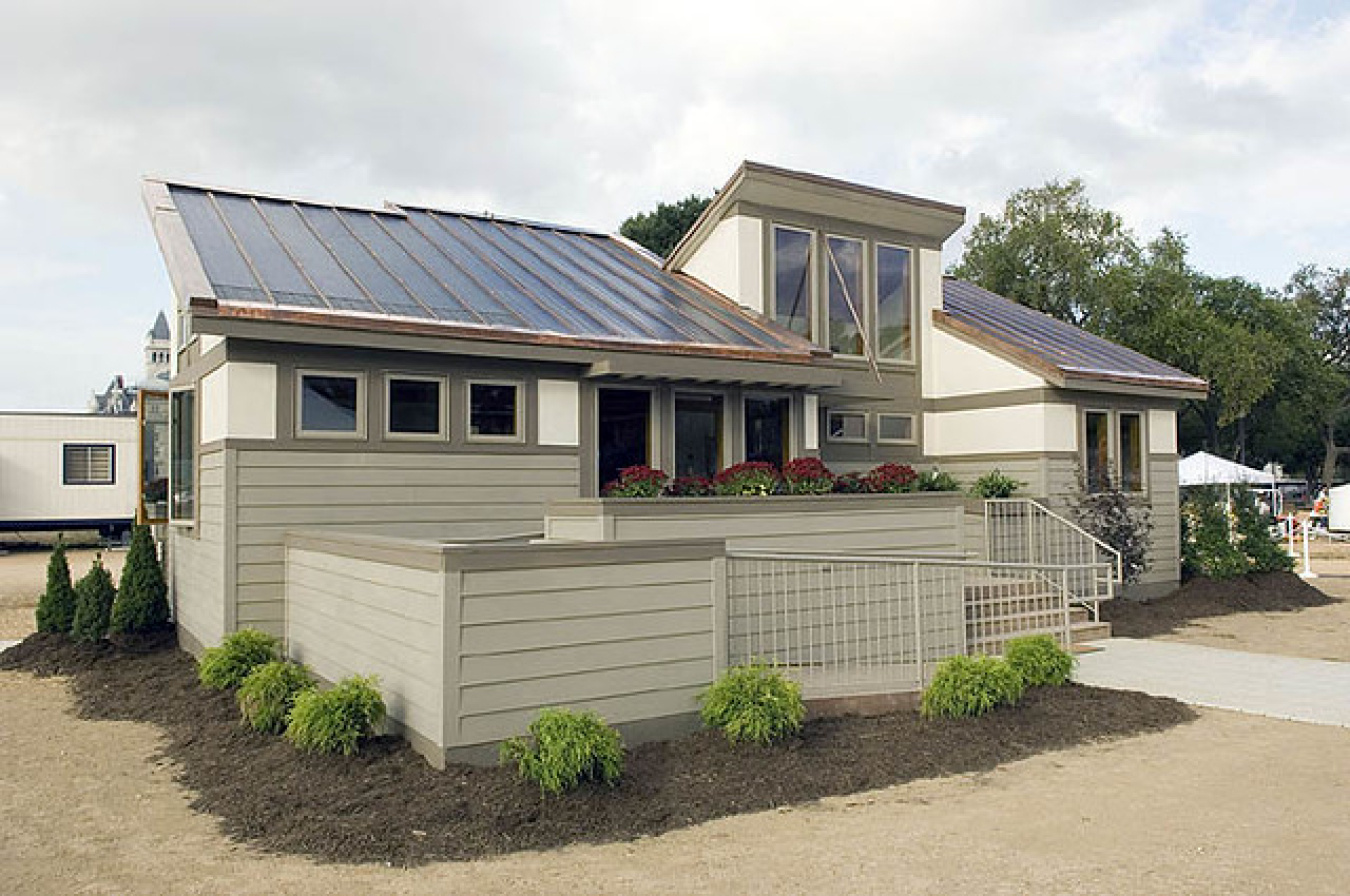
Above all else, the team from the University of Missouri-Rolla and Rolla Technical Institute wanted to build a house in which any traditional Midwesterner might feel at home. Everything in the house is designed around a mathematical sequence known as the Fibonacci Sequence, or the Golden Ratio. This sequence can be found in most shapes and patterns in nature, from pinecones to seashells. The curved kitchen island as an obvious example of the design.
The house also has a standing-seam copper roof, is made out of structural insulated panels, and incorporates a thermal/electric panel system the students believe will collect more power than separate systems.
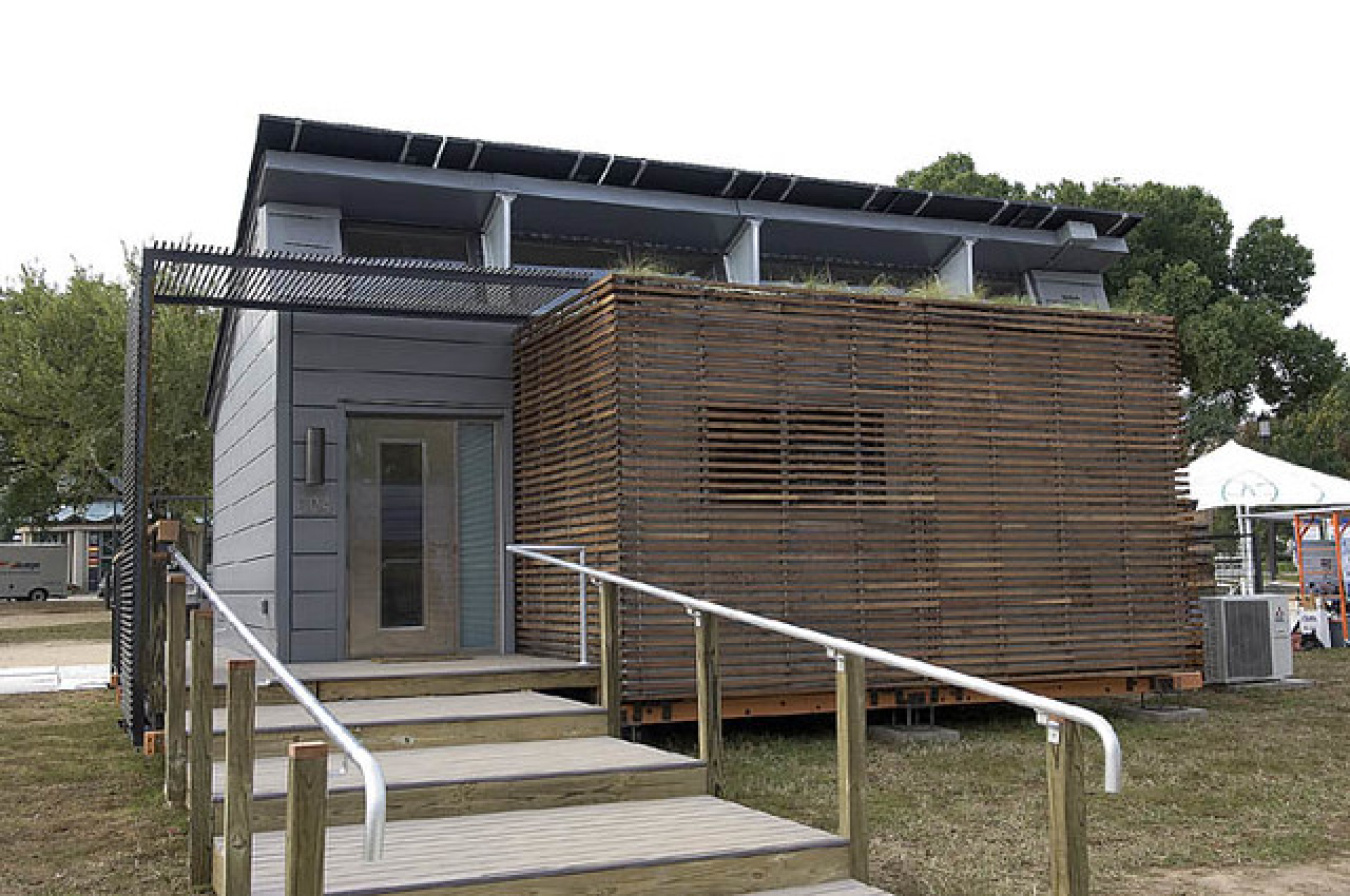
The team's house consists of prefabricated modules that "snap" together for easy transportation and quick assembly on the National Mall. In a play on words that demonstrates how they feel about their design, the team refers to the project as the "Super Nifty Action Package."
The students are especially pleased with their materials choices, which blend natural beauty with cutting-edge technology. Reclaimed redwood forms an exterior rain screen. Recyclable zinc cladding blends aesthetics with functionality. Local mesquite wood forms the floors. The walls are structural insulated panels with an expanded polystyrene foam core, finished with a translucent ecoresin. A "living roof" on the home's north side—planted with native Texas grasses—adds aesthetic appeal and provides extra insulation.
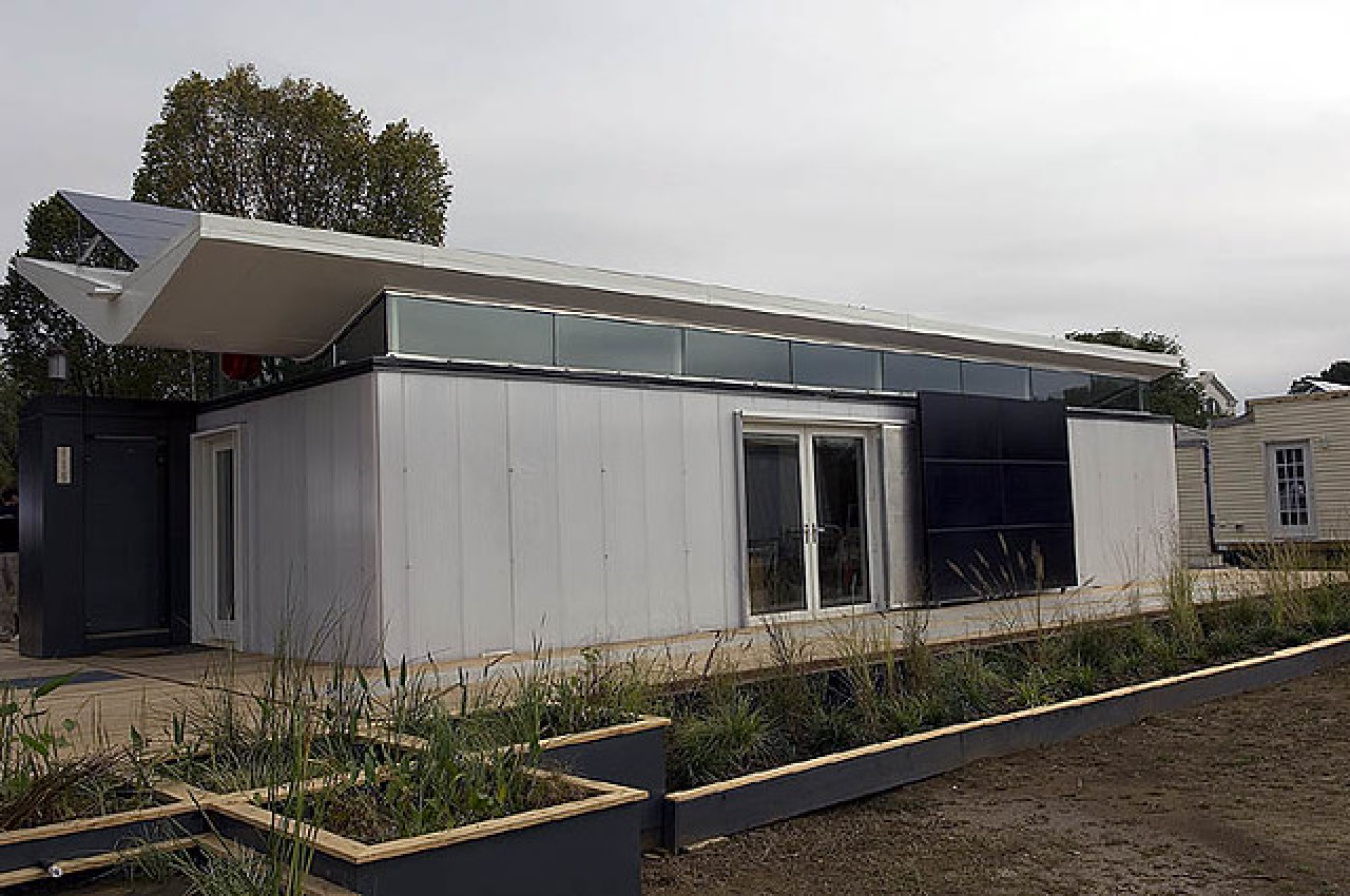
Sometimes when you try to solve a transportation problem, you end up refining an exciting new mobile home design. That's what happened to the Virginia Tech team as the design of their 2005 home evolved.
Faculty advisor Joe Wheeler says, "We wanted to be able to transport our home to Washington intact so we could spend the five days in D.C. fine-tuning and testing it, rather than reconstructing the building." The result is a unique synthesis of manufactured housing principles and innovative transportation solutions.
The Virginia Tech home is constructed as a double-drop lowboy trailer with a detachable, gooseneck assembly; this connects it to the tractor for the road trip. It also has a detachable bogey—a set of axles for the tire assembly
The home's south, east, and west walls are constructed of two panels of very thin translucent polycarbonate material, each filled with aerogel insulation. Motorized shades are used to adjust temperature in the wall cavity during the day and provide visual privacy at night. Movable dampers in the walls allow fresh air inside the wall cavity to be brought into the building or to be exhausted outside. The walls are meant to be as attractive as they are functional.
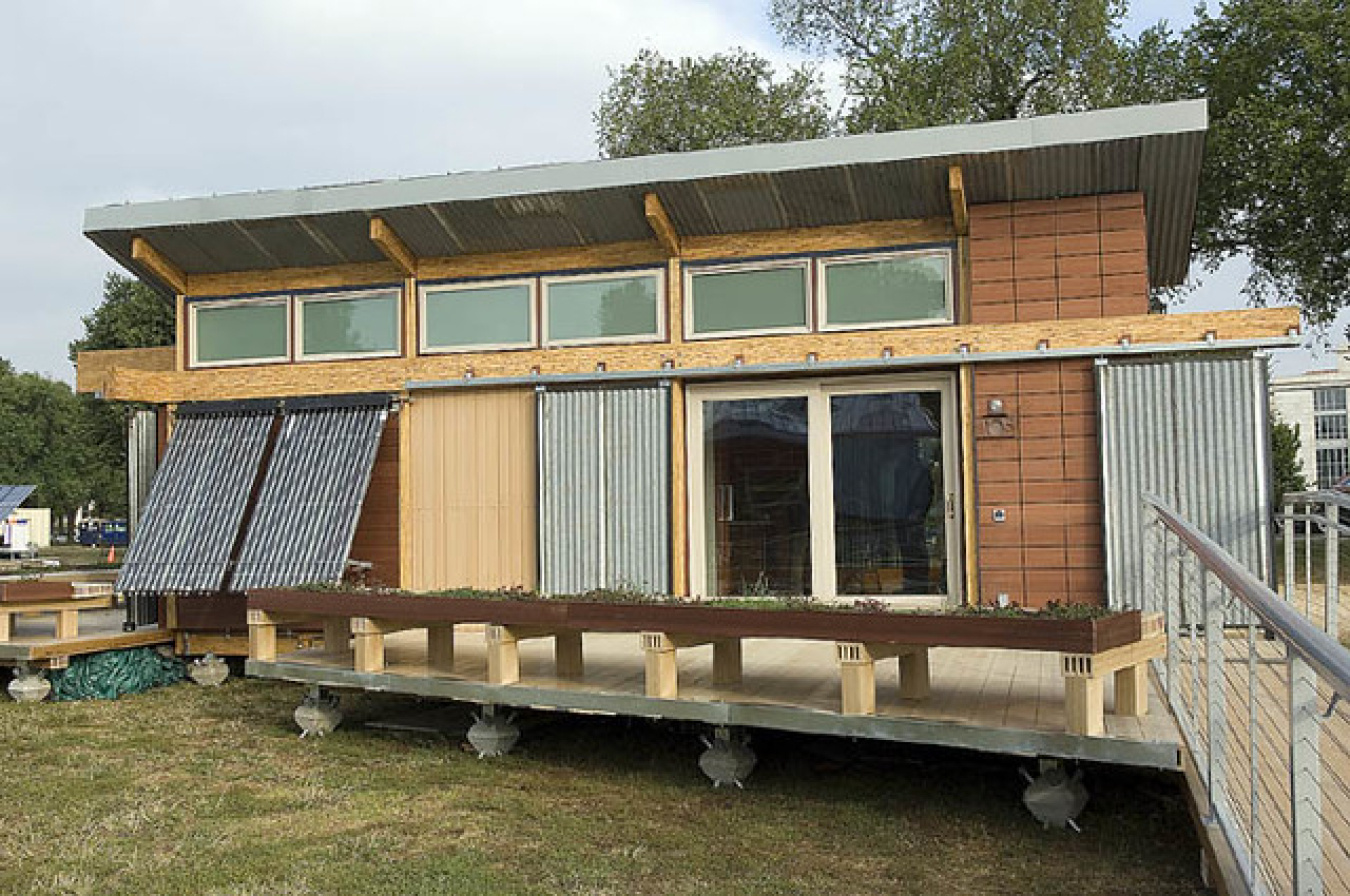
The Washington State University students knew that, as the only team from the Northwest, their participation in the 2005 competition gave them a unique opportunity to showcase local products and technologies. The team is particularly excited about its fully integrated heating and cooling system. They used a marine system from Glacier Bay, which makes refrigerators for high-end yachts that are so efficient that they only need to run 4% of the day. As a result, they were able to configure their heating and cooling system to allow the fridge compressor to run the house's air-conditioning for most of the day.
The house's shipping container actually becomes its core, while also providing easy access to the electrical, mechanical, and water systems. For the structure, the students are using a new type of structural insulated panel (SIP). Their system is the inverse of a traditional SIP, in that the interior is a corrugated steel frame, and the polystyrene is on the exterior.