



This past year, AMMTO has advanced projects and technologies that will generate impact for next-generation American manufacturing for energy technologies and systems. Take a look at our portfolio of successes.
Advanced Materials & Manufacturing Technologies Office
January 17, 2025 Estimated Read Time min
Throughout the past year, the Advanced Materials and Manufacturing Technologies Office (AMMTO) has advanced projects and technologies that will generate significant impact for next-generation American manufacturing for energy technologies and systems. As we look to the next chapter of advanced manufacturing in America, we are taking this opportunity to highlight some of the seeds that AMMTO has sown which have gone on to produce major impacts within America's energy and manufacturing industries.
AMMTO was created within the Department of Energy in 2022 to serve this robust mission with a focus on advancing technologies to ensure that American manufacturers can get ahead and stay ahead in a rapidly evolving global energy market, safeguarding both our nation’s economic security and industrial leadership. Our work focuses on materials and manufacturing for technologies that produce, transmit, store, use and/or conserve energy. Through innovative technologies we will secure critical supply chains, drive technical and economic competitiveness, promote material efficiency across supply chains, and work to develop and scale diverse innovation ecosystems throughout the energy manufacturing sector.
Apart from technological innovation, we know that having a ready workforce in place is critical to manufacturing success. For that reason, AMMTO's mission space remains focused on fostering a strong domestic manufacturing workforce through entrepreneurial, education, and workforce development initiatives.
These projects are securing the domestic supply chain for emerging technologies by delivering new technologies to address major vulnerabilities in our supply chains. They are enabling a more resilient energy economy by advancing new, cost-effective processing technologies for energy manufacturing. Additionally, these projects are increasing the competitiveness of U.S. manufacturing by advancing the development and commercialization of new materials and manufacturing capabilities. Finally, these projects are developing the next generation manufacturing workforce through novel training programs focused on the full range of workforce from skilled workers to technology entrepreneurs.
Below, we share exactly which impacts we're talking about, along with a few prescient examples from our portfolio of active and former projects that demonstrate how AMMTO is planting seeds that generate substantive results.
Securing the Domestic Supply Chain for Emerging Energy Technologies
Emerging energy technologies represent an estimated $130 trillion economic opportunity.1 To realize this potential benefit, the United States must develop stronger and more secure domestic supply chains for materials and manufacturing processes. Importantly, most of the raw materials that underpin the next generation of energy technologies are currently mined and refined outside the United States. In addition, the available supply of many of these materials that are critical to energy technologies is at risk of not meeting the expected demand. This imbalance poses a significant risk to the nation's energy resiliency and will require investment across the full supply chain from material extraction to manufacturing of final components. AMMTO works to secure the nation's energy future by investing in innovations that enhance domestic energy-related materials supply chains and manufacturing capabilities.
Filling Domestic Supply Chain Gaps for Critical Materials
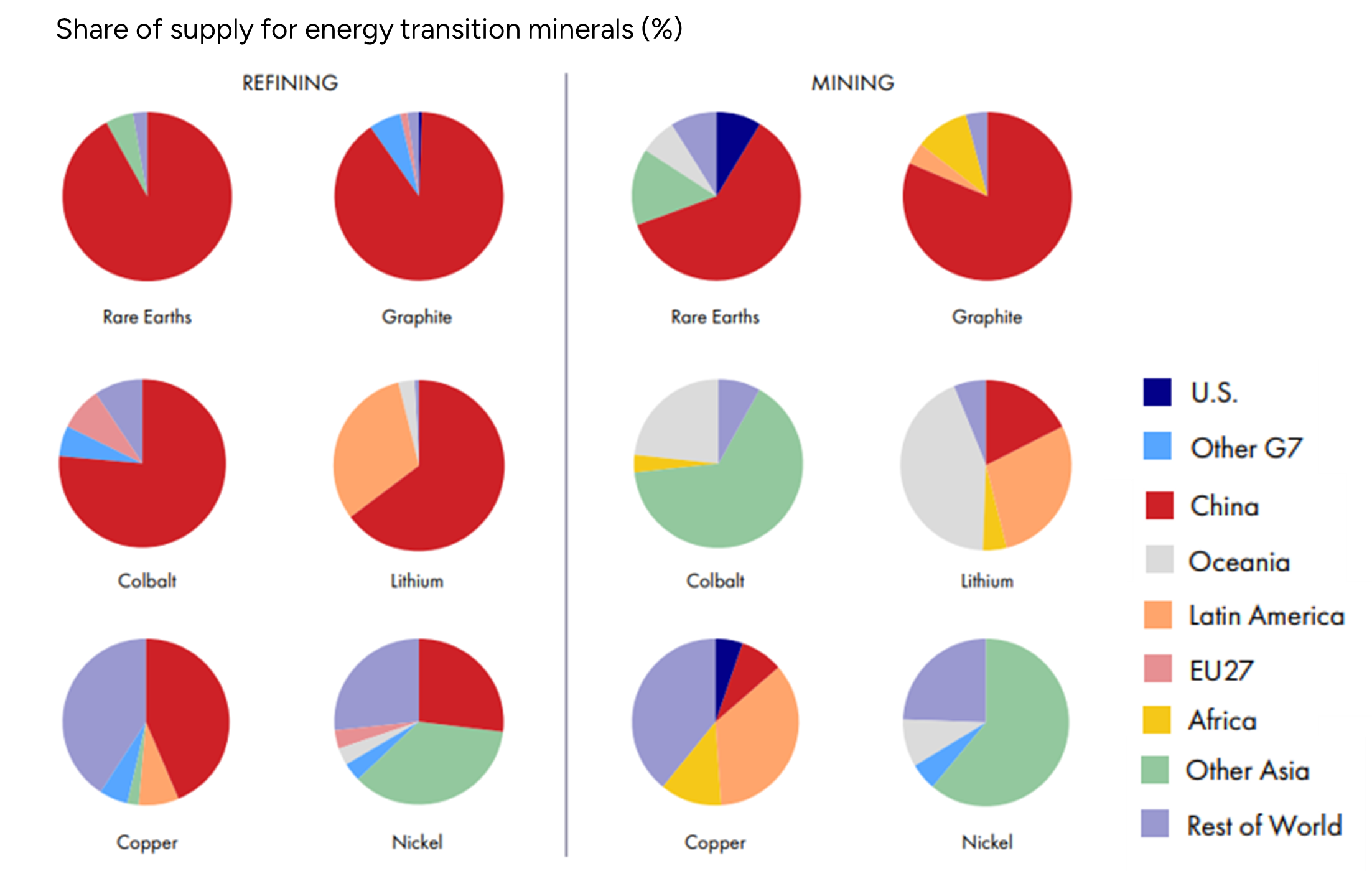
One area in which AMMTO has been a leader in promoting more secure supply chains is that of critical materials for energy. Critical materials are those that are essential ingredients for energy technologies—including battery storage, renewable energy, nuclear power generation, vehicle lightweighting, and other energy applications—but face significant risks for supply chain disruption.
AMMTO led the development of the Department of Energy's 2023 Critical Materials Assessment, which resulted in DOE designating eighteen critical materials for energy.2 Informed by the assessment’s analysis, AMMTO funds innovative solutions to secure the supply chains for these critical materials through investments in research, development, and demonstration (RD&D) projects that diversity supply, find alternative materials that can replace the critical materials in energy technologies, increase material and manufacturing efficiency, and help build reuse and recycling systems for critical materials. AMMTO also continues to perform activities, such as the Critical Materials Assessment and workforce development, that enable progress across multiple areas of research and innovation.
In 2024, AMMTO was instrumental in creating, and now jointly leads, the Critical Materials Collaborative (CMC). The CMC is a centralized coalition of DOE offices, federal agencies, and federally funded RD&D programs that will connect, grow, and fund the innovation ecosystem for critical materials research in the United States, with the goal of accelerating the development of secure domestic critical materials supply chains. The AMMTO-funded Critical Materials Innovation Hub (CMI Hub) serves a special role in supporting the management of the CMC. (See call-out box for more on the CMI Hub.)
Innovation Ecosystems: Critical Materials Innovation Hub
In addition to individual RD&D projects, AMMTO supports the development of innovation ecosystems that enhance capabilities of researchers, accelerate innovation, and expand impact across the nation. One example of this is the Critical Materials Innovation Hub (the CMI Hub). Going on for more than 10 years, the CMI Hub develops technologies and enhances the innovation pipeline for U.S. critical materials supply chains by accelerating research, educating a diverse workforce, and creating de-risked, commercial-ready technologies in partnership with American industry.
Driven by a diverse membership of 9 DOE national laboratories, 20 universities (including 10 minority serving institutions [MSIs]), and 20+ active private sector team members, the CMI Hub has an excellent track record of achievement: 600+ refereed publications, 13 R&D 100 awards, 56 patent awards, 20 licensed technologies, and more than $80 million in follow-on government funding. To build on these successes, AMMTO has committed $150 million to funding the CMI Hub's next five-year phase of operations.
Through cultivating ecosystems like the CMI Hub, AMMTO facilitates engagement between various organizations and teams that can catalyze the development of new materials and manufacturing solutions—thus amplifying AMMTO's impact beyond what individual project awards can achieve.
Oak Ridge National Laboratory (ORNL) researchers have developed a new, highly efficient method for extracting lithium from geothermal and oilfield brines, clays, and end-of-life batteries. The method uses a sorbent called lithium aluminum layered double hydroxide chloride (LDH), which uses aluminum hydroxide to extract at least five times as much lithium as current technologies allow, with greater than 90% efficiency. For this innovative work, funded by AMMTO through the CMI Hub, R&D World Magazine recognized the ORNL team with a 2024 R&D 100 Award.
Such new, economic methods for expanding the supply and improving the reuse and recycling of lithium are sorely needed to help build more secure domestic supply chains for this critical material and realize the potential of U.S. resources. DOE's Lawrence Berkeley National Laboratory estimates that with expected advances in technology, the geothermal brines in California's Salton Sea region alone could produce more than 3,400 kilotons of lithium, enough to make batteries for more than 375 million EVs. For perspective, the Federal Highway Administration reports that the total number of registered vehicles in the United States in 2022 stood at 283 million. Yet today, just one percent of lithium mining occurs in the United States, which also lags behind in recovering lithium from battery recycling.
These considerations illustrate why the ORNL team’s novel sorbent is such an important advancement, particularly as lithium demand grows for rechargeable batteries used in everything from personal electronics to electric vehicles. Not only would widespread use of LDH help expand domestic lithium supply, but it would do so more responsibly since the sorbent can be recovered and reused repeatedly, increasing the lifetime of materials used in lithium supply chains. In addition, the process is acid-free, meaning less harmful waste is generated.
In May 2024, ORNL licensed the LDH sorbent patent to Element3, a Texas-based company specializing in lithium extraction from gas and oil production wastewater, as part of a package of seven technology licenses. With this agreement, the national lab and private firm partners took an important step toward establishing more stable, secure domestic lithium supply chains.
Lithium-ion batteries are widely used in applications from small electronics to electric vehicles and battery energy storage systems. To accelerate deployment of energy technologies, DOE seeks ways to help battery makers lower overall costs and strengthen domestic supply chains for battery manufacturing.
One key area for improvement is in the expensive cathode active materials that exchange lithium ions with the anode to charge and discharge the battery. Producing the polycrystalline cathode materials found in most lithium-ion batteries today is a complex, energy intensive, and time-consuming process. Moreover, these common cathodes are inherently vulnerable to fracturing during charge-discharge cycles, which degrades performance and shortens battery life. The innovation opportunity is massive.
A partnership between Argonne National Laboratory and ACTion Battery Technologies, a subsidiary of Hunt Energy Enterprises, is tackling these challenges. With the help of $2.1 million in AMMTO funding, the Argonne-ACTion team has developed Hydro4Crystal: a rapid, continuous hydrothermal process that produces robust single-crystalline, nickel-rich cathode materials for lithium-ion batteries. This high-throughput platform technology integrates crystal formation, lithiation, doping, and surface coating into one compact step, streamlining the traditional multi-step process. What results is a superior product with greater energy density, faster charging speed, and longer battery life compared to polycrystalline cathodes.
Demonstration results indicate that Hydro4Crystal is well suited for low-cost, high-volume production. The rapid single-crystal production process can reduce capital expenditures by more than 30% and production costs by more than 15% while boosting production speed over 10-fold. At the same time, the process uses a smaller plant footprint, saving energy and material costs. Furthermore, the one-step method has already been shown effective for a variety of cathode chemistries, including lithium iron phosphate and cobalt-free lithium- and manganate-rich oxide.
This lab-industry partnership’s success illustrates the benefits of public investment in accelerating process commercialization and enhancing the competitiveness of domestic manufacturing. AMMTO's support has attracted Pre-Series A funding for ACTion to pursue pilot level manufacturing with new partners, including leading battery and cathode material manufacturers, private equity, and venture capital. As of late 2024, the DOE-supported development of Hydro4Crystal has produced two patents and earned a 2024 R&D 100 Award from R&D World Magazine.
Advancing Innovations Across the Entire Supply Chain
Securing the domestic supply chain for energy technologies requires the advancement of innovations across the whole supply chain, from the manufacturing of raw and processed materials to intermediate components and final products. AMMTO's investments span the entire supply chain, from RD&D efforts related to key energy materials production to the development of innovative manufacturing approaches for key energy technologies.
Lithium processing is currently concentrated abroad, creating a vulnerability for domestic battery manufacturers. Developing innovative, economical, and environmentally benign approaches to both extraction and processing of lithium to unlock new sources is crucial to meet energy and transportation goals.
Through AMMTO support, the American Battery Technology Company (ABTC) and its partners (which include Dupont and the University of Nevado, Reno) have built a pilot-scale facility and demonstrated its pioneering process for production of battery cathode grade lithium hydroxide monohydrate (LHM) from unconventional sedimentary claystone in the Nevada desert. The pilot plant processes upwards of 5 metric tons (MT) of feed per day.
With further funding from the Bipartisan Infrastructure Law (Section 40207), ABTC will commercialize their process, resulting in a facility capable of producing 30,000 MT of LHM per year in a low-cost and low-environmental impact compared to market technologies.
This achievement vitally allows for domestic production of the critical battery material from an unconventional—and untapped—resource. The disruptive step-change reduction in environmental impact compared to conventional processing methods allows for significant positive economic and social impacts.
- Image
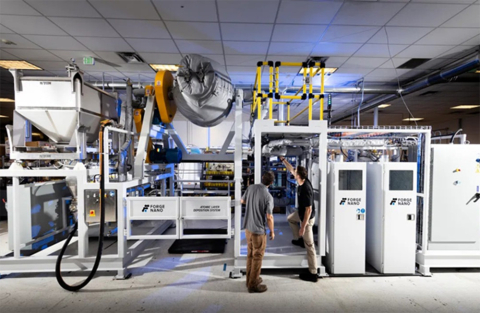
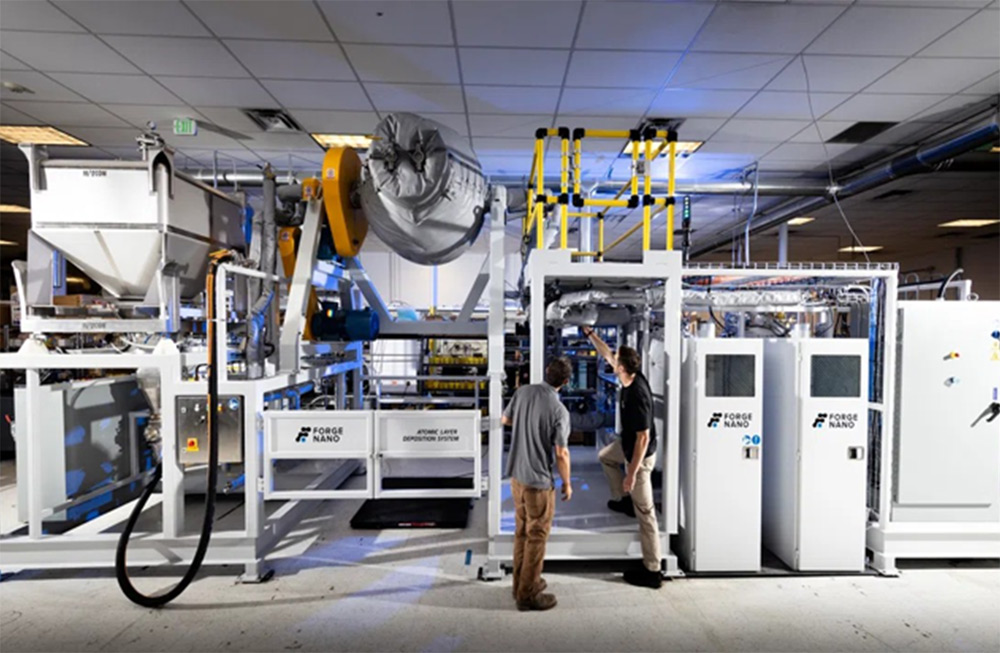
Photo by Chet Strange for Forge Nano Forge Nano, a leading materials science company, recently announced plans to launch a U.S. battery manufacturing business, Forge Battery, which expects to construct a 3 GWh/year lithium-ion battery cell gigafactory in Raleigh, North Carolina. Expected to begin commercial production in 2026, this new facility will produce best-in-class high-energy and high-power lithium-ion battery cells optimized via Forge Nano’s Atomic Layer Deposition (ALD) nanocoating technology, which AMMTO supported and stewarded through a $5 million program.
Even with the recent surge in battery-powered applications, battery cells still require additional advances to make the technology more readily accessible to a larger market. Forge Battery’s cell-level innovations unlock higher performance and improved durability, which is expected to foster further advancements in renewable power applications. High volume, consistent, controllable, and robust manufacturing technologies are necessary to develop and manufacture the next generation of energy storage technologies at cost targets that allow for adoption across a variety of different applications.
Supported by AMMTO, Forge Nano first sought to demonstrate proof-of-concept for scaled production and more efficient lithium-ion battery performance through continuous ALD-enhanced battery material processing equipment. Forge Nano’s ALD technology, validated through this project, led to the creation of high energy density cells (>300 Wh/kg) with improved safety and extended lifetimes that meet or beat the performance of existing lithium-ion technologies.
From a manufacturing perspective, Forge Nano also used this technology to lower cell-level costs by reducing electrolyte consumption and electrolyte additives. The project also utilized roll-to-roll (R2R) processing—a high-throughput technique for continuous two-dimensional deposition of materials—to enable low-cost production and improved performance. The success of the project, and the future opening of Forge Battery’s high-tech Raleigh facilities, will help to realize cost competitive domestic production of lithium-ion batteries that meet targeted requirements for transportation applications with improved performance characteristics.
Enabling a More Resilient Energy Economy
Innovations in cost-effective and environmentally sound manufacturing technologies are critical to ensure domestic manufacturers can compete both domestically and globally. From the processing of raw materials to production of end components, the environmental impact of manufacturing processing in terms of waste streams is an important consideration that impacts technology adoption and industrial competitiveness. AMMTO aims to enable a strong domestic energy manufacturing economy by enabling reuse and recycling supply chains that reduce waste and environmental impacts of manufacturing and improving the efficiency of manufacturing technologies.
Innovation Ecosystems: Developing Capabilities at National Labs to Provide Insight and Accelerate Innovation
Moving research projects through development faces many hurdles, including the cost of performing necessary scale up tasks and the diversity of expertise required for many projects. Through public-private partnerships, AMMTO supports the development of staff, tools, and facilities that can overcome these hurdles for researchers.
Staff at the national labs can provide expertise that research groups may lack. Continuing to fund research at the national labs in areas of interest to AMMTO allows staff to continue to improve their knowledge and capabilities and provide valuable service to academic and industry researchers to accelerate their research.
Analysis efforts at the labs can inform RD&D programs, government programs, and work done in the private sector. The analysis underlying the DOE 2023 Critical Materials Assessment was supported by researchers at Idaho National Laboratory and Argonne National Laboratory and helped inform DOE's critical materials list, which was used as part of eligibility criteria for the 48C tax credit included in the Bipartisan Infrastructure Law.
Testbed facilities can provide a lower cost option to perform tests on new technologies and reduce time required to perform the tests. Several such facilities have been developed at national labs and institutes through funding from AMMTO. One such example is the Manufacturing Demonstration Facility, started in 2012 by Oak Ridge National Lab (ORNL), a 110,000 square foot facility focused on accelerating development of energy technologies. Work at the facility has resulted in more than $1 billion in follow-on economic activity and continues to provide a valuable service to researchers in the energy technology space.
Reducing Waste and Strengthening Supply Chains Through Investment in Reuse and Recycling Systems
Reuse and recycling systems chains help to secure a domestic supply of materials, bolstering and diversifying supply chains while also reducing environmental impacts and strengthening domestic manufacturing. These pathways can take many forms, from recycling at end of life to repair and remanufacturing techniques to increase the longevity of items. All pathways can reduce the demand for virgin material and put less strain on natural resources. Increasing material reuse and recycling can also reduce the need for imports and fill crucial supply chain gaps, such as those for critical materials. AMMTO supports the development of transformative solutions that enable reuse and recycling systems in domestic manufacturing, prioritizing technologies and industries with the greatest potential impact.
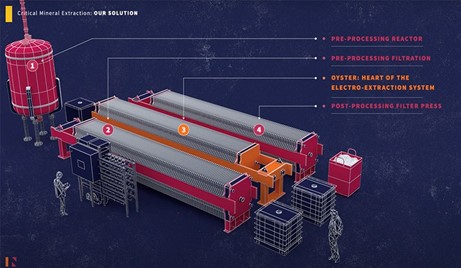
The United States currently lacks refining capabilities for the critical metals that are high in demand for many sectors, including energy, national defense, and telecommunications. This deficit in a crucial supply chain stage poses vulnerabilities for both energy and national security. While the United States could follow the current technical approach by building large, centralized refining facilities, that is a complex, years-long process with a multi-billion-dollar price tag. Instead, innovative AMMTO-supported U.S. startup Nth Cycle has developed a revolutionary alternative: a clean, inexpensive, modular critical metals refining technology that can be deployed in under one year at virtually any mining site or recycling facility.
Image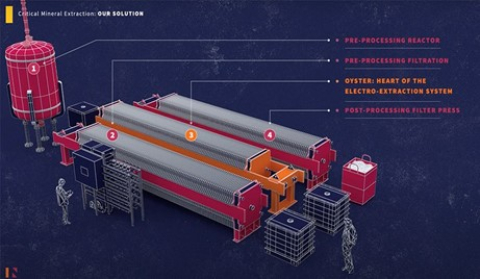
Image via Nth Cycle Nth Cycle’s novel technology, called the Oyster, is a modular system that integrates easily into a partner's existing equipment. Using a patented electro-extraction process that can accommodate a wide variety of feedstocks—including mined ore, end-of-life electronics, and recycled batteries—the Oyster can be calibrated to target, separate, and recover nearly any metal or group of metals for extraction at efficiencies greater than 95%. The end product is a high-value, market-ready metal precipitate that can be sold to energy manufacturers.
In September 2024, Nth Cycle became the first U.S. company to extract critical metals from scrap at a commercial scale, proving its Oyster technology at an existing facility in Ohio. The company produced a premium nickel cobalt precipitate using feedstocks from recycled lithium-ion batteries and other nickel-containing scrap. The Oyster unit at this facility can process 3,100 metric tons of scrap per year, yielding 900 metric tons of premium precipitate.
Compared to typical refining methods, the Oyster's environmental and economic benefits are substantial. Its electro-extraction process uses only electricity and water, eliminating the environmentally harmful waste streams associated with traditional smelting and hydrometallurgy. Due to the Oyster’s small environmental footprint and low use of chemicals, the permitting process that would take years for a centralized metals refining facility is shortened to a mere six months. And with a total installation time of less than twelve months, the Oyster can quickly begin producing valuable critical metals—while reducing transportation costs, time-to-market, and, crucially, U.S. industrial reliance on foreign sources for metals refining.
AMMTO’s support has directly impacted the success of this company and its technology’s commercialization. Nth Cycle founder and CEO Megan O’Connor is a graduate of the AMMTO-funded Innovation Crossroads program at Oak Ridge National Laboratory (ORNL), part of AMMTO’s broader Lab-Embedded Entrepreneurship Program (LEEP). At Innovation Crossroads, Nth Cycle benefited from access to ORNL expertise, equipment, and lab space that helped the company quickly scale its technology. In addition, with the help of Innovation Crossroads as well as the CMI Hub, Nth Cycle was able to better understand the market landscape and identify its prospective customers, both upstream and downstream. Since then, Nth Cycle has been highly successful in closing multiple rounds of private capital investment. Nth Cycle’s modular processing technology has the potential to play a critical role in driving stronger, more secure critical metals supply chains across the United States.
Demand is rising for rare earth elements (REEs), such as the critical neodymium used in permanent magnets for consumer electronics, electric vehicle motors, and offshore wind generators. Making better use of REEs already in the economy is one way to build more secure supply chains and help meet that demand. Unfortunately, just one percent of REEs is currently recycled. Therefore, enhancing the recovery and recycling of REEs from used products like computer hard disk drives (HDDs) and small motors is a key area of interest for materials R&D.
Ames National Lab researchers at the AMMTO-funded CMI Hub previously developed acid-free dissolution recycling (ADR), a new process for more cost-effective recovery of REEs from electronic waste. This innovative process has earned a patent, two R&D 100 awards, and millions of dollars in follow-on funding. In partnerships forged through the CMI Hub, Ames National Lab is now collaborating with private and academic partners to bring ADR closer to commercialization.
Ames National Lab’s patented ADR process dramatically improves upon the prevailing method of e-scrap recycling used today. Whereas typical magnet recycling uses harsh hydrochloric or sulfuric acid solutions to leach REEs from shredded HDDs and other e-scrap, water-based ADR is acid-free. This eliminates the need to safely store acids and dispose of the acid-contaminated wastes remaining after dissolution.
ADR also avoids pre-sorting for magnets mixed in the e-waste and excludes the usual expensive physical processing steps of heating, grinding, and screening the material. No specialized equipment is needed. Reagents can be reused. Further improving the economics, ADR allows for the recovery of valuable non-REE components, such as copper wire, that can be sold to other recyclers instead of being landfilled. (Copper is also considered critical, making this process a double win for critical materials reuse and recycling.) In summary, ADR is safer, simpler, and more efficient than traditional acid-based REE recycling.
Seeing the technology’s potential, a small business in Iowa called TdVib, LLC, has licensed ADR from Ames National Lab and is partnering with the lab to optimize and commercialize the process. Funded by a DOE small business technology transfer (STTR) award, the partners have achieved impressive results for kilogram-scale REE recovery from shredded HDDs: ADR profitably recovers greater than 90% of REEs; the recycled rare earth oxides (REOs) that result are of greater than 99.5% purity; and ADR’s chemical costs are less than 25% of those seen in acid-based recycling. The STTR project also demonstrated that these high-purity REOs can be used to make neodymium metal, which in turn is used to produce the alloy for manufacturing neodymium-iron-boron permanent magnets. Now in STTR Phase IIB, TdVib and Ames National Lab are exploring the application of ADR to traction motors from end-of-life hybrid and all-electric vehicles.
With further support from AMMTO, TdVib will partner with three other private firms, as well as Ames National Lab and the University of Arizona, to build a pilot scale ADR e-waste recycling demonstration in the Midwest region to strengthen domestic REE supply chains. TdVib has already begun supplying its recovered REEs to Massachusetts-based HELA Novel Metals, which turns this material into pure metallic powders that can then be used to directly produce fully dense (i.e., sintered) permanent magnets. This partnership demonstrates how ADR technology, born in a national lab with AMMTO support, is now commercially viable.
Aluminum is an energy-critical material that is used in solar panels, wind turbines, batteries, transmission lines, electrolyzers for clean hydrogen production, and alloys for vehicle lightweighting. As aluminum demand grows, both for energy applications and throughout the broader economy, aluminum recycling has gained attention because it uses much less energy than making new aluminum from virgin ore does. However, high levels of contamination in recycled aluminum—from diverse alloys, fasteners, cables, and other sources—currently prevent it from being used as a feedstock for higher-value products.
Innovations in sorting and characterizing the quality of aluminum scrap can boost the role of recycled aluminum, with potentially major environmental and economic benefits. In pursuit of such innovations, AMMTO awarded an industry team $4 million in 2021 for their "Enhanced Processing of Aluminum Scrap at End-of-Life Via Artificial Intelligence and Smart Sensing" project. The six industry partners, led by Massachusetts-based Solvus Global, will deliver a commercially viable process control software tool, called value-based intelligent melt control (VALI-Melt), for optimal blending of post-consumer aluminum scrap.
VALI-Melt performs quality control and analysis of aluminum scrap both before and after a buyer melts a scrap seller's feedstock. First, VALI-Melt’s scrap quality assessment (SQA) inspection tool evaluates a sample of the seller’s shredded scrap for composition, contamination, and other characteristics. Then, after the buyer melts the scrap at their facility, VALI-Melt uses an in melt compositional analyzer to measure the elemental concentrations of a melt sample in real time and confirm whether the results match the SQA data. VALI-Melt can then suggest adjustments to the aluminum blend to meet the buyer’s specifications as needed. By minimizing uncertainty for aluminum scrap sellers and buyers about the makeup of the scrap feedstock, the tool will increase confidence in using scrap to produce recycled aluminum.
The VALI-Melt tool has the potential to unlock significant efficiencies for the aluminum industry. Based on projected 2030 aluminum demand, the performers estimate that using VALI-Melt could lead to a 30% reduction in energy from primary aluminum production and, for auto makers, a 24% to 40% increase in post-consumer scrap content. With delivery expected in late 2025, this tool may soon help manufacturers incorporate recycled aluminum in high-value products.
Current data shows that roughly 85% of plastics used worldwide currently end up as waste in landfills. With plastics use having already doubled in the twenty-first century—and with estimates that plastics use will triple as early as 2060—new approaches are becoming increasingly necessary.
Biologically produced polyhydroxyalkanoates (PHAs) are a promising class of plastics that are among the most biodegradable and biocompatible. However, their adoption in conventional plastic packaging remains limited due to challenges with their thermal stability (particularly their low degradation temperature) and mechanical strength (brittleness). Developing solutions to these issues could beneficially increase both the adoption and recyclability of PHAs.
With the support of DOE’s BOTTLE Consortium—which is co-funded by AMMTO and the Bioenergy Technologies Office (BETO)—a team of researchers at Colorado State University worked to develop and test a process of synthesizing PHAs. The researchers used bio-based feedstocks to precisely control polymer structure, which in turn would enable more customizable thermal and mechanical properties. They discovered that they could create thermal stability superior to any other known PHA structures by using a substituted synthesized gem dimethyl. Testing of this unique PHA resulted in the first reports of a melt processable, recyclable PHA structure.
Incorporating thermal stability—and thereby enhancing melt processability—could enable these materials to serve as direct replacements for the unrecyclable, petroleum-based plastics that currently dominate the market. Additionally, the BOTTLE team demonstrated that these materials exhibit superior mechanical properties, with significantly higher ductility and strength than standard PHAs, effectively approaching the performance of high-grade plastics like polyethylene terephthalate (PET) and polyolefins.
Various adoption opportunities for these PHA materials are currently being explored: for example, the BOTTLE team is collaborating with The North Face to conduct PHA-based fiber processing trials with one of the company’s supply chain partners, with the goal of eventually scaling and licensing production of the materials. The potential broadened use of this process could significantly increase the adoption, recyclability, and reuse of PHAs.
Increasing the Competitiveness of U.S. Materials and Manufacturing
Enabling U.S. manufacturers of energy technologies to compete globally is a key component of AMMTO’s portfolio. Increasing competitiveness enables manufacturers to build more of their supply chain domestically, with the potential to create millions of good paying, high quality jobs, while also helping to secure supply chains, ensure reliable energy and increase prosperity for future generations of Americans.
Accelerating Innovation and Seeding Commercialization
Advancements in domestic manufacturing must move quickly through the innovation pipeline from research to deployment to realize gains in efficiency, cost, or performance that will maintain or improve global competitiveness. AMMTO builds up and supports its ecosystem of innovators to enable them to accelerate progress through this innovation pipeline (see callout on how AMMTO ecosystems enable this acceleration). These efforts can help to significantly reduce time to market for many technologies, thus enhancing U.S. manufacturing competitiveness.
Power electronics are systems that control the flow of electricity. This key set of technologies underpins critical infrastructures in today’s economy, including the electric grid, industrial systems, electric vehicles, and data centers. The problem, however, is that conventional silicon-based power electronics devices have nearly reached their limits in terms of operational voltage, temperature, and switching frequency. More advanced semiconductor materials are needed to enable grid modernization, the electrification of transportation, and other trends currently under way that are transforming how we use electricity. PowerAmerica—an AMMTO-funded consortium linking industry, academia, and national labs—is leading the charge to address this need for new materials and accelerate the commercialization of next-generation power electronics.
Since its founding in 2015 as the first Manufacturing USA institute, PowerAmerica has worked to spur the adoption of the superior semiconductor materials silicon carbide (SiC) and gallium nitride (GaN). SiC and GaN are so-called wide bandgap (WBG) semiconductors that work at higher temperatures, frequencies, and voltages than traditional silicon-based semiconductors can. Incorporating these advanced materials into power electronics systems and devices makes possible much smaller, more energy efficient devices, which also enables faster switching and reduced power losses.
PowerAmerica’s membership has continued to grow in number and influence over its near decade of existence. Ninety members now participate, including Fortune 500 companies; small businesses; entrepreneurs; industry associations; federal partners; and leading colleges, universities, and research institutes. The group has selected and funded 212 projects, which have led to several patents and commercialized products. This work has helped to improve WBG economics, making the technology cost-competitive with traditional power electronics and boosting confidence in the marketplace. The institute has also made a firm commitment to education and workforce development: PowerAmerica has trained thousands of individuals in power electronics manufacturing skills through short courses, seminars, internships, and graduate research projects.
PowerAmerica’s work has helped mature WBG technology such that it is already used in applications that many people see or use daily. Fast chargers for smart devices use GaN, for example, while solar panels, data centers, and newer electric vehicle batteries and chips contain SiC.
In another PowerAmerica project, Virginia-based GeneSiC Semiconductor became the first company to produce and commercialize 3.3 kV and 6.5 kV SiC metal-oxide-semiconductor field-effect transistors (MOSFETs). Commercial availability of these medium-voltage transistors was a key advancement for electric traction, extreme fast-charging infrastructure, and some grid applications. Now California-based Navitas Semiconductor, which acquired GeneSiC in 2022, sells a diverse line of GeneSiC MOSFET products, including medium voltage ones that resulted from the PowerAmerica project.
The institute’s efforts have also helped develop and strengthen domestic supply chains for WBG technology. In Texas, for example, PowerAmerica established the first U.S. SiC foundry. As a result, many companies that otherwise would have likely moved overseas were able to begin manufacturing semiconductor chips here in the United States.
Because of PowerAmerica’s contributions in advancing power electronics for the modern economy, AMMTO renewed the institute in 2023 with an additional five years of support to expand its focus and activities. With this latest infusion, AMMTO has emphasized the importance of the institute as a public-private partnership and its role in the sustainment of a long-term vision for the industry. A successful PowerAmerica means stronger core infrastructures that rely on power electronics, more secure domestic supply chains for critical systems and devices, and more prosperous American workers in a thriving U.S. power electronics industry.
AMMTO’s Lab-Embedded Entrepreneurship Program (LEEP) works to support and advance new-energy-related businesses and leaders who are developing innovative technologies to confront the energy challenges of today. Supporting new businesses and their cofounders at the earliest stages of technology development not only increases success rates, but can also dramatically accelerate the time to market, critically shortening the time necessary for the adoption and impact of game-changing new energy and manufacturing technologies.
Many of the initial startups that were funded and supported by AMMTO’s LEEP program have been able to use this support to achieve additional successes and accolades—further demonstrating the value of the program, the significance of the technological innovations, and that selected LEEP innovators have the skills, strong business ideas, and the technological advances to achieve long-term success and improve the competitiveness of U.S. markets.
Examples of early-stage technology and business successes stemming from LEEP investments and support include LEEP-supported startups Olokun Minerals, Expand Power, and Helix Earth Technologies—who are all making valuable leapfrog advancements in energy technology.
Olokun Minerals strives to address two major environmental and manufacturing problems at once: the contamination of brine waste from mining, fracking, and industrial processes and the lack of reliable, domestic sources of critical materials like lithium for energy storage. Olokun Minerals is developing a process for filtering brine waste from currently untapped water sources and reclaiming lithium from the filtered material to create a new domestic lithium source.
LEEP-supported Expand Power is innovating to address our nation’s aging electric power infrastructure, which needs updating to make it more resilient and efficient to handle the accelerating shifts in today’s energy landscape. New power electronics leveraging improved wide bandgap materials and improved system designs can help achieve this, while also strengthening U.S. supply chains. Expand Power is developing a new medium voltage transformer that can help update and upgrade important pieces of the U.S. power grid.
Helix Earth Technologies is developing a solid-state high-efficiency technology for removing water content from air, which aims to increase the efficiency of air conditioning systems and industrial drying processes, in turn leading to significant energy and cost savings.
In the past year, these three current LEEP-supported startups have each won EPIC Pitch Competition prizes, where the top tech incubators and startups across the country compete to see who has the strongest, most compelling business pitches. The additional successes of these and other LEEP innovators reflect the skills and talent of the innovators, as well as how far they can take their ideas by leveraging the early support and resources that AMMTO’s LEEP offers. Providing talented people who have strong technology ideas with the time and R&D resources to turn those ideas into reality is a winning recipe to generate success, advance valuable technology, and improve our nation’s energy and manufacturing competitiveness.
Learn more about LEEP and how AMMTO continues to leverage national labs to find and support the manufacturing innovators of tomorrow in the "Developing the Next-Generation Manufacturing Workforce" section below.
Developing Transformative Materials and Manufacturing Technologies
AMMTO is funding the development of technologies and techniques with the potential to transform manufacturing sectors. These technologies completely rethink how we manufacture components (e.g., bottom-up vs top-down) and have the potential to drastically improve manufacturing efficiency once the technologies have matured. One such method that AMMTO has funded is additive manufacturing. This technique allows for precise manufacturing (or remanufacturing and repairing) of components, which has the potential to reduce material waste from subtractive manufacturing processes, increase longevity of manufactured components through advanced remanufacturing and repair techniques, and allow for more advanced component designs that enable lightweighting or enhancing structural properties, along with many other potential improvements which can increase the global competitiveness of domestic manufacturers.
- Image
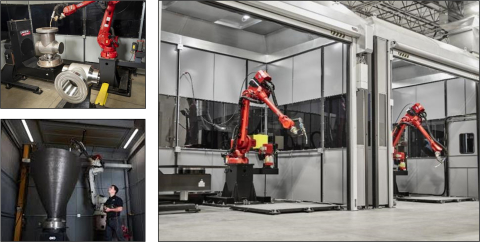
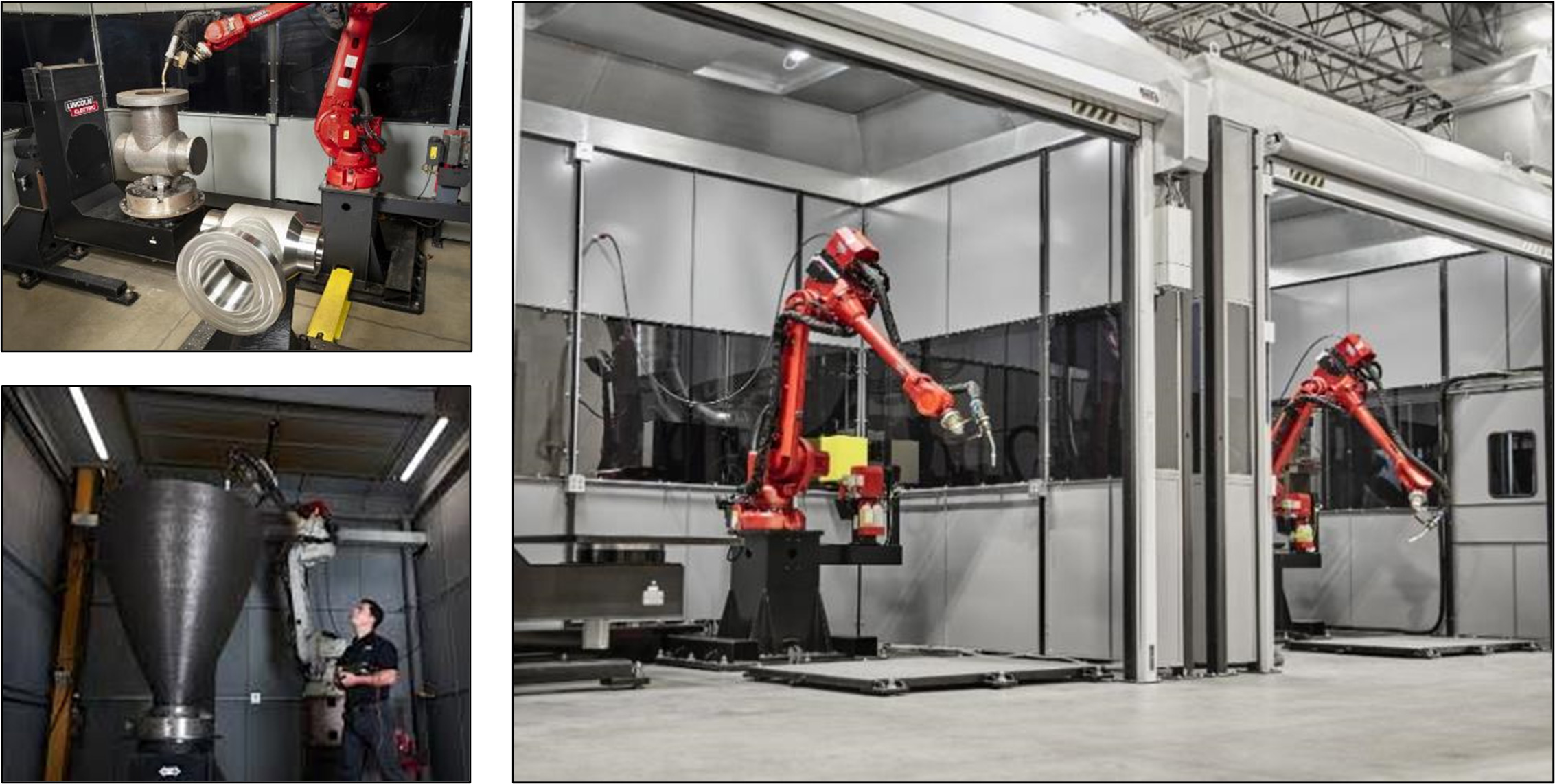
Photo via Lincoln Electric One of the many challenges of meeting future U.S. energy goals is current limitations for the U.S. manufacturing industry to produce the large near-net-shaped metal components—such as castings and forgings—necessary for many existing and emerging energy systems and sectors. Near-net-shape refers to the manufacturing of parts that are close to the final shape and size necessary, so that the part can then be used with minimal machining or finishing, which, in turn, greatly lowers production costs.
Partnering with the Manufacturing Demonstration Facility (MDF) Innovation Ecosystem, and with funding from AMMTO, the Oak Ridge National Laboratory (ORNL) accelerated the creation of a new and novel U.S. production capability. MedUSA is a multi-agent additive manufacturing system that uses three robotic arms, each equipped with a welder, to create near-net-shape parts via wire-arc additive manufacturing. In addition to addressing domestic supply-chain challenges in the production of near-net-shape components, the flexibility of the system means that large parts, which generally are produced in small volumes, can be made more economically. The positive benefits of the commercialization of this process will only grow over time, making the production of components for large-scale energy applications—like wind energy, hydropower, or next generation nuclear power—much more viable for, and attractive to, industry.
Because of AMMTO's work, Lincoln Electric, the country’s largest supplier of welding wire, now has a vertically integrated, large-scale metallic component supply business that is internationally competitive, which represents not just an advancement for a single process, but for a whole R&D wing of a U.S. company to grow. More recently, the ORNL MDF demonstrated a new approach for multi-agent manufacturing to be employed in future large-scale foundries at the International Manufacturing Technology Show (IMTS), which is one of the largest meetings for the manufacturing community. These efforts will ensure ongoing competitiveness through innovation for domestic large-scale manufacturing for energy systems.
Today, the United States generally does not domestically manufacture the large or medium-scale titanium components necessary for air and spacecraft. Most flight-critical titanium components are currently sourced from overseas suppliers, which represents a considerable national security risk. Additionally, most current manufacturing processes result in inefficient waste of energy intensive titanium feedstock. The development of new additive manufacturing processes explored by AMMTO may fundamentally change both the energy efficiency and the cost structure of processing these components—enabling entirely new pathways toward domestically producing more energy efficient, high-value titanium components that will ensure continued U.S. competitiveness in the critical aerospace sector.
With the multi-year support and direction of AMMTO, a novel additive manufacturing process was developed in partnership with Oak Ridge National Laboratory (ORNL) and their Manufacturing Demonstration Facility (MDF) Industrial ecosystem, which allowed the project to reach commercialization. AMMTO directed and approved the work scope and developed the tools and process knowledge that led to project success.
The newly developed system incorporates advanced additive manufacturing technology to produce high-value titanium components while driving down costs enough to enable economical production in the United States, successfully “reshoring” production through a new process technology.
Critically, this technology also offers considerable energy savings. For example, this type of titanium component typically has a buy:fly ratio of about 50:1, meaning that just a mere fraction of the purchased, energy intensive titanium feedstock makes it into the final part, with the rest being downcycled and/or discarded as industrial waste. However, the AMMTO partnership’s novel process generally produces parts at around 2-10:1, meaning that this new system consumes 5-25 times less materially embodied energy than its conventional counterpart.
This now commercialized process will likely continue to expand its manufacturing footprint across the United States. GKN Aerospace has commissioned its first plant in Fort Worth, TX built around the process technology to supply domestic large scale titanium components, which will lead to the creation of approximately 100 new high-paying jobs. The impacts to the U.S. workforce will be significant as this sector grows to support the needs of future aircraft.
The components of energy systems are exposed to a wide range of harsh service condition stressors, such as extreme heat and pressure, thermal cycling, corrosive chemicals, irradiation, and mechanical wear. Frequently, component materials are exposed to two or more of these stressors simultaneously, which can degrade performance, reduce efficiency, and eventually lead to equipment failure. As energy demands continue to grow, new materials and manufacturing approaches for harsh service environments are required to advance power generation, energy storage, and other sectors while helping equipment operate more effectively and affordably.
In gas turbines and jet engines, hot gas path (HGP) sections are a highly corrosive setting where parts experience extreme temperatures, mechanical loads, and caustic compounds. High gamma prime (γ') strengthened nickel superalloys such as René 41 and René 80 perform well in such harsh environments, but these superalloys are expensive. Furthermore, the traditional manufacturing approach of making an entire part from a high γ' strengthened superalloy further drives up costs, even for systems that require only one section with high γ' properties.
One potential solution is to make the part largely from a low or no γ' superalloy, such as Inconel 718, and simply join (via welding) René 41 or René 80 to the exact location where the advanced properties are needed. This approach, however, has a major drawback: the joining interface is a common site of part failure. A more durable solution is to produce a functionally graded material (FGM) via additive manufacturing, wherein the two superalloy types can be mixed in precise proportions such that the transitions between them are seamless.
One recently completed project in AMMTO’s portfolio made a significant advancement in this space. Supported by AMMTO, the engineering services firm EWI produced a novel Inconel 718 to René 41 FGM for jet engines. The EWI team used directed energy deposition (DED) additive manufacturing to build a full-scale jet engine case with the FGM.
To assist in selecting the materials and in manufacturing the final product, EWI also developed a machine learning and modeling toolkit as part of the project. Among other process enhancements, the toolkit allowed the team to predict the FGM microstructure, optimize printing parameters, and avoid defect formation.
The results of the project are promising. Compared to the baseline technology—common rotary friction welding—EWI’s FGM for jet engines showed a 10% higher ultimate tensile strength and a 45% improvement in average fatigue life. In addition, the team demonstrated the potential for a 10% reduction in cost over conventional manufacturing. Beyond the specific applications addressed in this project, EWI’s innovation could be used in many other situations to increase energy efficiency, reduce costs, and limit premature component failure.
Innovation Ecosystems: Manufacturing USA Institutes
AMMTO manages five Manufacturing USA Institutes that convene the brightest minds from our national labs, government, academia, and industries to tackle vital manufacturing challenges. This institute model enables crucial cross-sector collaboration and prioritizes representation across supply chains. Because of this, the respective member bases of AMMTO's institutes include many small and medium businesses, which supports coordinating RD&D efforts across the full supply chain or market sector to optimize impacts.
Each of AMMTO's Manufacturing USA institutes provide shared access to unique facilities or RD&D resources that accelerate the development and scale-up of new technologies, through risk and cost reduction for RD&D projects.
By engaging such a holistic stakeholder landscape, our institutes are positioned to leverage unique insights into the needs of their relevant RD&D communities. Often, these insights will be utilized by AMMTO in developing roadmaps and strategies for the office.
This engagement also means institutes are uniquely positioned to create innovative workforce development programs that support the growth of the manufacturing ecosystem related to their technology areas, as discussed in the sections below.
Utilizing Manufacturing Institutes and Their Ecosystems to Drive Training
Manufacturing USA institutes are a key collaborator in AMMTO's mission to develop the next generation manufacturing workforce. Each of these institutes has a diverse ecosystem that can provide insights to inform the development of trainings that are most needed in their areas and will have the greatest impact. This approach ensures that those closest to the issues can help guide the development of these trainings.
- Image
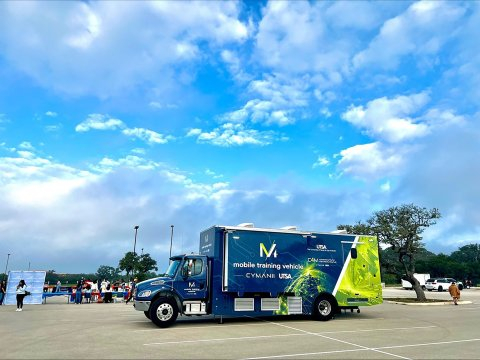
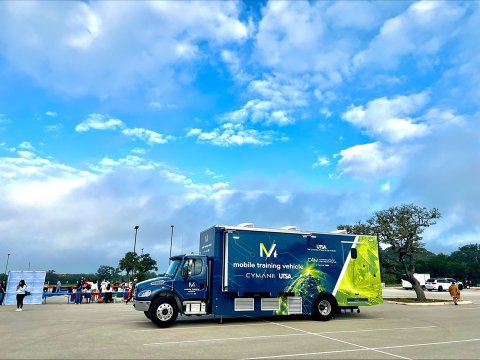
Photo by Nebiat Solomon for AMMTO While we often think of cybersecurity in the context of hackers stealing our personal and financial data from major corporations, cyberthreats can create just as much damage and chaos to both the U.S. energy infrastructure and myriad advanced manufacturing systems.
The threat and consequences of cyberattacks are becoming even more dire as advanced manufacturing systems further rely upon various industrial Internet of Things (IoT) devices to further streamline and improve smart manufacturing capabilities, requiring manufacturers and their systems to be on constant high alert. Consider, for example, the domino effect in manufacturing supply chains, where one manufacturing plant in the pipeline may have the resources to thwart hackers, while another does not: if the latter fell victim to a cybersecurity attack, this could greatly impede and even bring to a standstill the manufacturing process for both plants.
But providing employees with the resources, knowledge, and training to confront these threats can be challenging for many manufacturers. To alleviate this issue, the Cybersecurity Manufacturing Innovation Institute (CyManII) works to conduct cybersecurity research and provide innovative and low-cost cyber hygiene and cybersecurity training to manufacturers.
For example, the UTSA Cyber Range is an advanced, dedicated classroom and learning lab at the University of Texas at San Antonio. But a more mobile solution is still necessary to reach small and even mid-range manufacturers throughout Texas and in other states.CyManII recently introduced the first-of-its-kind CyManII Mobile Training Vehicle, which provides remote training for manufacturers that need it, but cannot necessarily afford to send their workers to offsite trainings. This state-of-the-art mobile training vehicle—which is fully equipped with internet access, laptops, and training space—can provide hands-on experience directly at the manufacturing plant. In addition to instruction, the CyManII Mobile Training Vehicle provides learners with simulated digital networks that train them to detect, identity, and mitigate targeted cyberattacks using realistically modeled scenarios.
By creating a high-tech classroom on wheels, the Mobile Training Vehicle helps CyManII provide critical mobile training and invaluable simulated experience. This service alleviates the burden and costs of travel while greatly strengthening critical manufacturing infrastructure from the crippling—and growing—threats of cyberattacks.
Leveraging the National Laboratories to Support Advanced Materials and Manufacturing Entrepreneurship
The U.S. national laboratories are centers of scientific innovation and expertise. For budding entrepreneurs in advanced materials and manufacturing technologies, the national labs can be invaluable resources, providing access to mentorship, specialized equipment, and funding that help transform an idea into reality.
Meeting crucial DOE energy goals requires the support and success of innovative new energy-related businesses and business leaders who are taking on the difficult energy challenges of today. Of course, starting a new business from the ground up remains incredibly daunting, demanding, and risky. And the challenges of such an endeavor are so much greater when that new startup business is based on a "hard tech" innovation (i.e., a technology solution based on substantial scientific or engineering challenges).
However, providing support to new businesses and their cofounders at the earliest stages of technology development can not only increase success rates, but also dramatically accelerate the time to market, thus shortening the time necessary for the adoption and impact of game-changing new energy and manufacturing technologies.
The Lab-Embedded Entrepreneurship Program (LEEP) initiated, developed, and supported by AMMTO helps strengthen the entrepreneurial pathway to success and start-up for new technology commercialization by providing crucial support to new entrepreneurs, connecting them to business development and world leading R&D resources at national labs.
By being market driven and committed to finding and supporting promising energy leaders, LEEP has generated an amazing record of success, with 97% of LEEP-supported startups remaining in business or being acquired and collectively raising over $3.9 billion in follow-on funding. Additionally, the success of these LEEP-supported businesses has, so far, created over 2,400 jobs.
The program’s success has generated interest and demonstrated value for other offices in DOE as well. In just two years, LEEP has expanded from three offices selecting and funding innovators in 2022 to ten offices supporting a record-sized cohort of twenty-seven LEEP innovators in 2024. AMMTO, the original supporter of the LEEP Program, continues to manage the program directly and remains its largest funding office.
Make sure you stay in the loop with the progress being made across AMMTO's portfolio as we prepare for another packed year full of materials and manufacturing innovation.
Sign up to get the latest news on advanced materials and manufacturing news and opportunities, including the progress being made across AMMTO’s portfolio as we prepare for another packed year.
1: Climate Leadership Council
2: The Energy Act of 2020 authorized the Secretary of Energy to determine critical materials for energy. For the full definition of critical materials per the Energy Act of 2020, as well as the list of eighteen critical materials determined as a result of the CMA 2023 analysis, see the AMMTO Critical Minerals and Materials page.