



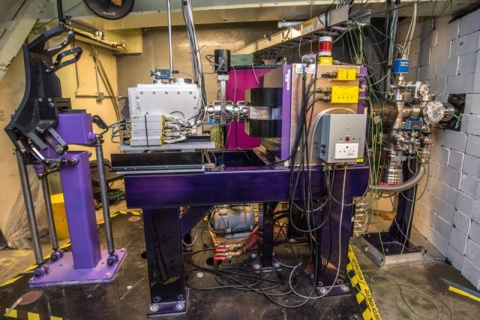
Expanding our understanding of the structure and decay properties of some of the most exotic elements.

Built with detector technologies used in nuclear physics experiments, the system monitors radiation treatments in hard-to-reach areas.
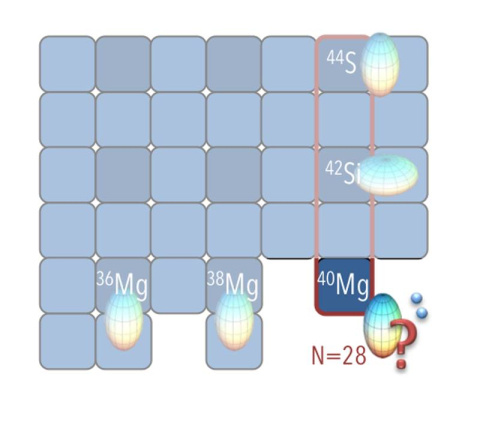
The recently observed “fingerprints” of neutron-rich magnesium-40 suggest an unexpected change in nuclear structure.
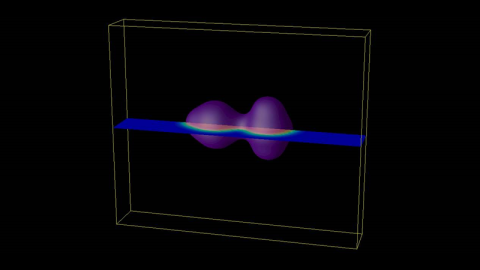
Following in the footsteps of supernovas, a new approach offers a more natural way to make new extremely heavy elements.
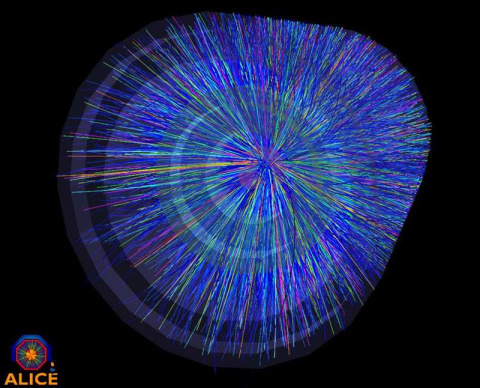
Pairs of sub-atomic particles may catalyze reactions that happened moments after the Big Bang.
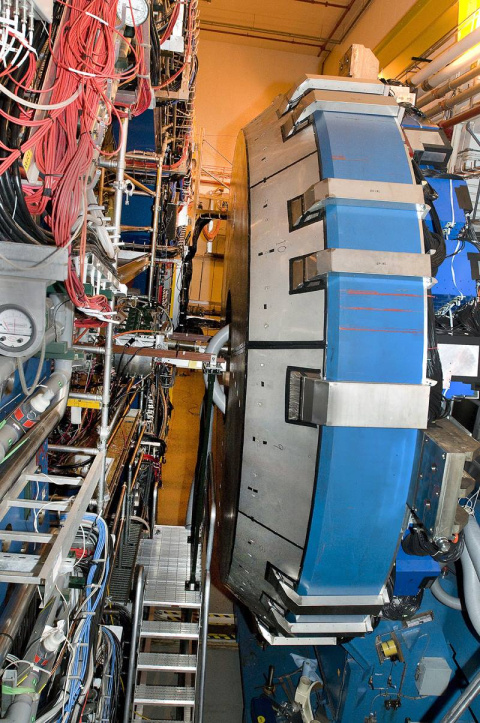
Low-momentum (wimpy) quarks and gluons contribute to proton spin, offering insights into protons’ behavior in all visible matter.

Production of actinium-227 ramps up for use in a drug to fight prostate cancer that has spread to bone.
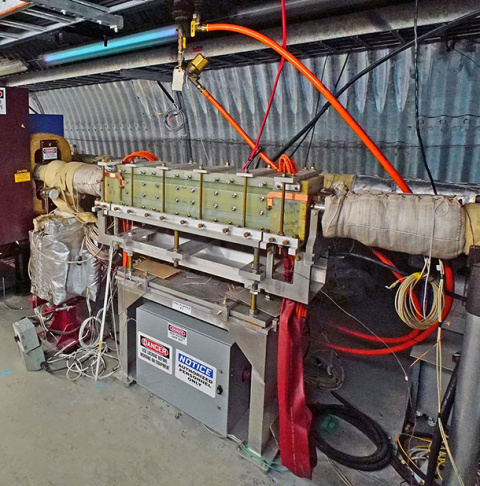
The spin direction of protons was reversed, for the first time, using a nine-magnet device, potentially helping tease out details about protons.

Since the 1980s, scientists have known that quark and antiquark spins within a proton account for, at best, a quarter of the overall proton spin.
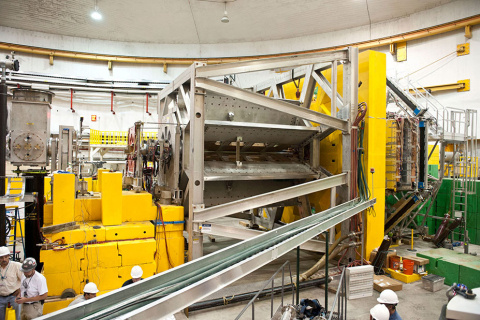
A precision measurement of the proton’s weak charge narrows the search for new physics.