



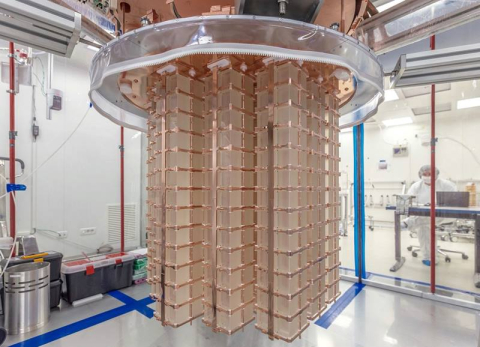
Nuclear physicists narrow the search for a rare nuclear decay that can explain the origin of matter in the universe.
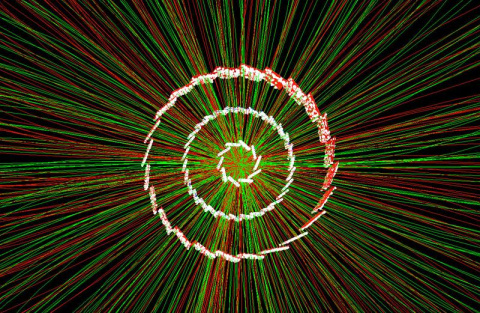
Tracking particles containing charm quarks offers insight into how quarks combine.
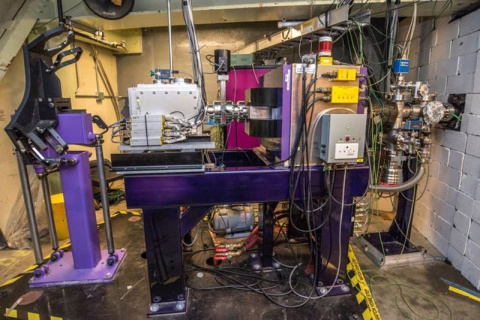
Isotope Discovery Continues: Mass Identification Confirms Production of a New Isotope of Mendelevium
Scientists discovered the lightest isotope of mendelevium thanks to the direct measurement of its mass number.
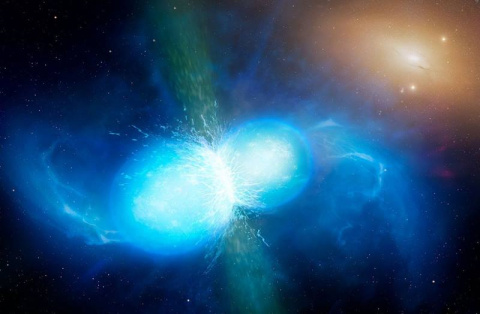
Data from the first observation of a neutron-star collision combined with input from modern nuclear theory narrow the range of neutron star radii.
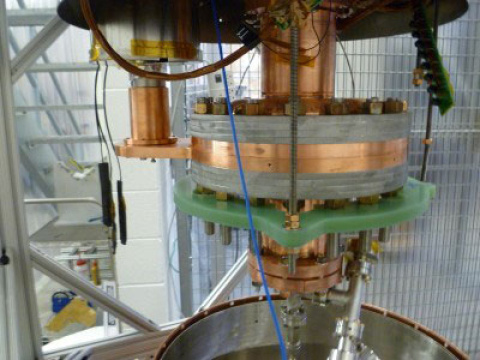
Development of new particle accelerator components can make this niche research technology practical for industrial and medical applications.
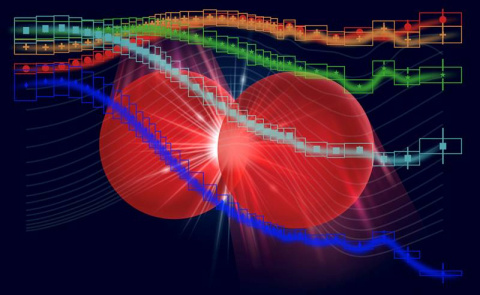
A new analysis provides a clearer picture of the universe by considering the yield of fast particles in grazing versus head-on nuclear collisions.
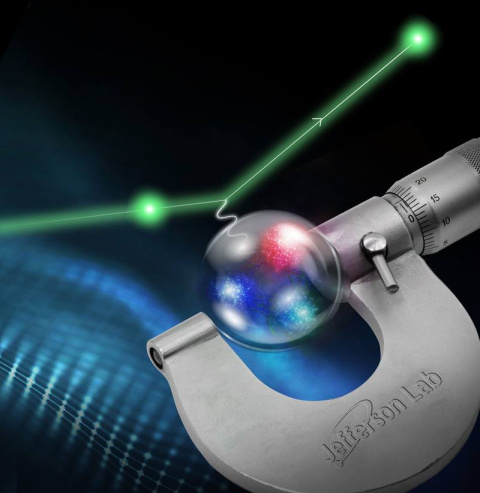
Physicists get closer to solving the proton radius puzzle with unique new measurement of the charge radius of the proton.
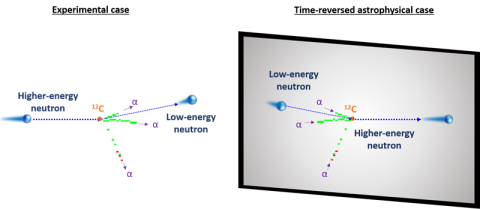
Studying nuclear reactions using a Time Projection Chamber allows scientists to study stars’ internal processes.
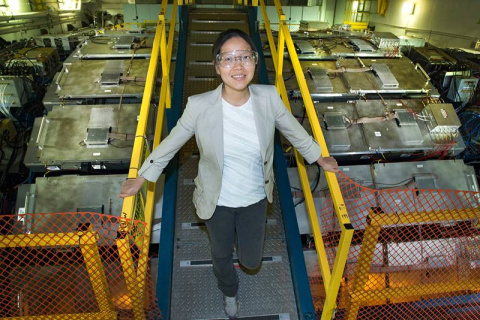
New measurements offer insights into binding interactions that glue fundamental building blocks of matter together.
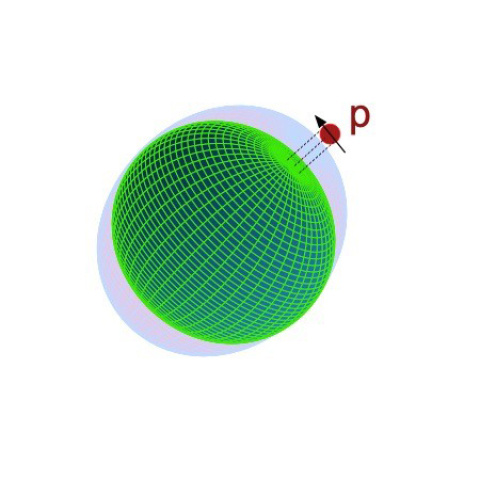
Measurements of the electromagnetic properties of radioactive antimony-129 offer new insights on proton-neutron interactions and nuclear shapes.