



RSS
The technique allowed experimental measurement of the entropy of the Li-ion electrolyte, a thermodynamic feature affecting Li-ion battery design.
Researchers have used machine learning to create a model that can simulate reactive processes in a diverse set of organic materials and conditions.
Scientists are looking to create a clearer picture of what happens when you combine climate change with urban environments.
The AI model, developed at PNNL, can identify patterns in electron microscope images of materials without requiring human intervention.
Sean Oesch, a leader in cyber technologies, contributed to the OWASP AI Security & Privacy Guide to inform global AI security standards & regulations.
Arslan is the director of the Center for Nanoscale Materials (CNM) and the Nanoscience and Technology division at Argonne National Laboratory.
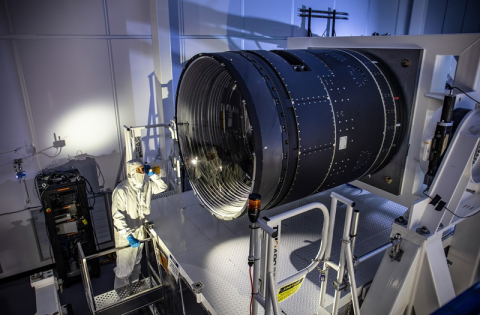
A team from DOE’s national labs has finished building the Legacy Survey of Space and Time Camera, which will take unparalleled images of the cosmos.
A team developed a new cathode material that is electrically conductive and structurally healable, overcoming the limitations of current cathodes.
A new efficient laser “microcomb” developed by Stanford researchers could revolutionize precision measurement in the handheld electronics realm.
Researchers find neutron star mergers are a treasure trove for new physics signals, with implications for determining the true nature of dark matter.