



RSS
The team reached a resolution better than 20 nanometers, detecting optical properties of plant cell materials down to the width of a microfibril.
Lee Hagaman, a graduate student in physics at Yale University, will be collaborating with Xin Qian at Brookhaven National Laboratory.
Iowa State researchers are working to develop strategies and controllers that would reenergize power grids dominated by wind power.
MSU researchers find an integrated approach to land management practices can reduce carbon dioxide in the atmosphere far more than earlier estimates.
The Daya Bay Neutrino Experiment has produced the most precise measurement yet of theta13, a key for understanding how neutrinos change their "flavor"
Meet the engineer who oversees implementation of the thousands of electronic components that will bring the upgraded APS to life.
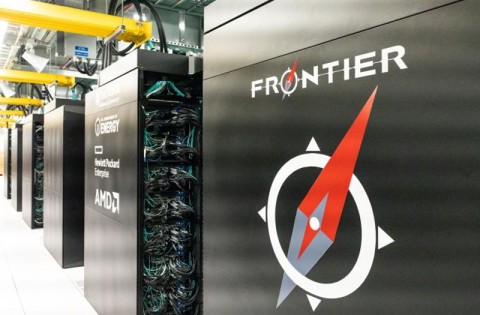
U.S. scientists and collaborators have a powerful new instrument at their disposal—the world’s first exascale supercomputer.
Engineers and scientists develop QICK, a new control electronics system to improve computing performance and cut costs.
Researchers demonstrated a system where superconducting cables move electric current with no resistance, using helium gas for crucial cooling.
Theoretical research from FRIB helps answer questions about the ghost-like neutrino particle, including its mass & whether it is its own antiparticle.