



RSS
Using electrochemistry, University of Oregon researchers have developed a way to make iron metal for steel production without burning fossil fuels.
Ole Miss is among the institutions partnering on Fermilab's Deep Underground Neutrino Experiment, or DUNE.
Scientists supported by Q-NEXT have found a way to engineer a high-performing niobium-based qubit & so take advantage of niobium’s superior qualities.
Data from heavy ion collisions give new insight into electromagnetic properties of quark-gluon plasma.
Experimentalists & theorists collaborate to develop critical detector components, data analysis tools, and theoretical models for the HL-LHC upgrade.
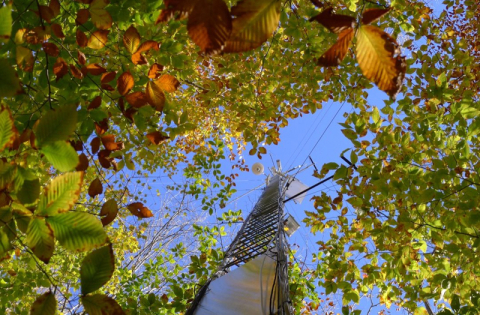
Decades of research supported by the Department of Energy informed a national strategy to measure and monitor greenhouse gas emissions.
The finding provides insights into the ultrafast control of magnetic materials, with potential to enable next-generation information processing tech.
The team built and characterized quantum memories that operate at room temperature and demonstrated that these memories have identical performance.
University of Rochester scientists led experiments to demonstrate an effective “spark plug” for direct-drive methods of inertial confinement fusion.
Chavez will bring her creative approach to integrating art, science and technology to the U.S. Department of Energy’s Fermi National Accelerator Lab.