



Decades of uranium enrichment and support activities at the Paducah Site necessitated a need for a cleanup strategy to evaluate and take appropriate actions to ensure protection of human health and the environment.
Past operations generated hazardous, radioactive, mixed (both hazardous and radioactive), and non-chemical (sanitary) waste and resulted in soil, groundwater and surface water contamination. Environmental investigations have been conducted since the 1980s to understand the extent of contamination.
Following environmental investigations of the entire site, the Paducah Gaseous Diffusion Plant was placed on the Superfund National Priorities List (NPL) in 1994. Sites on the NPL must be cleaned up in accordance with the Comprehensive Environmental Response, Compensation, and Liability Act of 1980 (CERCLA). CERCLA is a United States federal law designed to identify, investigate and cleanup hazardous wastes sites that may pose a threat to human health or the environment.
In accordance with CERCLA, DOE worked with the U.S. Environmental Protection Agency (EPA) and Kentucky Department for Environmental Protection (KDEP) to establish the Federal Facility Agreement (FFA). The FFA established the framework for cleanup at Paducah.
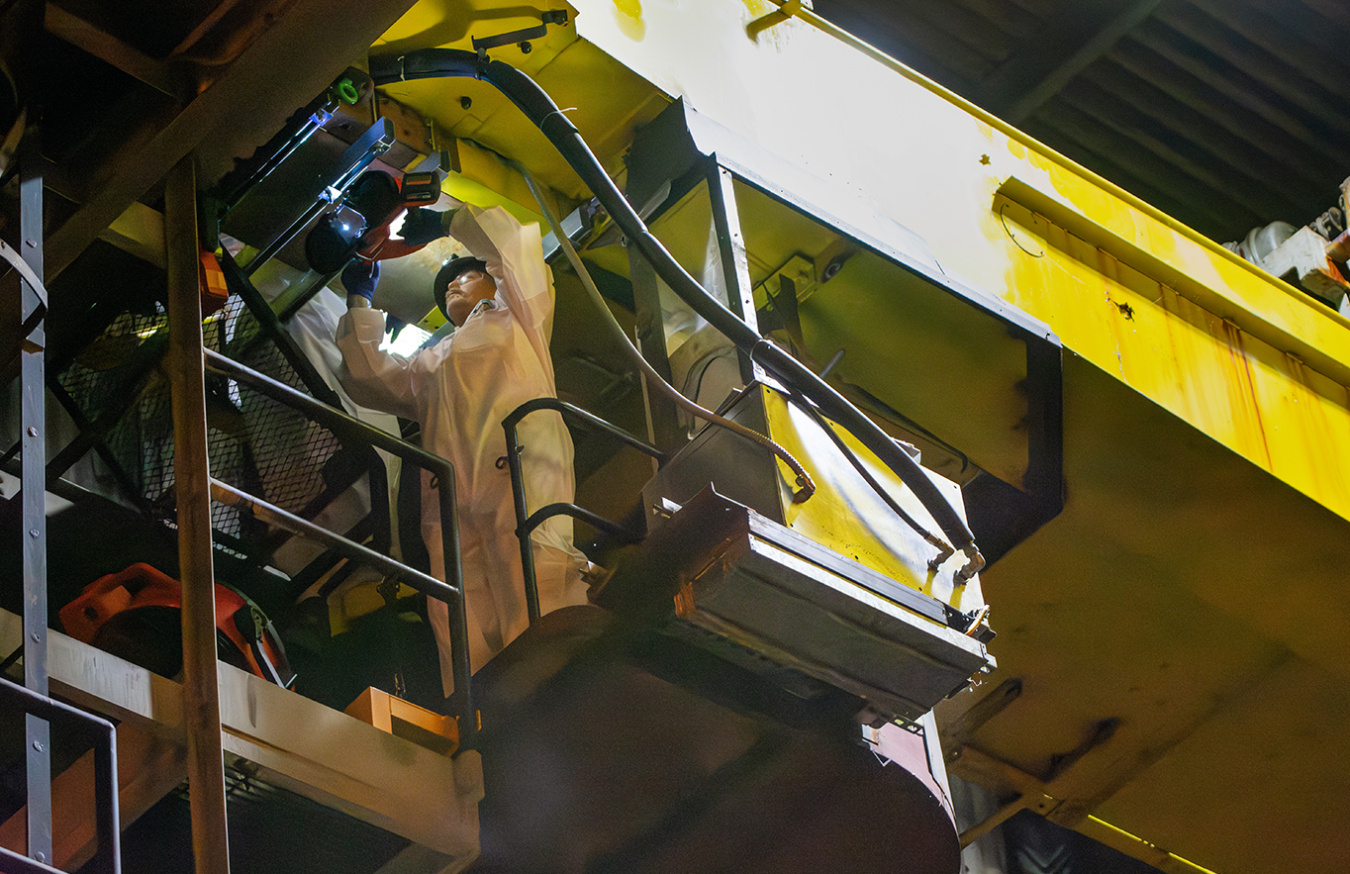
Working with the U.S. Environmental Protection Agency and state of Kentucky, Paducah is advancing a holistic approach, dubbed Decision 2029. This initiative establishes a streamlined regulatory framework focused on a comprehensive sitewide cleanup for the Paducah Gaseous Diffusion Plant that facilitates a reindustrialization end-state attractive to industry. The strategy integrates and condenses 51 decision documents into a consolidated set of five distinct decisions with a focus on three that will shape the path forward for future cleanup at the site through deactivation and demolition, waste disposal and environmental media remediation.
The Paducah annual Site Management Plan outlines the approach for achieving cleanup under the Federal Facilities Agreement between DOE, Kentucky and EPA. Priorities for reducing risks are established as early as possible. Based on priorities, cleanup actions are divided into units, called operable units (OUs), which are grouped by the effected material (media) or activities—i.e., Groundwater OU, Surface Water OU, Soils OU, Burial Grounds OU, and Decontamination and Decommissioning (D&D) OU.
The cleanup scope is associated with these media-specific OUs that were established by assessing risks for each source area at the site. This process included looking at the type and amount of the contaminant, how the contaminant is released, and whether exposure could occur based on current and possible future use of the Paducah Site.
The scope of the Environmental Media Sitewide OU identifies and evaluates final remedial actions for soil and sources above the Regional Gravel Aquifer, at- and below grade portions of facilities (e.g., basements, footings, utilities), surface water (on-site and off-site), lagoons, burial grounds, and 3-5 confirmed/probable Dense Nonaqueous Phase Liquids (DNAPL) in groundwater beneath the C-400 Complex OU.
The C-400 Complex OU scope is being absorbed into the D&D OU, Environmental Media Sitewide OU, and Comprehensive Site OU (SCOU) decisions. The D&D decision will include the above grade structures inside the C-400 Complex. The Environmental Media Sitewide OU will include the at- and below grade features and confirmed/probable DNAPL in groundwater beneath/inside the C-400 Complex. The CSOU will include dissolved phase plume beneath/inside the C-400 Complex. Milestones for the C-400 final remedial action represent a contingent schedule if the D&D OU and Environmental Media Sitewide OU RI/FS, proposed plans, and RODs are not proceeding as anticipated.
Decontamination is the reduction or removal of contaminated radioactive material from a structure, object or person. Decommissioning is the process of removing a nuclear facility from service.
The D&D OU uses the CERCLA removal action process to administer decommissioning activities of excess buildings (i.e., inactive with no reuse potential) that have a known or potential release of contamination to the environment. The primary objective for this OU is to minimize or eliminate the potential threats to health and the environment caused by the potential uncontrolled release of hazardous substances from contaminated structures and to reduce long-term surveillance and maintenance costs.
The final CSOU evaluation will consider appropriate actions for any remaining contamination, after actions determined by the three decision documents for WDA OU, D&D OU, and Environmental Media Sitewide OU have been completed. With the new cleanup strategy, the CSOU will include the following:
- Groundwater Dissolved-Phase Plume
- Northeast Plume (interim ROD transition to final remedy)
- Northwest Plume (interim ROD transition to final remedy)
- Dissolved-Phase Plumes
- Water Policy (removal action transition to final remedy)
- Potential additional Groundwater Sources (RGA)
- Comprehensive risk review of remaining site conditions
The scope of this project is to evaluate disposal options for CERCLA waste and wastewater that will be generated as a result of implementing remedial actions for all the OUs as determined by the sitewide D&D OU Record of Decision (ROD) and Environmental Media Sitewide OU ROD, including relevant interim RODs and action memoranda. The evaluation of disposal options will be conducted using the CERCLA remedial decision-making process. Accordingly, the scope of the RI/FS will be focused and tailored to the nature of this project.
Paducah Regulatory Approach
Past uranium enrichment operations and support activities generated hazardous, radioactive, mixed (both hazardous and radioactive), and non-chemical (sanitary) waste. Past operations also resulted in soil, groundwater, and surface water contamination. Environmental investigations have been conducted since the 1980s to understand the extent of contamination.
Following environmental investigations of the entire site, the Paducah Gaseous Diffusion Plant was placed on the Superfund National Priorities List (NPL) in 1994. Sites on the NPL must be cleaned up in accordance with the Comprehensive Environmental Response, Compensation, and Liability Act of 1980 (CERCLA). CERCLA is a United States federal law designed to identify, investigate and clean-up hazardous wastes sites that may pose a threat to human health or the environment.
In accordance with CERCLA, DOE worked with the U.S. Environmental Protection Agency (EPA) and Kentucky Department for Environmental Protection (KDEP) to establish the Federal Facility Agreement (FFA). The FFA established the framework for cleanup at Paducah, instituted enforceable milestones, and coordinated site-specific cleanup requirements for achieving comprehensive site cleanup, including stakeholder involvement under CERCLA and the Resource Conservation and Recovery Act.
The FFA directs the comprehensive remediation of the Paducah Gaseous Diffusion Plant. It contains requirements for implementing investigations of known or potential releases of hazardous substances, pollutants or contaminants, or hazardous wastes or hazardous constituents, selection and implementation of appropriate remedial and removal actions and establishing priorities for action and development of schedules, consistent with the established priorities, goals and objectives of this agreement.
A key aspect of PPPO’s Strategic Vision is an effort underway to work cooperatively with U.S. EPA Region 4 and the Commonwealth of Kentucky to re-align the regulatory approach at Paducah to a more holistic, integrated approach successfully used at Portsmouth. PPPO has proposed to integrate and accelerate the Paducah clean-up decisions for Environmental Media, D&D and Waste Disposition to 2029. The Decision 2029 plan is projected to accelerate final clean-up decisions by up to 25 years. This initiative will maintain focus on the TCE source at C-400 while streamlining the regulatory process to maximize an integrated project portfolio strategy. The plan will reduce more than 50 regulatory decision documents to five decisions, assuring consistent and aligned Applicable or Relevant and Appropriate Requirements.