



The U.S. Department of Energy’s Office of Environmental Management is seeing significant improvement in sampling and analysis times at the 222-S Laboratory at the Hanford Site. May 19, 2026
Office of Environmental Management
May 19, 2026 Estimated Read Time min
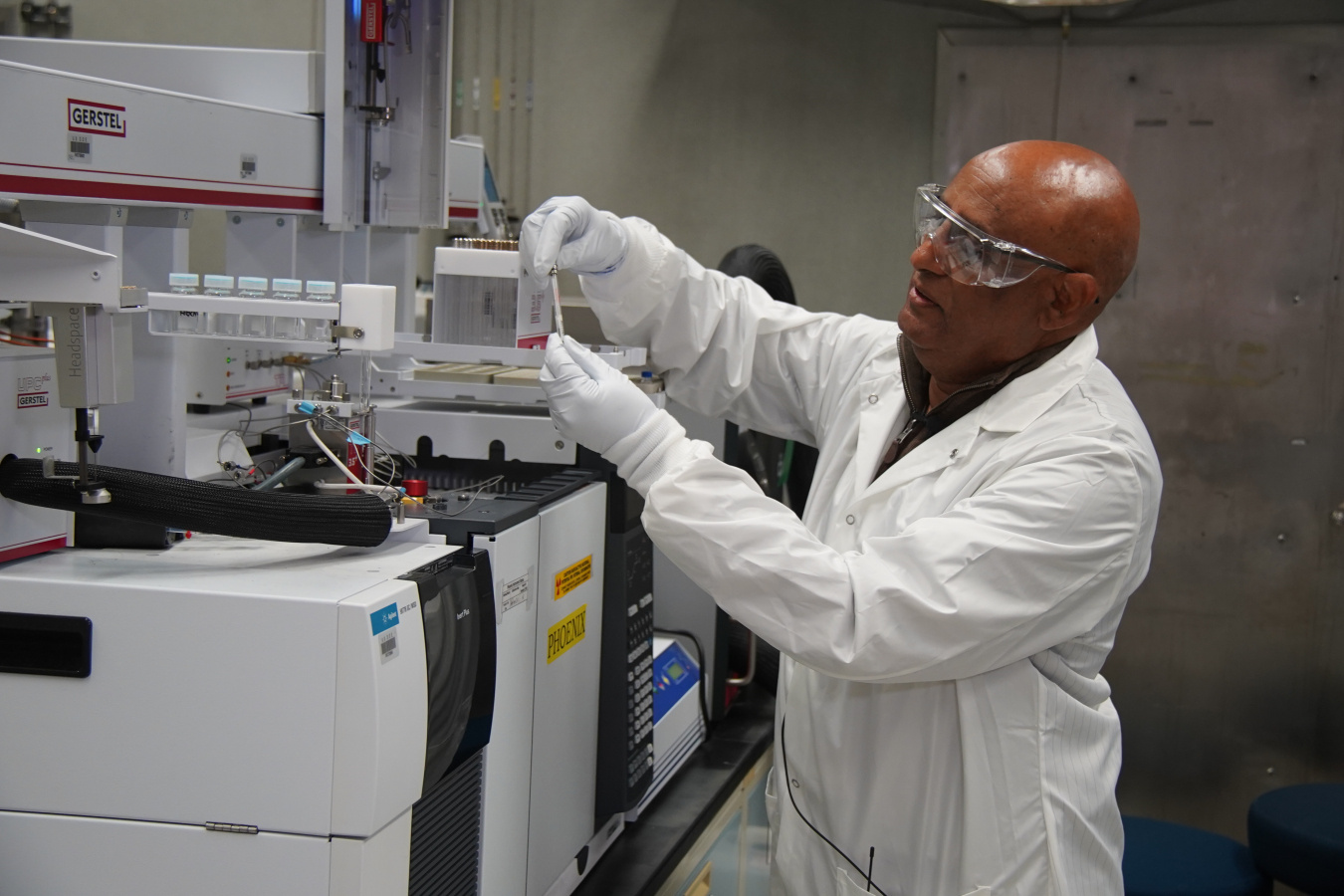
Using a research method that significantly reduces sample turnaround times, scientist Solomon Bairai operates equipment to analyze tank waste samples for organic chemicals at the 222-S Laboratory on the Hanford Site.
RICHLAND, Wash. — The U.S. Department of Energy’s Office of Environmental Management (EM) is seeing significant improvement in sampling and analysis times at the 222-S Laboratory at the Hanford Site.
The laboratory has achieved a major accomplishment in reducing the time it takes from receiving a sample to delivering analytical results by 50% over the past five years.
For 75 years, the lab has been the analytical backbone of Hanford’s evolving mission, delivering data that guides critical decisions. Today, contractor Navarro-ATL is advancing one of the lab’s most significant modernization periods, with upgraded facilities, new analytical methods, state-of-the-art instrumentation, and targeted infrastructure improvements that are positioning the lab for future mission needs.
“These upgrades aren’t just technical improvements — they deliver more capacity, better precision and greater confidence for decisions that reduce risk,” said Mark Hughey, Navarro-ATL’s general manager.
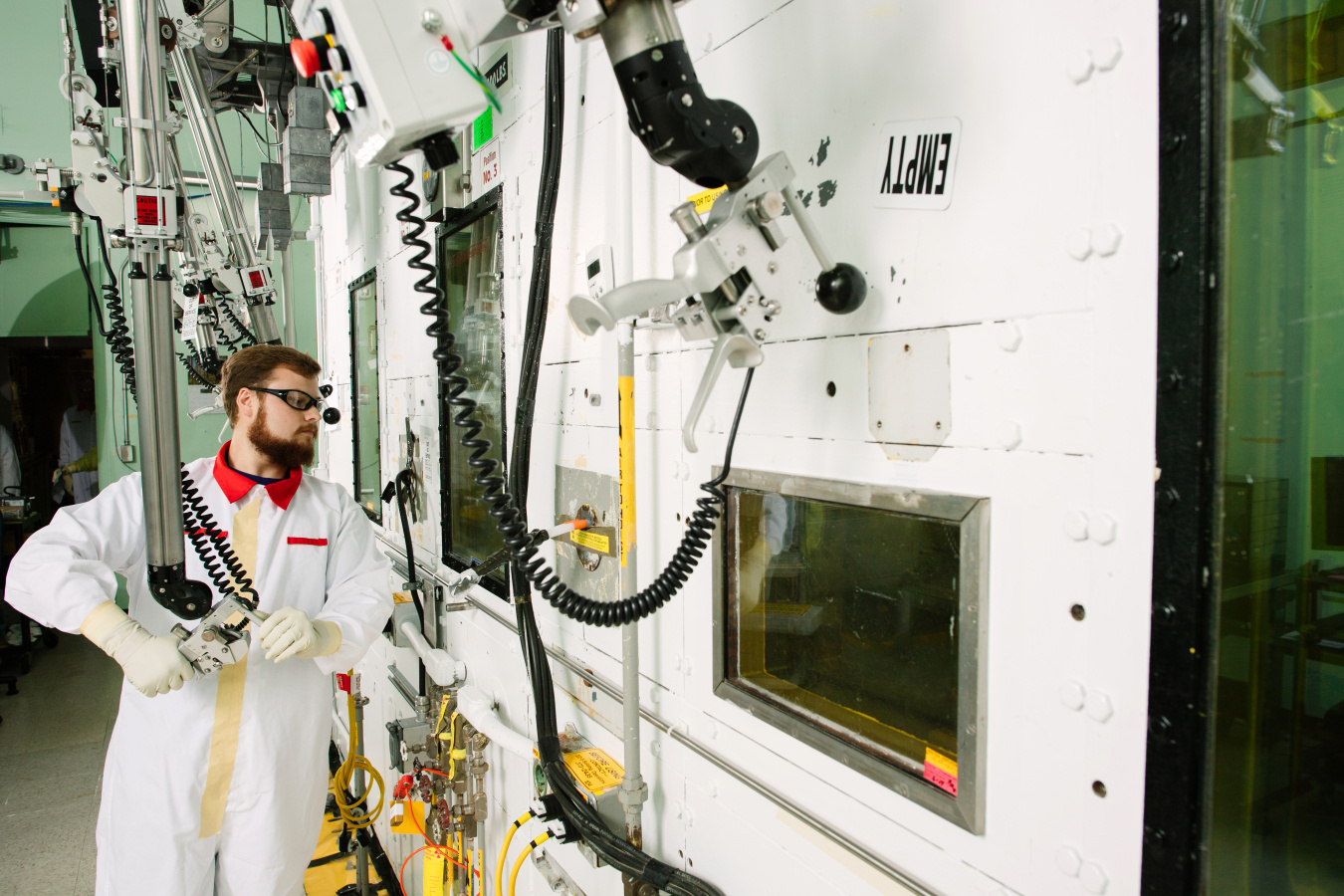
At the 222-S Laboratory, modern upgrades and innovative research methods have cut turnaround times by 50%. From behind shielded glass, scientist Caleb Mortensen guides a mechanical manipulator, reflecting the lab’s commitment to safer, faster work.
Upgrades Expand Capability, Reduce Downtime
EM and Navarro-ATL have invested in improvements that strengthen the lab’s ability to support a growing and increasingly complex cleanup mission. Renovated analytical laboratory rooms and 29 new or modernized instruments installed have expanded capacity and improved reliability.
When the workload increased fourfold in 2025, the lab’s upgrades and process improvements enabled the team to keep pace and deliver results reliably, while also reducing the average turnaround time for essential analytical data from 180 days to less than 90 days — a key accomplishment as EM prepares for treating and processing the waste stored in underground tanks.
A major advancement came with the Washington State Department of Ecology’s approval of the Twister Stir Bar method. Developed by Navarro-ATL chemists, the technique provides more precise identification of complex organic compounds and cuts the time required to separate targeted compounds from a sample from two to three days to just three hours.
Inside the lab’s hot-cell complex, new lead-shielded windows have replaced aging units. The lab is also installing new mechanical manipulators to replace older models. These upgrades enhance the potential 24/7 operations needed to support a faster pace of treatment by the Direct-Feed Low-Activity Waste (DFLAW) program and future grout campaigns.
To receive the latest news and updates about the Office of Environmental Management, submit your e-mail address.