



The safe removal of all enriched uranium from Venezuela sends another signal to the world of a restored and renewed Venezuela. Thanks to President Trump’s decisive leadership, the teams finished in months what would have normally taken years.
National Nuclear Security Administration
May 8, 2026 Estimated Read Time min
Urgent Operation Demonstrated Unique Nonproliferation Capabilities and Close Cooperation with International Partners
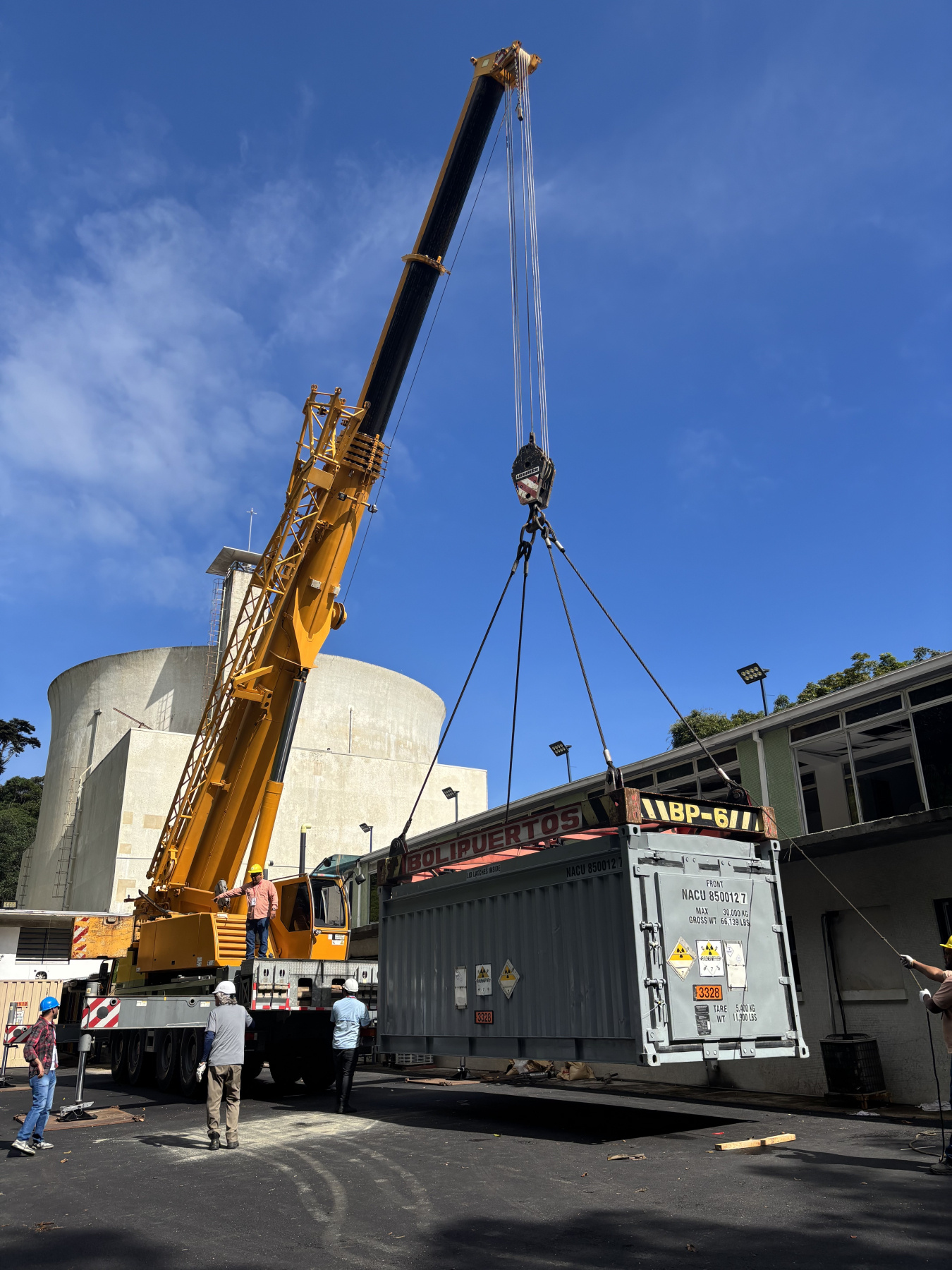
WASHINGTON — In a win for America, Venezuela, and the world, the U.S. Department of Energy’s National Nuclear Security Administration (DOE/NNSA), working with partners, completed the removal of all remaining enriched uranium from a legacy research reactor in Venezuela.
“The safe removal of all enriched uranium from Venezuela sends another signal to the world of a restored and renewed Venezuela,” said Brandon Williams, NNSA Administrator. “Thanks to President Trump’s decisive leadership, the dedicated teams on the ground completed in months what would have normally taken years.”
President Trump and Secretary of State Rubio’s three-phase plan for Venezuela fast-tracked the retirement of this nuclear risk, marking another historic milestone for DOE. Following DOE Secretary Wright’s visit to Venezuela in February, in a matter of weeks, NNSA’s Office of Defense Nuclear Nonproliferation (DNN) worked with Department of State personnel in Washington and Caracas alongside experts from the United Kingdom, the Venezuelan Ministry of Science and Technology, and the International Atomic Energy Agency (IAEA) to prepare for a site assessment to inform removal planning.
For decades, the RV-1 reactor supported physics and nuclear research. Once that work finished in 1991, its uranium, enriched above the crucial 20 percent threshold, became surplus material.
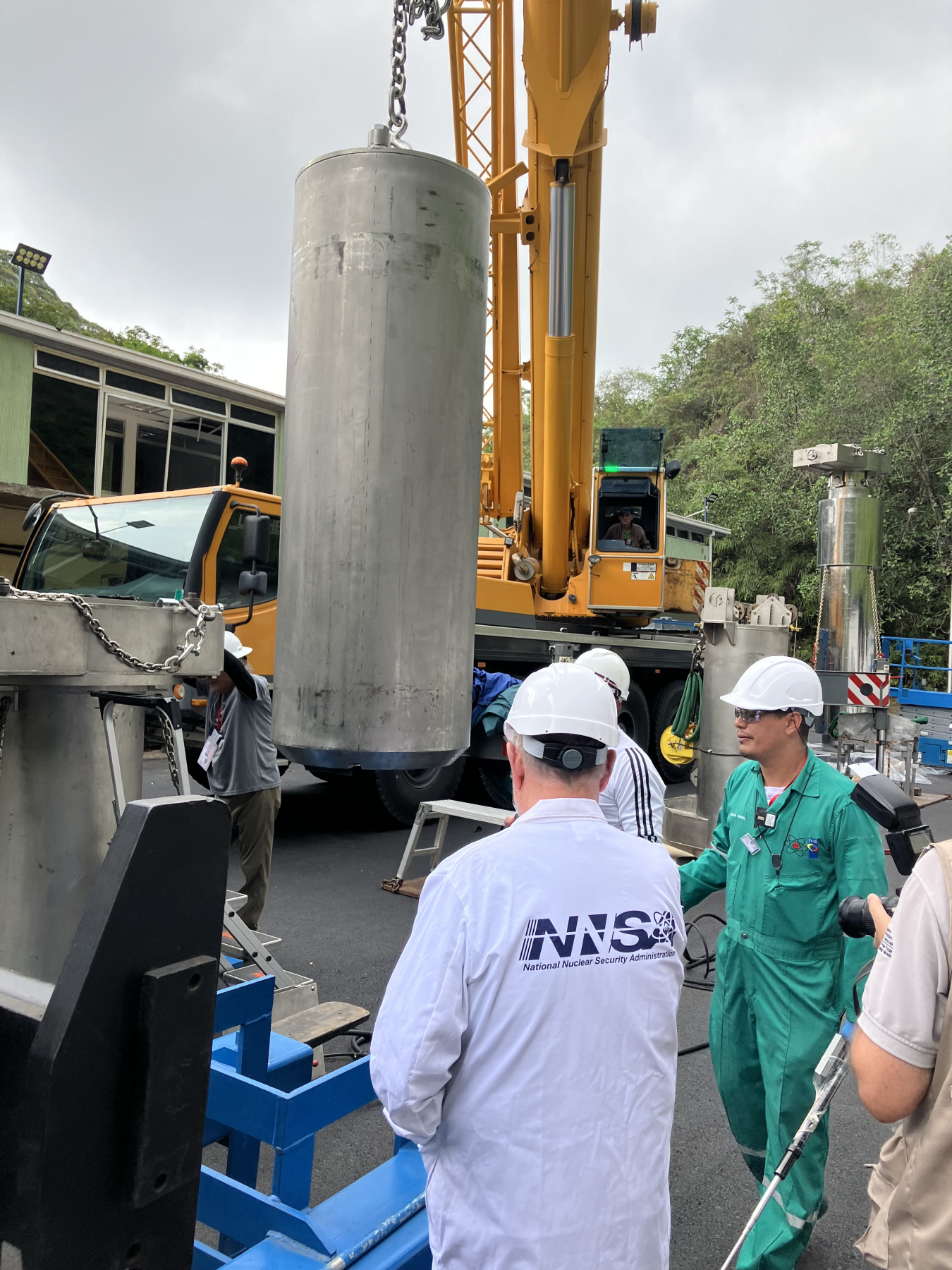
To secure this surplus material, the DNN team and technical experts from the Venezuelan Institute for Scientific Research safely removed 13.5 kilograms (about 30 pounds) of uranium from the RV-1 reactor less than six weeks after their initial site visit. Working in close cooperation with the IAEA throughout, the team securely packaged the uranium into a spent fuel cask.
The group then escorted the material 100 miles overland to a Venezuelan port. There, they transferred the cargo to a specialized carrier supplied by the U.K.’s Nuclear Transport Solutions. The vessel carried the material to the United States arriving on U.S. shores in early May. Upon arrival, U.S. teams unloaded the casks and transported them to the Savannah River Site (SRS) for processing and reuse.
Dr. Matt Napoli, DNN’s Deputy Administrator, traveled to Venezuela to oversee the operation.
“I couldn’t be prouder of the men and women who carried out this vital mission,” Dr. Napoli said. “NNSA’s long history in removing nuclear material and the team’s extensive know-how were key to this success. I would also like to extend my appreciation to our Venezuelan partners for finalizing this material removal and establishing the foundation for future cooperation.”
The people of DNN and its predecessor offices have decades of experience in removing nuclear material from around the globe and ensuring that it cannot be used to threaten the world with nuclear terrorism. Since 1996, they have removed or confirmed the disposition of over 7,350 kilograms (16,250 pounds) of highly enriched uranium and plutonium from dozens of countries.
The DOE Office of Environmental Management took custody of the material at SRS. There, technicians will process the material at the H-Canyon chemical separations facility to obtain high-assay low-enriched uranium for America’s nuclear renaissance.
“Thanks to President Trump’s decisive leadership, the dedicated teams on the ground completed in months what would have normally taken years.”
— Brandon Williams, NNSA Administrator.