With the help of tools at DOE’s Joint Genome Institute, microbiologists explored the world of microbes on conifer needles.
April 22, 2026 Estimated Read Time min
Shannon Brescher Shea
Shannon Brescher Shea (shannon.shea@science.doe.gov) is the social media manager and senior writer/editor in the Office of Science’s Office of Communications and Public Affairs. She writes and curates content for the Office of Science’s Twitter and LinkedIn accounts as well as contributes to the Department of Energy’s overall social media accounts. In addition, she writes and edits feature stories covering the Office of Science’s discovery research and manages the Science Public Outreach Community (SPOC). Previously, she was a communications specialist in the Vehicle Technologies Office in the Office of Energy Efficiency and Renewable Energy. She began at the Energy Department in 2008 as a Presidential Management Fellow. In her free time, she enjoys bicycling, gardening, writing, volunteering, and parenting two awesome kids.
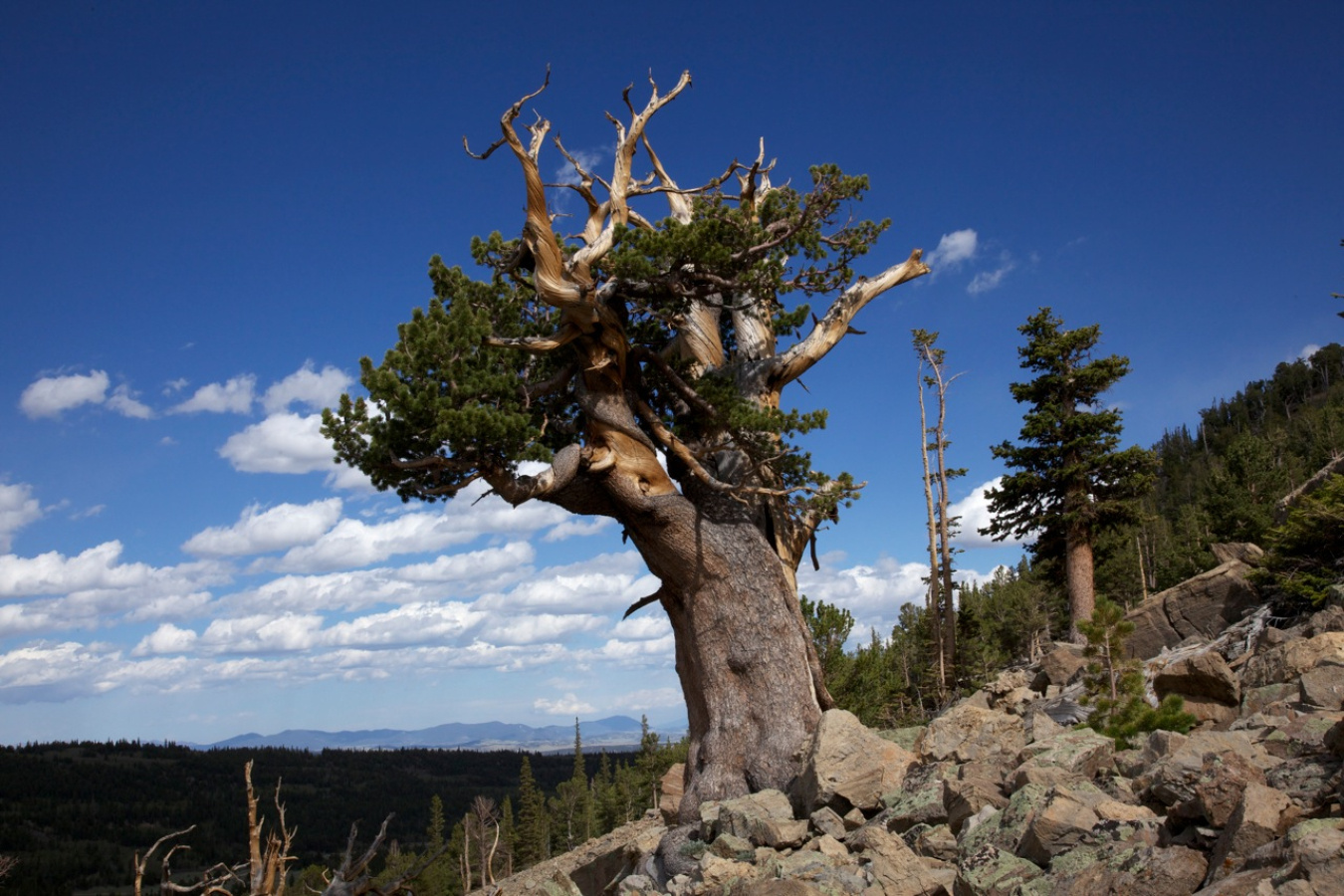
A tree rises up through the forest canopy. Its tall branches split off into twigs with sharp needles sprouting from each one. The needles are green all year long, whether in the sunny summers or snowy winters of the Rocky Mountains.
But look closer. Even closer. So close that you need a microscope to see the tiny inhabitants of this pine needle.
With that help, you’ll find a vast diversity of microbes, complex enough to rival a city. This level is where microbiologists work. They explore these interconnected communities full of bacteria, viruses, fungi, and archaea. The knowledge they gain can provide information about keeping both agricultural crops and natural ecosystems healthy.
Microbiologists used the powerful resources at the Joint Genome Institute (a DOE Office of Science User Facility) to dive into the microbial communities that live on the surfaces of conifer needles. Their findings revealed insights into the interactions between these microbes and how they affect systems around them.
Tiny organisms, big impacts
While most studies of the plant microbiome are done on agricultural crops, this study took a different approach. As Carolin Frank, senior author of the paper and an associate professor in Life and Environmental Sciences at University of California, Merced said, “No one had really looked at conifers before [in this context] … I was excited to explore that.”
Conifer forests supply ecological services such as regulating water and limiting soil erosion. With their tendency to live in tough environments, they can reveal how plants respond and evolve stress tolerance. Compared to other trees, their leaves are long-lasting and provide stable habitats to their microbial neighbors.
As most studies examine microbial communities in trees’ roots, the surfaces of leaves also offer new areas for scientists to explore. Unlike microbes in the soil, exposure to the atmosphere affects these communities’ dynamics. Microbes can move from plant to plant via the wind and small particles that float through the air. Which microbes thrive on the leaves depends on their ability to adapt to plants’ specific conditions.
However, the influence goes both ways. Microbes – including bacteria, viruses, and fungi – can interact with the plants’ chemical defenses, influence nutrient turnover, and affect growth. They can make leaf litter break down faster and fix nitrogen in the soil. They even have some surprising abilities, like producing proteins that act like antifreeze and pigments that protect from UV radiation like sunscreen.
“If we think about bacterial communities, they play such important roles,” said Shayna Bennett, another co-author who was a graduate student intern at the JGI during the study. “You’ve got bacteria that are able to help their host, provide some kind of service, some that are pathogens, and some that are just hanging around.”
Scoping out the communities
Unlike agricultural fields, conifer forests aren’t very accessible. Obtaining a suitable data set required collecting samples from 67 trees at sites that were hundreds of miles apart. Dana Carver (Frank’s graduate student at the time) mapped out a route that allowed her to hit all of the sites in a single month. (She’s now a technical professional at DOE’s Oak Ridge National Laboratory specializing in microbial analysis.) With her husband along as a second pair of eyes and hands, she road-tripped out to six different areas.
There, she sampled three conifer species: limber pine, Douglas fir, and Engelmann spruce. With a sterile razor blade, she collected a twig with needles from each tree and put it on ice. After shipping it overnight to UC Merced, the genomic analysis could begin.
Unlike animals and plants, it is often difficult for scientists to identify microbes in nature without analyzing their genes. However, samples end up with a mishmash of genes from many different microbial and other non-microbial species. As scientists took samples from the conifer needles, they ended up with genes from every species that was on that needle when they sampled it. (This collection of genes is known as a metagenome.) Genomic analysis allows scientists to identify species as well as tease out other features.
The team used two complementary methods to analyze the DNA. They first conducted a broad-based analysis that allowed them to identify the many types of microbes. They then took a subset of that sample and ran a more detailed analysis called shotgun metagenomics. Shotgun sequencing provides more information by analyzing the DNA of everything within a sample. The JGI made this analysis possible.
“It’s such a massive sequencing project,” said Frank. “The sequencing, the tools, the expertise, the ability to work with such large data sets and access to the servers they have – all of it.”
These tools allowed the team to produce 67 metagenomes. Each metagenome is the genetic material of everything in that environment. They then split those out further to identify species within each metagenome.
One of the biggest challenges was determining what was a microbe and what wasn’t. “These conifer needles have always been a challenge to work with. Distinguishing host DNA from microbial DNA is particularly difficult, especially for chloroplast DNA [from the structures that conduct photosynthesis], which can be misidentified as microbial,” said Bob Bowers, another co-author. In his role as a JGI research scientist, he led the genomic analysis.
What made this challenge even harder is that there is no complete genomic sequence for these conifers. There was no reference genome that scientists could refer to and pull out of the data. In addition to the needles, there were even bits of DNA from ticks and parasitic wasps in the samples. Imagine putting together a puzzle that has a bunch of extra pieces but there’s little information on which pieces belong or not.
Fortunately, the massive amount of data allowed the team to sort the metagenomes into three groups. Each group of microbes matched up with a different tree species.
Evolution in action
From that massive data set, the research team picked out some big conclusions.
Of course, the first was simply identifying the microbes. The microbial communities differed quite a bit across host tree species and sampling site. While there were some bacteria that were specific to certain species, the geographic site had the biggest effect on what lived there. Even if the tree species were the same, some bacteria flourished in some areas better than others. Fungi followed a similar pattern.
Shayna Bennett, another co-author who was a graduate student intern at the JGI during the study, recalled the first time she got a solid look at the data. Looking out the window of the JGI’s offices, she contemplated the tiny communities as she gazed out onto the hills of the Berkeley Lab campus. “Perhaps a more experienced person in this field would say, ‘Oh, this is normal.’ But as a young scientist learning about this system, seeing the functional capability of this community … it’s a little bit awe-inspiring.”
Many of the bacteria demonstrated impressive functions. Some bacteria were taking in the plants’ anti-bacterial chemicals. Instead of dying, the bacteria were using them as energy sources! This back and forth between plant and microbe showed how one adapted in response to the other, with the evolutionary advantage shifting over time. Some microbes could also break down carbohydrates, giving them a different advantage.
The team dug even further into the data to identify certain chunks of DNA. Unlike more complex organisms, many types of microbes can trade DNA. Called horizontal gene transfer, this attribute allows microbes to gain new functions that they wouldn’t have had otherwise, such as stress tolerance. By looking for viruses, plasmids (DNA molecules in some bacteria), and other types of elements, scientists traced who traded genes with who.
“I’ve always loved horizontal gene transfer,” said Frank. “It’s a force that is really important for these communities that shapes their functional potential.” For example, the team found a set of genes that most scientists know through its ability to provide antibiotic resistance in medical settings. But in the natural world, it allows bacteria to deal with environmental stress.
Beyond these tree species, the study opened new insights into the ecosystem a whole. The major defensive chemical that the bacteria broke down is called alpha-pinene. In addition to defending plants, it also plays a crucial role in forming tiny atmospheric particles. As water droplets stick to these particles, they become the beginnings of clouds. Knowing that these bacteria break down alpha-pinene may be crucial to understanding the larger ecosystem.
The study also set up research for the future in another way – by furthering Bennett’s work. “Shayna was a really wonderful student and I hope to continue working with her moving forward,” said Bowers, who also served as her JGI internship supervisor.
Bennett is now studying communities of viruses that live on the leaf surfaces of California black oaks. The JGI internship piqued her interest in the world not visible to the naked eye and expanded her point of view. She said, “Thinking about the neighboring microbial communities, it makes you feel quite small.”