



NNSA has approved the Enhanced Fusion Yield Capability project, a move made faster by Secretary Wright's streamlining regulations. This initiative will boost the laser energy at the National Ignition Facility, enabling more pertinent assessments and modernization efforts for the nation's nuclear weapons stockpile.
National Nuclear Security Administration
April 13, 2026 Estimated Read Time min
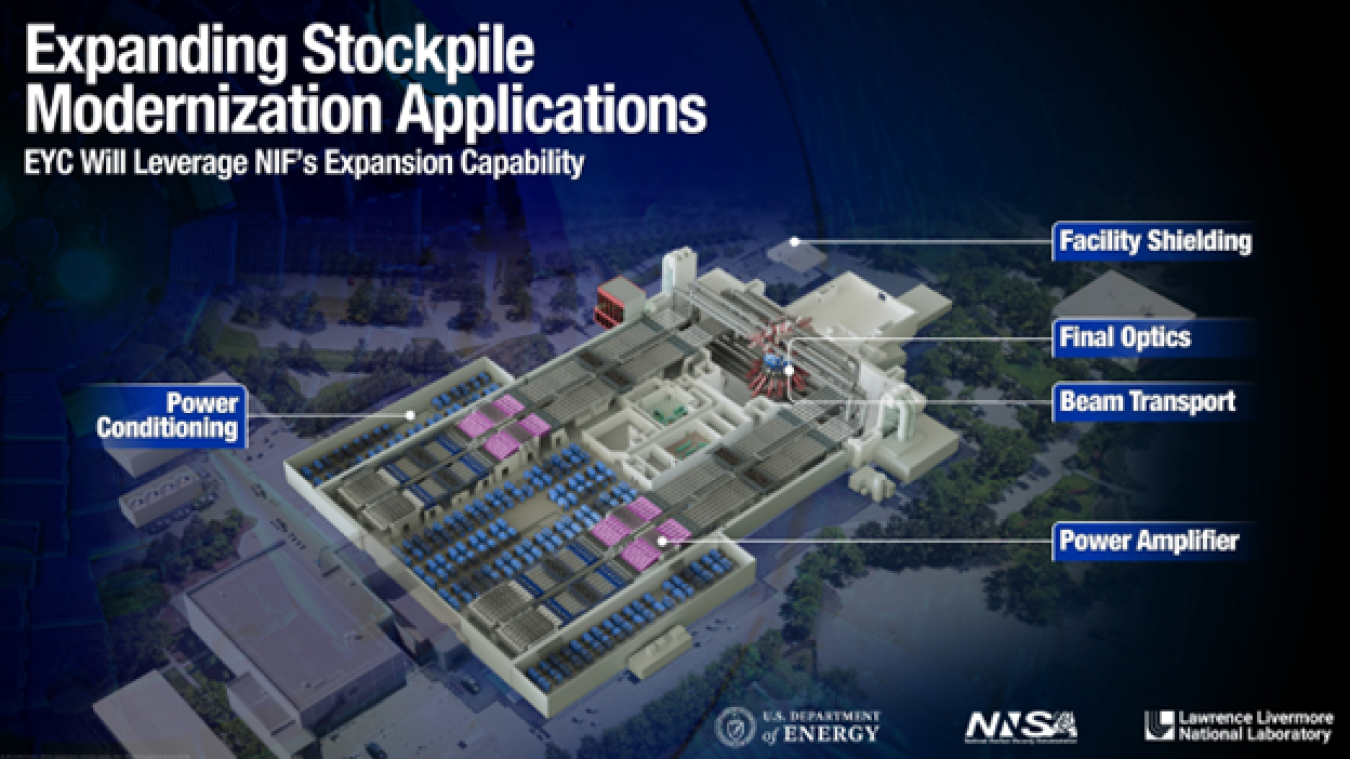
WASHINGTON – The U.S. Department of Energy (DOE) and National Nuclear Security Administration (NNSA) have approved a path forward for a project that will increase the laser energy available to the National Ignition Facility (NIF) at Lawrence Livermore National Laboratory (LLNL). This advancement was expedited by key regulatory changes made in March 2025 by U.S. Secretary of Energy Chris Wright, which eased construction project burdens at National Labs.
The Enhanced Fusion Yield Capability (EYC) project is a critical upgrade designed to support NNSA's nuclear stockpile modernization mission. The EYC project will raise NIF’s peak recurring laser energy from 2.2 megajoules to 2.6 megajoules. That increased laser energy will significantly raise NIF’s fusion yields, providing more relevant conditions to assess and modernize the nation’s nuclear weapons stockpile.
“The United States holds a decisive scientific advantage over our adversaries,” said NNSA Administrator Brandon Williams. “Thanks to President Trump and Secretary Wright, we are restoring common sense to policymaking, cutting unnecessary bureaucracy, and accelerating the modernization of our nuclear stockpile. Efforts like NIF demonstrate that America leads the world, and this project will further strengthen our understanding and confidence in our nuclear deterrent.”
In 2022, NIF became the first laboratory to achieve fusion ignition, in which more fusion energy was produced than laser energy required to start the reaction. NIF has since repeated that achievement with higher fusion yields and remains the only facility in the world to have achieved ignition.

“Building on the historic achievement of fusion ignition, we are excited to work with NNSA to enhance NIF’s capabilities to support our critical national security missions,” said LLNL Director Kim Budil. “This strategic investment will expand the regimes that are accessible at NIF and ensure it will remain a cornerstone of the nation’s high energy density and fusion science communities for many years to come.”
The project has advanced to Critical Decision-1. This approval marks the completion of the project definition phase and the conceptual design as part of DOE’s Order 413.3B process for the acquisition of capital assets.
Secretary Wright’s common-sense rule updates for the Nuclear Security Enterprise speed up critical infrastructure improvements and ensure taxpayer dollars are spent more wisely. The rules establish a clear, step-by-step plan for managing large construction or upgrade projects, while ensuring that they are carefully planned, stay on budget, and function as intended from start to finish.