



The Pinellas County Site in Largo, Florida, was once a key player in national defense, developing and manufacturing components for the nation’s nuclear weapons complex.
April 10, 2026 Estimated Read Time min
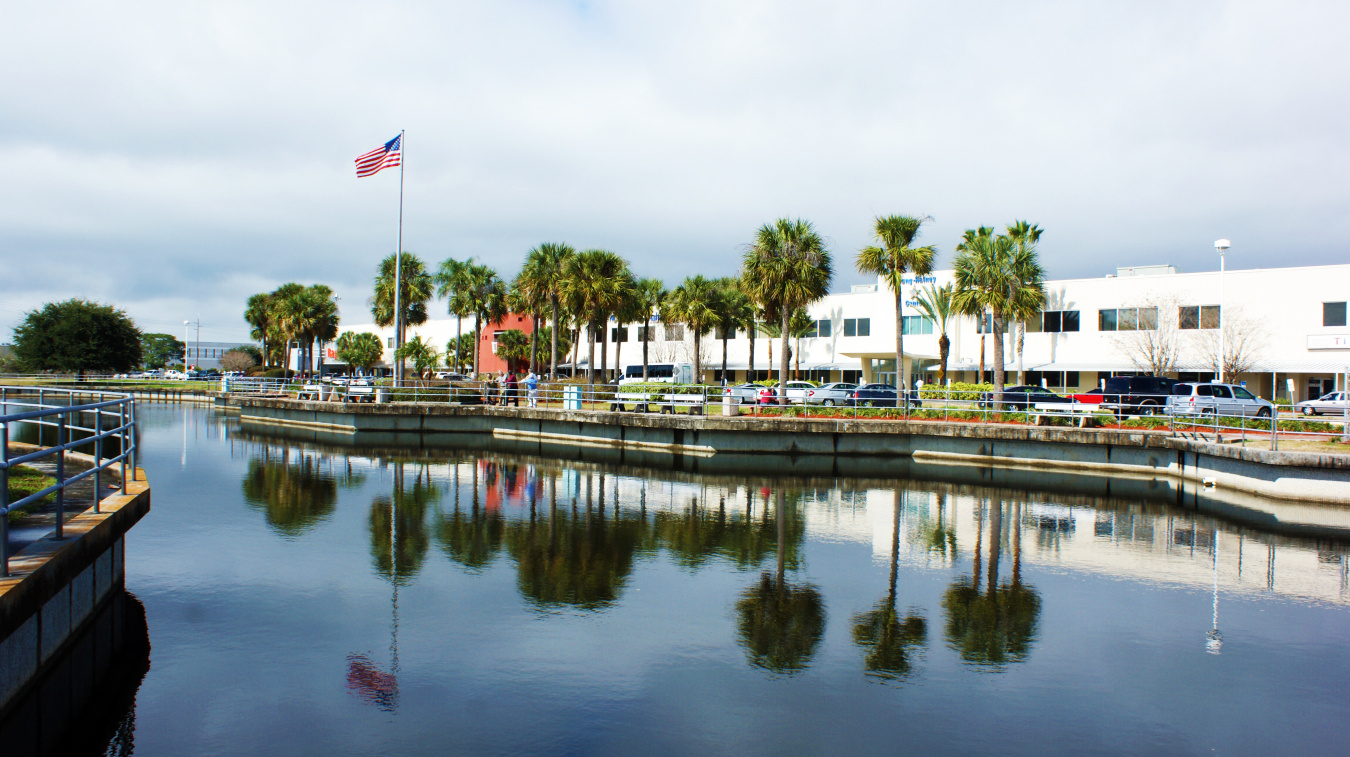
The Pinellas County Site in Largo, Florida, was once a key player in national defense, developing and manufacturing components for the nation’s nuclear weapons complex.
The site has a long history of implementing innovative environmental restoration approaches, and as the U.S. Department of Energy (DOE) Office of Legacy Management (LM) addresses the last area with groundwater contamination, known as the Building 100 area, the innovation continues.
The site team has reached a major milestone in cleaning up contaminated groundwater in the Building 100 area using a method called bioremediation.
“The success we’ve had at the Pinellas site has been a team effort and is a testament to dedication, scientific expertise, and a forward-thinking approach to environmental challenges,” said LM Site Manager Melissa Lutz.
The Challenge: Inaccessible Materials
The Pinellas site faced a significant problem: Its groundwater was contaminated with harmful chemicals known as chlorinated volatile organic compounds (cVOCs) and 1,4‑dioxane, a solvent commonly used in industrial cleaning processes. These contaminants stemmed from historical operations at Building 100, where leaking pipes and drum storage areas unfortunately left their mark.
The tricky part? The source of the contamination was inaccessible beneath the 11‑acre occupied building, making traditional excavation of source material impossible. Past attempts at groundwater cleanup, such as a pump-and-treat system, proved insufficient, and the contamination footprint began to spread.
The Breakthrough: Nature's Own Cleanup Crew
Facing this complex challenge, DOE teams turned to enhanced bioremediation. This innovation harnesses the power of naturally occurring microorganisms to break down pollutants into less harmful substances. These tiny organisms in the soil and water work tirelessly to neutralize threats.
From 2014 to 2019, experts injected a special blend of emulsified vegetable oil (to nourish the microbes) and specific beneficial bacteria (Dehalococcoides mccartyi) deep into the ground. These injections were carefully placed using specialized horizontal wells under Building 100 and through temporary vertical points in other affected areas.
“We were confident this method would be a success,” Lutz said, “but we were so pleased at just how well it worked. The results exceeded expectations.”
The bioremediation efforts paid off in a big way. Concentrations of cVOCs have plummeted, with many areas of the site experiencing drastically reduced levels. For example, while the site still experiences vinyl chloride (a breakdown product) at concentrations that exceed cleanup target levels, the once-widespread plume of contamination has shrunk noticeably.
A monitoring well inside Building 100, which historically showed the highest levels, now registers low concentrations of cVOCs. Another well on the eastern side of the building reported zero detectable cVOCs in March 2025.
Building on this achievement, independent scientists and engineers reviewed the groundwater bioremediation program in 2025. Their findings confirmed the LM team’s success and paved the way for an even smarter future:
- No more large-scale injections needed. The groundwork has been laid, and the natural processes have proven to be effective.
- Transition to enhanced attenuation: The site will target breakdown products through a highly effective and noninvasive strategy called “enhanced attenuation.” This approach leverages natural breakdown processes, supported by rigorous monitoring, to continue the cleanup.
- Significant cost savings: This innovative transition isn't just good for the environment; it's also projected to save substantial resources, demonstrating LM’s commitment to efficiency.
This shift to enhanced attenuation is a testament to continuous learning and scientific advancement, aligning with guidance from the Interstate Technology and Regulatory Council. It involves fostering a “structured geochemical zone” where both oxygen-rich and oxygen-poor conditions work in harmony to tackle different contaminants efficiently — a strategy proven successful at other complex sites.
“The Pinellas County site stands as a powerful example of how scientific innovation, dedicated teamwork, and strategic planning can lead to exceptional environmental outcomes,” Lutz said.