



Savannah River National Laboratory researchers, along with university and other national laboratory partners, invented a new technology that uses light to fine-tune material properties such as strength, flexibility and durability during the 3-D printing process. March 17, 2026
Office of Environmental Management
March 17, 2026 Estimated Read Time min
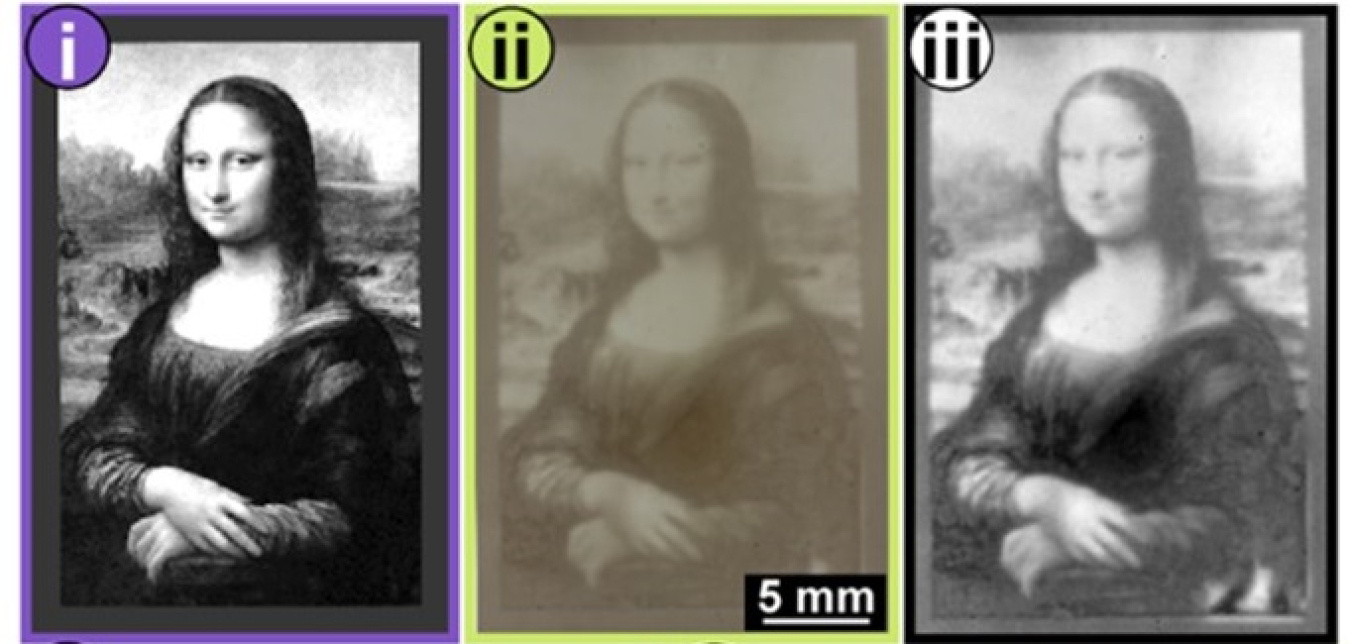
Digital images of Leonardo da Vinci's Mona Lisa were used to create printed copies where the shades of gray represent different levels of crystallinity, showing how the CRAFT method can precisely control a material’s physical properties. Credit: Sandia National Laboratories.
Breakthrough research enables precise control of material properties during manufacturing
AIKEN, S.C. — Savannah River National Laboratory (SRNL) researchers, along with university and other national laboratory partners, invented a new technology that uses light to fine-tune material properties such as strength, flexibility and durability during the 3-D printing process. Typically, 3D printed parts share the same set of characteristics throughout.
“We've never had this level of control over these materials before,” said Sam Leguizamon, SRNL researcher and project lead for the technology, called CRAFT, or Lithographic Crystallinity Regulation in Additive Fabrication of Thermoplastics. “Being able to direct how polymers form during printing gives us a powerful new tool not just for manufacturing, but for advancing the entire field of polymer science.”
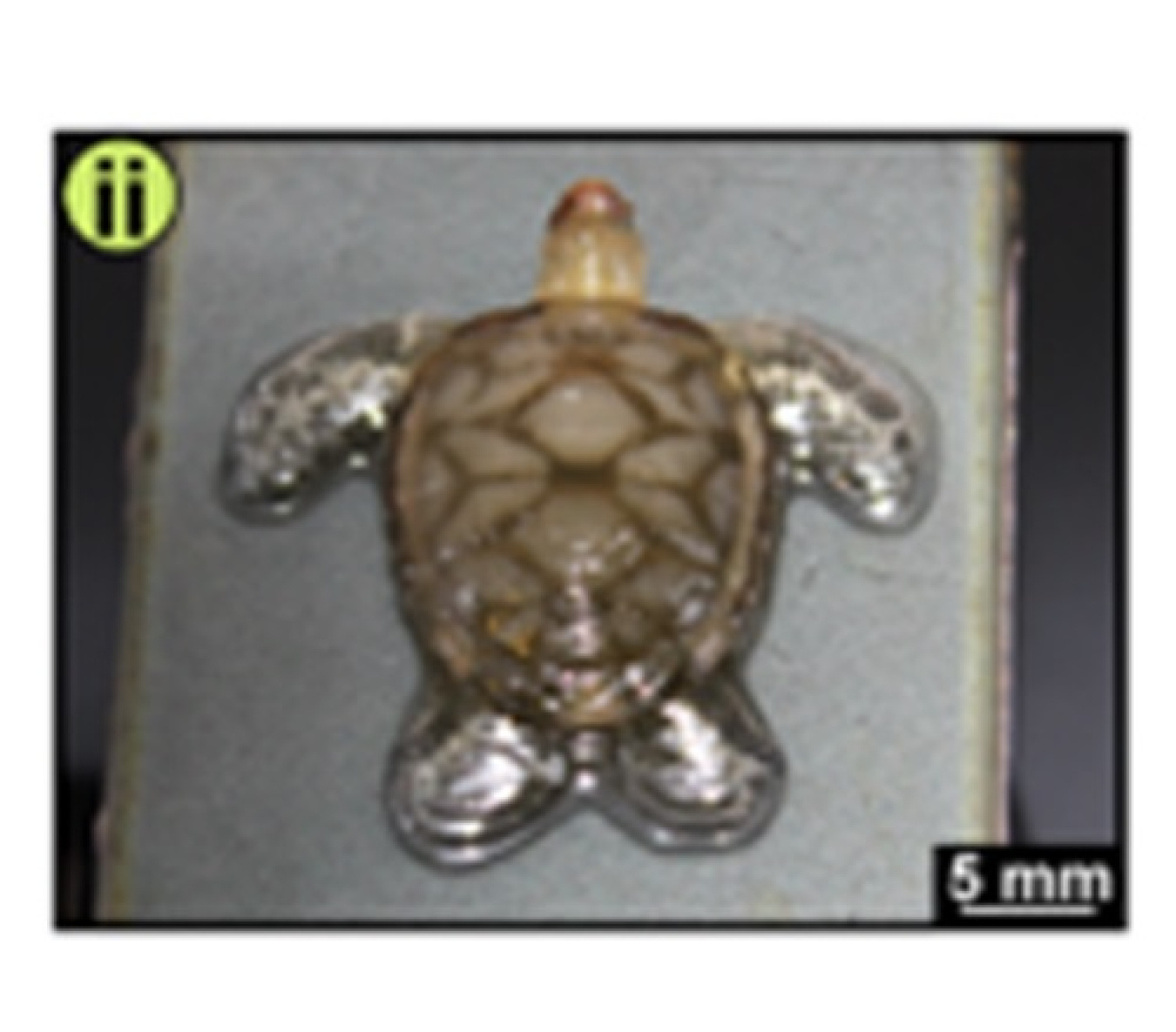
Using the CRAFT method, a soft-bodied turtle was 3D printed with varying degrees of flexibility and physical properties. Credit: Sandia National Laboratories.
SRNL, the sole national laboratory sponsored by the U.S. Department of Energy Office of Environmental Management, hopes to leverage its new Advanced Manufacturing Collaborative facility to further develop CRAFT and other related additive manufacturing technologies alongside academic and industry partners.
Leguizamon played a pivotal role in uncovering the groundbreaking science behind CRAFT during his tenure at Sandia National Laboratories. There, his team made a remarkable discovery: by changing light intensity during printing, they could produce materials with varying levels of clarity. Looking deeper, Leguizamon found that these changes in clarity align with shifts in the material’s molecular structure, which normally required chemical methods or high-temperature processing.
Leguizamon continued his work on the CRAFT project after arriving at SRNL. He drafted a clear narrative to refine CRAFT’s mechanics and to optimize the process. He also formed partnerships with the University of Texas at Austin, Lawrence Livermore National Laboratory and Sandia National Laboratories.
“CRAFT represents a shift in how we think about manufacturing plastic parts,” said Patrick Garcia, SRNL associate lab director. “Instead of accepting materials as they come off the printer, we can now design them with specific material properties for a specific purpose from the very beginning of the process.”
The University of Texas team recently demonstrated a real-world application of CRAFT by printing a detailed model of a human hand. The printed hand mimics the characteristics of skin, bones, ligaments, and tendons, all using a single material. Models like this could be used to teach medical students or to help develop advanced protective gear.
CRAFT offers a new pathway for creating advanced thermoplastics tailored to specific applications. Industries such as aerospace, biomedicine and energy systems could use this technology designed directly into 3D printed parts.
This research was supported by the National Nuclear Security Administration Office of Engineering and Technology Maturation, which develops and matures advanced manufacturing capabilities for the nuclear security enterprise.
-Contributor: Federica Staton
To receive the latest news and updates about the Office of Environmental Management, submit your e-mail address.