



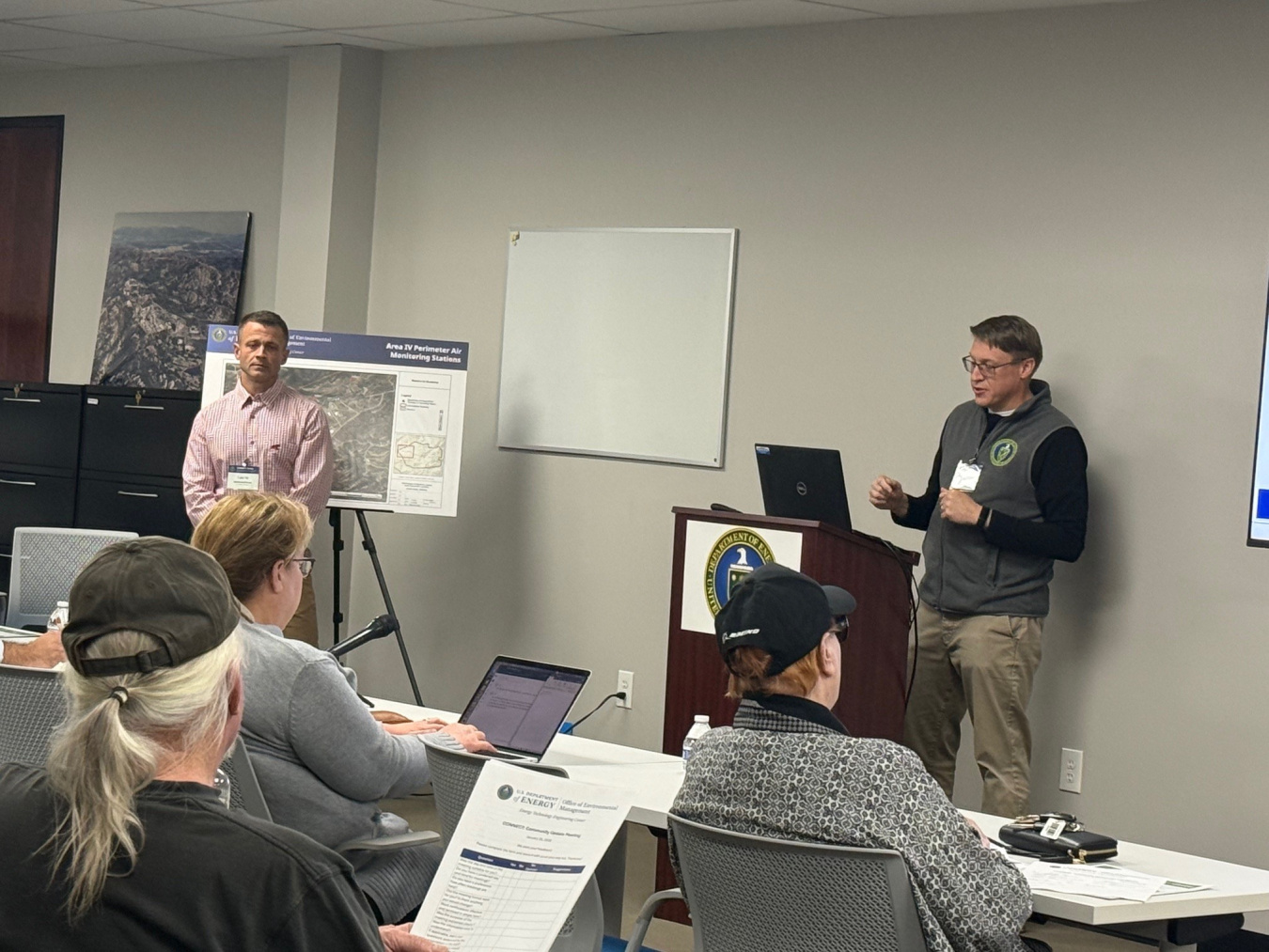
Josh Mengers, DOE's federal project director for ETEC, shares an update on building demolition work at SSFL during a community meeting in January 2026.
Energy Technology Engineering Center
March 13, 2026 Estimated Read Time min
Area IV at the Santa Susana Field Laboratory (SSFL) used to house more than 270 numbered structures, but now all that remains is one basement, two vaults and several concrete slabs.
Following the demolition of the final 18 above-ground buildings in 2020 and 2021, the U.S. Department of Energy (DOE) shifted its focus to removing these remaining underground structures.
“We’ve made significant progress on building demolition. Our next major step is to demolish the last remaining basement . . . known as Building 4024,” said Josh Mengers, DOE’s federal project director, at the inaugural session of the new Community Outreach, Neighbor Notifications, Engagement, Collaboration and Training (CONNECT) series.
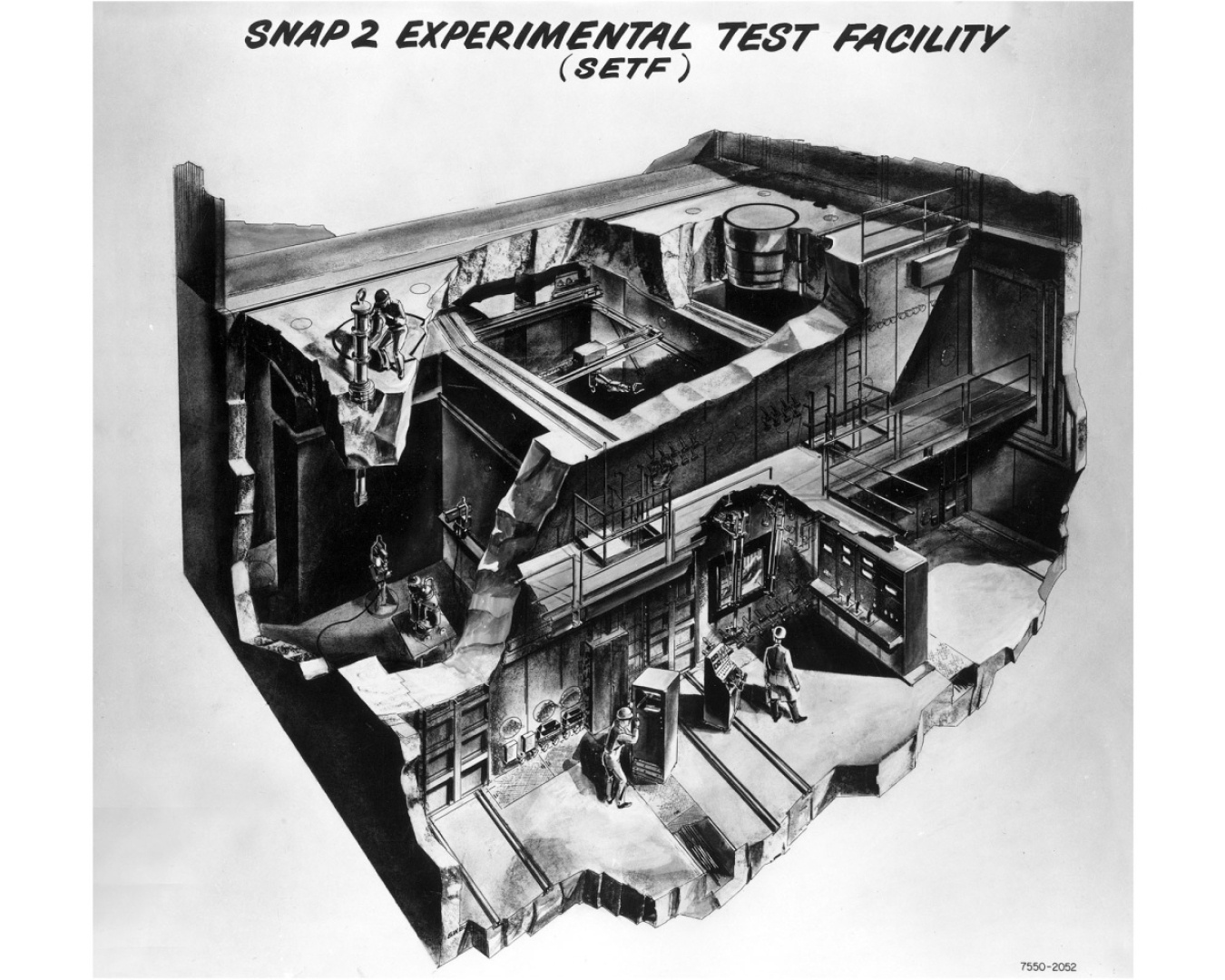
The basement of Building 4024, which extends about 35 feet below ground, was used in the research, development and testing of small nuclear reactors in a simulated space environment as part of the Systems for Nuclear Auxiliary Power (SNAP) program.
Demolishing the basement, also known as the SNAP Environmental Test Facility, is just one part of DOE’s ongoing cleanup at the 2,850-acre SSFL, where it previously conducted nuclear energy and liquid metals research at the Energy Technology Engineering Center (ETEC) in Area IV.
In 2025, DOE developed a work plan for the basement’s demolition outlining the proposed procedures and approach for removing the underground facility.
“Currently, we’re tracking to begin demolition of this basement in late 2027,” said Luke Hill, project manager with DOE contractor North Wind.
Several other plans have been created to support the demolition work, including a site monitoring and mitigation plan that provide guidelines to protect biological and cultural resources, manage soil and excavated rock, mitigate dust and monitor air quality.
Other plans detail protocols for waste management and transportation, stormwater pollution prevention and a data gap investigation.
“We need to understand the subsurface around the building to help us with critical decisions and demolition approach,” Hill said.
DOE will work with the California Department of Toxic Substances Control (DTSC) on the review and approval for all plans, Hill said. DTSC is the state agency overseeing cleanup at SSFL.
-Contributor: Melissa Simon