



The Idaho Cleanup Project is expanding a disposal facility by constructing a third cell to support the U.S. Department of Energy's Office of Environmental Management mission here for the next 30 years. March 10, 2026
Office of Environmental Management
March 10, 2026 Estimated Read Time min
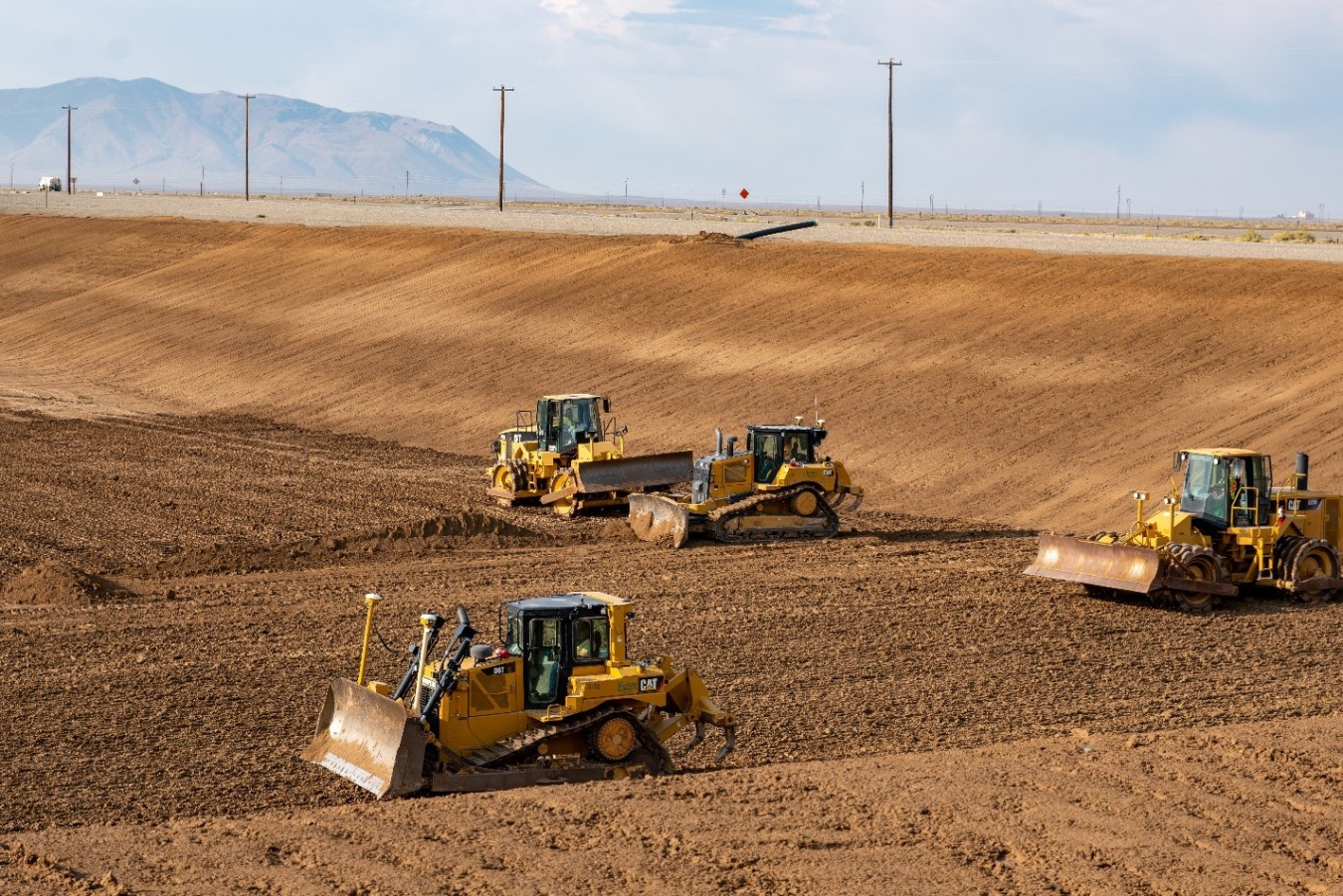
Earthmoving equipment prepares the foundation for an additional cell at the Idaho CERCLA Disposal Facility, part of the ongoing expansion to support future cleanup at the Idaho National Laboratory Site.
IDAHO FALLS, Idaho — The Idaho Cleanup Project (ICP) is expanding a disposal facility by constructing a third cell to support the U.S. Department of Energy's Office of Environmental Management (EM) mission here for the next 30 years, ensuring efficient remediation and disposal of defueled reactor components and other waste generated at the Idaho National Laboratory (INL) site.
Team members have integrated several design enhancements into the Cell 3 construction, including improved leachate collection systems, more leak detection systems and additional operating space. Leachate is water from rain and snowmelt that filters through the Idaho CERCLA Disposal Facility (ICDF).
CERCLA stands for Comprehensive Environmental Response, Compensation, and Liability Act, a law enacted by Congress in 1980 that requires stringent waste acceptance criteria, ensuring protection of the public and the underlying Snake River Plain Aquifer. ICDF’s criteria, which are approved by multiple regulatory agencies, serve as a critical safeguard to ensure only appropriate waste streams are disposed of at the facility.
Construction of Cell 3 is central to the ICP’s mission to transform environmental liabilities into opportunities, underscoring EM’s commitment to supporting local communities, advancing innovation and maintaining the highest standards of safety and reliability.
“By expanding the ICDF, we’re not only reducing costs but also enabling more remedial actions to take place, ensuring that reactor components and other waste streams are managed safely and efficiently,” said Craig Reese, the ICDF expansion project manager with ICP contractor Idaho Environmental Coalition.
While operating Cell 3 will boost ICDF’s overall disposal capacity, its operations will focus on managing exceptionally heavy waste components, such as defueled reactor vessels, empty tanks and structural debris from INL site nuclear facilities. Some of these components exceed 100 tons, requiring a strategic approach to disposal to address the unique challenges posed by oversized and dense waste.
-Contributors: Ryan Christensen, Leslie Dal Lago
To receive the latest news and updates about the Office of Environmental Management, submit your e-mail address.