Four key priorities set to guide the Office of Indian Energy's work and impact across Indian Country.
Office of Indian Energy Policy and Programs
June 1, 2026 Estimated Read Time min
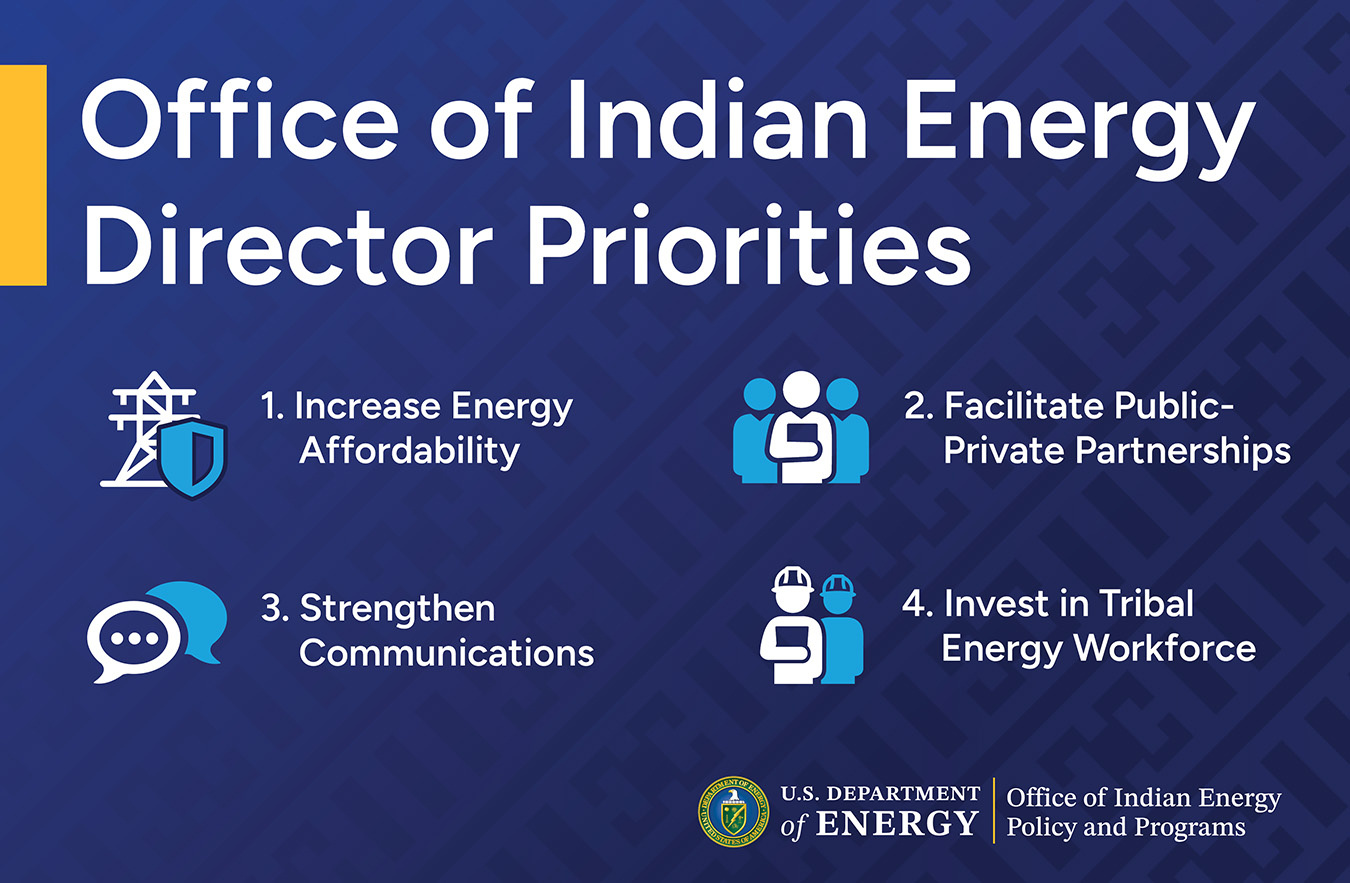
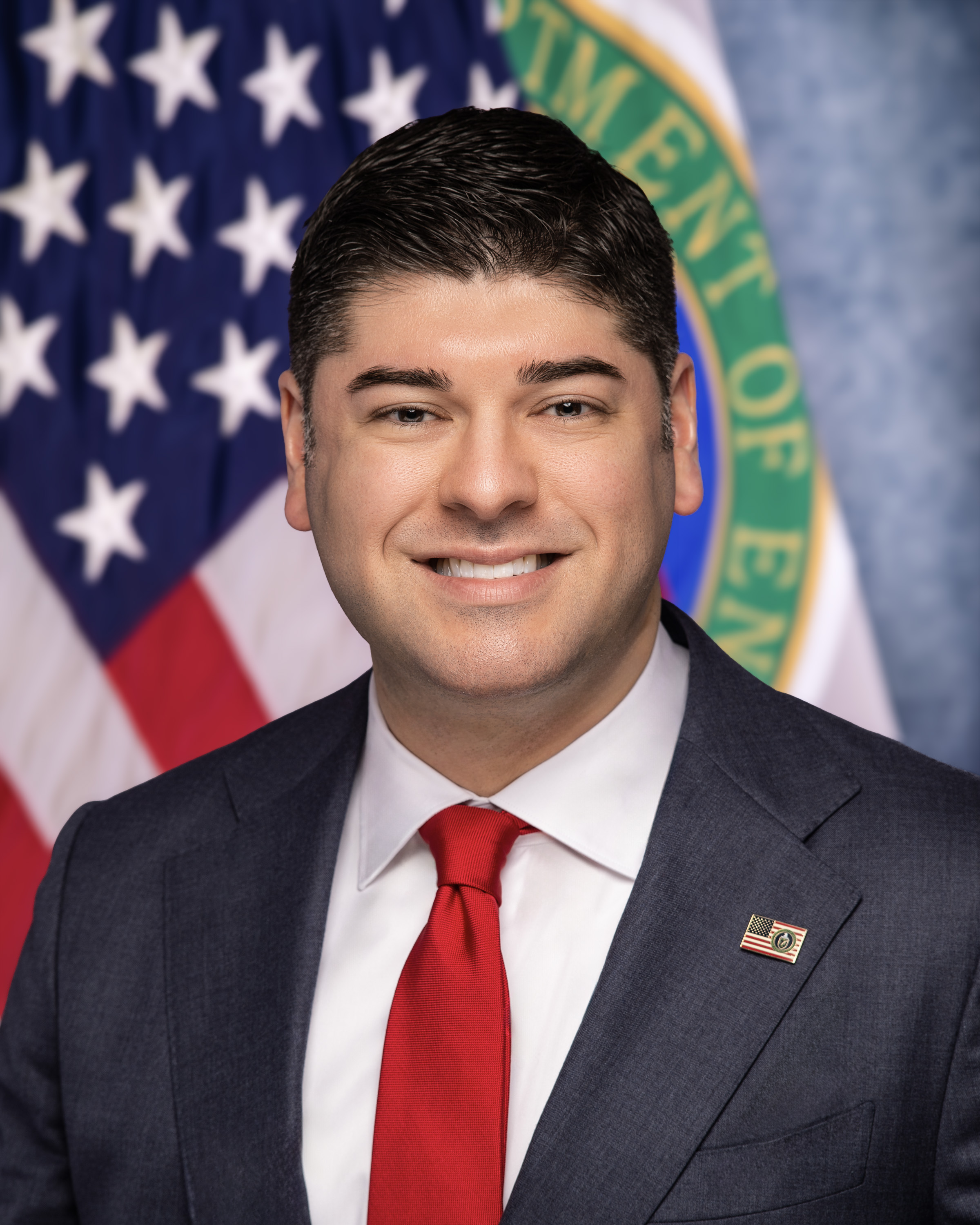
The U.S. Department of Energy (DOE) Office of Indian Energy Policy and Programs (IE) Director Eric Mahroum has outlined four key priorities that drive IE’s activities and impact across Indian Country.
These four main priorities align with the national energy goals of DOE Secretary Chris Wright and President Trump, while upholding the Office’s mission to maximize the development and deployment of energy solutions for the benefit of American Indians and Alaska Natives.
Director Priority One: Affordability
Increase affordable, reliable, and secure electricity for all Tribes, directly aligning with Secretary Wright’s and President Trump’s goal for energy across the country.
- According to DOE’s 2023 Tribal Electricity Access and Reliability Report to Congress, between 17,000–23,500 Tribal homes do not have access to electricity.
- Many Indian Tribes spend a disproportionate amount of their income on energy (28.3% higher on average than the U.S. national median energy burden of 3%, with some paying well over 4 times the national average).
- In response to the 2023 Report to Congress, IE is developing a two-phased strategy to tackle challenges to Tribal residential electricity access, which is expected to be completed in late 2026/early 2027.
Director Priority Two: Public-Private Partnerships
Facilitate public-private partnerships to unleash American energy across Indian Country.
In support of this goal, IE is working with the DOE Energy Dominance Financing Office and the Office of Policy to host a Tribal Data Center Convening to gather Tribes and Tribal organizations, data center developers, and private industry to facilitate new partnership opportunities for Tribes and the private sector.
Tribes interested in data centers may not know which developers are credible or serious. Meanwhile, data center and power developers are looking for good sites but may not be experienced working with Tribal governments. DOE can leverage its convening power as a trusted party to bring together Tribal governments and the private sector to create effective business environments for Tribes to take advantage of the more than $500 billion data center economy.
Director Priority Three: Communications
Strengthen outreach and communications with all Tribes, inclusive of all energy resource priorities.
Throughout 2026, IE is hosting a Tribal webinar series providing participants with information to advance Tribal energy development and foster peer-to-peer learning. This year’s webinar series focuses on three themes:
- Unleashing Tribal Energy Resources
- Tribal Energy Program Review Mini-Series
- Creating the Enabling Framework to Advance High-Value Energy Projects.
Visit our webinars webpage to watch recordings of past webinars and register to join any upcoming events!
Director Priority Four: Workforce
Invest in the Tribal energy workforce to build the pipeline for the next generation of energy leaders.
On May 4, 2026, IE and the Hydrocarbons and Geothermal Energy Office announced up to $11.3 million in federal funding available to institutions of higher education, including up to $2.3 million exclusively for Tribal Colleges and Universities, to train the next generation of America’s energy workforce. The Partnerships for Academic-Industry Career Training (PACT) Initiative will facilitate the development of hands-on training and credentialling programs in skillsets supporting the production of natural gas, oil, coal, and geothermal energy by establishing regional academic-industry consortia.