



The Office of Fossil Energy’s Strategic Petroleum Reserve Project Management Office hosted the Louisiana Regional Science Bowl at the University of New Orleans on Saturday March 18.
As part of our series on women in the Office of Fossil Energy (FE), we turn the spotlight on Elena Melchert, a petroleum engineer who leads the Upstream Research Division in FE’s Office of Oil and Natural Gas.
In recognition of Women’s History month, the Office of Fossil Energy is spotlighting some of the many extraordinary women on our team. One of those is Ann Satsangi -- a General Engineer in the Government Affairs and Analysis group of the Clean Coal...
The Office of Fossil Energy and the Office of Energy Efficiency and Renewable Energy’s Geothermal Technologies Office (GTO) are partnering to award up to $15 million for a Lab Call under the Subsurface Technology and Engineering Research, Development...
Yesterday, January 10, 2017, NRG Energy, Inc. (NRG) and JX Nippon Oil and Gas Exploration Corporation (JX Nippon) announced that the Petra Nova project -- the world’s largest post-combustion carbon-capture system – has begun commercial operation at...
NETL Group Combines Fossil Energy Research with Studies of Geothermal Energy Potential in Appalachia
For more than a century, fossil energy innovations have dominated research at the National Energy Technology Laboratory (NETL). Now a group of NETL researchers are building on that expertise to increase the world’s body of knowledge on how to integra...
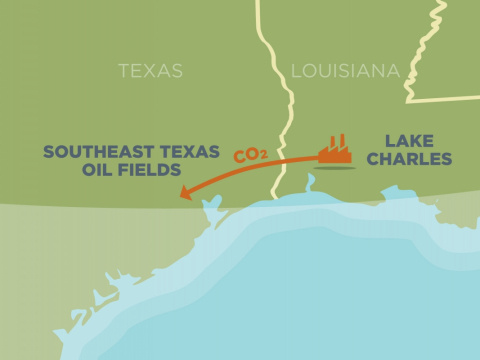
The Department offered up to $2 billion in loan guarantees for its first ever Advanced Fossil Energy Project to Lake Charles Methanol, LLC
The National Energy Technology Laboratory (NETL) has awarded six research projects to U.S. Department of Energy (DOE) national laboratories to advance fundamental shale research. The two-year projects will investigate the processes associated with hydr...
Researchers at the National Energy Technology Laboratory (NETL) will team with two prestigious national laboratories and a major research university to execute two strategic computing projects aimed at meeting the scientific and national security missi...