



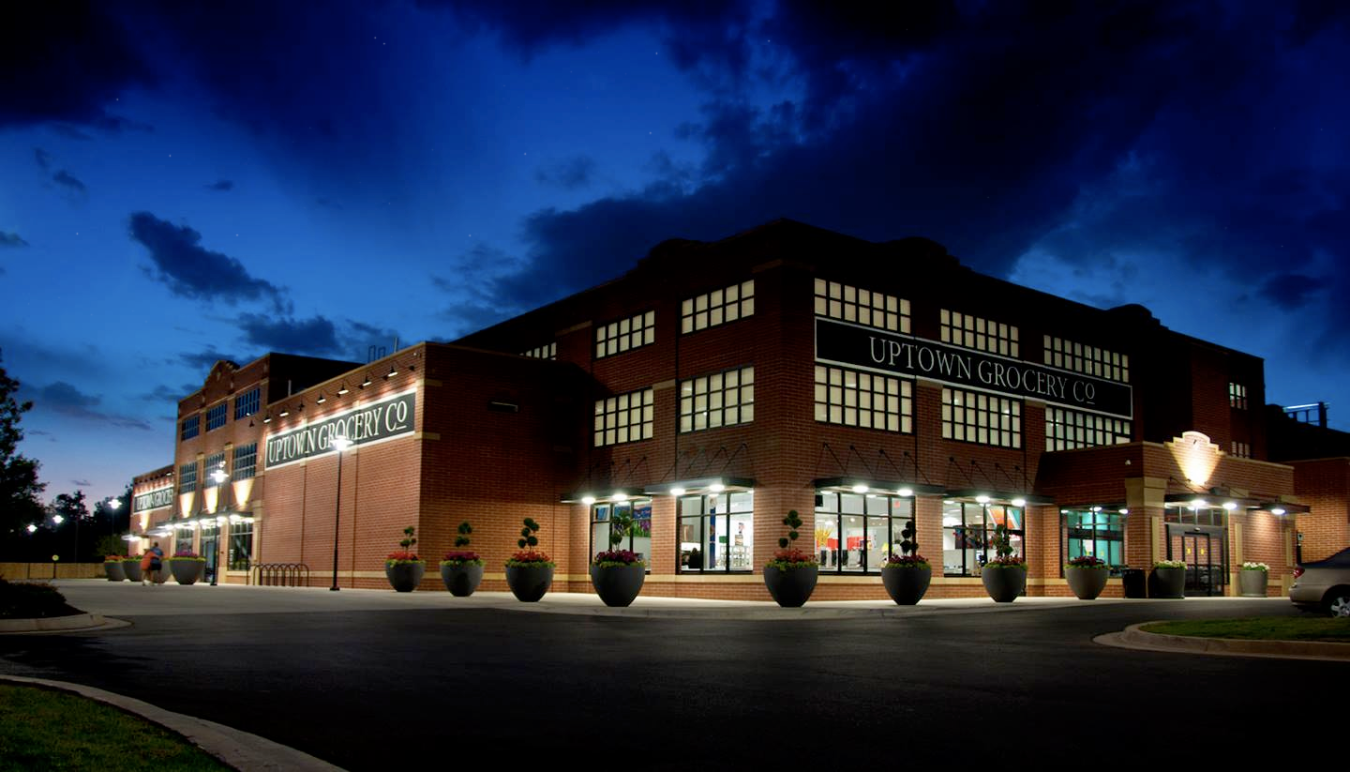
Uptown Grocery Co.’s second location has 33% lower utility bills than the company’s first grocery store built without geothermal heat pumps. Photo from Uptown Grocery
Fast Facts
Location: Oklahoma City, Oklahoma
Size:
- 61,000 square feet
- 126 boreholes drilled 500 feet deep
- 10 rooftop geothermal heat pumps
Unique Features:
- Rooftop heat pumps and outdoor air systems connected via single-pipe, primary-secondary circulation loop.
- Design minimizes pumping and provides an opportunity to share loads internally, before balancing the system loads with ground heat exchange.
- Prepackaged rooftop units keep bulk of mechanical infrastructure out of sight.
- Large parking lot provides plenty of outdoor space for borehole field.
Cost Savings:
- ~$50,000 in annual savings
- 33% lower utility bills
Funding Sources:
- $1.8 million in private funding
- $178,000 tax credit
Geothermal Provides Round-the-Clock Comfort and Efficiency
Building on the success of their flagship upscale grocery concept, the owners of Uptown Grocery saw an opportunity to raise the bar on energy efficiency, customer comfort, and cost savings by investing in a geothermal heat pump (GHP) system for their second location. Along with a retail grocery layout, the 61,000-square-foot facility features a full-service cafe, mezzanine seating area, and a unique 24/7 operating schedule.
When designing the new location, the geothermal system designer met directly with the building’s owners to present economic analysis and cost modeling to illustrate how a geothermal heat pump system could achieve high-performance heating and cooling with long-term cost savings due to its efficiency.
A Sophisticated System Beneath the Surface
The grocery store uses a vertical closed-loop system consisting of 126 boreholes, each drilled to a depth of 500 feet and spaced 25 feet apart. The building’s large parking lot provided plenty of outdoor space for the ground field, making it easy to meet the energy demand of the store for heating and cooling.
The system features seven circuits of 18 boreholes, reaching a total depth of more than 53,000 feet. A unique aspect of this installation is the single-pipe, primary-secondary circulation loop within the building—a highly efficient design that minimizes pumping energy.
The 285-ton (a measure of cooling capacity) geothermal heat pump system includes 10 packaged rooftop units with variable-speed tandem inline pumps designed to meet the heating and cooling demands of the store. The rooftop geothermal heat pumps were a strategic choice—they minimized interior space impacts and kept the bulk of the mechanical infrastructure out of sight. The only exception to this geothermal design is the refrigeration, which relies on a separate condensing system for a more tailored and efficient HVAC approach.
To meet the round-the-clock demands of a grocery store—with fluctuating occupancy and cooking loads—the building maintains a slight positive pressure, using a custom return air and ventilation control strategy. The building uses three dedicated outdoor air units with a total capacity of 159 tons to provide ventilation and maintain optimal indoor air quality. These units feature a fully modulated outdoor air mixing box and reheating capability to control indoor humidity levels year-round. This attention to air management helps keep the indoor environment comfortable and odor-free, even with the open kitchen and deli spaces in constant use.
Smart Economics, Fast Payback
The geothermal heat pump system offered several advantages, but it was the long-term cost savings that ultimately sealed the deal. Using a custom economics calculator, the design-build team was able to compare the projected capital and operational costs of a conventional HVAC system versus a geothermal one. The geothermal design had a higher upfront cost—$1.8 million versus $855,000—but came with a $178,000 tax credit and significant depreciation benefits.
The results speak for themselves; compared to the nearly identical flagship store built without geothermal, this location has consistently shown 33% lower utility bills, resulting in annual savings of about $50,000. The project achieved positive cash flow within the first year, showing that geothermal is a flexible, scalable solution that can deliver comfort, resilience, and real returns, even for energy-intensive commercial spaces operating 24/7.
Contacts:
For any website technical issues or general questions about geothermal heat pumps, contact DOE.Geothermal@ee.doe.gov.
Printable Version
Download the printable Uptown Grocery case study or visit the Geothermal Heat Pump Case Studies page to see more examples of geothermal heat pumps in action.