



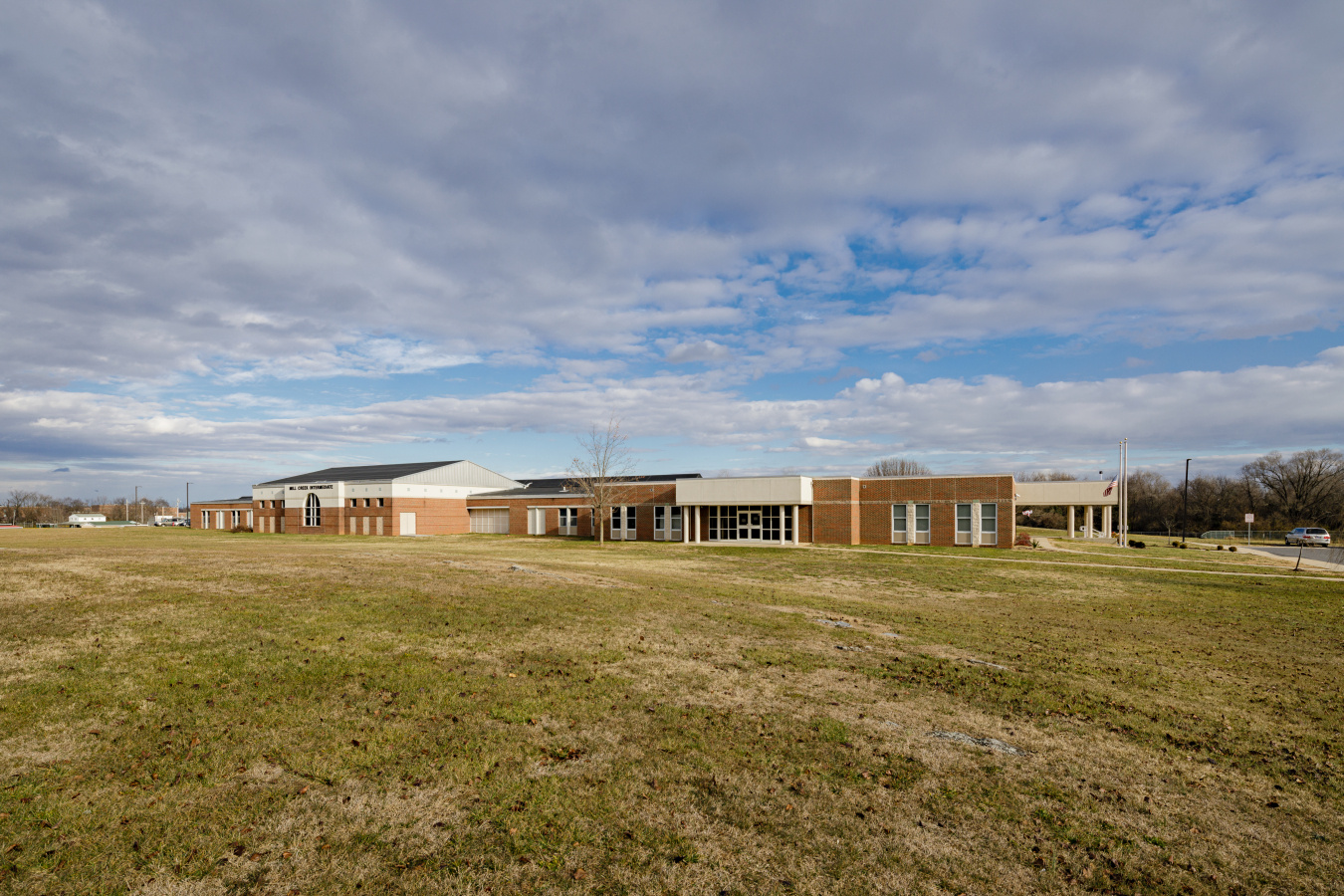
Tapping the Earth’s heat for student comfort. Spring Mills Primary School is one of 10 schools in the Berkeley County School District upgraded to geothermal heat pump systems for heating and cooling. Impossible to spot, the system is installed beneath the grassy areas shown here. Photo from CMTA, Inc.
Fast Facts
Location: Berkeley County, West Virginia
Details Across All 10 Systems:
- Closed-loop, vertical systems
- 362 boreholes drilled 400 feet deep
- 396,000 square feet of building space
- 55 miles of geothermal piping
Unique Features:
- Decentralized dedicated outdoor air units recover energy from exhaust air and pre-treat outside air.
- To save costs, the upgraded buildings reused existing HVAC infrastructure (piping, fan coil units, power, and controls).
Geothermal Supports Optimal Learning Environments
When Manny Arvon, the former superintendent of the Berkeley County School District in West Virginia, had the opportunity to replace heating and cooling systems in 10 of the county’s schools, he learned that geothermal heat pump (GHP) systems could reduce energy costs and system maintenance while improving energy efficiency.
But that’s not even what sold him on geothermal. Because Manny was committed to providing optimum learning environments for the county’s students, he especially liked geothermal’s promise of quiet, comfortable, and reliable heating and cooling for the schools.
10 Schools, 27 Miles of Boreholes, Two Summer Breaks
With many of its schools more than 100 years old, the school district knew replacing aging heating and air conditioning systems was a top priority. The growing district could not afford to close any schools for renovations, however, and school schedules could not be disrupted.
The Berkeley County School District tackled these challenges by renovating all 10 schools over just two summer breaks. The concentrated timeframe required planning and coordination with various contractors but also helped keep costs down.
The projects were massive, with about 27 miles of boreholes drilled across 400 wells. Even so, the work was completed on time and the buildings were clean and ready for the first day of school.
A+ for Energy Efficiency and Year-Round Comfort
Berkeley County School District officials say the new geothermal heat pump systems substantially lessen background noise and improve indoor air quality. Thanks to these geothermal upgrades, energy use in the 10 schools has been cut by 75%.
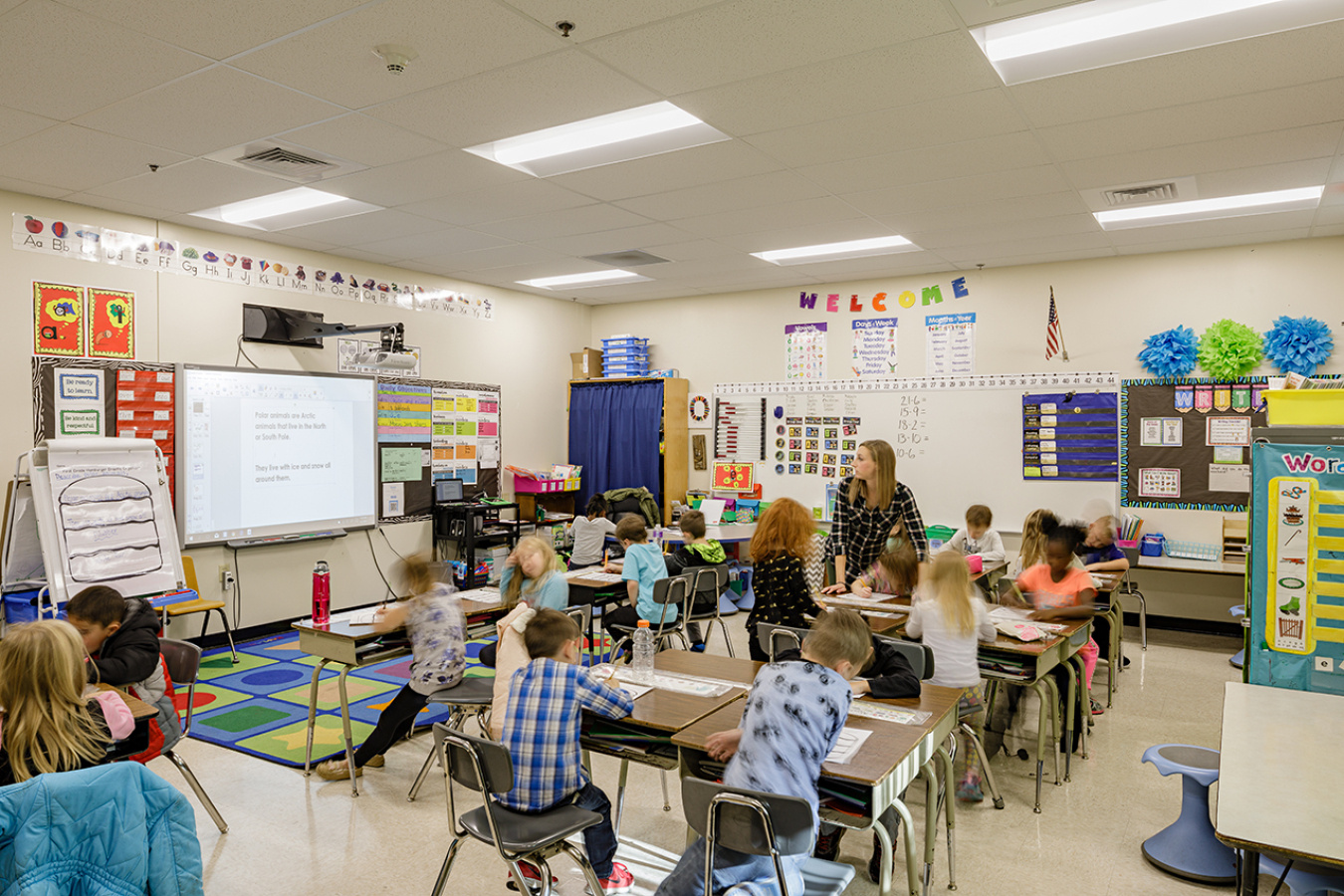
Providing an optimal learning environment. In addition to improved energy efficiency and lower maintenance costs, the geothermal heat pump systems installed in schools throughout Berkeley County School District provide comfortable, quiet learning environments for students and teachers. Photo from CMTA, Inc.
Energy Savings:
- More than 31 million kWh per year for cooling
- 880,000 therms per year for heating
Cost Savings Per Year:
- $665,500 in energy
- $106,500 in maintenance
Installation Specifics:
- 10 schools
- Time to install: 8 weeks during summer breaks
Installation Costs:
- $23.4 million for 10 schools
Results:
- 75% reduction in energy use across all 10 schools
Lessons Learned:
- Train in-house HVAC staff to maintain the systems
- Install controls that allow minimum adjustment by teachers in classrooms
“The geothermal heat pump systems we’ve installed in Berkeley County District Schools are so successful, we are planning to install them in three new schools. If you’re thinking of installing a geothermal heat pump system, it should be a no-brainer. Go with geothermal.”
Ty Tyson, Executive Director of Maintenance & Facilities, Department of Maintenance, Berkeley County Schools
Contacts:
For questions about this case study, contact Paul “Ty” Tyson, ptyson@k12.wv.us.
For any website technical issues or general questions about geothermal heat pumps, contact DOE.Geothermal@ee.doe.gov.
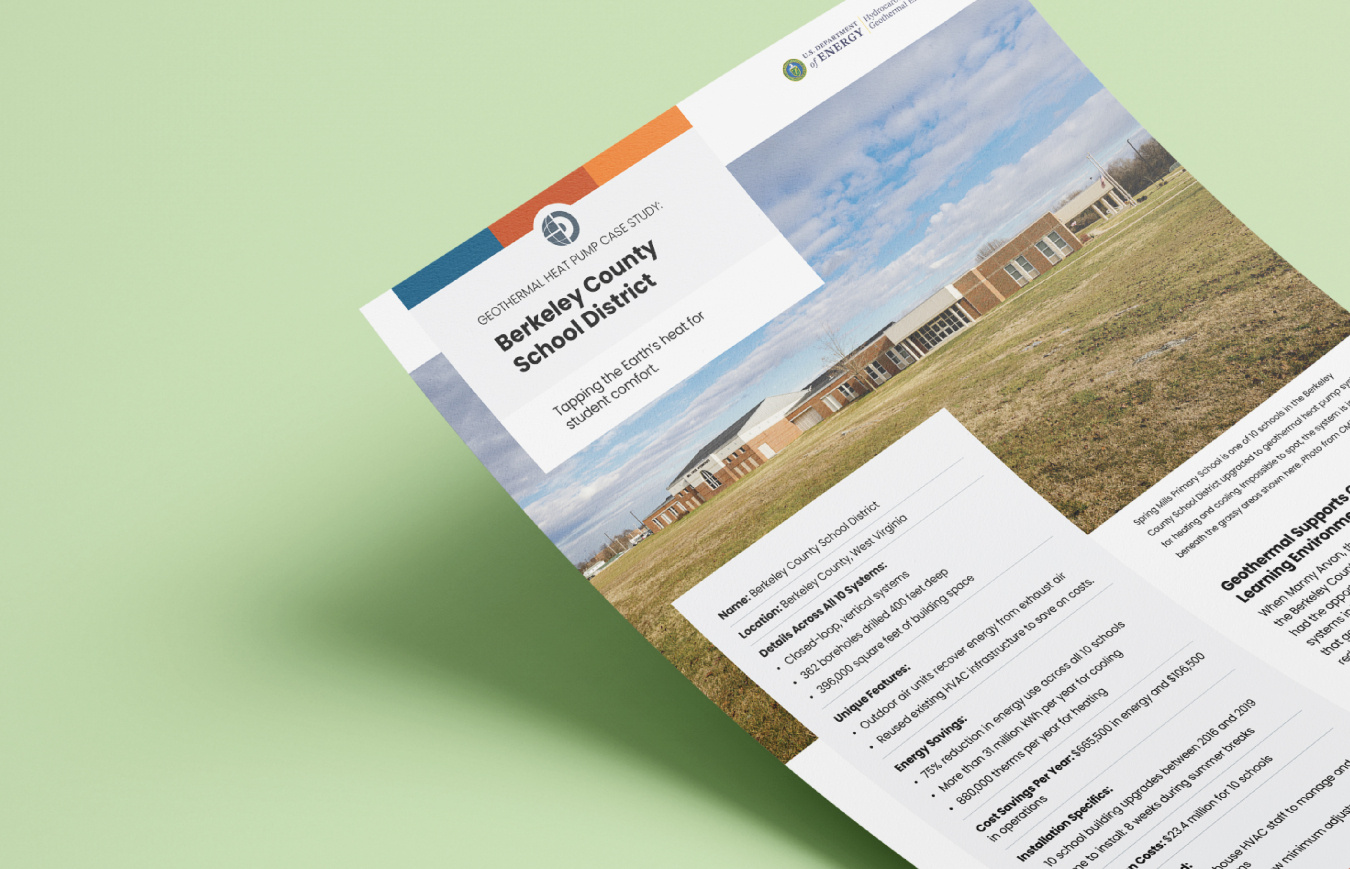
Printable Version
Download the printable Berkeley County School District case study or visit the Geothermal Heat Pump Case Studies page to see more examples of geothermal heat pumps in action.