



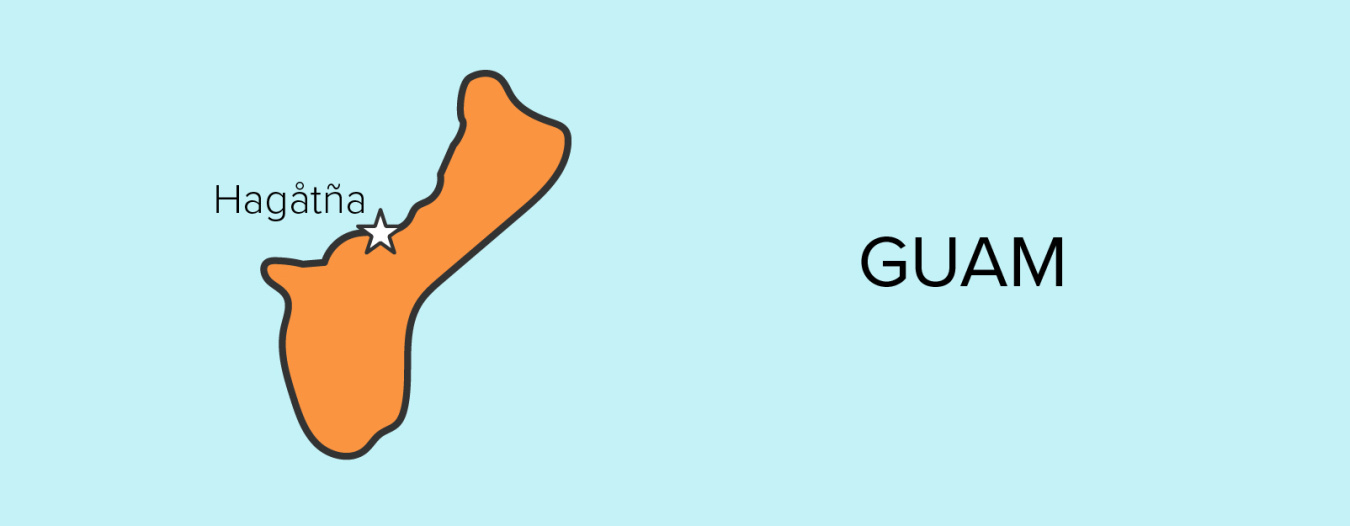
Guam is a U.S. island territory in the Micronesia subregion of the western Pacific Ocean. Due to geographic isolation and lack of local energy resources, Guam primarily relies on imported fossil fuels to meet all its energy needs. Guam’s exposure and vulnerability to extreme tropical storms is an ongoing threat.
In 2025, the average electricity price for residential customers in Guam was approximately $.026/kWh, about 1.4 times the U.S. average of $.018/kWh.
Guam Energy Baseline Report
This report was developed with the support of the U.S. Department of the Interior’s Office of Insular Affairs (OIA) and in collaboration with several key partners on the island of Guam.
Territory of Guam Energy Sector Risk Profile
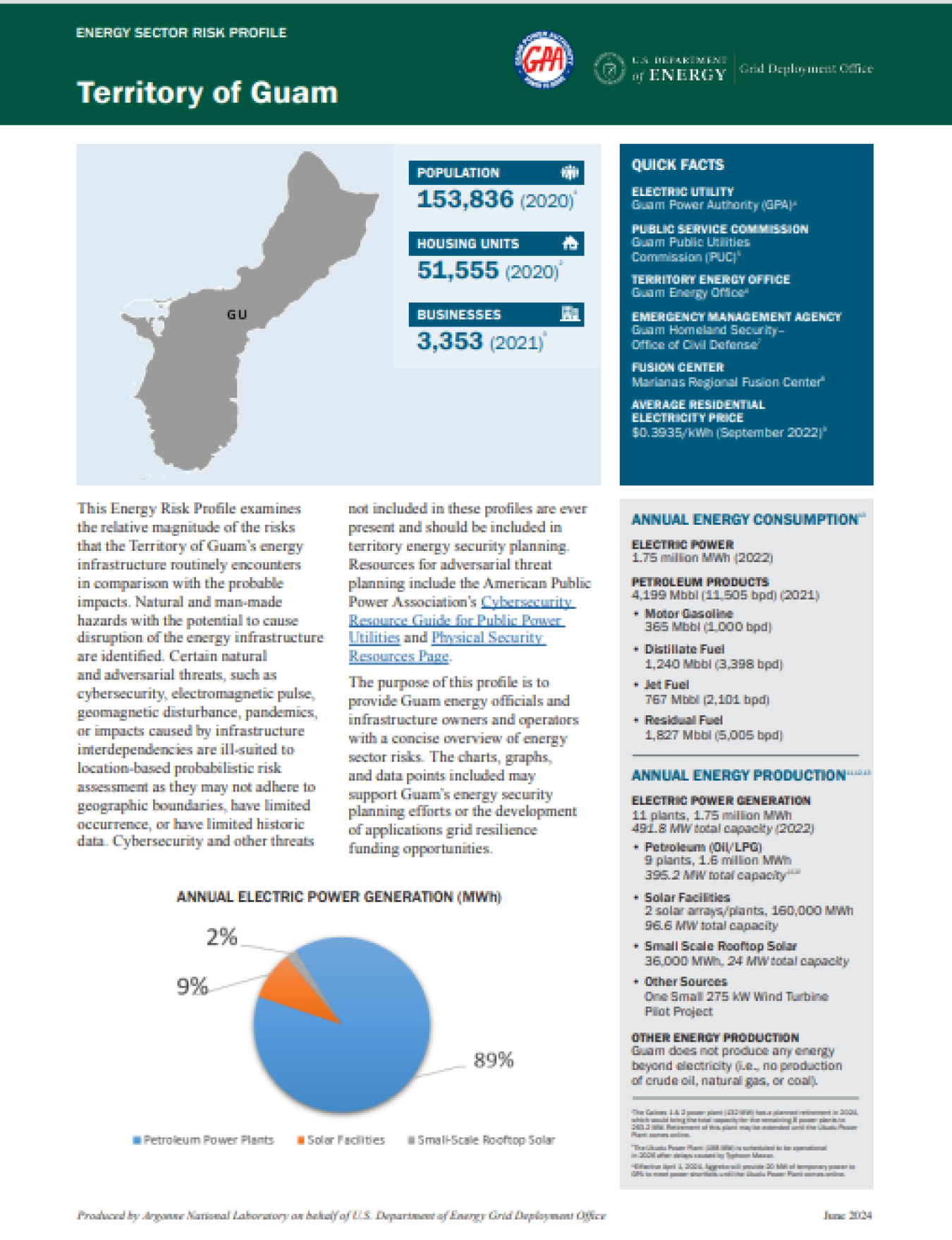
This Energy Risk Profile examines the relative magnitude of the risks that the Territory of Guam’s energy infrastructure routinely encounters in comparison with the probable impacts.
Grid Resilience Activities
Grid Resilience Formula Grant:
Guam received over $2.4 million in FY 22-24 funding to:
- Undertake significant system hardening initiatives including undergrounding key transmission lines for improved system reliability and resilience.
- Attract, train, and retain an appropriately skilled Guam workforce in grid modernization and resilience efforts.
Managed through OE and administered by the National Energy Technology Laboratory (NETL), the Grid Resilience State and Tribal Formula Grants program is designed to strengthen and modernize America’s power grid against wildfires, extreme weather, and other natural disasters.
Technical Assistance
Pacific Assistance for Localized Management of Secure Energy (PALMS): Building on existing relationships—and bridging new ones—PALMS aims to identify, share, and address gaps in resources needed to implement projects for secure, reliable, and affordable electric grids in the northern Pacific Island territories. Robust energy infrastructure is required to support the strategic value of these locations for national security. DOE National Labs (Pacific Northwest National Lab, National Laboratory of the Rockies, and Argonne National Lab), will work with key local and federal stakeholders to collaborate on a broad shared knowledge base of energy plans, analysis, and projects that will help identify, rank, and accelerate next steps in power system improvements.
Mawar Resilience Project: Part of FEMA’s Mawar Resilience Project (MRP), the Office of Electricity (OE) led an interagency working group to help assess damage to critical energy infrastructure in Guam caused by Typhoon Mawar in 2023. OE and CESER are worked with Argonne (ANL) and Lawrence Berkeley National Labs (LBNL) to use advanced power modeling tools to determine which assets, if disrupted, would cause the greatest electrical load loss and financial impact to customers in Guam. This information, combined with the risk of common natural threats on the island, allowed the labs to provide recommendations for high-priority energy infrastructure with the greatest possible return on investment for Guam’s overall resilience.