



About 300 fewer high-level waste canisters will need to be poured at the Savannah River Site to complete the legacy cleanup mission, thanks to more waste being added per canister and a processing opportunity realized. July 21, 2026
Office of Environmental Management
July 21, 2026 Estimated Read Time min
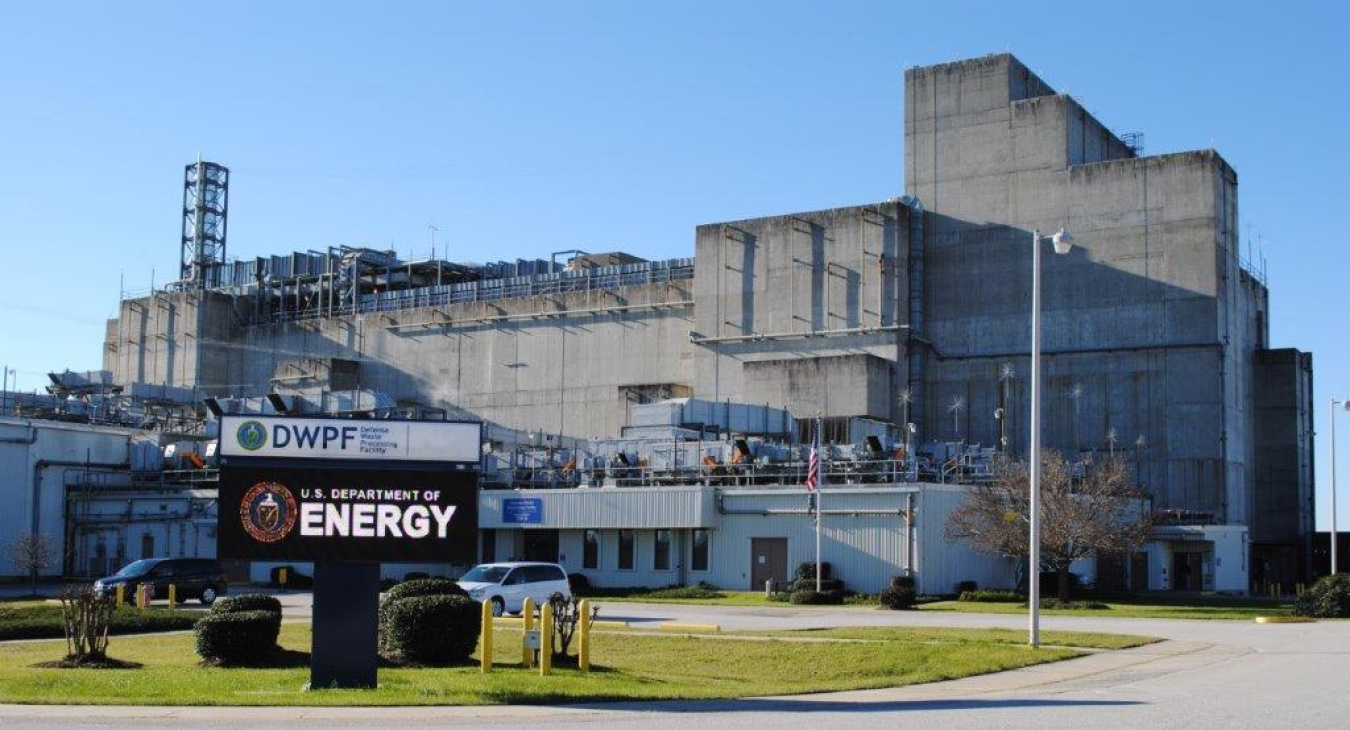
The latest iteration of the Savannah River Site (SRS) Liquid Waste System Plan results in fewer high-level waste canisters to pour to complete the legacy waste cleanup mission at SRS.
AIKEN, S.C. — About 300 fewer high-level waste canisters will need to be poured at the Savannah River Site (SRS) to complete the legacy cleanup mission, thanks to more waste being added per canister and a processing opportunity realized.
SRS Liquid Waste System Plan Revision 24.1 includes two changes that have a cumulative benefit of 300 fewer canisters of glassified high-level waste expected to be poured at the Defense Waste Processing Facility (DWPF). Handling and storing fewer canisters lowers the overall environmental and safety risks to workers and the public.
The plan noted several potential opportunities for efficiencies, two of which have come to fruition since it was published earlier this year, prompting the update. The system plan documents production goals and the strategies in place to meet those goals.
The first of the two changes implemented by SRS liquid waste contractor Savannah River Mission Completion (SRMC) will result in 150 fewer canisters due to a process improvement that allows for more waste to be poured in each canister.
Essentially, this change improves the sludge batch process that feeds DWPF by sending a portion of the waste directly to the tank used to create the batches instead of sending it to a holding tank at DWPF. This improvement not only streamlines the transfer process but also produces a more consistent sludge batch composition. A consistent batch means more waste can be poured into a canister — 5.5% more with this advancement. More waste per canister means fewer canisters in the DWPF lifecycle.
The process improvement also alleviates previous operational constraints between the Salt Waste Processing Facility (SWPF) and DWPF and frees up valuable space within DWPF for additional feed storage, maximizing facility resources and enhancing overall operational flexibility. SWPF and DWPF work together to treat the waste.
Senior Vice President and Optimization and Integration Director Steve Howell said the SRMC team continues to find optimizations that accelerate the U.S. Department of Energy (DOE) Office of Environmental Management mission.
“Continuous improvement is a core value of our mission — whether it’s enhancing safety, streamlining processes or maximizing resources,” Howell said. “Every advancement we make brings us closer to our cleanup goals and ensures we deliver the best possible results for the site, the community and the environment.”
In the second change, DOE's decision to restart uranium recovery at H Canyon discontinues the Accelerated Basin Deinventory program. That change will also result in 150 fewer canisters through DWPF.
-Contributor: Colleen Hart
To receive the latest news and updates about the Office of Environmental Management, submit your e-mail address.