Savannah River Fact Sheet on Defense Waste Processing Facility
July 16, 2026 Estimated Read Time min
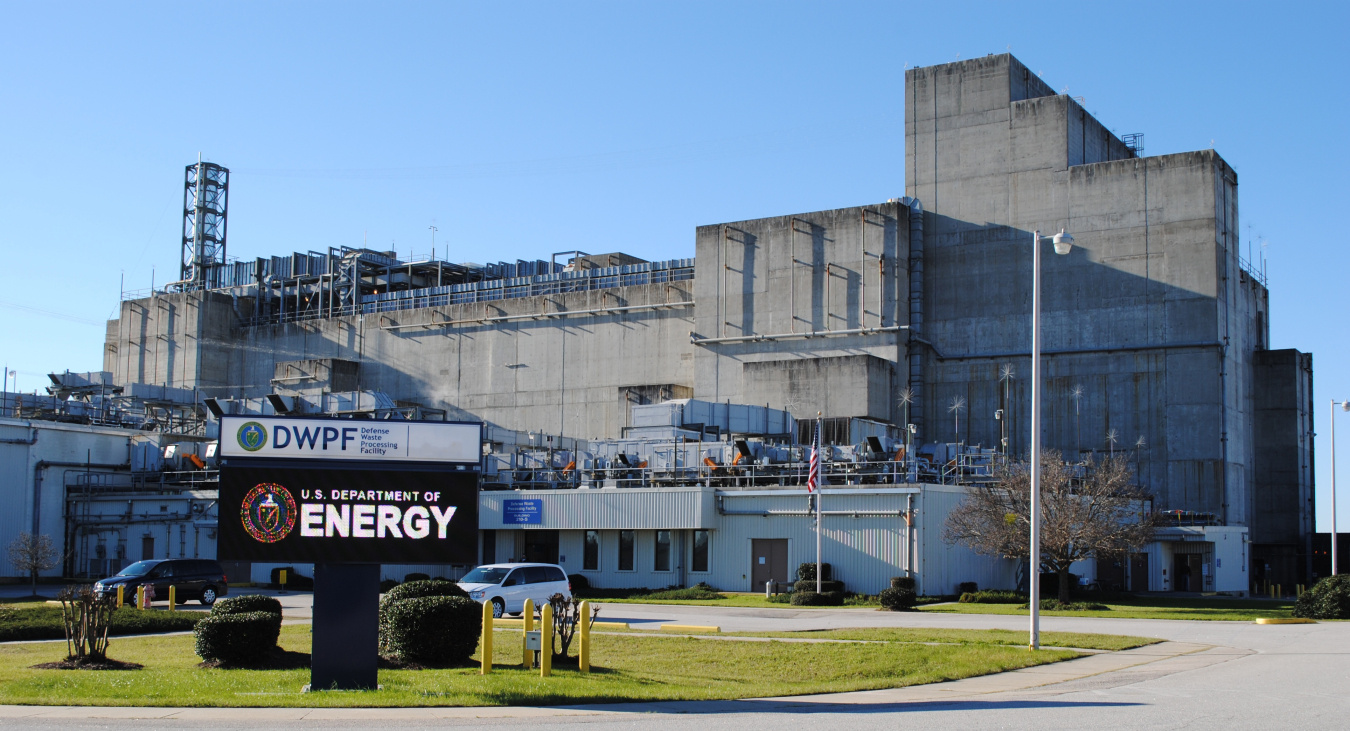
The Defense Waste Processing Facility (DWPF) is the radioactive waste glassification plant at the Savannah River Site. This facility, which began radioactive operations in March 1996, uses a vitrification process to convert high-activity radioactive liquid waste stored at the Savannah River Site (SRS) into a solid glass form suitable for long-term storage and disposal.
Scientists have long considered vitrification as the preferred option for treating radioactive liquid waste. By immobilizing the radioactivity in glass, DWPF reduces the risks associated with the continued storage of liquid waste at SRS and prepares the waste for final disposal in a future federal repository. Approximately 32 million gallons of liquid waste is stored in the remaining 43 underground carbon- steel waste tanks at SRS. This remaining waste contains approximately 181 million curies of radioactivity.
DWPF has poured 4,500 canisters. To complete its waste vitrification mission, DWPF is projected to produce approximatively 7,440 total canisters, according to the latest SRS Liquid Waste System Plan.
Waste Feed
Radioactive liquid waste in tank storage exists in essentially two forms: a sludge form and a salt form. DWPF is designed to treat the high-activity radionuclides from both forms of this waste. The sludge form, while comprising less than 10 percent of the volume in the tanks, contains slightly less than 50 percent of the radioactivity. The salt form comprises more than 90 percent of the volume and contains the balance of the radioactivity. The Salt Waste Processing Facility (SWPF) decontaminates the salt feed from the site’s tank farms. The high-activity radionuclides are transferred to DWPF for vitrification, while the decontaminated salt solution is pumped to the Saltstone Production Facility.
DWPF Operations
DWPF is vitrifying sludge from the radioactive liquid waste stored in waste tanks, along with actinides, cesium, and strontium removed from the salt forms in the waste. In this vitrification process, a sand-like borosilicate glass (called “frit”) is mixed with the waste and sent to the plant’s 75-ton steel and ceramic melter. The melter is a refractory-lined stainless-steel vessel surrounded by a water cooled jacket. In the melter, electricity is used to heat the waste/ frit mixture to nearly 2,100 degrees Fahrenheit until molten. This molten glass-waste mixture is poured, in a pencil-thin stream, into stainless steel canisters to cool and harden.
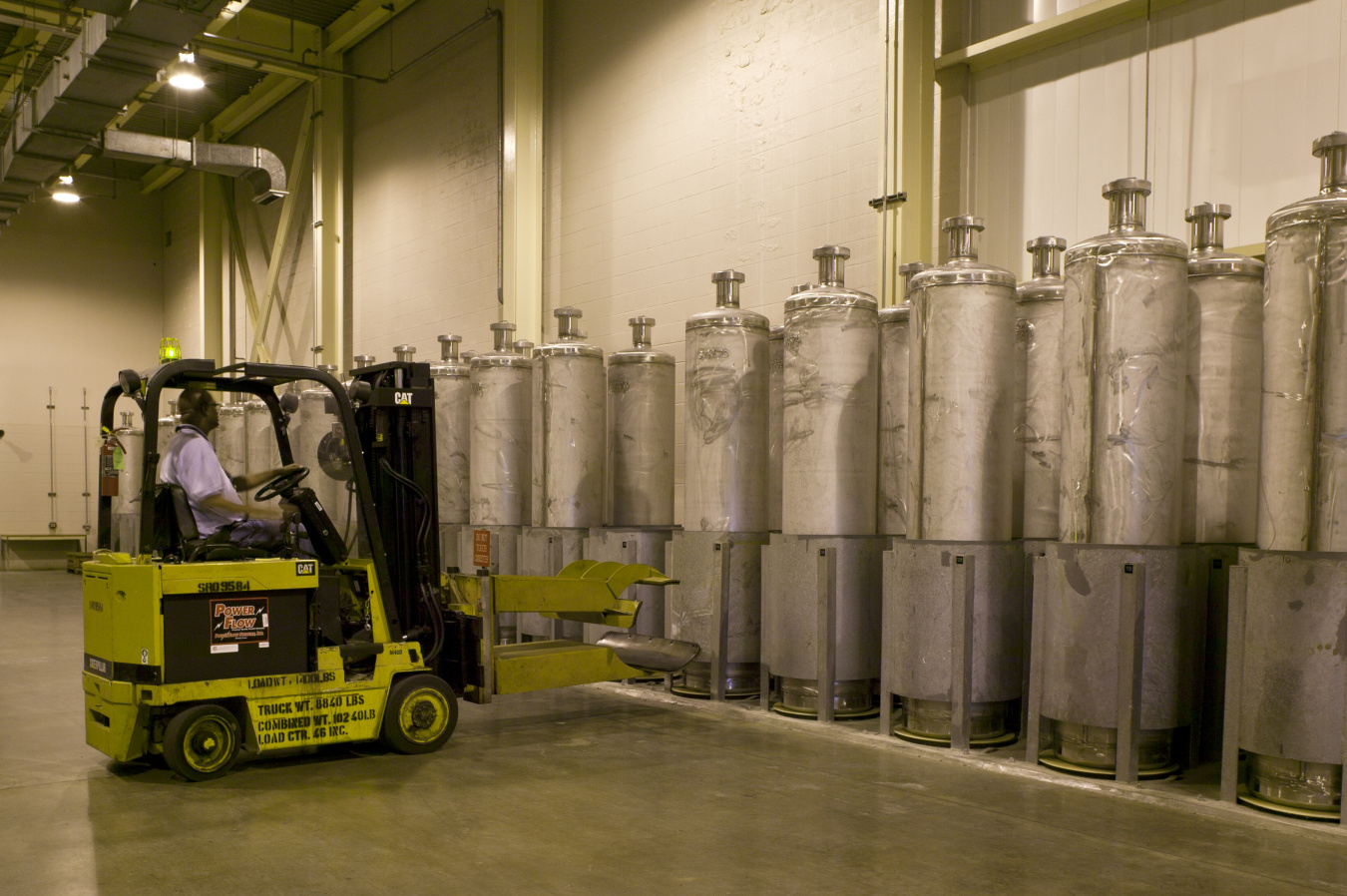
Each canister is 10 feet tall and 2 feet in diameter and weighs approximately 1,000 pounds when empty and approximately 5,000 pounds when filled. Filling one canister can take approximately one day.
After filling, the exterior of each canister is blasted with a frit-water mixture to remove any surface contamination. A stainless-steel plug is fitted into the neck of each filled canister, then welded into place using an electrical current of 250,000 amps applied for 1.5 seconds, while 80,000 pounds of force simultaneously presses the plug into the neck of the canister. The resulting weld is as strong as the three-eighths-inch thick stainless-steel canister itself.
Temporary Storage
The canisters containing vitrified high-activity waste produced at DWPF are currently stored on site in one of two Glass Waste Storage Buildings (GWSB). GWSB 1 consists of a below-grade seismically qualified concrete vault containing support frames for vertical storage of 2,262 standard canisters. Beginning in May 1996, canisters were stored in GWSB 1. In 2015, the existing design of GWSB 1 was reevaluated and determined through several studies that with some minor modifications to the shielded storage plug and removal of the canister support crossbars that a second canister could be safely stored on top of the first one. Subsequently, canisters were moved from GWSB 2 to the converted storage locations in GWSB 1. This innovation, which is recognized as Canister Double-Stack Project, increased the available storage capacity in GWSB 1 to 4,524 canisters. In 2024, all the necessary modifications were complete in GWSB 1 to fully accommodate double stacking.
GWSB 2, with a similar design to GWSB 1, has 2,340 canister storage locations. The first canister was placed in GWSB 2 on July 10, 2006. Double-stack modifications like GWSB1 have started in GWSB 2 and will increase the capacity to 4,680 canisters. The canisters will be stored on site until a federal repository is identified.
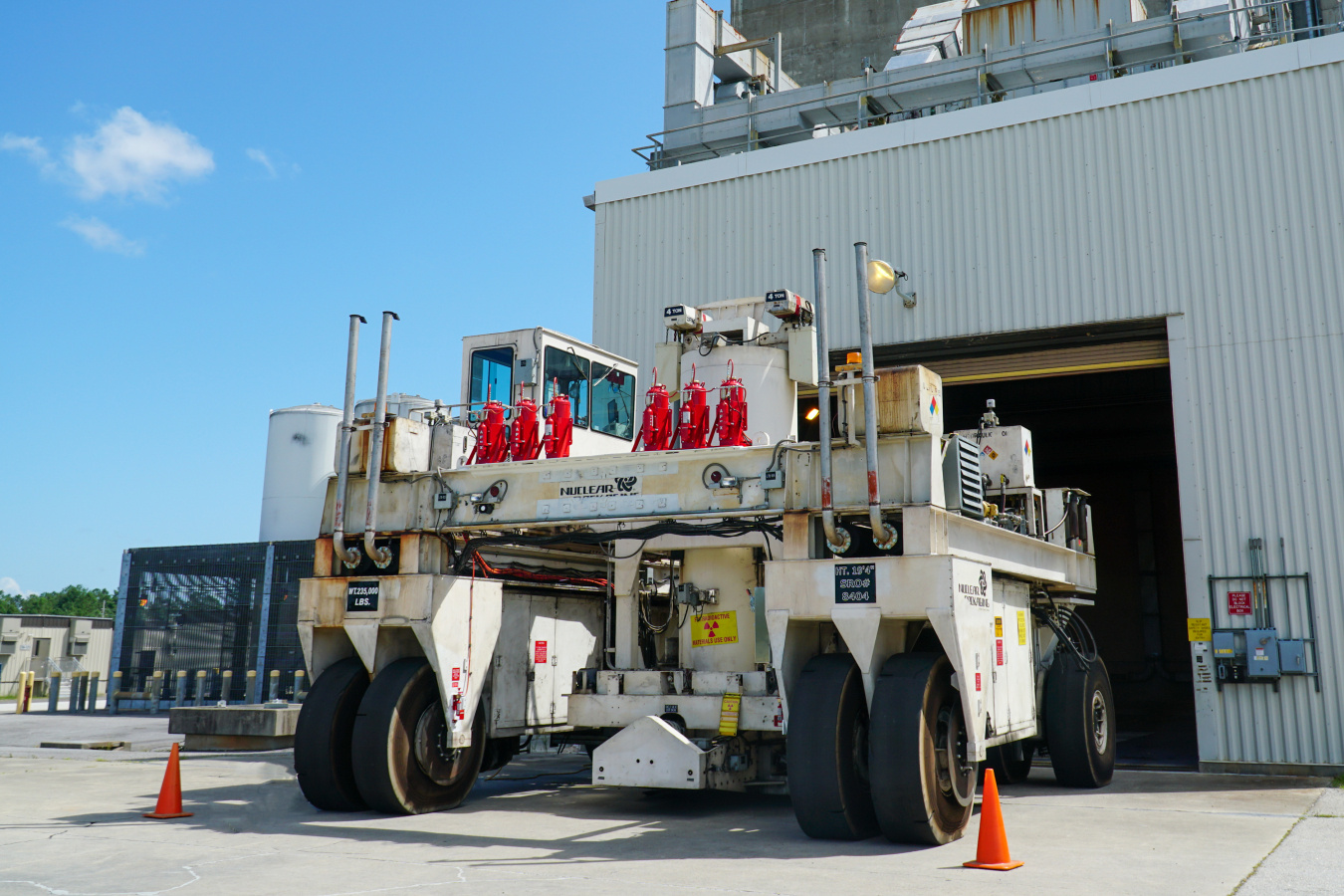
A specially designed vehicle, called the Shielded Canister Transporter, moves each sealed canister, one at a time, from DWPF to the GWSBs. This transporter, more than 18 feet tall, 25 feet long and weighing 235,000 pounds, is a two-wheel-drive vehicle powered by redundant diesel engines. It has a center module with a shielding cask, floor plug cavity, and associated canister lifting equipment. At DWPF, the transporter draws canisters up into the shielded cask for the short trip to a GWSB. At the GWSB, the transporter lowers each canister into an underground, reinforced, seismically qualified concrete vault.
Watch the DWPF overview on YouTube for more information about DWPF.