



U.S. Department of Energy Office of Environmental Management teams are tackling extensive decommissioning and demolition efforts, transforming an area of the Savannah River Site into an asset for future development. April 21, 2026
Office of Environmental Management
April 21, 2026 Estimated Read Time min
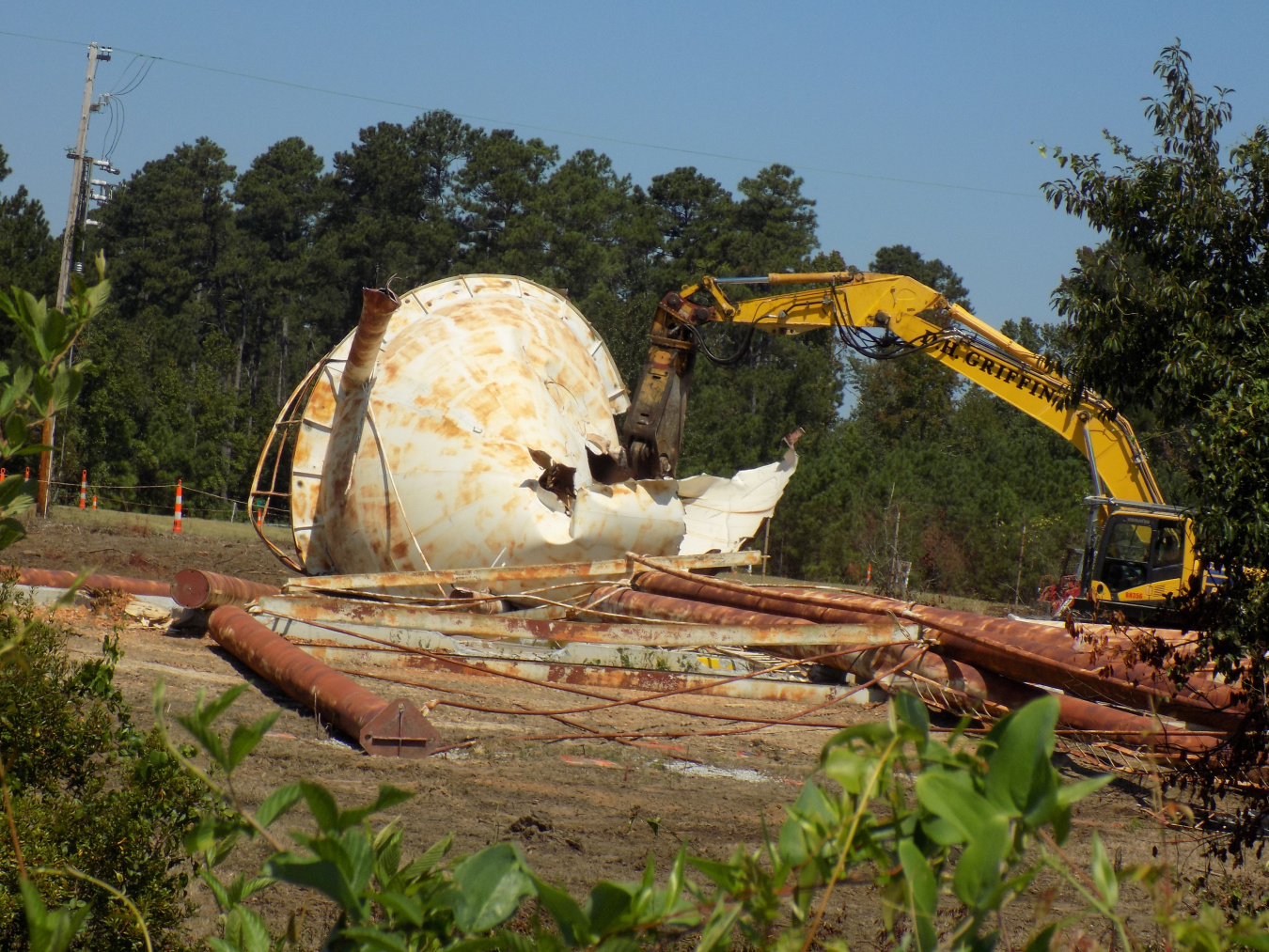
Crews shred an obsolete water tower for scrap metal in the D Area of Savannah River Site.
AIKEN, S.C. — U.S. Department of Energy (DOE) Office of Environmental Management (EM) teams are tackling extensive decommissioning and demolition efforts, transforming an area of the Savannah River Site (SRS) into an asset for future development.
Since 2021, crews have been conducting decommissioning and demolition work in the site’s D Area to reduce hazards and prepare for reuse of land.
In a recent milestone, teams in D Area removed over 640 tons of scrap metal and 617 tons of asbestos, making significant strides toward reducing the cleanup footprint. Clearing out old pipelines in D Area has also been a key step in readying the area for future projects.
“The collaborative work of the team has not only enhanced safety and efficiency but has also set a high standard for integrating environmental stewardship with long-term development opportunities,” DOE-Savannah River Office of Closure and Project Management Director Karen Morrow said. “As SRS continues its work, the transformative efforts in D Area are an example of fostering a successful vision of responsible sustainability, revitalization and innovation.”
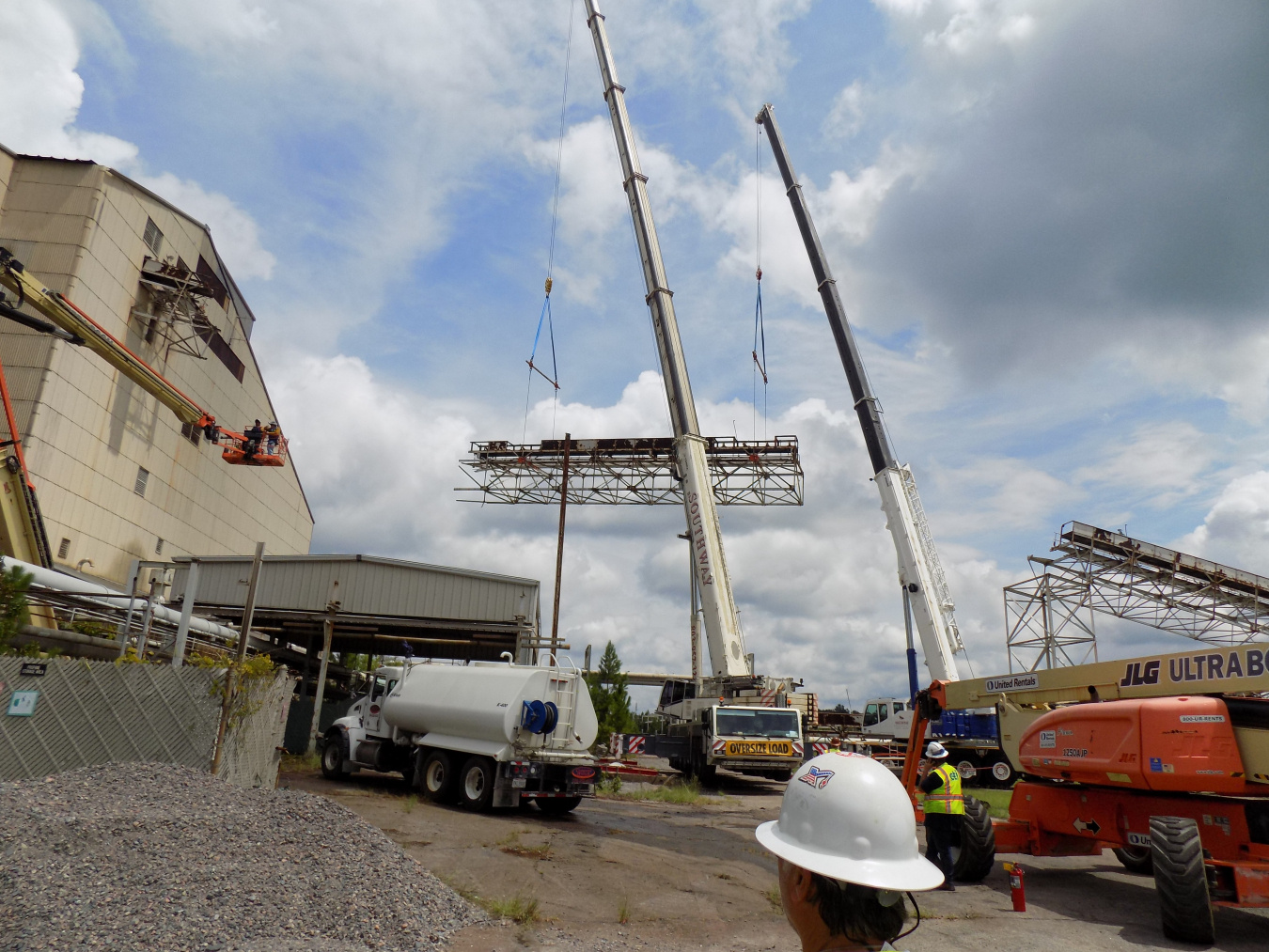
Workers remove a conveyor belt once used to transport coal to the D Area powerhouse at Savannah River Site.
EM contractor Savannah River Nuclear Solutions (SRNS) has successfully navigated the challenges of permits, regulations and jobsite coordination to bring a vision of new development to life, with plans to install meteorological equipment to monitor weather patterns underway.
D Area facilities once produced heavy water for nuclear reactors and generated steam and electricity to support much of what was previously known as the Savannah River Plant, which was developed in the 1950s.
-Contributor: Fallan Flatow
To receive the latest news and updates about the Office of Environmental Management, submit your e-mail address.