



The Moab Uranium Mill Tailings Remedial Action Project recently conducted site tours for representatives from the U.S. Department of Energy’s Office of Legacy Management and two regional tribal nations, Hopi Tribe and Navajo Nation. May 19, 2026
Office of Environmental Management
May 19, 2026 Estimated Read Time min
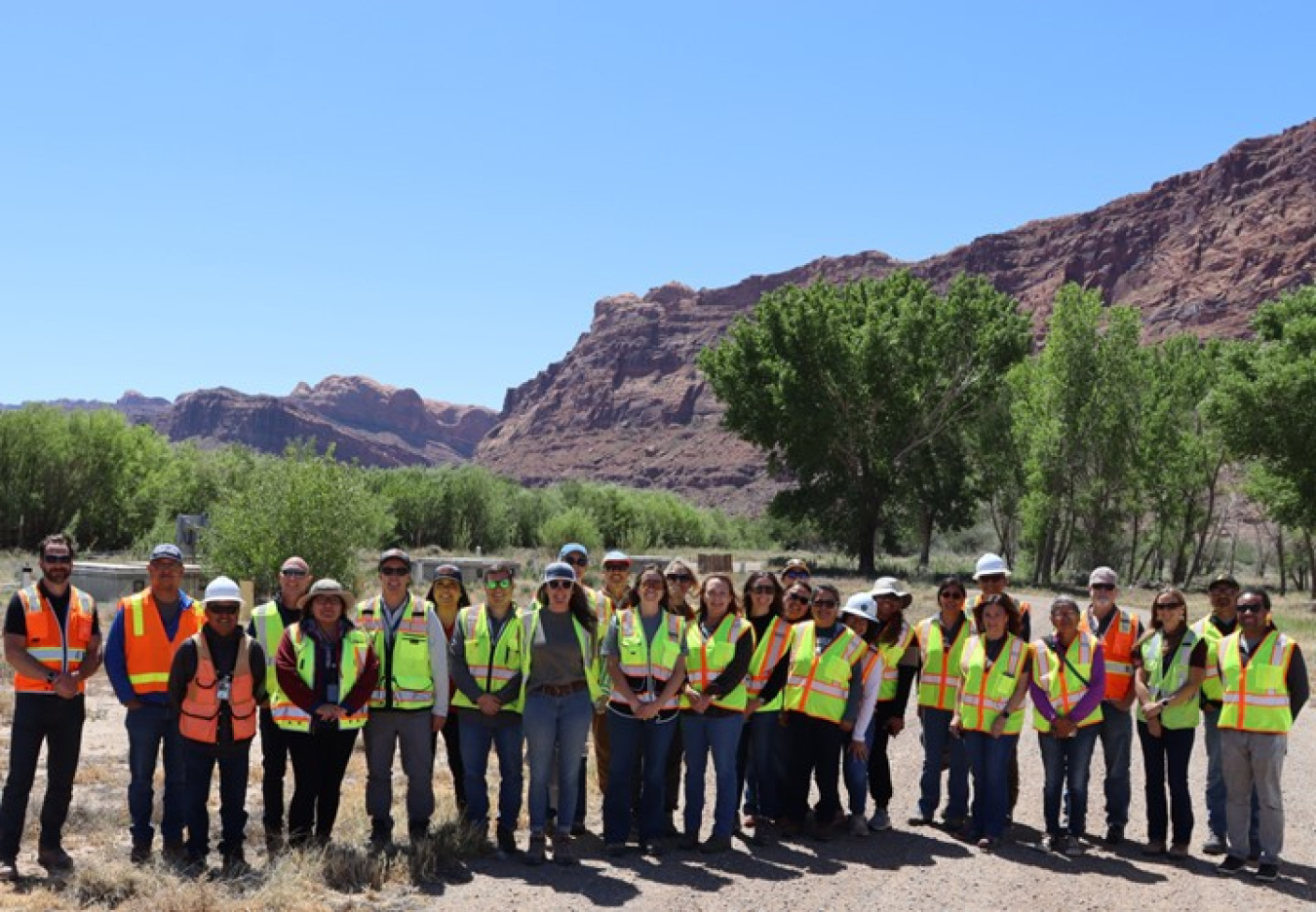
Representatives from the U.S. Department of Energy’s Office of Legacy Management, Navajo Nation and Hopi Tribe tour the Moab site well field alongside Moab Uranium Mill Tailings Remedial Action Project staff, gaining a firsthand look at remediation efforts along the Colorado River.
MOAB, Utah — The Moab Uranium Mill Tailings Remedial Action Project recently conducted site tours for representatives from the U.S. Department of Energy’s (DOE) Office of Legacy Management (LM) and two regional tribal nations, Hopi Tribe and Navajo Nation.
Attendees received an on-the-ground view of cleanup progress at the Moab Project’s two active sites. At the Moab site, along the Colorado River, the visitors observed remediation of the former uranium processing facility. Thirty miles north at the Crescent Junction site, they viewed the engineered disposal cell where the uranium mill tailings and other contaminated materials are permanently contained.
The visit came at a significant moment in Moab Project history: Crews recently reached a major milestone with the removal of the site’s 16-million-ton tailings pile, following 17 years of relocating the tailings to Crescent Junction for permanent disposal.
Cleanup efforts are now focused on removing remaining contaminated soil, and developing a final groundwater compliance action plan. At Crescent Junction, crews are working to finish the disposal cell and constructing an evapotranspiration cover to manage moisture and protect the disposal cell’s long-term integrity.
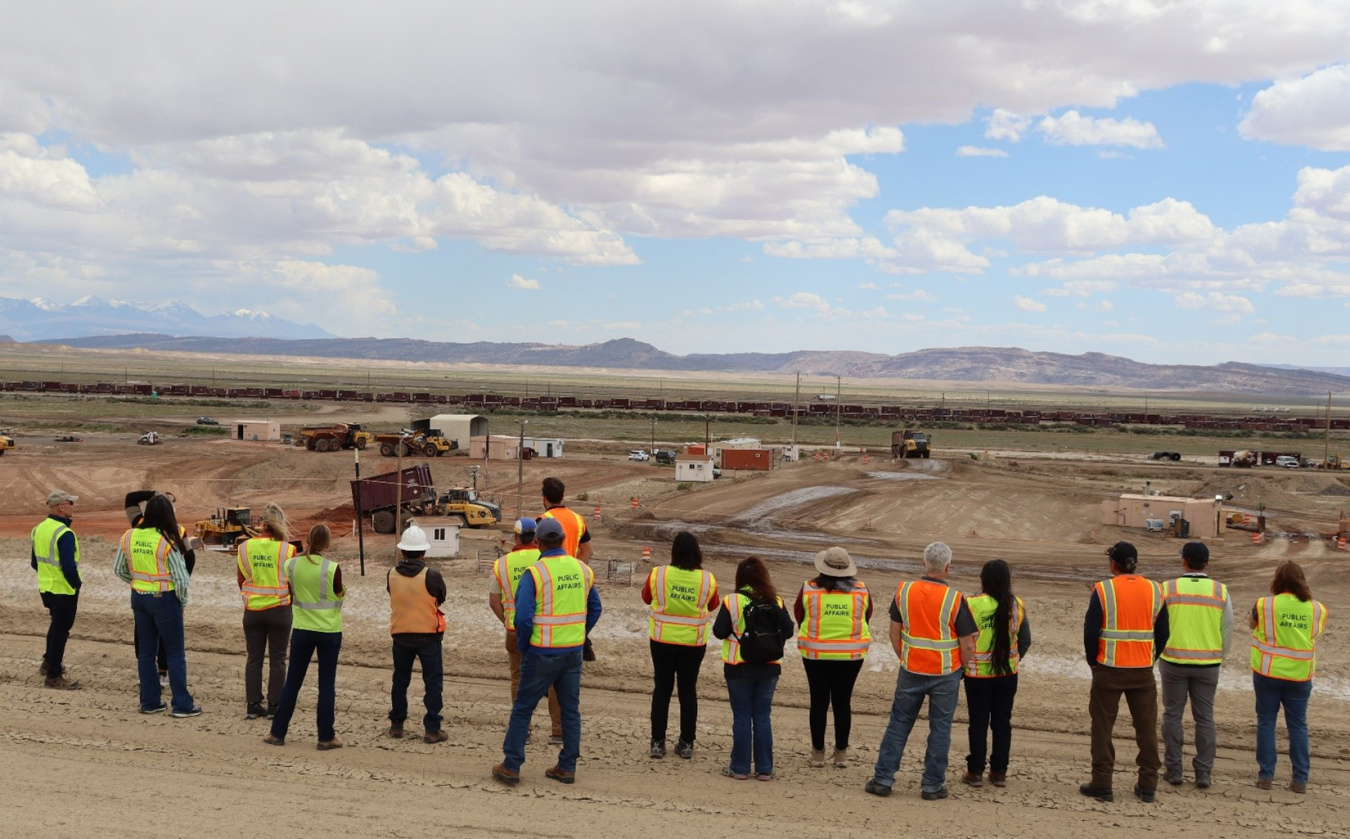
This visit served as a valuable interagency opportunity. Upon completing the DOE’s Office of Environmental Management (EM) cleanup mission at the Moab Project, the Moab and Crescent Junction sites will transition to the Office of Legacy Management for long-term surveillance and maintenance. Hosting that office’s representatives for onsite tours supports a smooth handoff between the two DOE offices.
“This was a tremendous opportunity to showcase the progress our team has made while strengthening relationships,” said Elizabeth Moran, Moab Project environmental manager. “Having our Office of Legacy Management colleagues and tribal partners see things firsthand sets the stage for a successful transition and continued responsible stewardship.”
The tours reflect EM’s commitment to government-to-government engagement with tribal nations whose communities have long been connected to the Colorado River corridor and the broader Four Corners region.
-Contributor: Barbara Michel
To receive the latest news and updates about the Office of Environmental Management, submit your e-mail address.