



H2@Scale is a legacy U.S. Department of Energy (DOE) initiative that brought together stakeholders to advance affordable hydrogen production, transport, storage, and utilization to enable revenue opportunities across multiple sectors.
Ten million metric tons of hydrogen are currently produced in the United States every year. While most of this hydrogen is produced via centralized reforming of natural gas, deployments of alternatives, such as electrolysis, are rapidly increasing. Other emerging approaches include thermochemical water splitting, use of photoelectrochemical cells, and biological pathways. The primary uses of hydrogen in the United States today are in the oil refining and ammonia industries. Other emerging applications include the industrial sector (e.g., metals refining), liquid fuels (e.g., biofuels, synfuels), heat generation, energy storage, and transportation.
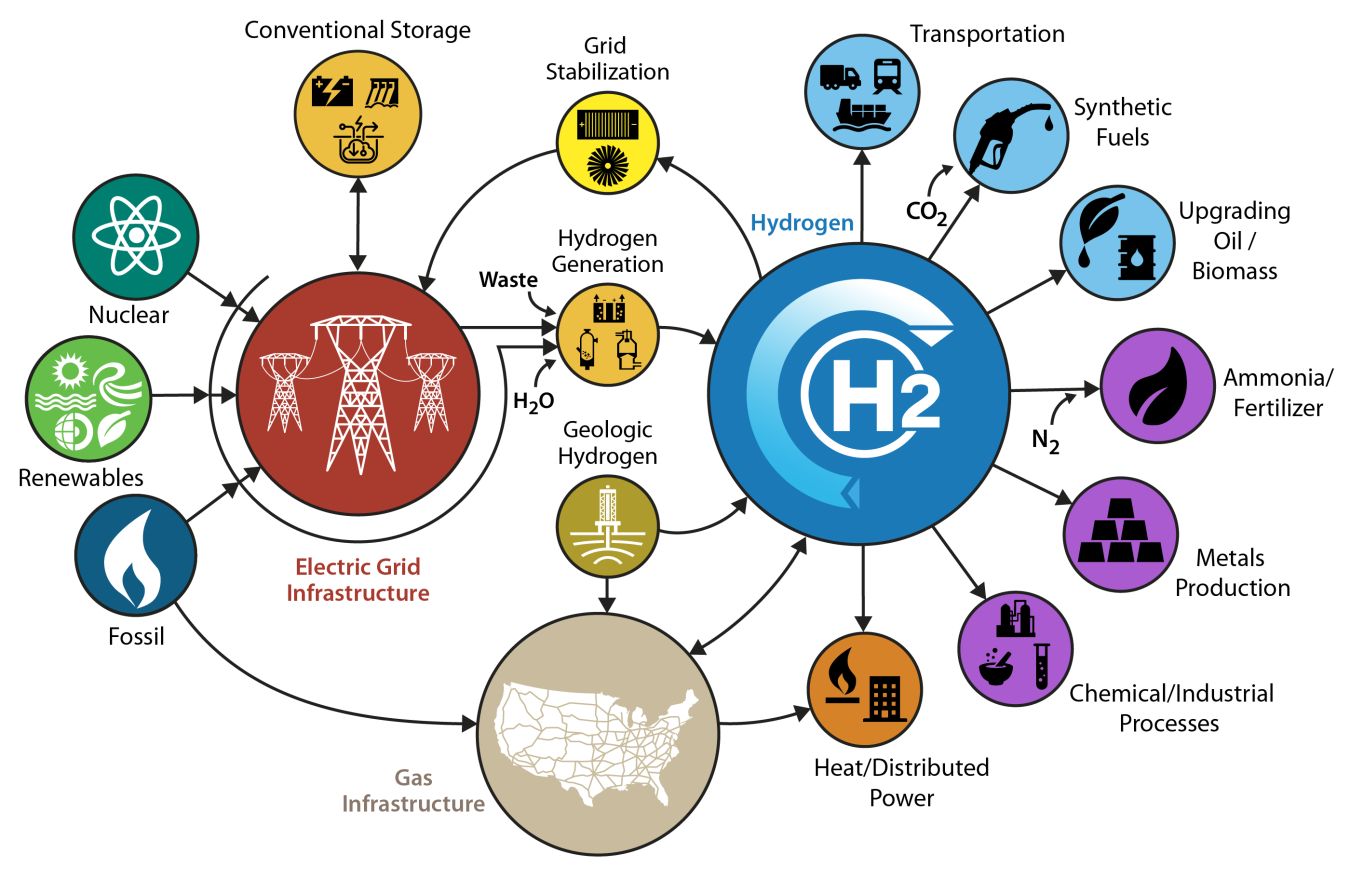
Learn more about H2@Scale through the technical reports, presentations, and workshop proceedings linked below.
Technical Reports
Assessment of Potential Future Demands for Hydrogen in the United States (Argonne National Laboratory, October 2020)
The Technical and Economic Potential of the H2@Scale Concept within the United States (National Renewable Energy Laboratory, October 2020)
Resource Assessment for Hydrogen Production (National Renewable Energy Laboratory, July 2020)
Workshops and Events
H2IQ Hour: Analyzing the Economic and Technical Potential of H2@Scale (January 2021)
H2IQ Hour: Highlighting H2@Scale Demonstration Projects (October 2020)
View information from past H2@Scale workshops.
Past Funding Opportunities and Requests for Information
Find past funding opportunities and past requests for information related to H2@Scale.