



RSS



Providing valuable insight into BETO’s early-stage research and development programs as well as the people who contribute to the success of the U.S. bioeconomy.
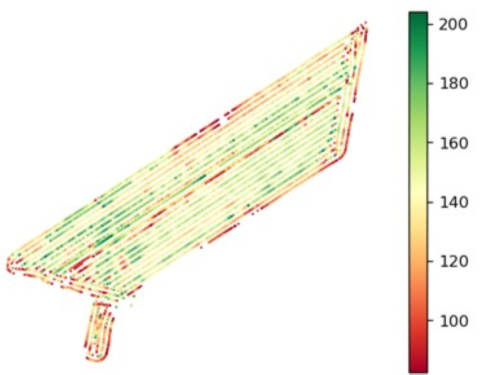
Precision agriculture offers the possibility of balancing maximum productivity with conserving and protecting the land for future generations, but the challenge has been finding capable tools that can make both goals achievable...
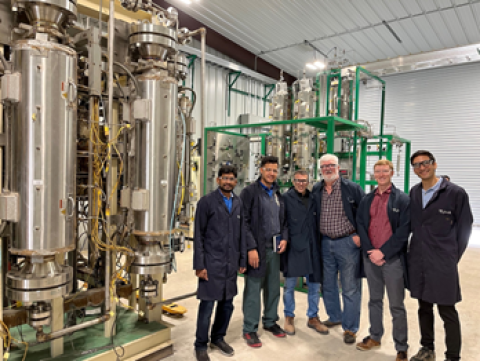
Startup firm Pyran recently took a huge leap forward in the development of its technology to make renewable industrial chemicals, achieving an extraordinary 1,000-times scaleup of its reactor in a single step.
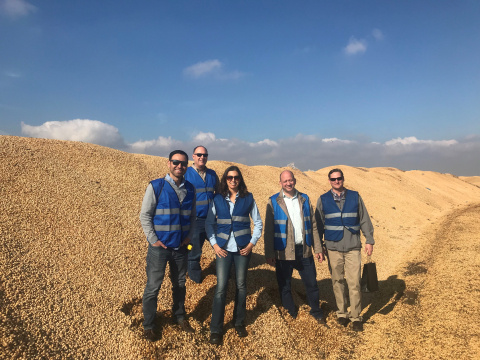
New analysis outlines steps for turning piles of waste into a potentially powerful solution to lower one company’s carbon footprint.
U.S. Secretary of Energy Jennifer Granholm is hosting her counterparts from energy ministries across the world in Pittsburgh, September 21–23, 2022 for the Global Clean Energy Action Forum.
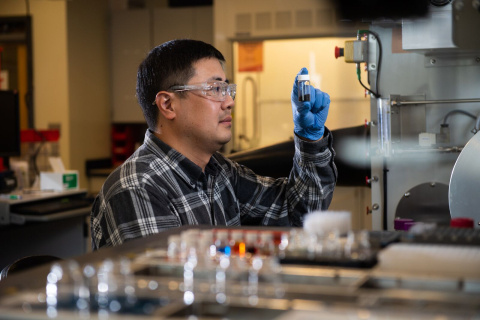
A research team from Pacific Northwest National Laboratory investigates how potassium in biomass feedstocks poisons a catalyst.
The U.S. Department of Energy Bioenergy Technologies Office (BETO) has achieved a significant milestone in decreasing the minimum fuel selling price (MFSP) of drop-in biofuels.
Biofuels have been proven to emit significantly lower emissions than petroleum-based fuels, and recent scientific studies indicate that net-zero emission biofuels are not only possible, but achievable. Corn ethanol and other biofuels
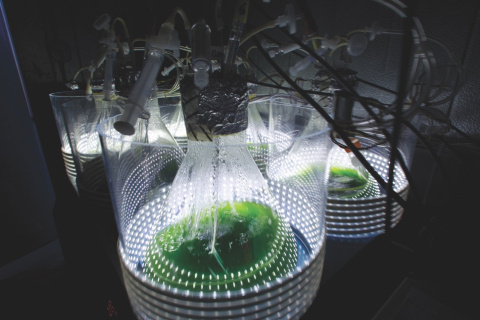
The potential for advancing algal biofuels and bioproducts relies on using algae strains that are best suited for industrial production.
Breakthroughs from the U.S. Department of Energy (DOE) Co-Optimization of Fuels & Engines (Co-Optima) initiative will help rapidly cut emissions, reduce dependence on international petroleum, and contribute to ambitious national goals to reduce emissions on the land, in the air, and across the water.
Co-processing biomass-derived oil with crude oil in existing refineries is an effective way to stimulate the market for sustainable transportation fuels. With this approach, the fuel produced by co-producing bio-oil and petroleum can still be “dropped in”