



RSS
Subscribe to the Hydropower Newsletter
H2O's Hydropower e-newsletter features news on R&D and applied science to advance sustainable hydropower and pumped-storage technologies.
Below are stories about hydropower featured by the U.S. Department of Energy (DOE) Hydropower and Hydrokinetic Office.
Since winning the Furthering Advancements to Shorten Time Commissioning for Pumped Storage Hydropower Prize in 2019, three teams continued testing, completed further analysis, and identified potential sites for their technologies.
On Dec. 1, 2022, WPTO will host a webinar to explore the water power topics in Phase One of the Fiscal Year 2023 Small Business Innovation Research and Small Business Technology Transfer Program. Speakers will discuss these topics and answer questions.
WPTO announced an opportunity for hydropower developers and other stakeholders to receive technical assistance to address valuation hurdles in pumped storage hydropower project development and for challenges related to the HydroWIRES mission.
$4 million funding opportunity aims to reduce the environmental impacts of hydropower with research to advance innovative fish passage and protection technologies.
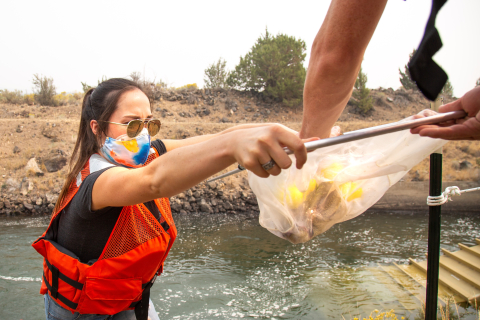
Since winning the Fish Protection Prize, three teams have further developed their innovative concepts, which have the potential to help modernize hydropower facilities and protect fish from water diversion pipes and dam intakes across the country.
WPTO announces six winners in the second phase of the Hydropower Operations Optimization Prize. These teams developed high-tech solutions to improve hydropower operations and grid resiliency. The prize’s third and final phase is now open!
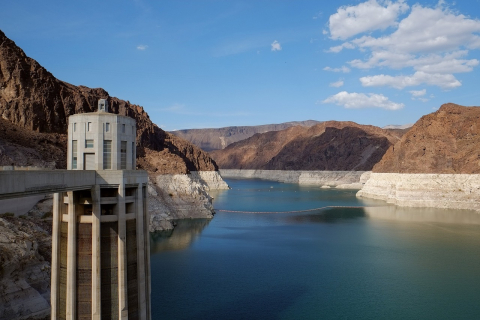
The Pacific Northwest National Laboratory, with funding from WPTO, recently completed the most comprehensive study into the effects of drought on hydropower generation in the United States this century.
Hydropower plants produce energy using the elevation difference created by a dam or diversion structure. Water flows in one side and exits at a lower point, which spins a turbine that runs a generator. Learn six things about hydropower’s potential.
With back-to-school season in full swing, WPTO offers a range of educational resources to teach students of all ages about hydropower and highlights programs designed for those about to embark on their clean energy careers.
WPTO publishes a notice of intent to issue a $4 million funding opportunity to reduce the environmental impacts of hydropower with research to advance innovative fish passage and protection technologies.