



RSS



Subscribe to the Hydropower Newsletter
H2O's Hydropower e-newsletter features news on R&D and applied science to advance sustainable hydropower and pumped-storage technologies.
Below are stories about hydropower featured by the U.S. Department of Energy (DOE) Hydropower and Hydrokinetic Office.
STEM disciplines, or the fields of Science, Technology, Engineering, and Mathematics, are critical to understanding our world and developing solutions to complex challenges.
DOE awards $16M across five national labs to advance the state of HydroWIRES research. Selected projects fall into one of five topic areas focused on increasing hydropower’s impact towards a clean, resilient energy grid.
EERE seeks comments on the testing facilities and capabilities that will validate and advance emerging and future hydropower technology innovations.
Permitting and federal authorization processes can increase the costs, risks, and timelines of licensing (or relicensing) hydropower projects. Now, a new report examines what factors affect this process and how.
EERE seeks comments on the testing facilities and capabilities that will validate and advance emerging and future hydropower technology innovations.
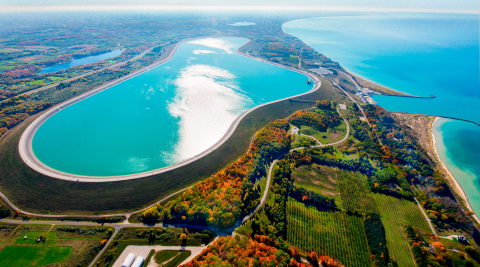
Every day, we are powering our lives using pumped storage hydropower—a unique and relatively unknown source of energy storage.
DOE announced funding for continuing research and development projects in the SBIR/STTR program, including $8.1 million for seven hydropower and marine energy projects.
EERE's Water Power Technologies Office, through its HydroWIRES Initiative, announced three selectees for a Notice of Opportunity for Technical Assistance for Improving Hydropower’s Value Value Through Informed Decision Making.
Of the many natural gifts we can appreciate on Earth Day, it's hard to think of one more versatile—or more vital—than water.
Two teams will share $75,000 prize pool for their foundation solutions to shore up hydropower systems.