Note: This page is about a research effort that is no longer active.
The Integrated Energy Systems Office (IESO) works with industry partners to increase the performance and reliability of wind energy technologies while lowering the cost of wind energy. The office's research efforts have helped to increase the average capacity factor (a measure of power plant productivity) from 22% for wind turbines installed before 1998 to an average of nearly 35% today, up from 30% in 2000. Wind energy costs have been reduced from over 55 cents (current dollars) per kilowatt-hour (kWh) in 1980 to an average of under 3 cents per kWh in the United States today. This page describes some IESO's utility-scale wind technology research efforts.
View past wind energy technologies research and development projects by visiting the Wind Energy Projects Map and selecting Program Area: Next-Generation Technology Development and Manufacturing.
Research Project Highlights
These are some of the key research project highlights from the program's wind technology research.
Prototype Development
Learn more about how DOE's National Laboratory of the Rockies is testing the causes of drivetrain failures.
Modern wind turbines have scaled up in size to multi-megawatt power ratings. IESO research has helped facilitate this transition, through the development of longer, lighter rotor blades, taller towers, more reliable drivetrains, and performance-optimizing control systems.
During the past several decades, the office worked with industry to develop a number of prototype technologies, many of which have become commercially viable products. One example is the GE Wind Energy 1.5-megawatt (MW) wind turbine. Since the early 1990s, the program worked with GE and its predecessors to test components such as blades, generators, and control systems on generations of turbine designs that led to GE's 1.5-MW model, which has constituted approximately half of the nation's installed commercial wind energy fleet and is a major competitor in global markets.
Component Development
IESO worked with industry partners to improve the performance and reliability of system components. Knight and Carver's Wind Blade Division in National City, California, worked with researchers at the Department of Energy's Sandia National Laboratories to develop an innovative wind turbine blade that has led to an increase in energy capture by 12% The most distinctive characteristic of the Sweep Twist Adaptive Rotor (STAR) blade is a gently curved tip, which, unlike the vast majority of blades in use, is specially designed to take maximum advantage of all wind speeds, including slower speeds.
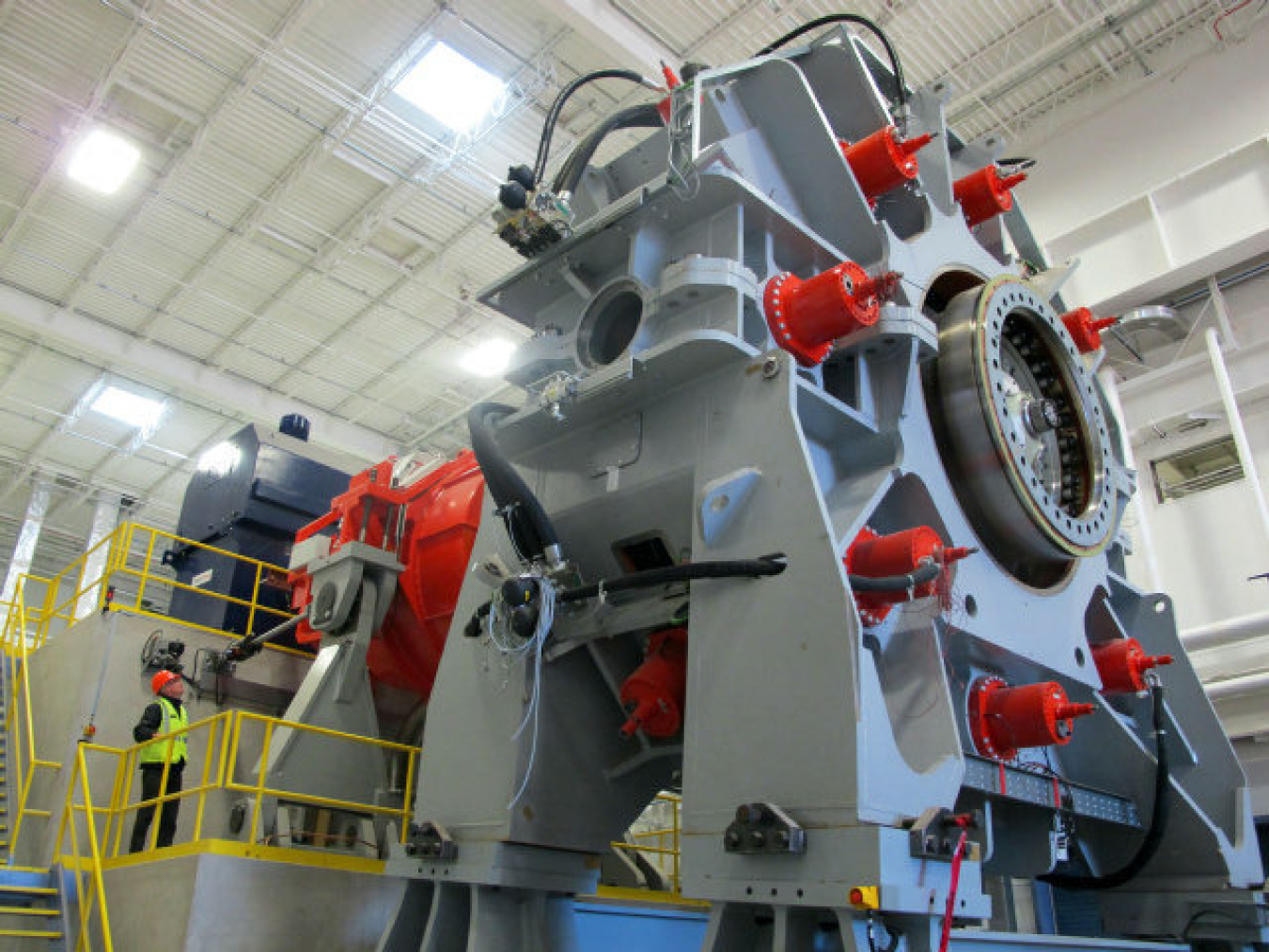
To support the development of more reliable gearboxes, the program worked with several companies to design and test innovative drivetrain concepts. Through the support of $47 million in DOE funding, the nation's largest and one of the world's most advanced wind energy testing facilities was opened at Clemson University to help speed the deployment of next-generation energy technology, reduce costs for manufacturers, and boost global competitiveness for American companies.
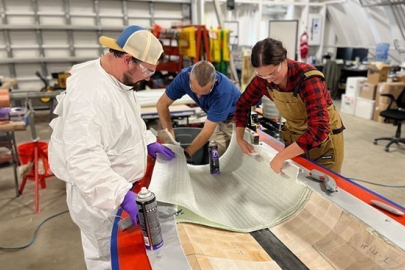
Highlighted Project: To support innovation in the design and manufacturing of wind power generation components, DOE partnered with public and private organizations to apply additive manufacturing, commonly known as 3D printing, to the production of wind turbine blade molds. The traditional method of blade design requires the creation of a plug, or a full-size representation of the final blade, which is then used to make the mold. Creating the plug is one of the most time-intensive and labor-intensive processes in wind blade construction, so 3D printing saves these critical resources.
Utility-Scale Research Turbines
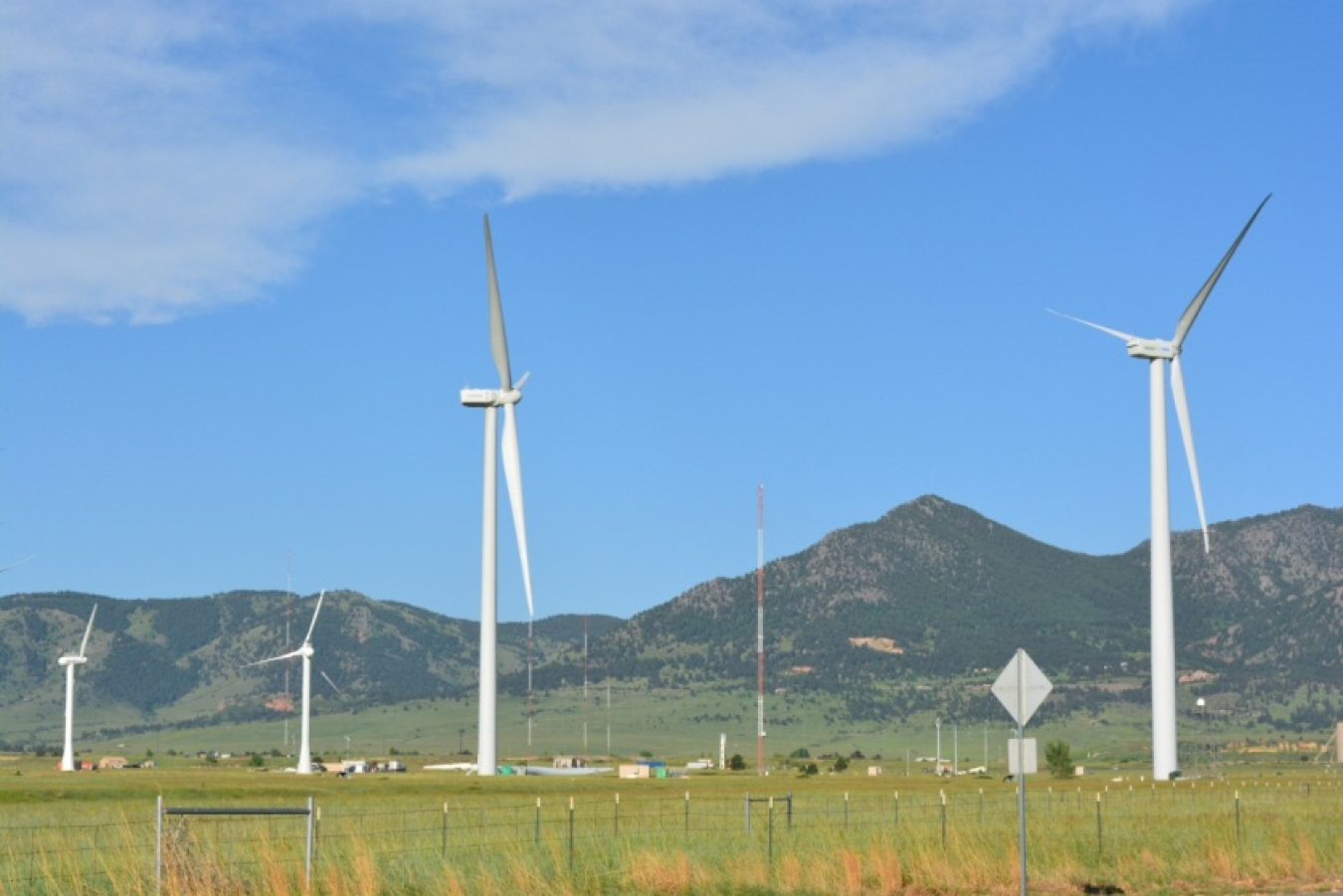
The National Laboratory of the Rockies's National Wind Technology Center (NWTC) has helped pioneer wind turbine component, systems, and modeling methods that have driven industry acceleration. The facility offers multiple test sites, several dynamometers, onsite manufacturing resources, and structural validation capabilities. Innovative wind energy research at the NWTC has included:
- Using computational fluid dynamics to develop the Simulator for Wind Farm Applications and other modeling and controls tools, which help wind farm operators minimize the impact of turbine wake effects by investigate plant performance under a full range of atmospheric conditions. Studies have shown that by coordinating turbine controls to curtail wake effects, the overall wind power plant output could be increased by 4%–5%.
Utilizing the controllable grid interface test system, which reduces wind turbine certification testing times and costs while providing system engineers with a better understand of how wind turbines, photovoltaic inverters, and energy storage systems react to disturbances on the electric power system.
Small Wind Turbine Technology R&D and Testing
IESO has collaborated with NLR researchers and U.S. suppliers of distributed wind energy technologies to develop wind turbines and components, perform testing and certification, and commercialize products to make distributed energy technologies more affordable. Through an initiative called the Competitiveness Improvement Project (CIP), IESO funded the installation of three small wind turbines at the Flatirons campus in Colorado to enable research on turbine design characteristics common to small wind turbines used in distributed applications.
Wind Turbine Technologies News
-
The U.S. Department of Energy (DOE) selected 27 innovators and entrepreneurs to join the latest cohorts in its Lab-Embedded Entrepreneurship Program (LEEP).
-
 NLR will award up to $6.25 million to teams from U.S.-based industry and academia to support fundamental research efforts that generate validation data for predicting large turbine aerodynamic performance, loads, and behavior of large wind turbines.
 -
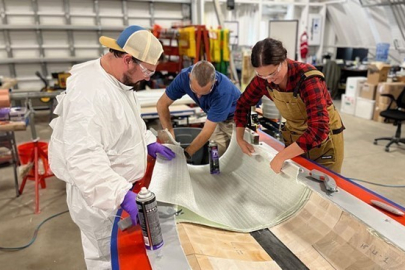 Report suggests investing in strategies and innovations to process the remaining 10%, supporting reuse and recycling.
 -
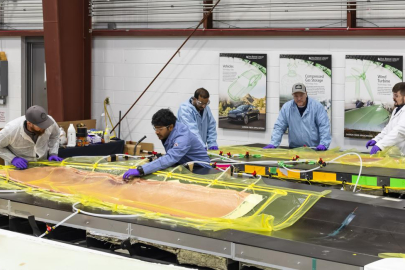 DOE’s Advanced Materials and Manufacturing Technologies Office (AMMTO) funded research conducted by Oak Ridge National Laboratory (ORNL) where researchers achieved a milestone building a 6.5-foot turbine blade tip with novel materials.
Wind Turbine Technologies Publications
-
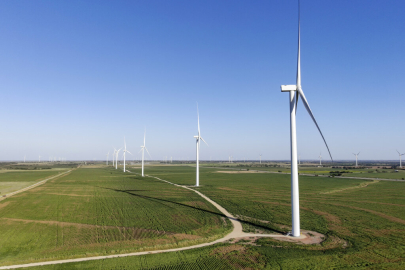 The annual Land-Based Wind Market Report provides an overview of trends and policies in the U.S. power industry, primarily focusing on land-based, utility-scale wind turbines over 100 kilowatts in size.
 -
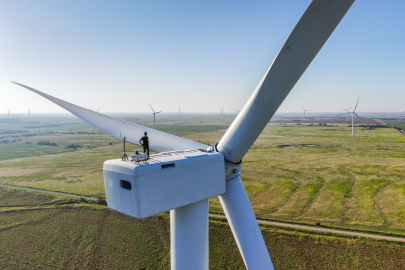 The American WAKE experimeNt (AWAKEN) is compiling the world’s largest and most comprehensive dataset on wind energy atmospheric phenomena, detailing how wind and surrounding air particles interact with wind turbines and wind farms.
 -
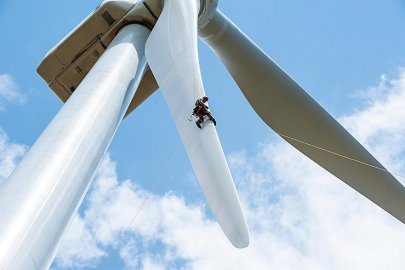 The Big Adaptive Rotor project works to design and enable the next generation of land-based wind turbines.
 -
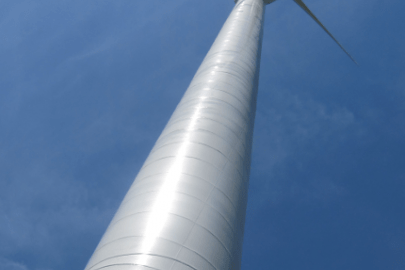 Learn how Keystone Tower Systems is using spiral welding to revolutionize wind turbine manufacturing.