



Subscribe to the WETO E-Newsletter
Subscribe to the WETO e-newsletter to stay informed on the latest wind energy news, events, publications, and updates.
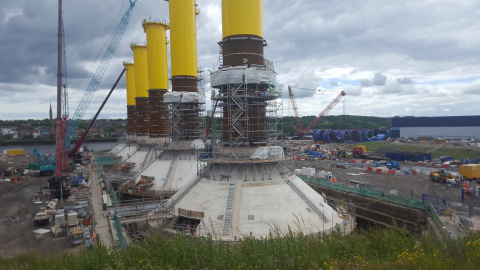
The use of concrete support structures for offshore wind turbines offers many potential advantages over towers comprised of only steel, including greater durability, a longer lifespan, increased local labor opportunities, and much quieter installations.
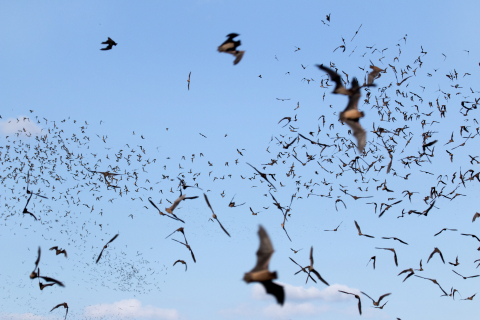
DOE Announces $1.6 million for a jointly funded project supporting the coexistence of offshore wind with bats on the West Coast.
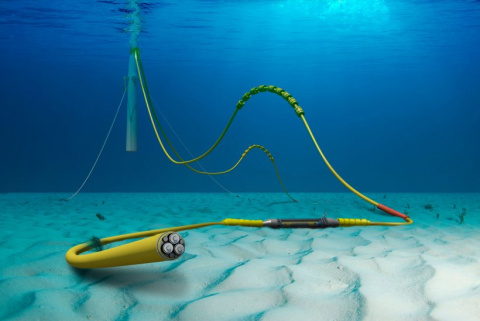
DOE’s Pacific Northwest National Laboratory (PNNL) will conduct a literature review of West Coast offshore wind transmission research to date, covering potential interconnections along California, Oregon, and Washington coastlines.
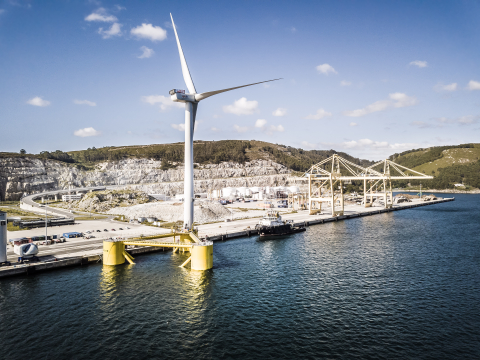
An NREL study will outline a strategic network of U.S. West Coast ports and port infrastructure upgrades that could collaboratively unlock the potential of commercial-scale floating offshore wind energy technology deployment.
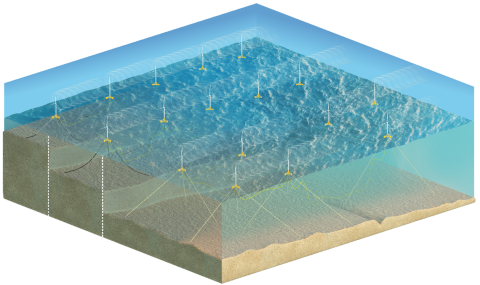
By developing a design toolset and reference designs for large-scale U.S. floating offshore wind farms, the Floating Offshore Wind Array Design project will inform design decisions and help ensure cost-efficient and responsible deployment.
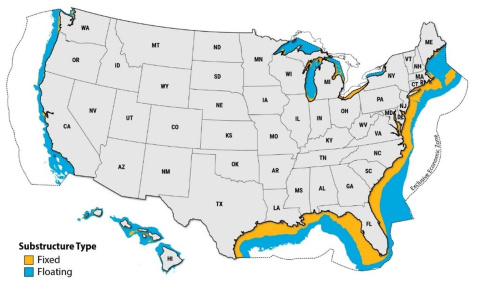
Floating offshore wind potential offers more than two times the energy equivalent of annual U.S. electricity consumption, even after accounting for relative technical suitability in support of responsible offshore wind energy deployment.
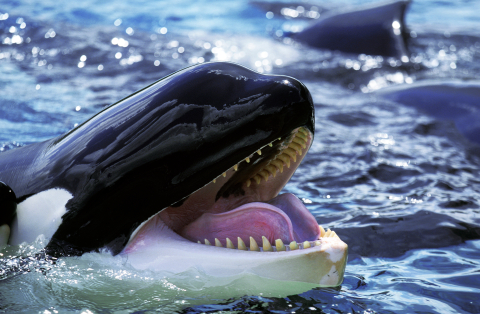
The National Offshore Wind Research and Development Consortium (NOWRDC), which was established with funding from the U.S. Department of Energy (DOE), has selected five new projects to receive a total of $3.5 million for ocean coexistence and transmission.

Bharat contributes to the Atlantic Offshore Wind Integration Study which focuses on the reliability and resilience of wind in the power system.
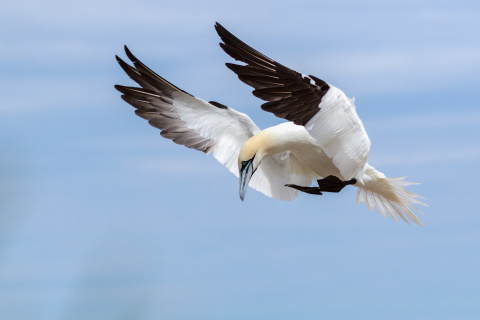
Working Together to Resolve Environmental Effects of Wind Energy (WREN) was established with a primary objective to facilitate international collaboration and advance global understanding of potential environmental effects of wind energy.
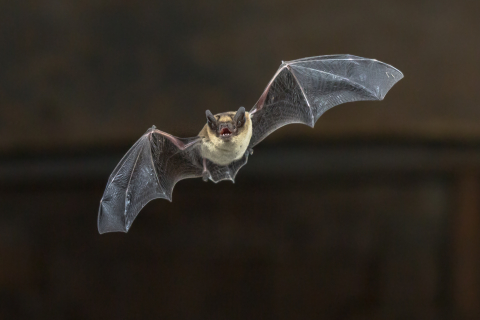
RFI seeks input on the status and research needs related to bat deterrent technologies, which will help inform a potential Funding Opportunity Announcement aimed at advancing bat deterrent technology solutions.