



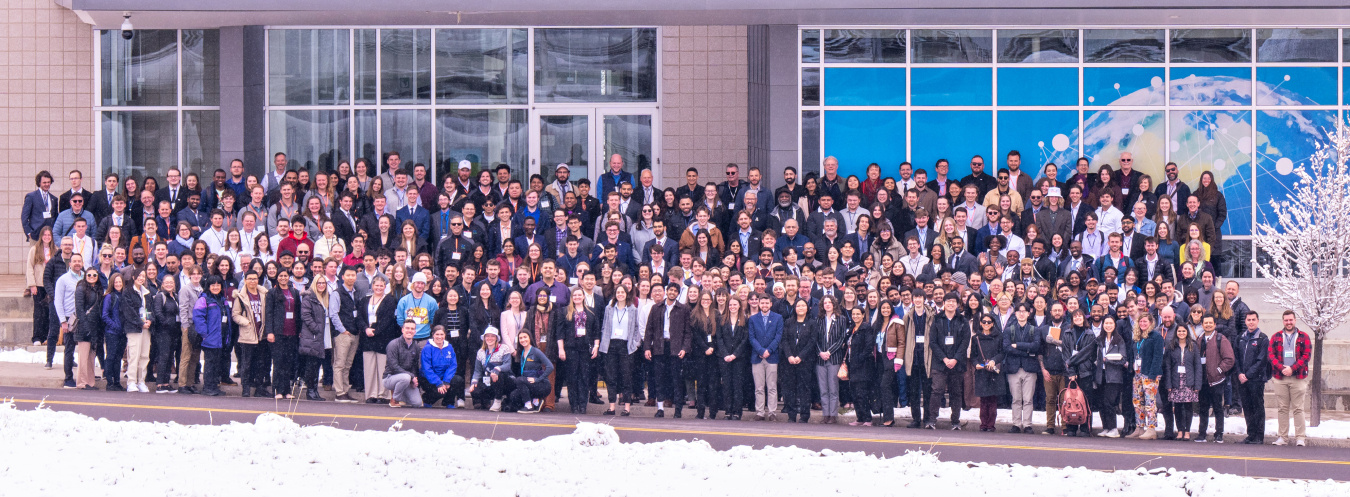
The 15 Finalist Teams in the 2023 Build Challenge represented 18 collegiate institutions spanning 3 countries.
For team deliverables, explore the BuildingsNEXT Deliverables Table.
2023 Build Challenge Finalist Teams
*Teams with an asterisk did not compete in 2023 due to unforeseen permitting delays, supply shortages, etc. but were chosen as finalist teams in 2022.
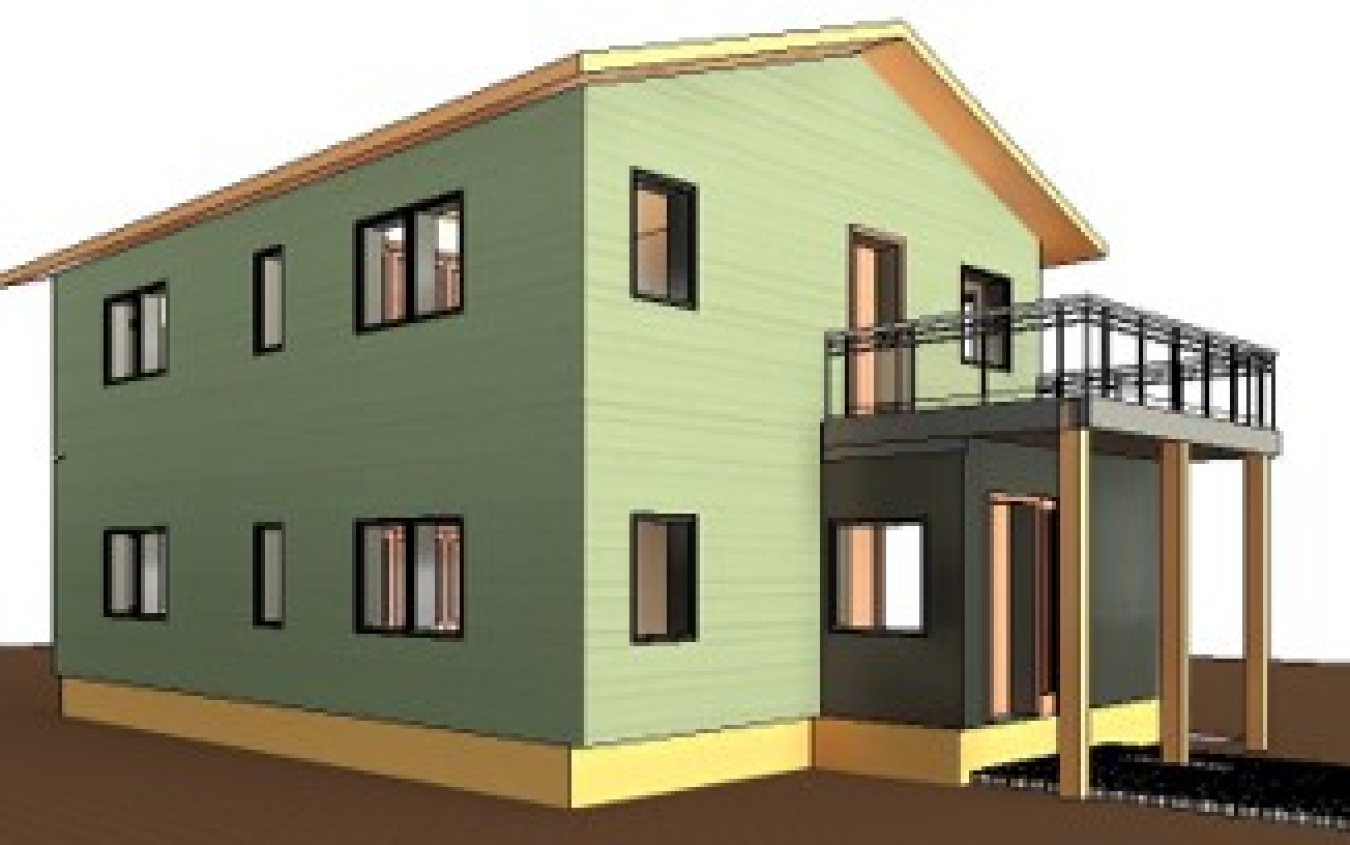
Team Name: Net Zero 5280
Location: Colorado School of Mines campus, Golden, Colorado
This affordable 1,718 ft2 house will integrate a back-up energy storage system of reused electric vehicle (EV) batteries.
Key Features:
- Reused battery system
- Greywater system
- Ground-source heat pump
- Solar thermal water heating/water heat recovery.
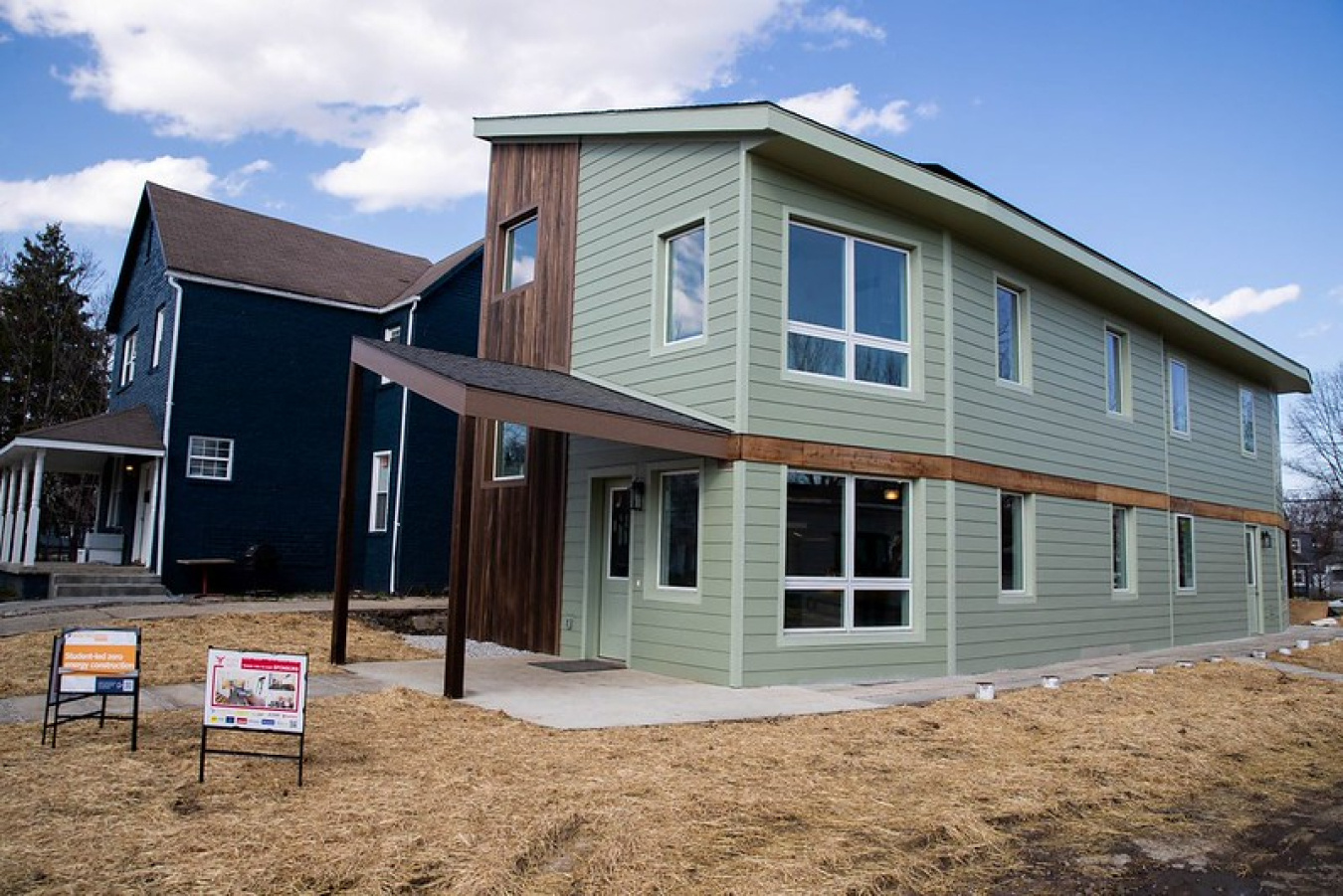
Team name: Cardinal Studio
Build location: Indianapolis, Indiana
Results: Winner of the 2023 Build Challenge
The 1,350 ft2 duplex unit was built with a community development corporation on an infill lot and aims to address gentrification pressure and promote neighborhood revitalization.
Photos, videos, under construction, and final 3D tours.
Key Features:
- Rent-to-own/Aging-in-place
- High-efficiency heating
- Electric vehicle (EV) charging
- Frost Protected Shallow Foundation (FPSF).
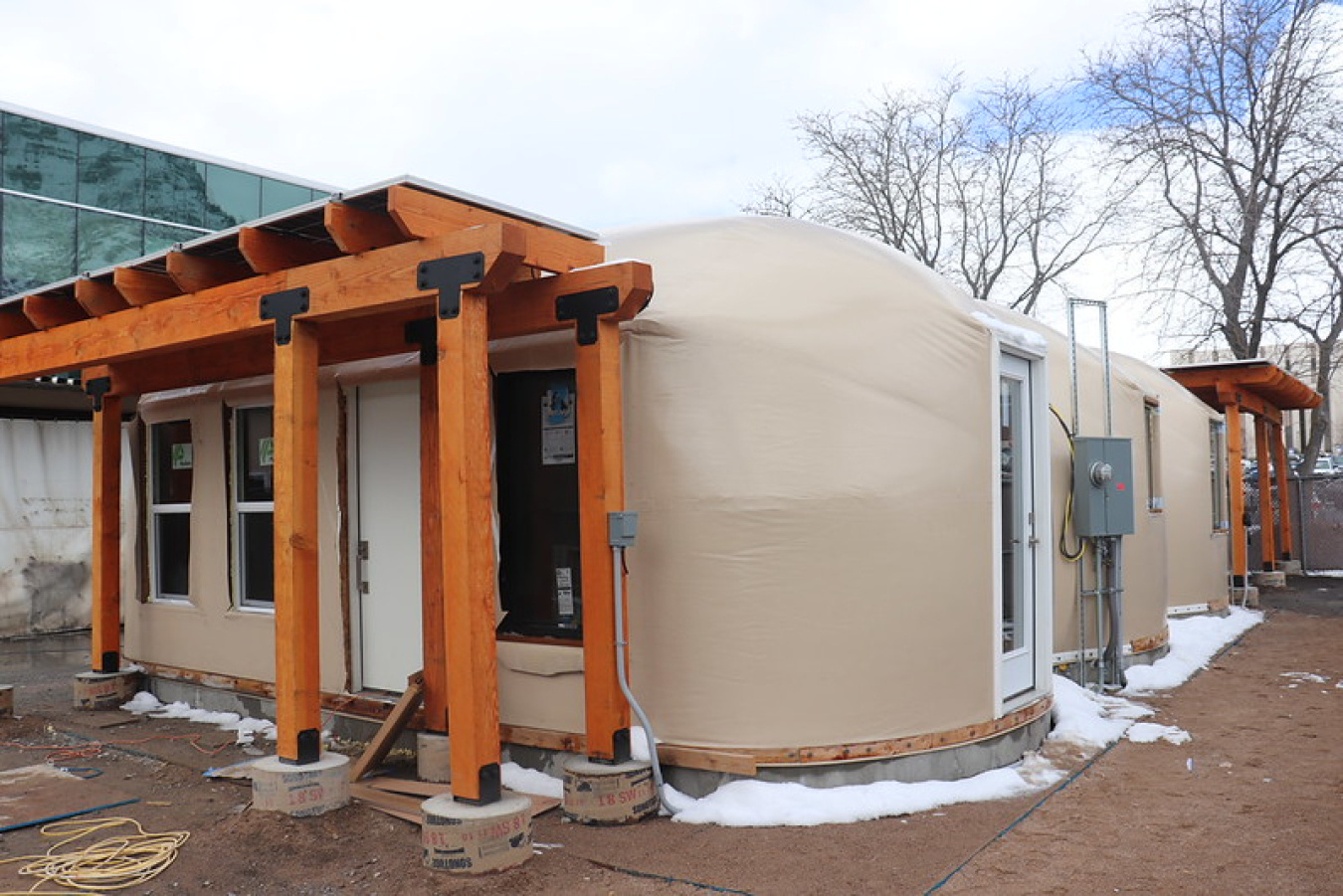
Team name: Wasatch Builders
Build location: Provo, Utah
The 850 ft2 modular monolithic “Triple Dome Home” design used elongated reinforced concrete pods that are transportable. As 40-60% of energy load comes from heating and cooling loads in Utah, the team made a conscious decision to focus the design of the home on maintaining the temperature within the home.
Photos, video tour, and under construction 3D tour.
Key Features:
- Recycled concrete
- Monolithic domes
- Earth berm roof.
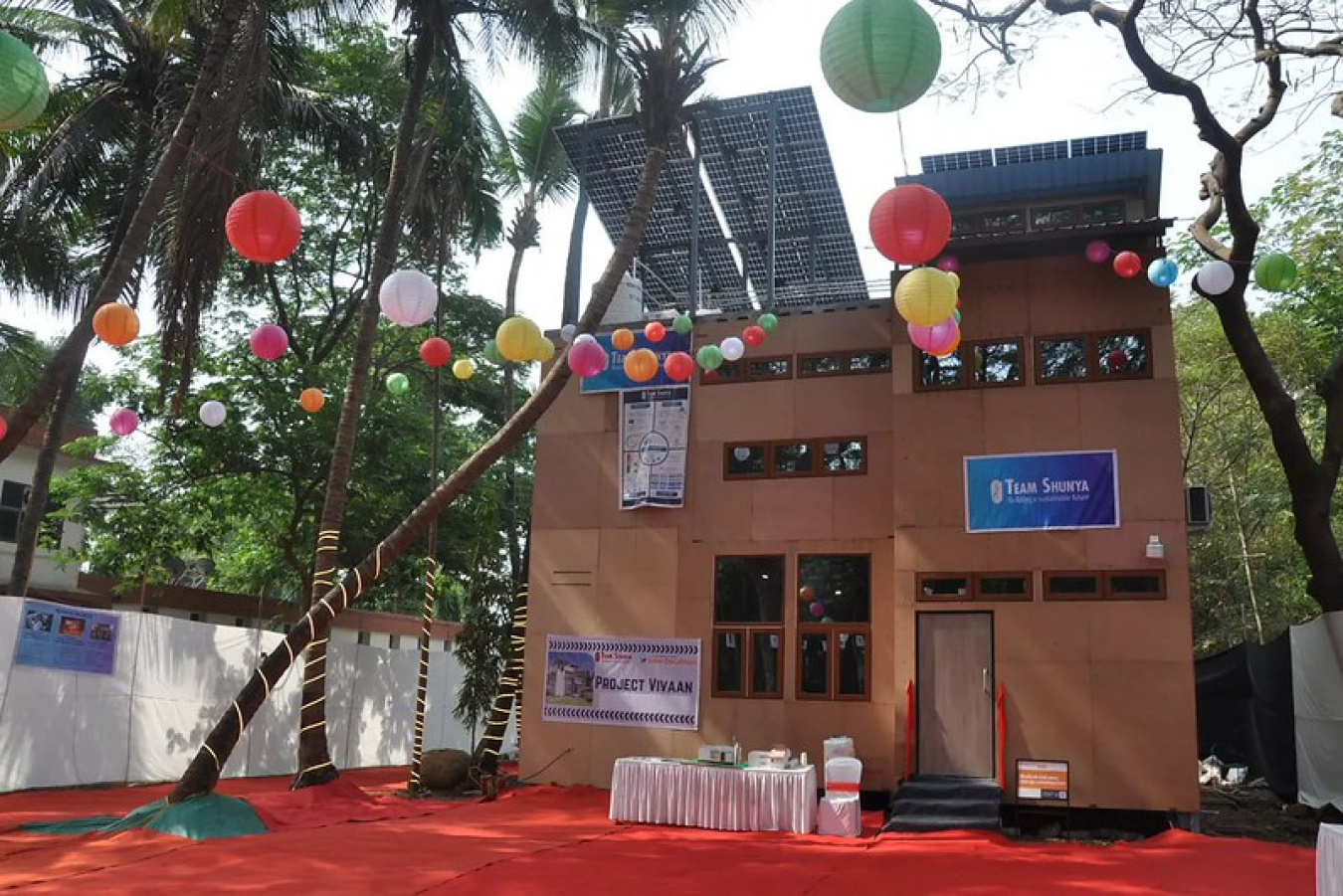
Team name: Team SHUNYA
Build location: Navi Mumbai, India
Results: Second place in the 2023 Build Challenge
The 1,416 ft2 house was built with advanced technology solutions for a family of four in a newly planned city to help address air quality in a hot and humid climate.
Photos and video tour.
Key features:
- Dismantlable structure for end-of-life recyclability
- Integrated and extensible automation system
- Thermal energy storage
- Agriculture waste-based wall panel materials
- Chilled water hydronic cooling with liquid desiccant dehumidification.
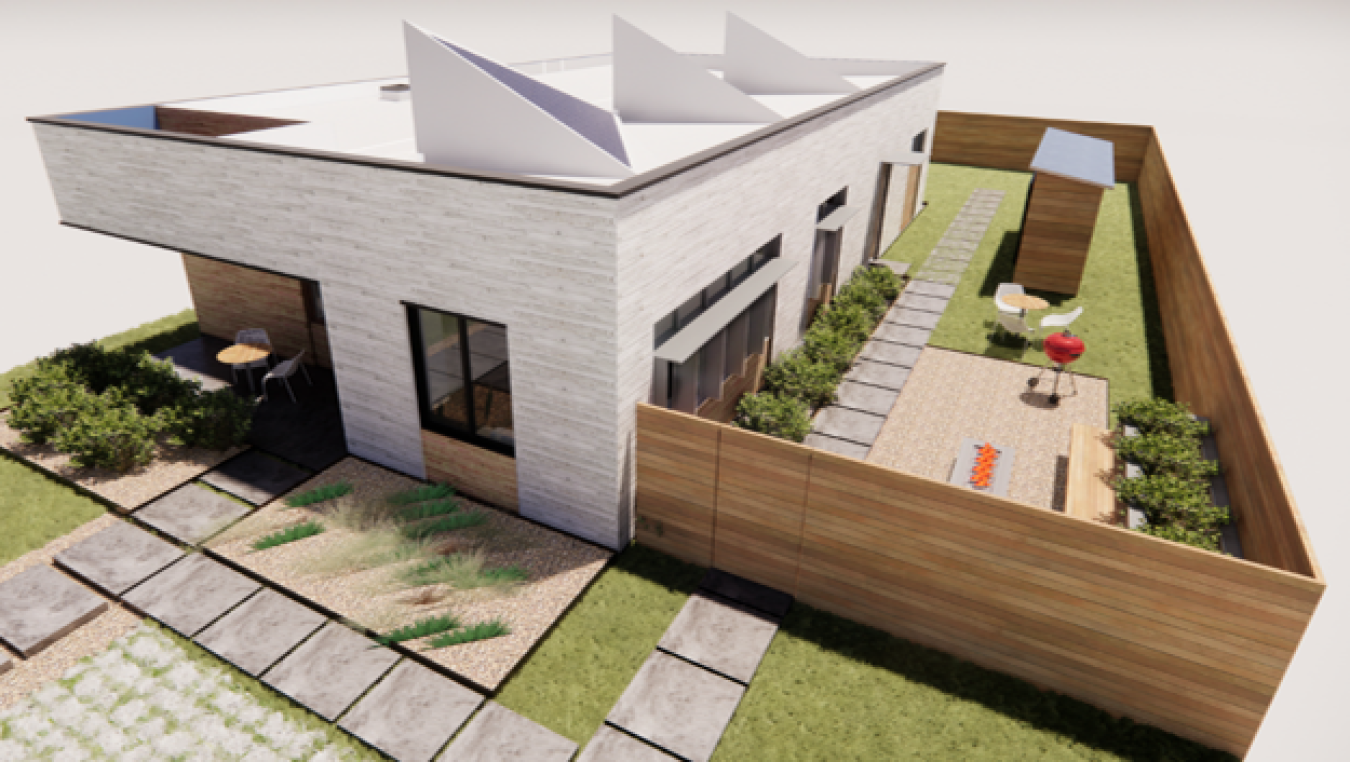
Team name: Solar Texas
Build location: College Station, Texas
Affordable housing for a 1,580 ft2 structure in a college town.
Key features:
- Passive lighting
- 3D-printed, FEMA-compliant safe room
- Affordable housing
- Deconstruction through disassembly.
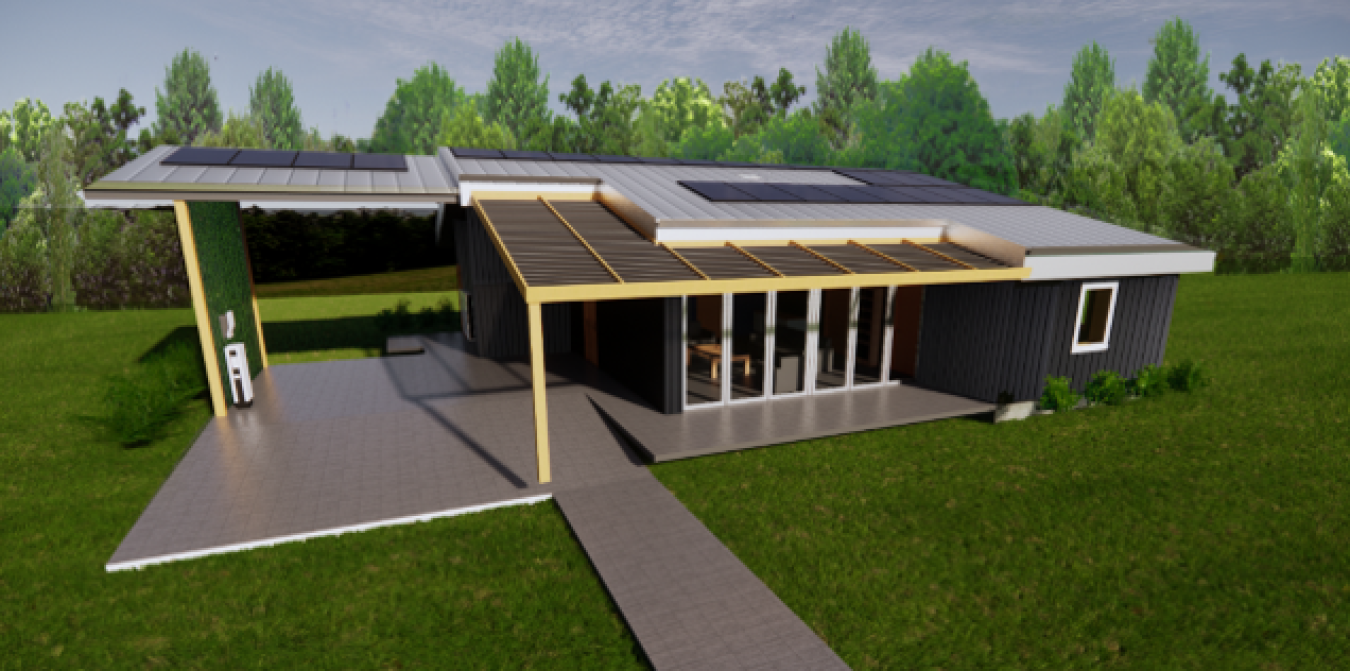
Team name: MeroHouse
Build location: Middletown, Pennsylvania
This 1,400 ft2 accessible, modular house incorporates an “aging-in-place” concept, allowing for comfortable, independent living during retirement.
Key features:
- Adjustable exterior shading
- Cork tile flooring
- Battery storage.
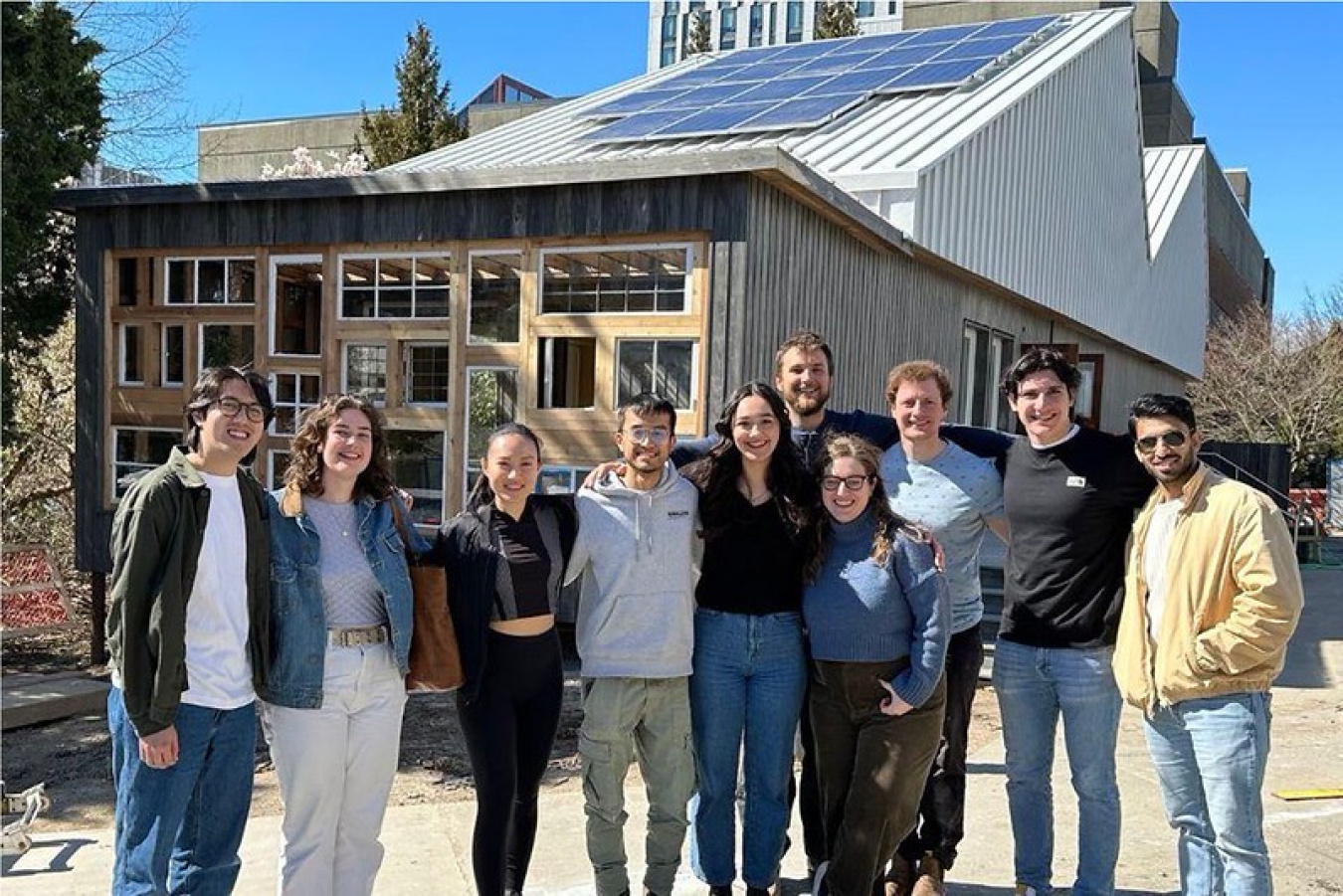
Team name: Third Quadrant Design
Build location: University of British Columbia campus in Vancouver, British Columbia
The 1,220 ft2 structure, located on the university campus, integrates innovative design and materials for an educational space of the future.
Photos, video, construction tour, and finished 3D tour.
Key features:
- Salvaged materials
- Rainwater capture
- Hempcrete walls
- Seismic resilience.
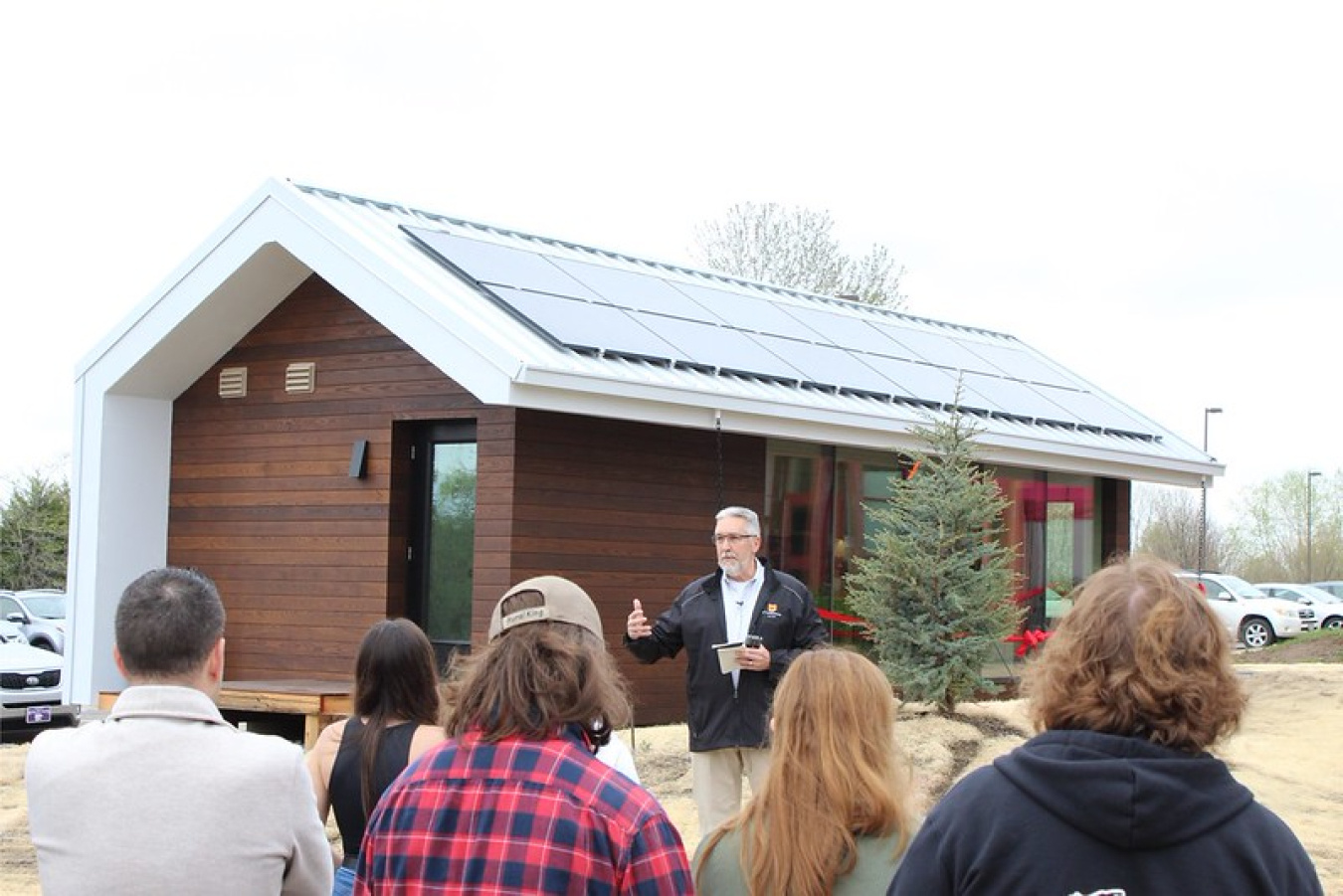
Team name: Dirt Works Studio
Build location: Lawrence, Kansas
This project focuses on local, low-maintenance, bio-based materials in a 500 ft2, one-story demonstration home with panelized design for flexibility in scaling and construction.
Photos, video, construction tour, and finished 3D tour.
Key features:
- Campus research
- Prefabricated wall systems
- Bio-based materials
- Local industry participation.
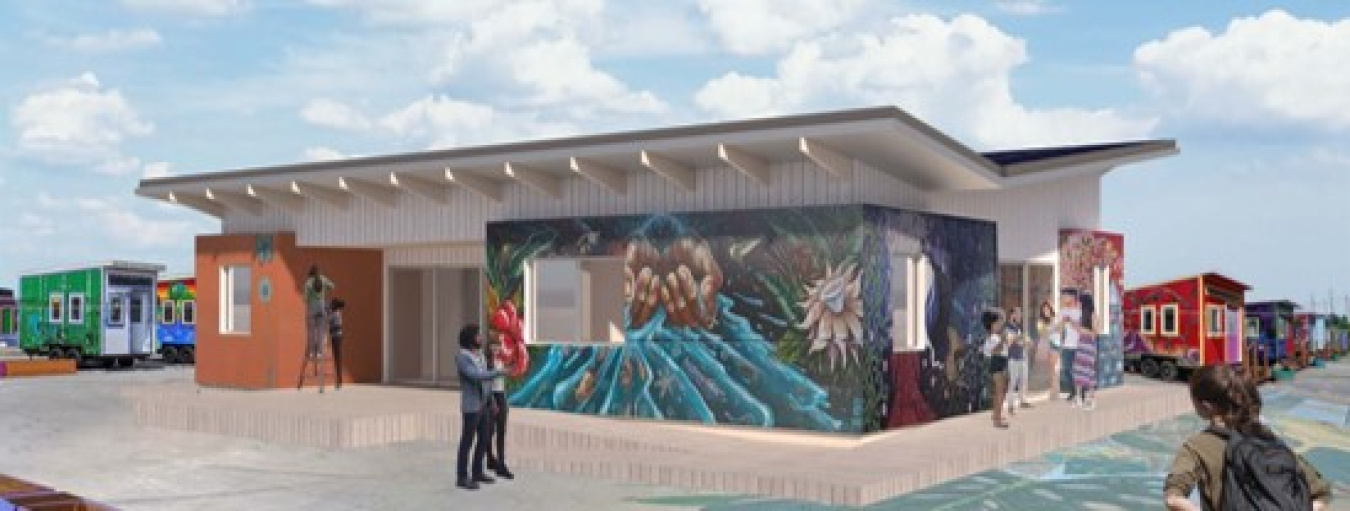
Team name: UC Berkeley + University of San Francisco
Build location: Tiny House Empowerment Village (THEV)—the world’s first tiny house village for formerly unhoused youth aged 18–25, Oakland, California
This 1,280 ft2 community center can be dissembled/reassembled as a demonstration for emergency relocation.
Key features:
- Water recycling and treatment
- Microgrid control algorithms
- Community-focused design process.
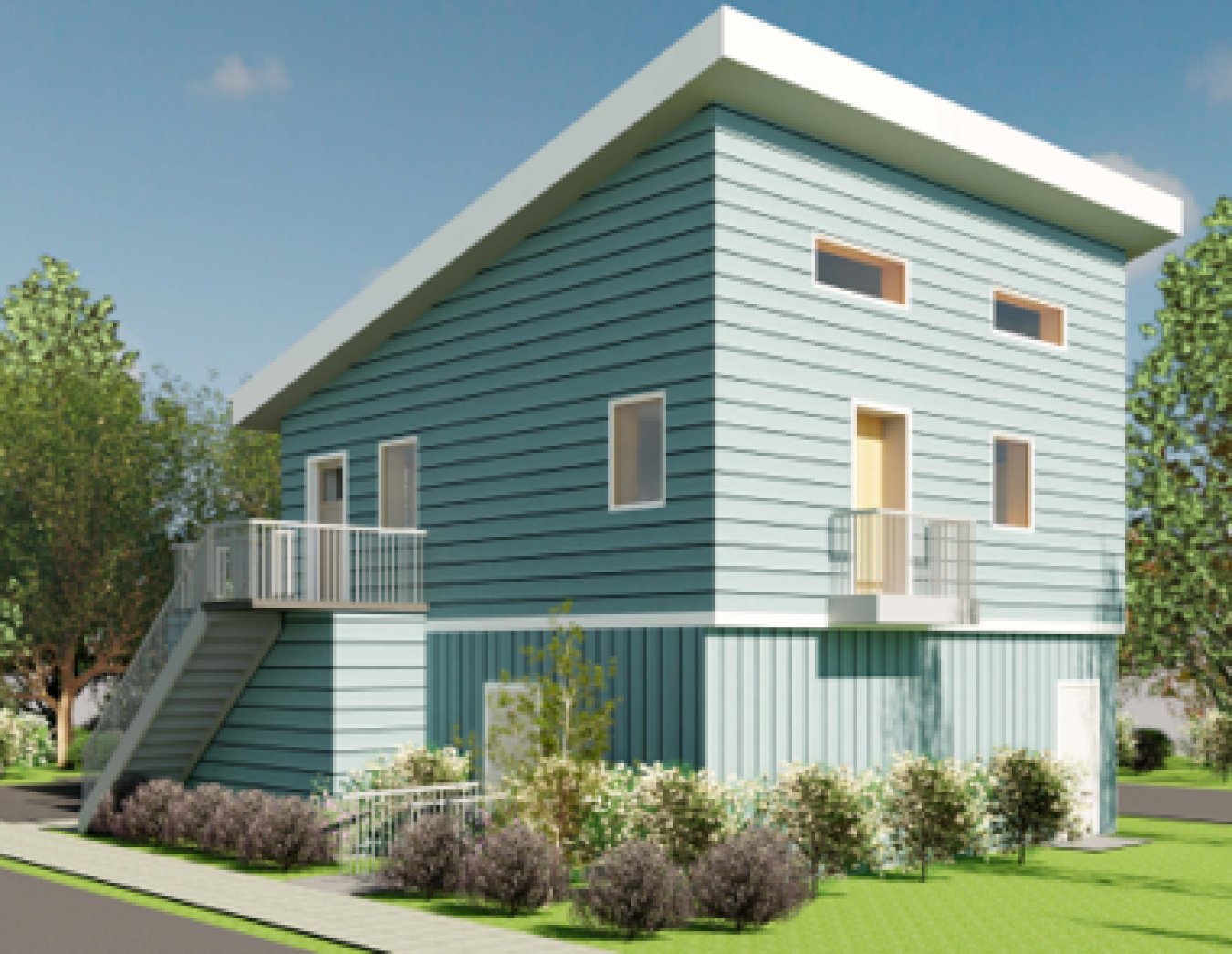
Team name: Spruce Canopy
Build location: Boulder, Colorado
The University of Colorado Boulder built a highly efficient and resilient 670 ft2, carriage-style home for an affordable housing community in north Boulder.
Key features:
- Flood resilient
- Replicable carriage style design
- Prefabricated wall systems.
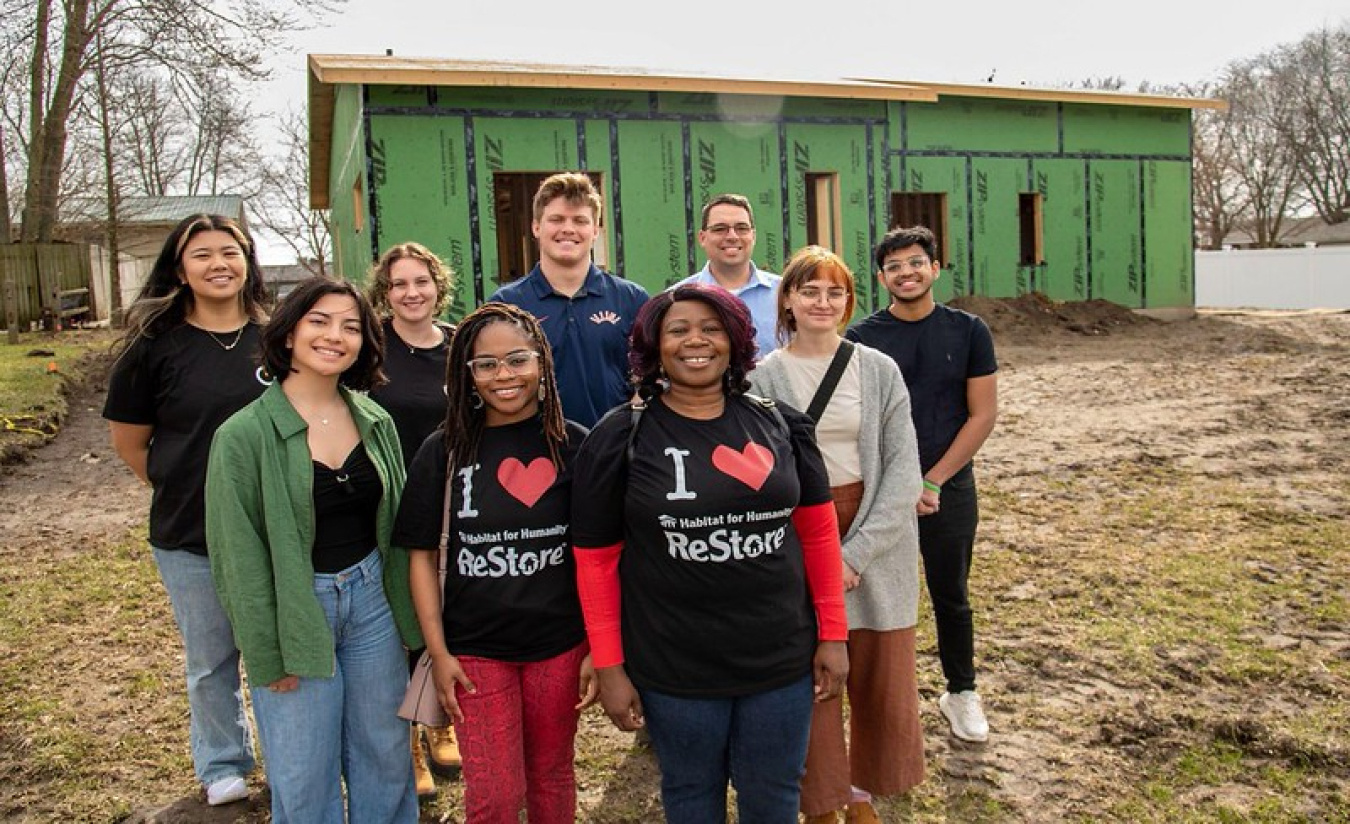
Team name: Illinois Solar Decathlon
Build location: Rantoul, Illinois
This 1,510 ft2 home for a single parent and two children will help serve as a housing model for rural Illinois.
Photos, video, construction tour, and finished 3D tour.
Key features:
- Radiant space heating
- Remote heat recovery ventilation
- Grid-responsive energy management system with battery backup.
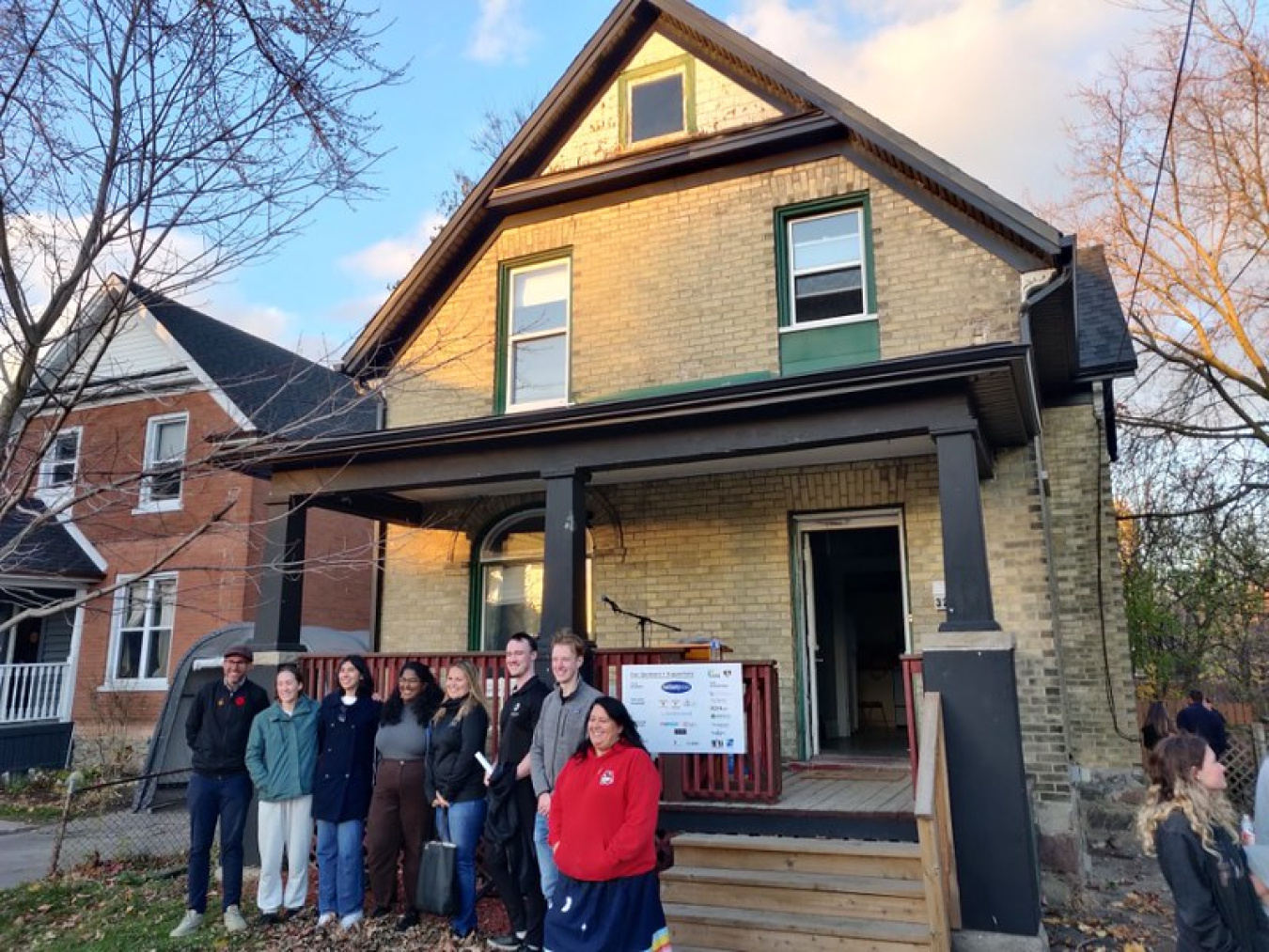
Team name: Warrior Home
Build location: Ontario, Canada
This project is a retrofit of a 1,440 ft2, 100-year-old home for an indigenous nonprofit organization looking to expand their affordable housing options.
Photos, video, and 3D tours of the top floor, main floor, and basement.
Key features:
- Community-focused design
- Affordability
- Replicability of upgrade measures
- Crawlspace to basement conversion.
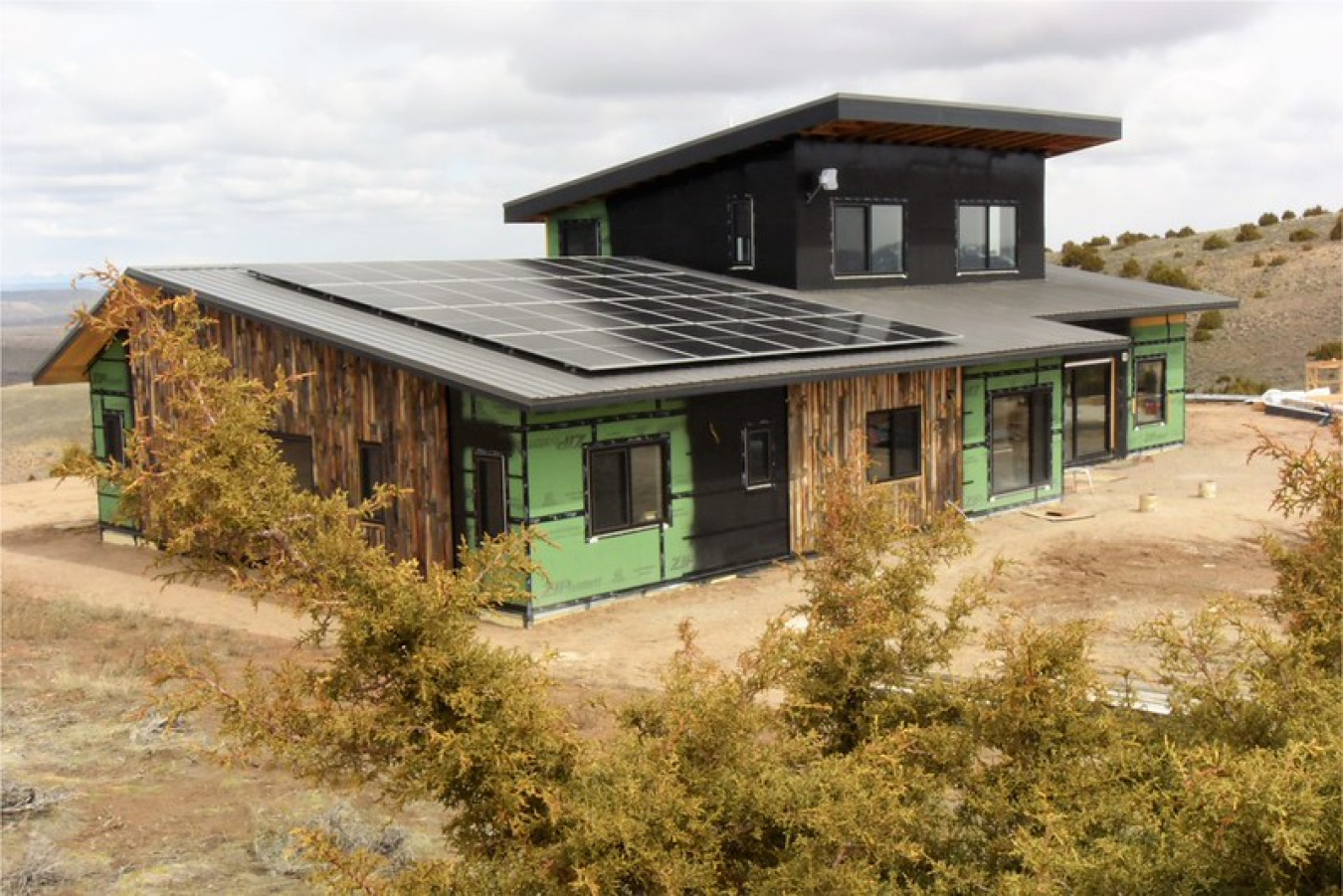
Team name: Wind River
Build location: Fremont County, Wyoming
Using reclaimed wood from a 2020 wildfire, this 2,460ft2 home is an example of single-family housing in rural Wyoming.
Photos, video, construction tour, and finished 3D tour.
Key features:
- Reclaimed wood
- Liquid-based radiant floor heating
- Air-to-water heating with domestic hot water backup
- Fresh air monitoring system.
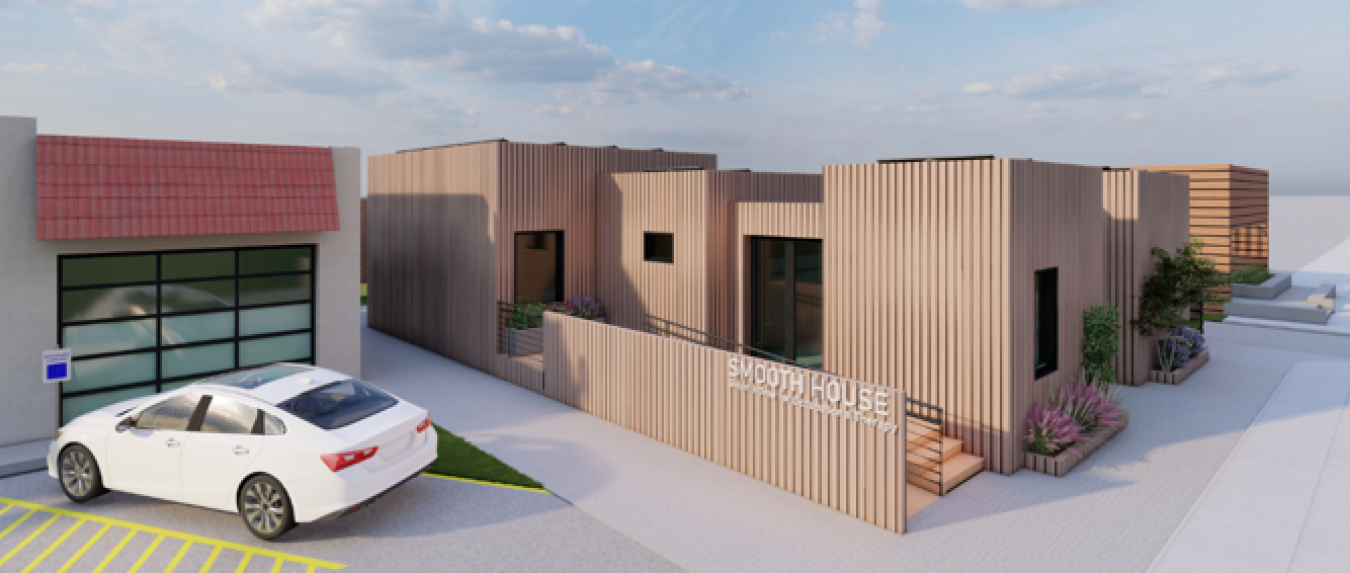
Team name: Team WashU; SMart hOme for Occupational THerapy (SMOOTH)
Build location: St. Louis, Missouri
This house will be a community-engaged, 2,100 ft2 occupational therapy and healing facility featuring therapeutic spaces and state-of-the-art technologies.
Key Features:
- Prefabrication
- Biophilic elements, such as a green wall and healing garden
- Engineered bamboo mass timber floor and wall systems
- Greywater system.
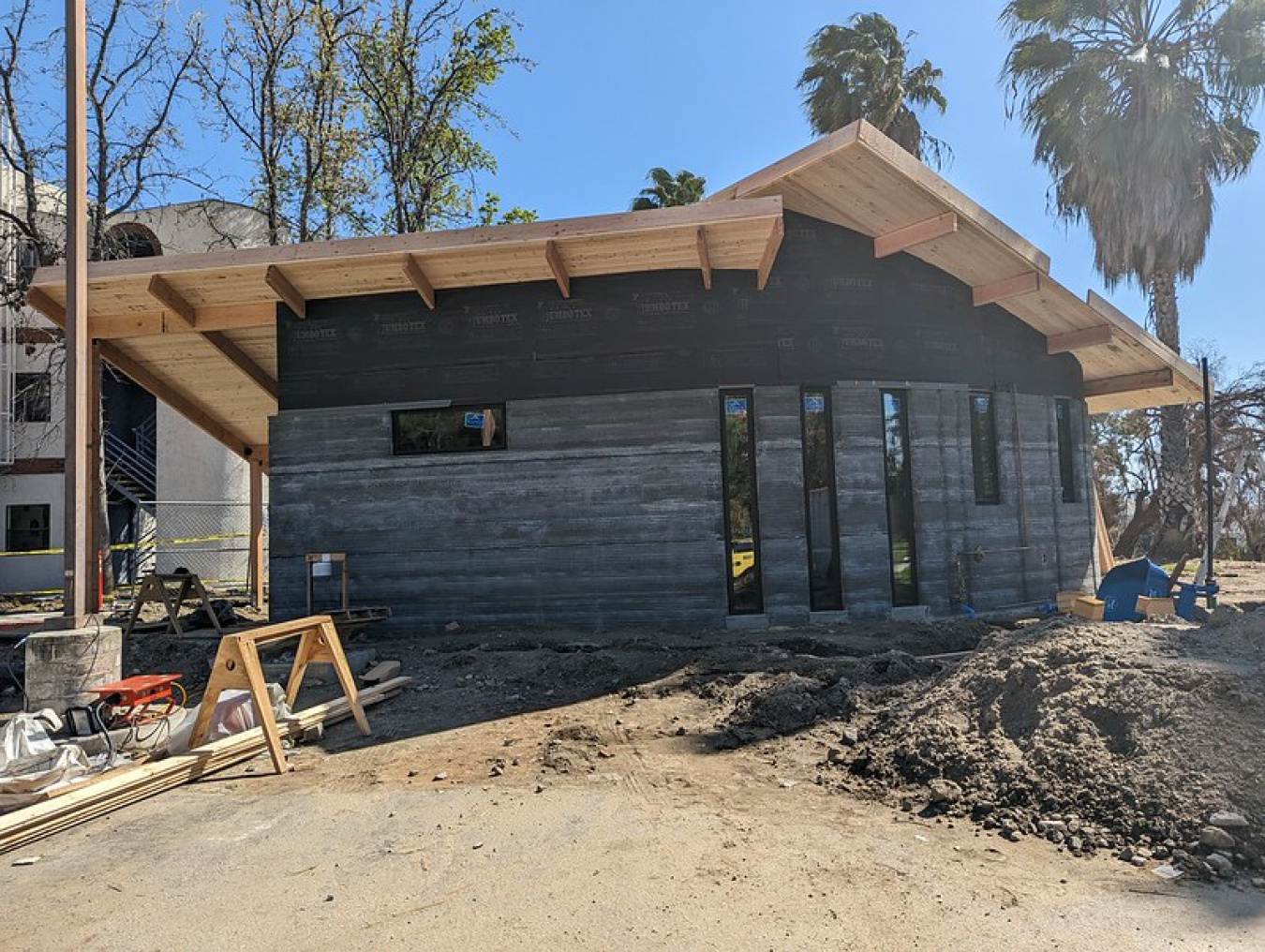
Team Name: SolarFutures
Build Location: Burbank, California
This 477 ft2 home will help provide relief for the housing insecure and features first-of-its-kind construction technologies, such as 3D concrete elements.
Photos, video, construction tour, and finished 3D tour.
Key features:
- 3D concrete wall printing
- Modularity
- Reuse of rain and greywater
- Direct air capture system that can produce up to eight gallons of drinkable water.