



For team deliverables, explore the BuildingsNEXT Deliverables Table.
2020 Build Challenge Finalist Teams
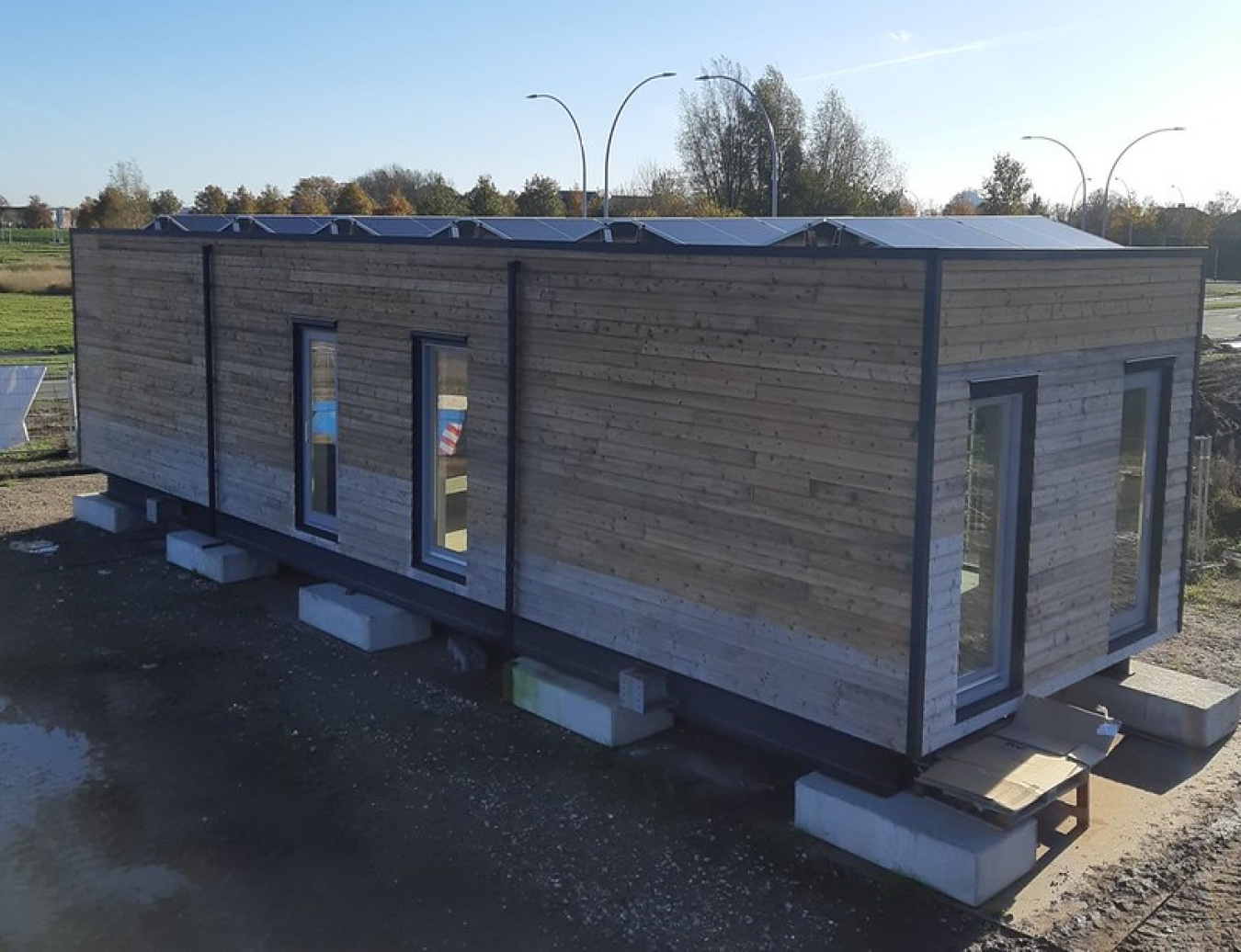
Team Name: Team Celcius
Location: Utrecht, Netherlands
This modular home starts at 798 ft2 and is designed to store and reuse energy and rainwater to maximize the reuse of materials throughout its life cycle, while remaining within financial reach for everyone.
Key Features:
- Modular design can be sized from a starter home up to a five-story building
- A structural frame consisting of wooden beams, constructed with steel connectors and a sliding bracket solution, allows for beams to be fully reused.
- A high-efficiency heat pump recovers heat from outgoing air and can operate in extreme temperatures ranging from -10°C up to 45°C.
- A smartphone app connects to every device in the home, so performance is easily accessible for the occupant and used for future data collection and research.
- Mycelium wall insulation is manufactured through a low-energy biochemical process using organic materials.
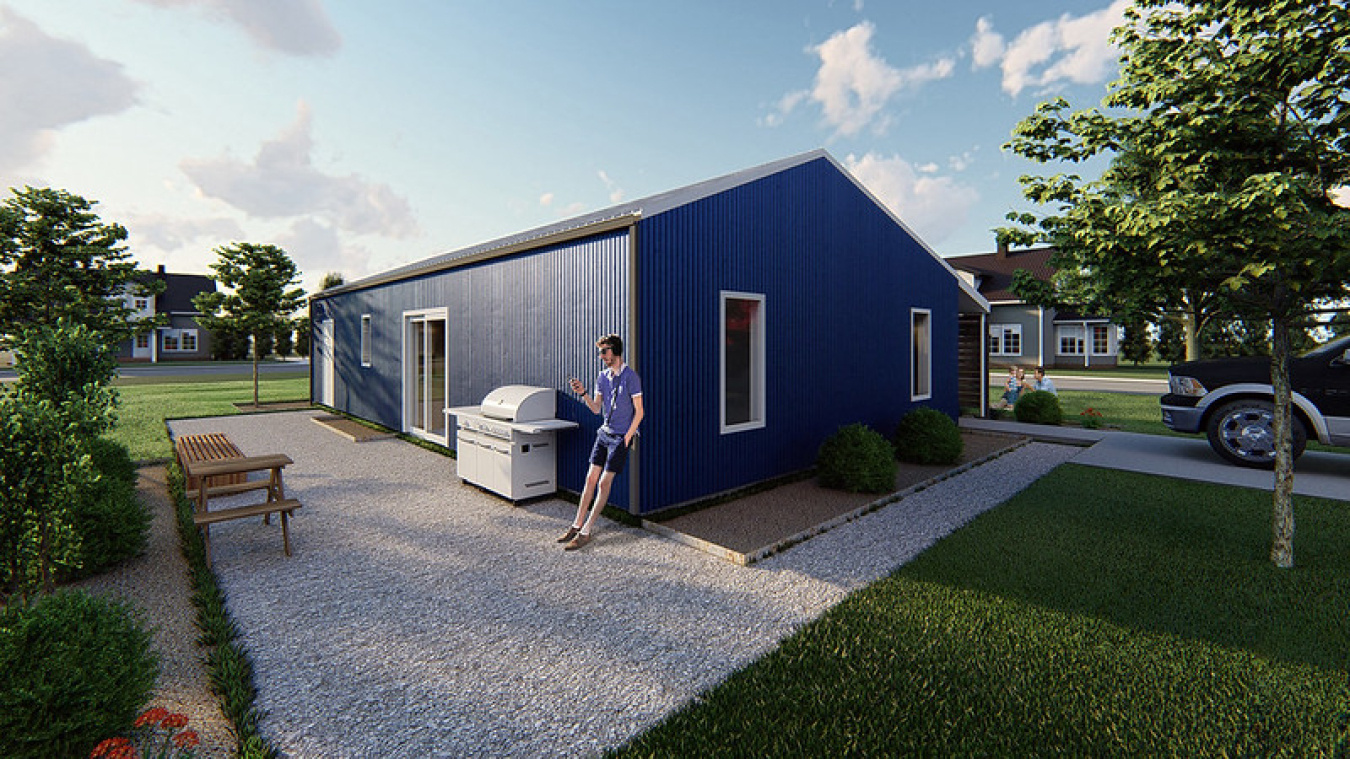
Team Name: Net Positive Studio
Location: St. John, Kansas
This 816 ft2 home demonstrates an attractive, high-performance, replicable housing solution that can replace the community’s shrinking housing stock while encouraging households to invest in the future of their town.
Key Features:
- A central gathering space permits a simple footprint that saves on costs and construction timelines.
- Passive strategies reduce heating, cooling, and lighting energy use.
- Custom casework is used to maximize usable space, acting as both storage and internal partitions.
- A south-facing porch utilizes large sliding barn doors that shade and block winds, allowing users to manually control the climatic environment of the porch.
- A bioswale allows for stormwater to permeate the ground on-site and provides a landscape feature alongside indigenous plants and trees that reduce yard maintenance and costs.
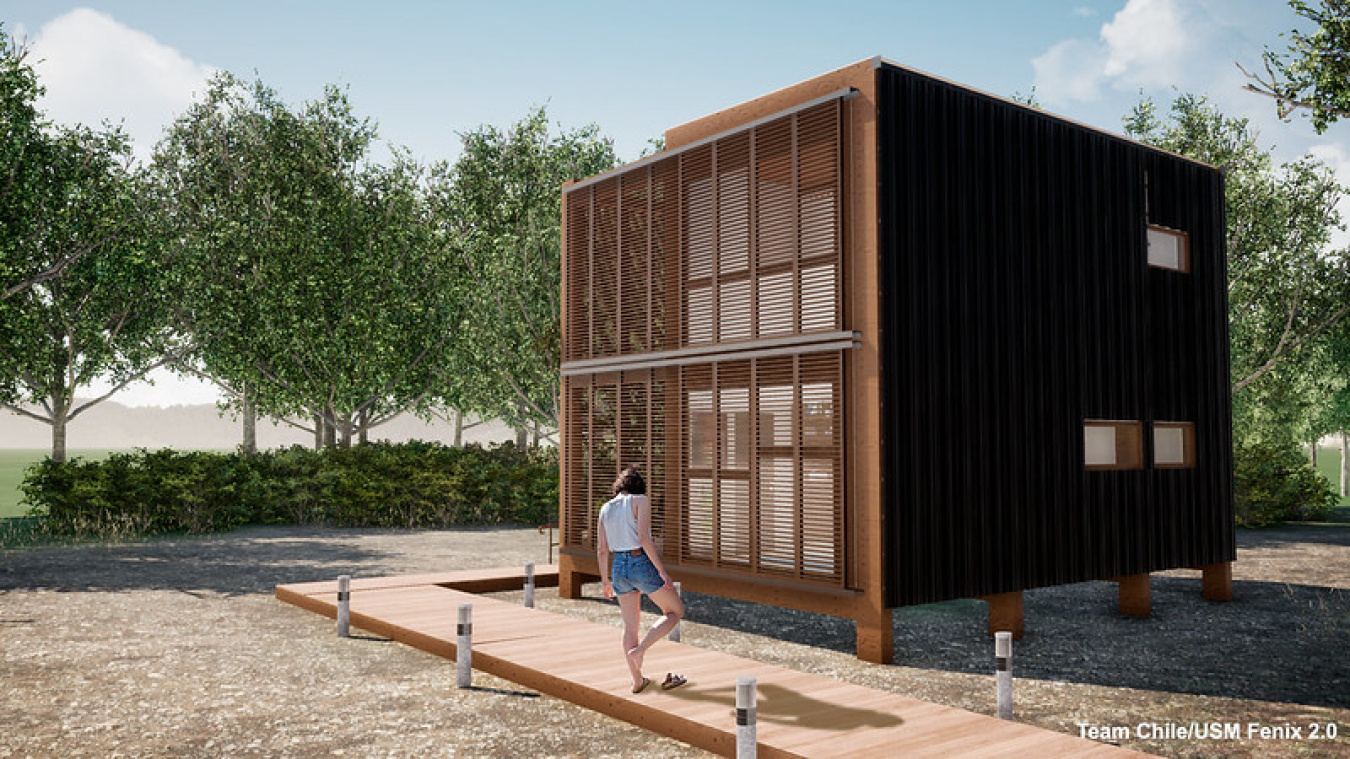
Team Name: Casa FENIX
Location: Valparaíso, Chile
This 2346 ft2 mixed-use multifamily home is designed to replace homes affected by the 2019 fire in Valparaíso.
Key Features:
- A 5x5m wooden grid is industrially manufactured through robotic parametric design (Timber Joinery Robotics), composed of linear components of glulam timber with robotically carved joints.
- A thin film electric radiant layer under the floors provides an HVAC heating system that can be digitally controlled.
- A heat pump water boiler, greywater recycling, and native plant garden contribute to the efficiency of the water system, which is needed in the home's dry environment.
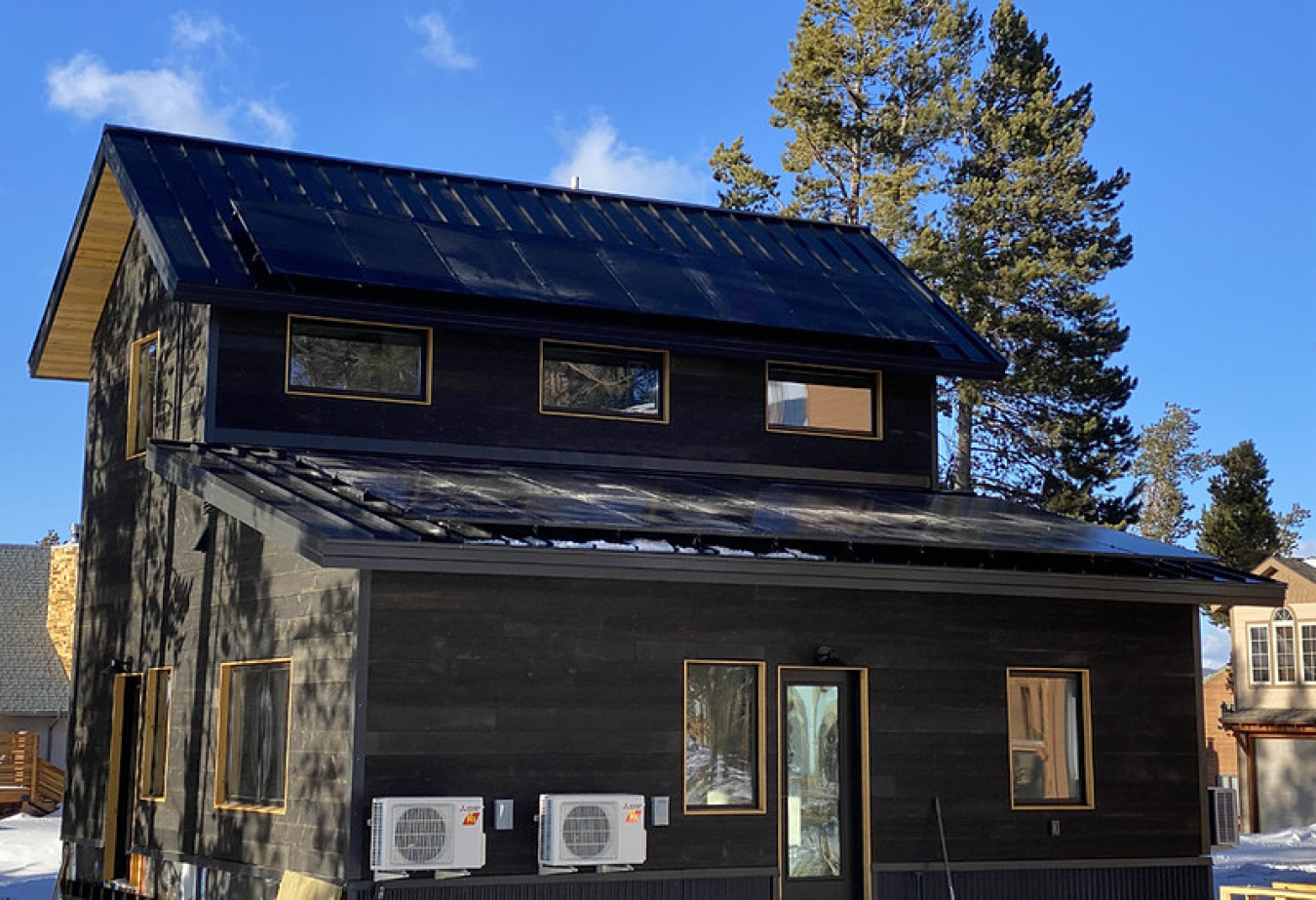
Team Name: SPARC House
Location: Fraser, Colorado
This 1200 ft2 home offers a flexible accessory dwelling unit for homeowners in mountain communities.
Key Features:
- Designed for panelized and volumetric prefabrication.
- Includes an attached rental unit.
- Accommodates harsh environment with robust building systems.
- Provides energy recovery methods.
- Minimizes power mismatch via a building automation system.
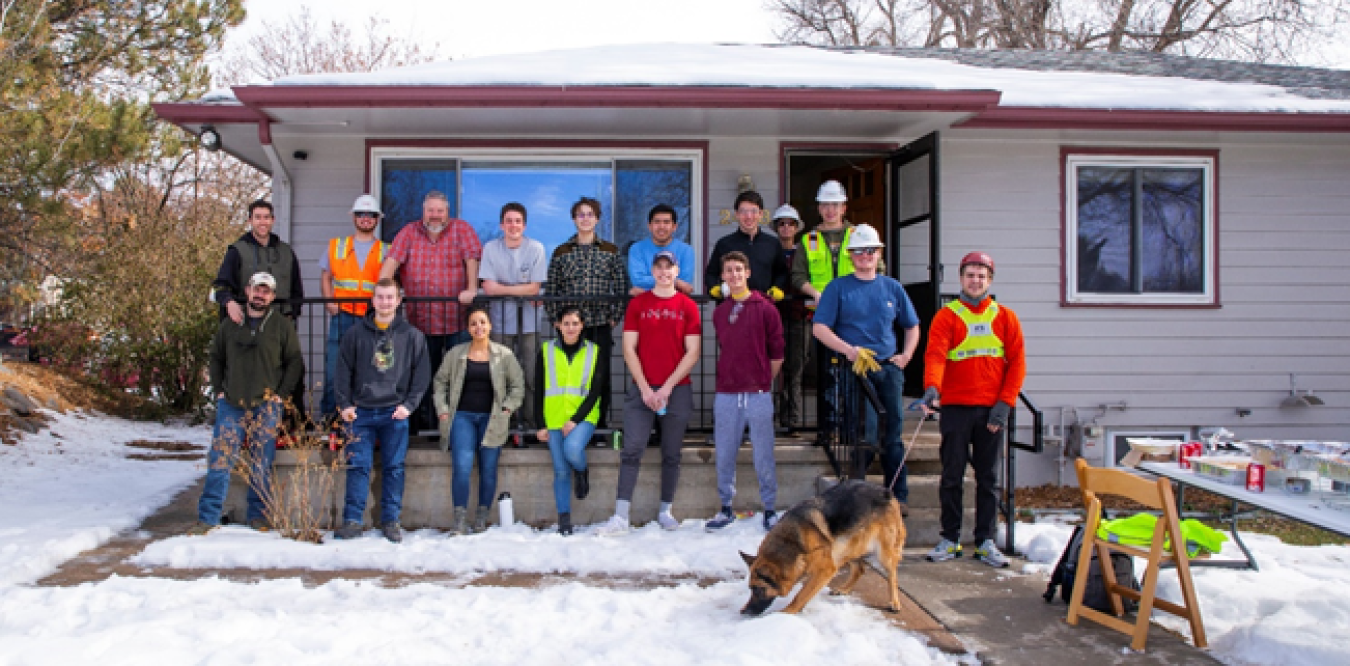
Team Name: CampusCraft
Location: Denver, Colorado
This 1056 ft2 home renovates a 1956 ranch with budget-conscious options for homeowners living in floodplains.
Key Features:
- All components selected minimize power consumption, resulting in a whole house power draw roughly equivalent to a standard size refrigerator
- Reinforced piping to prevent leaks and avoid potential flood risks
- Shelving unit constructed from salvaged barnwood and cast-iron piping
- Aquaponics system mimics a natural ecosystem by using the waste outputs of one system as inputs to the other
- RetroFoam insulation used in the home has higher R-value, eliminating drafts and air leaks
- An air barrier solution sprayed into the building seals holes with no harmful chemicals.
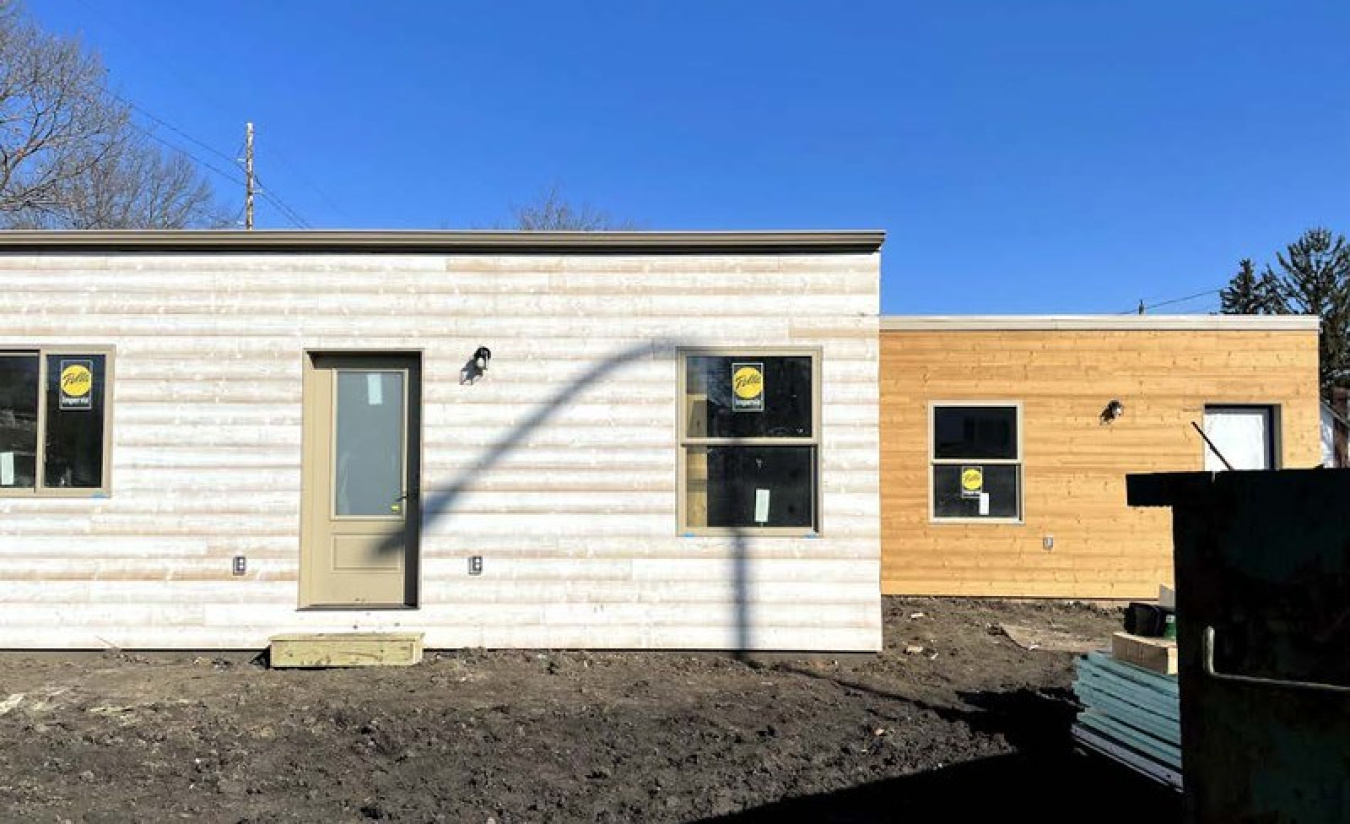
Team Name: ADAPTHAUS
Location: Urbana, Illinois
This 1747 ft2 home offers an affordable entry point into the housing market with flexible modules that grow to suit changing resident needs.
Key Features:
- A communal, convertible, and modular design allows for co-use and passive income through multi-use strategies in the home.
- The exterior facade uses a standard clip-and-rail system to attach as a rainscreen to the wall envelope.
- The landscape is actively and passively designed to embody the idea of a productive system, taking on a curvilinear form that works to complement the modular nature of the embedded architecture.
- The hybrid use of hot rolled steel as the rim joist of the floor and cold formed steel as the floor joist maintains the stiffness of the floor during transportation, while still staying economical.
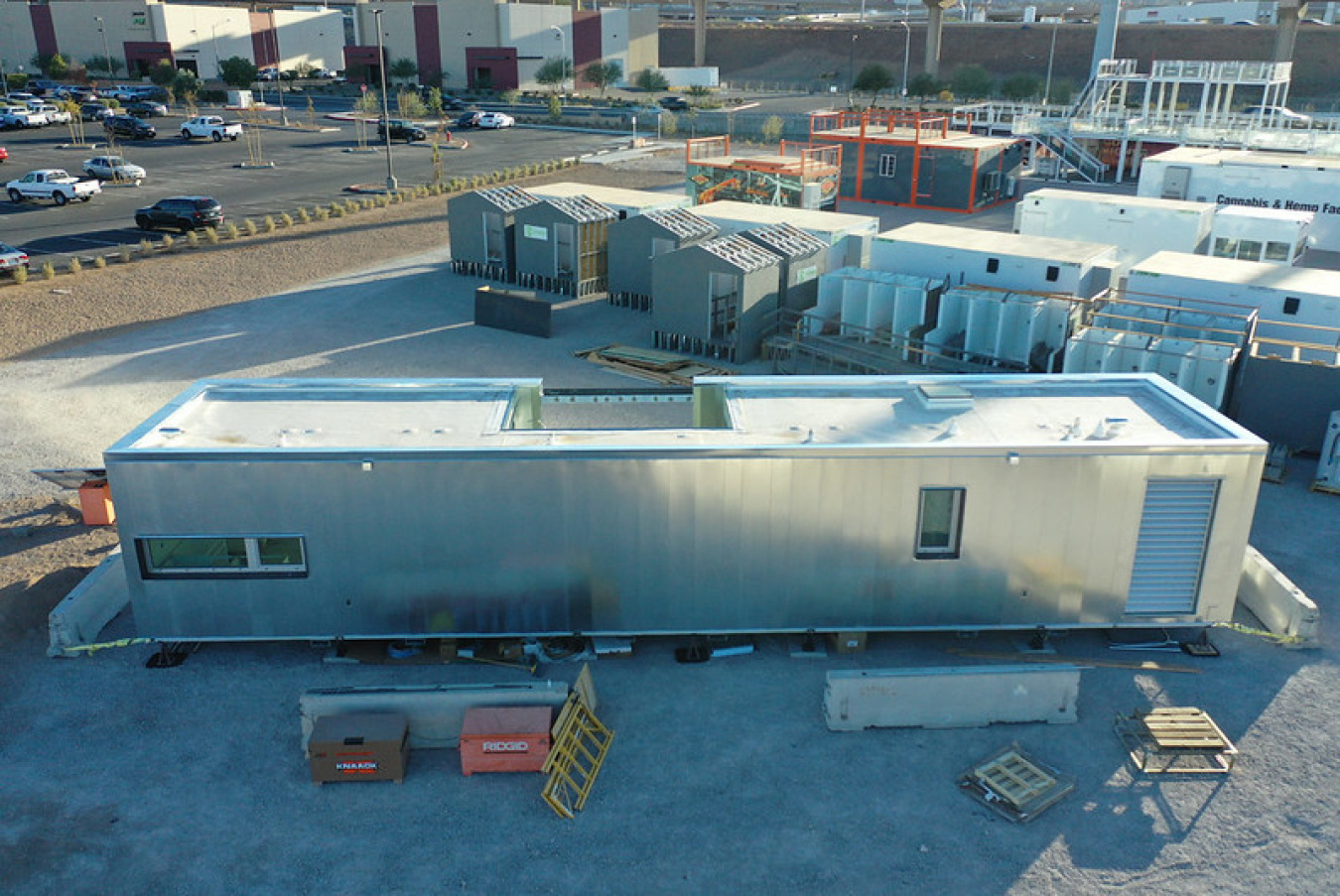
Team Name: Mojave Bloom
Location: Las Vegas, Nevada
This 628 ft2 home is intended to serve as transitional housing for military veterans as part of the Las Vegas Community Healing Garden.
Key Features:
- The inner courtyard is designed to shelter residents from heat and noise.
- A canopy of bifacial photovoltaic panels bathes the inner courtyard in diffused light.
- Recaptured water circulating through the hydroponic system in the inner courtyard creates a meditative sound for the user.
- The sliding living green walls and operable window walls that separate the living spaces from the courtyard allow the user to manipulate space and control their own environment
- Clerestory windows draw the morning sun into the bedroom, regulating the circadian rhythm and helping to address insomnia.
Team Name: Warrior Team
Location: Ontario, Canada
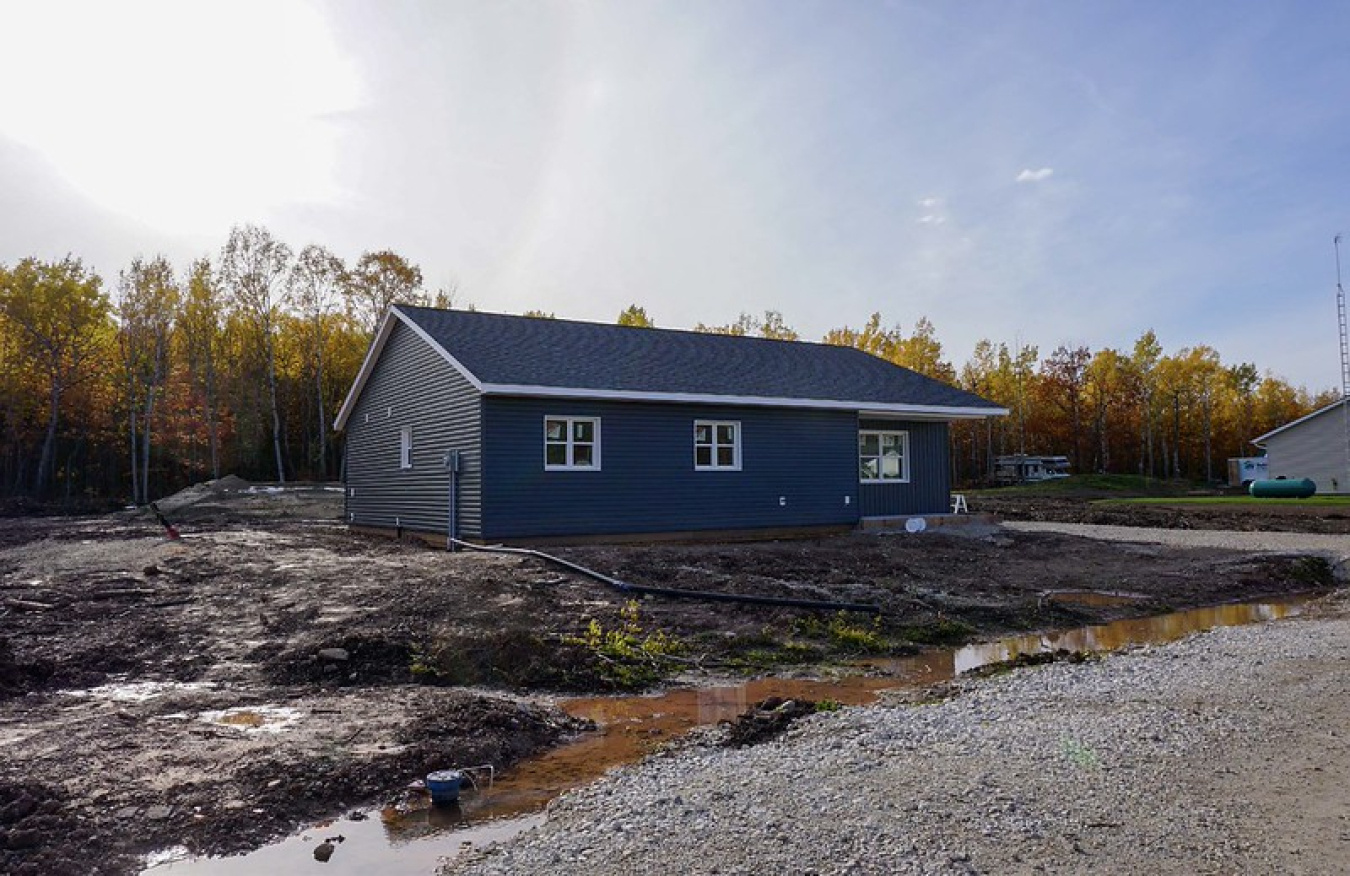
This 1560 ft2 home is built on the Neyaashiinigmiing Reserve to minimize operational, maintenance, and capital costs in partnership with Habitat for Humanity.
Key Features:
- Thermal control of the enclosure was prioritized to minimize unwanted thermal gains and losses
- The design incorporates accessibility features such as handrails and additional lighting to accommodate users with physical and visual impairments.
- Smart plugs, smart thermostats, and other technologies are used to monitor and minimize energy usage.
- A central heat pump coupled with a heat recovery ventilator transfers heat from the outdoors instead of using combustion or electricity, and can switch between heating and cooling modes depending on the season.
- A hybrid electric water heater tank paired with a heat pump warms water using electrical resistance. The heat pump draws heat from the surrounding air and uses a compressor and refrigerant to warm the water using ambient heat.
Team Name: Net Zero Wildcats
Location: Ogden, Utah
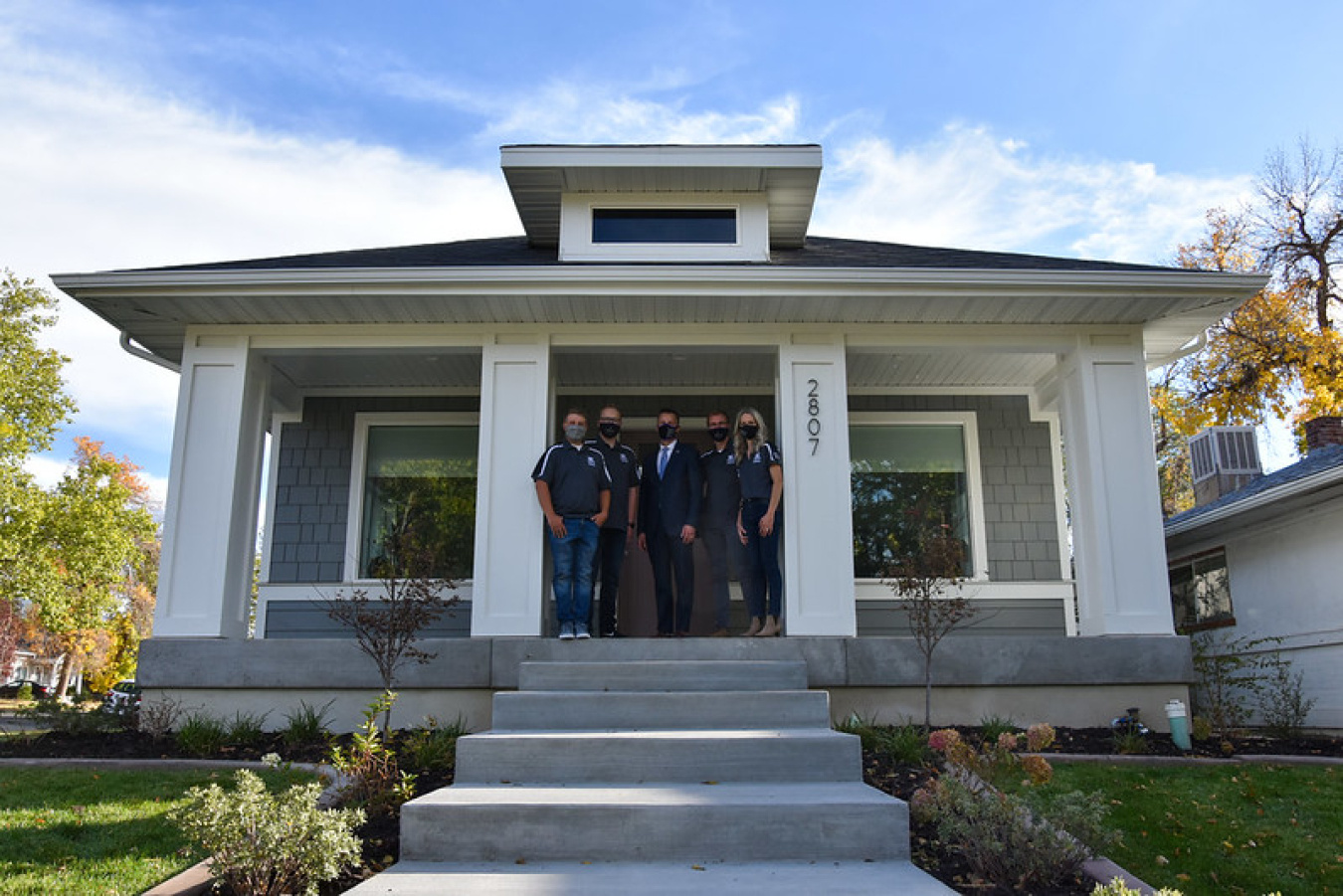
This 2450 ft2 home maintains a traditional craftsman style with mass market appeal, while offering energy-efficient features.
Key Features:
- The home is designed to match the historic aesthetic of the community while offering mass-market universal appeal, as well as modern amenities and energy technologies.
- The home's main floor is designed to allow for aging in place with minor alterations to access, allowing a single family to live in the home through all stages of life.
- The HVAC system allows for room-by-room control.
- Foundation walls made using insulated concrete forms provide the strength and durability of a traditional home with added insulating R-value from foam.
- A 72-hour battery backup prevents the inconvenience associated with a power outage.