



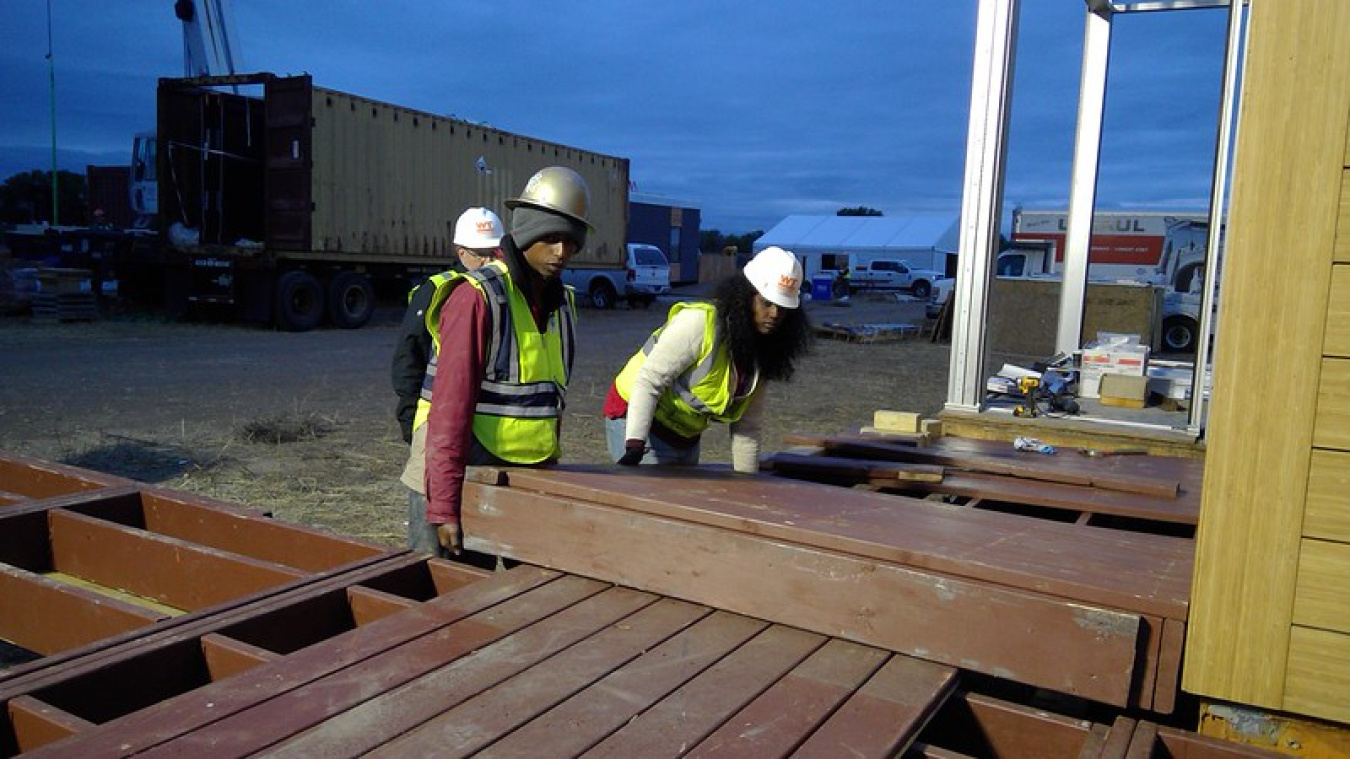
Eleven teams were finalists in the 2017 Build Challenge in Denver, Colorado. Two additional teams met the design deliverable requirements but did not construct.
For team deliverables, explore the BuildingsNEXT Deliverables Table.
2017 Build Challenge Finalist Teams
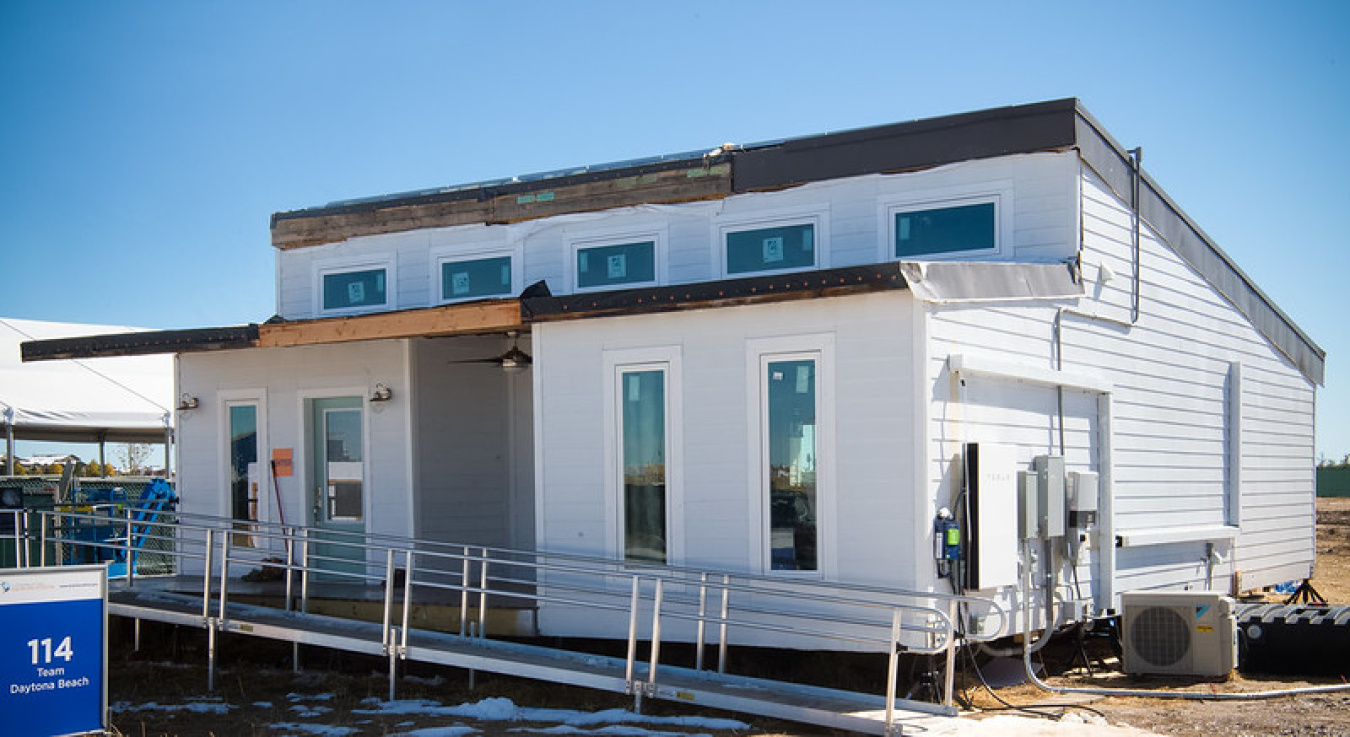
Team Daytona Beach’s BEACH House meets at the intersection of South Florida history and innovative design. Targeting future Gen-X retirees, this “forever home” is designed to have universal appeal for a small family without sacrificing comfort. BEACH House incorporates colors and art deco details inspired by the renowned Hemingway House. It also includes Americans with Disabilities (ADA) compliant features and a ductless HVAC system designed to keep the Florida home cool using a fraction of the energy typically used. The design also features a hydroponic garden that uses collected rainwater to grow leafy vegetables and herbs without impacting Florida’s water systems.
360 Video Tour | Live Tour | Video | Photos
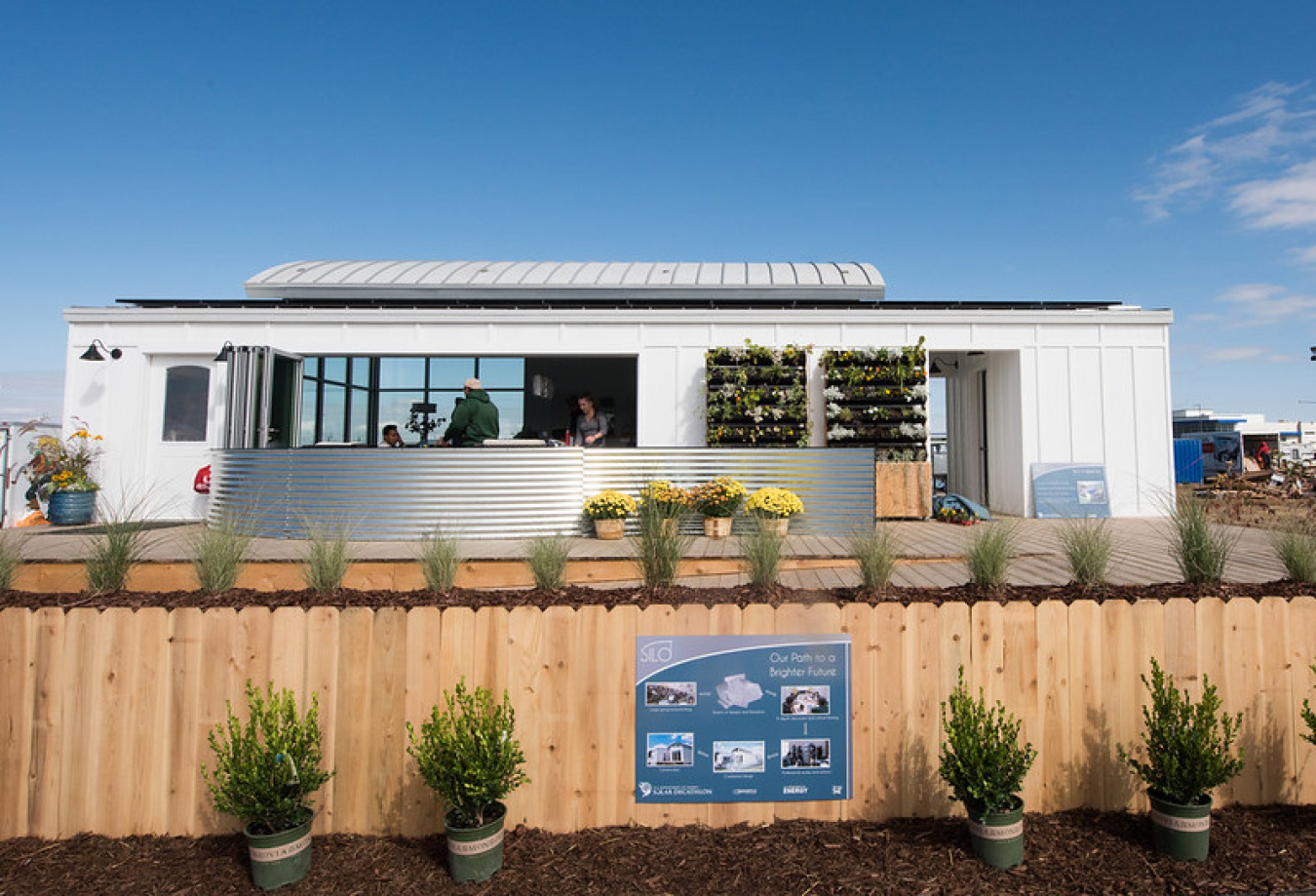
The project’s name―SILO―illuminates Missouri S&T’s design philosophy. S is for Smart, as in a house that lets occupants control all of its systems using voice commands. I is for Innovative, as in a student-designed system that monitors the house’s interior environment. L is for Living, and speaks to farmhouse-inspired lifestyle that encourages gathering and sharing food. And O stands for Oasis, a serene space filled with natural light, fresh air, and greenery—a place where empty-nesters can relax, rejuvenate, and congratulate themselves on a job well done.
SILO’s greywater system uses an architecturally pleasing water wall to aerate used water from sinks and showers—an approach that prevents algae growth and extends the time the water can be used. Treated water is used to irrigate non-edible landscaping, including plants growing on a movable green wall. This wall serves as thermal barrier and can be used to create a “serenity space” on the east side of the house.
360 Video Tour | Live Tour | Video | Photos
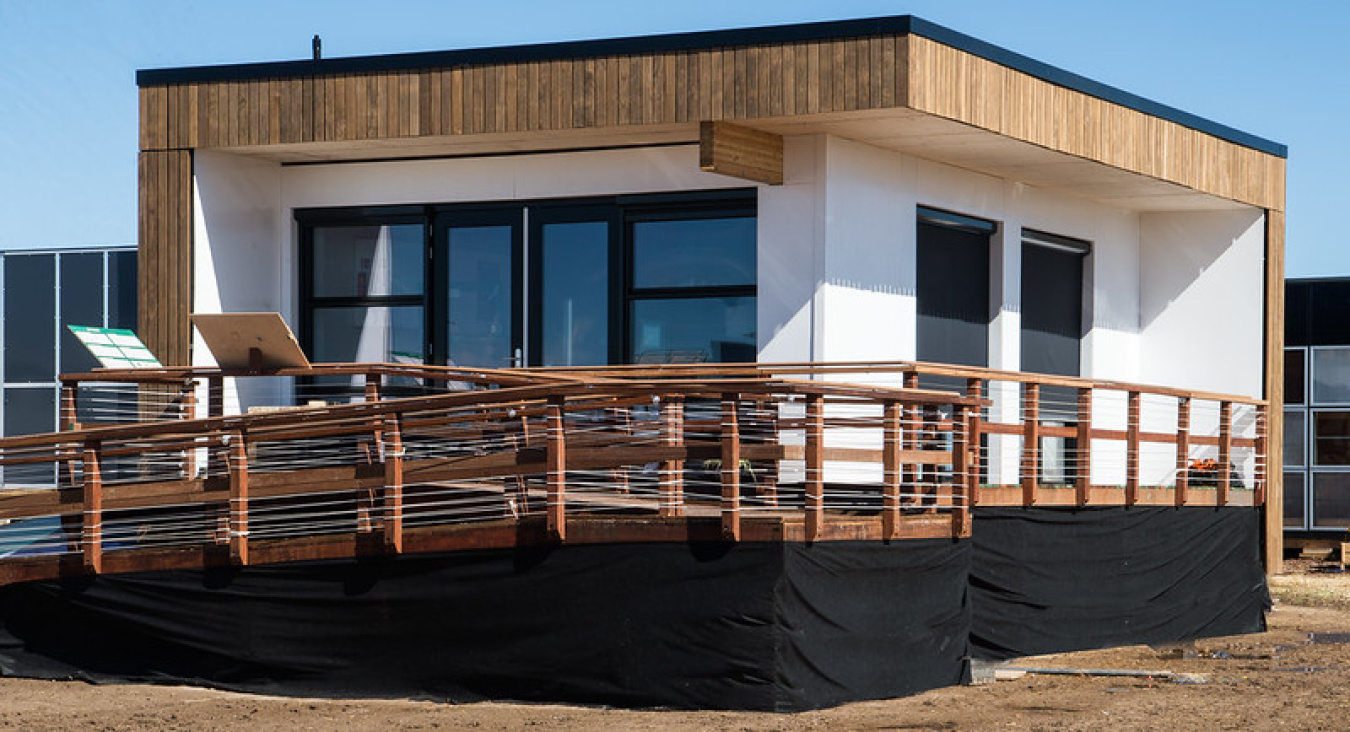
The team from HU University of Applied Sciences Utrecht, Netherlands has developed the design of their modular home, called Selficient, around the concept of a fairly well known toy: LEGO. Using the wall panels as “blocks,” homeowners can tailor a house to fit their needs. Panels can be added to expand the house or removed to scale it down. On top of the modular house design, the Netherlands team tapped into the burgeoning “Internet of Things” industry by connecting heat, water, and other home systems to the owner’s smartphone. This way, the homeowner can easily monitor and regulate the settings from anywhere.
360 Video Tour | Live Tour | Video | Photos
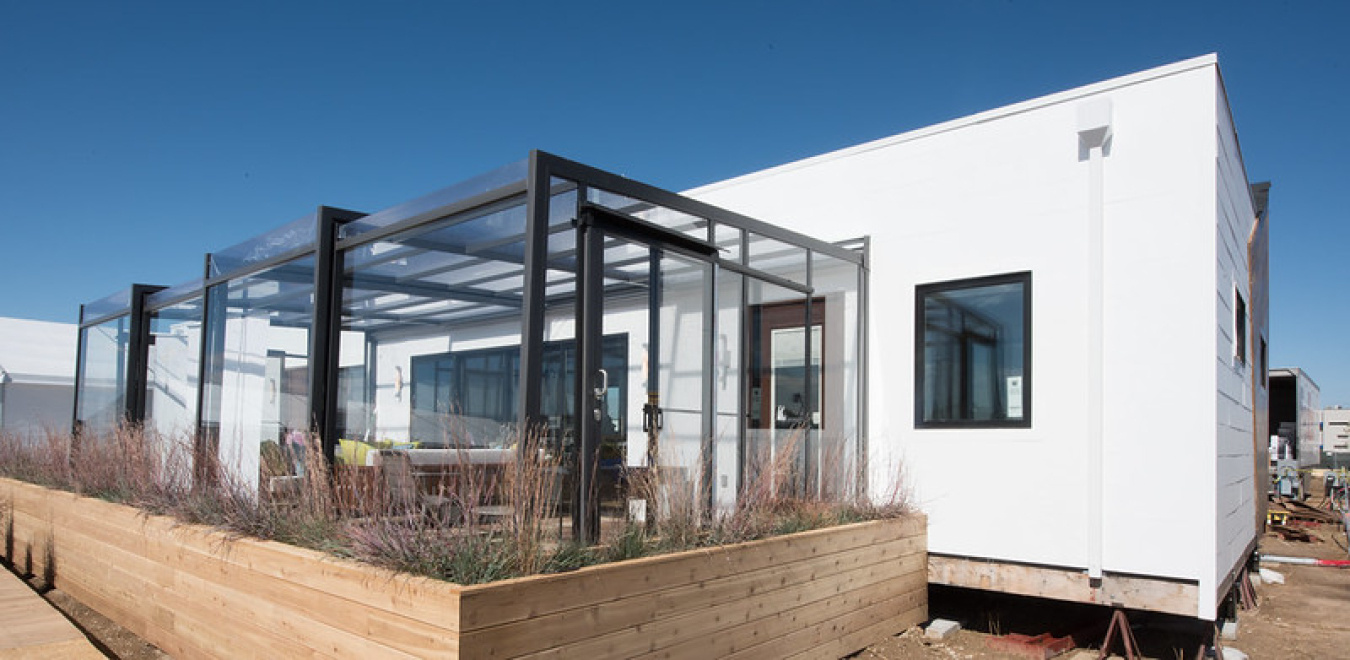
To help guide their design for a flexible, appealing house marketed for Chicago’s baby boomers, the 2017 team from Northwestern University conducted extensive user research within their local community. Constructed with structural insulated panels (SIPs), Enable also includes movable interior walls and an attached sunroom. To help occupants maintain their good health as they age, the students added air-filtering technologies and a system that monitors VOCs, CO2, dust, and humidity.
360 Video Tour | Live Tour | Video | Photos
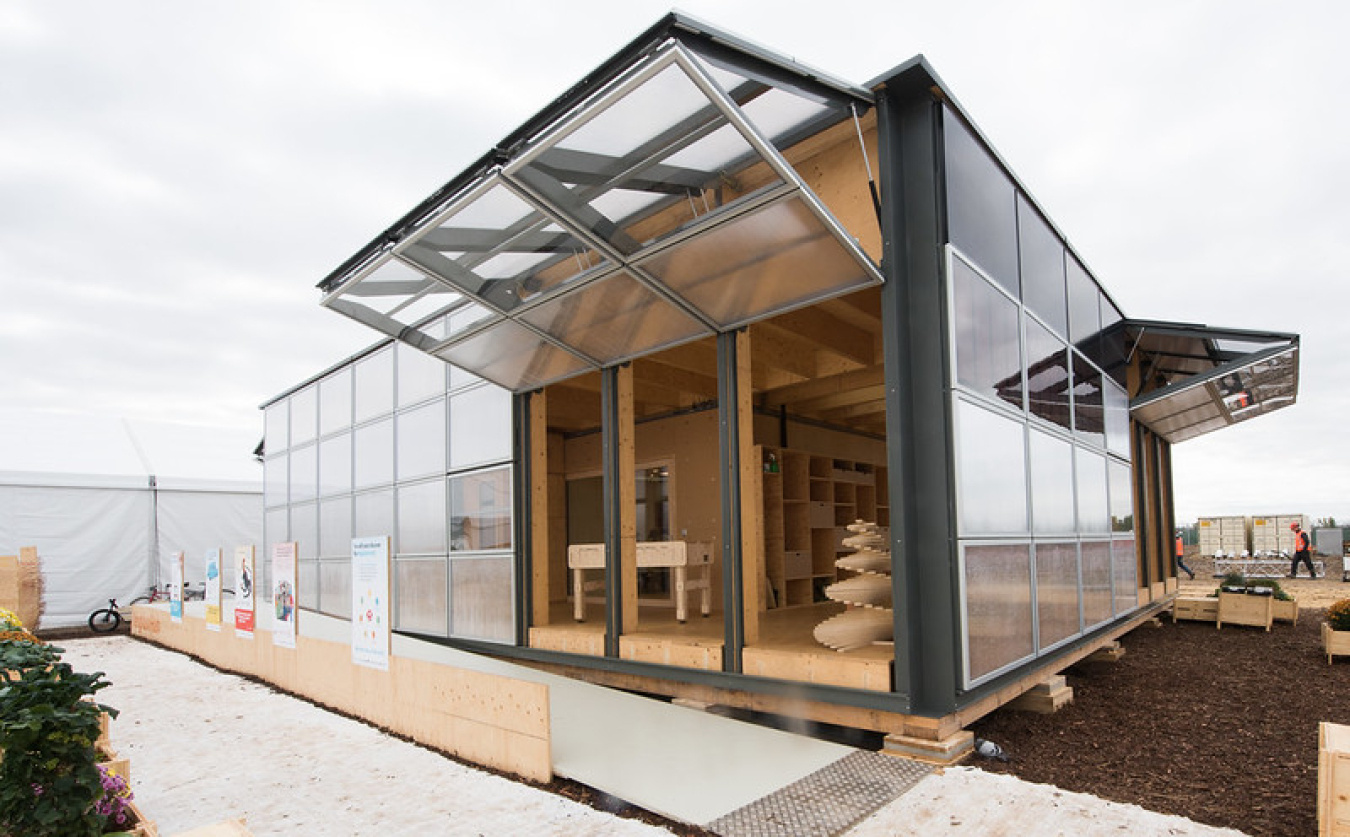
Results: 2017 Build Challenge 1st Place Overall
NeighborHub is more than a house. The Swiss Team’s goal is to create a shared space that helps to build and sustain the community around it. By demonstrating innovative solutions and providing a space to collaborate, NeighborHub has the potential to support Switzerland’s urban transition by emphasizing seven themes: energy, water management, waste management, mobility, food, material choices, and biodiversity. NeighborHub is designed with multifunctional spaces that can change to meet the needs of the community—from a dining space for a community meal to a conference room for educational workshops to a bike-repair shop or local market. This flexibility ensures that, over time, the house will meet the needs of the greatest number of occupants while using the least amount of land and facilitating strong connections within the neighborhood.
360 Video Tour | Live Tour | Video | Photos
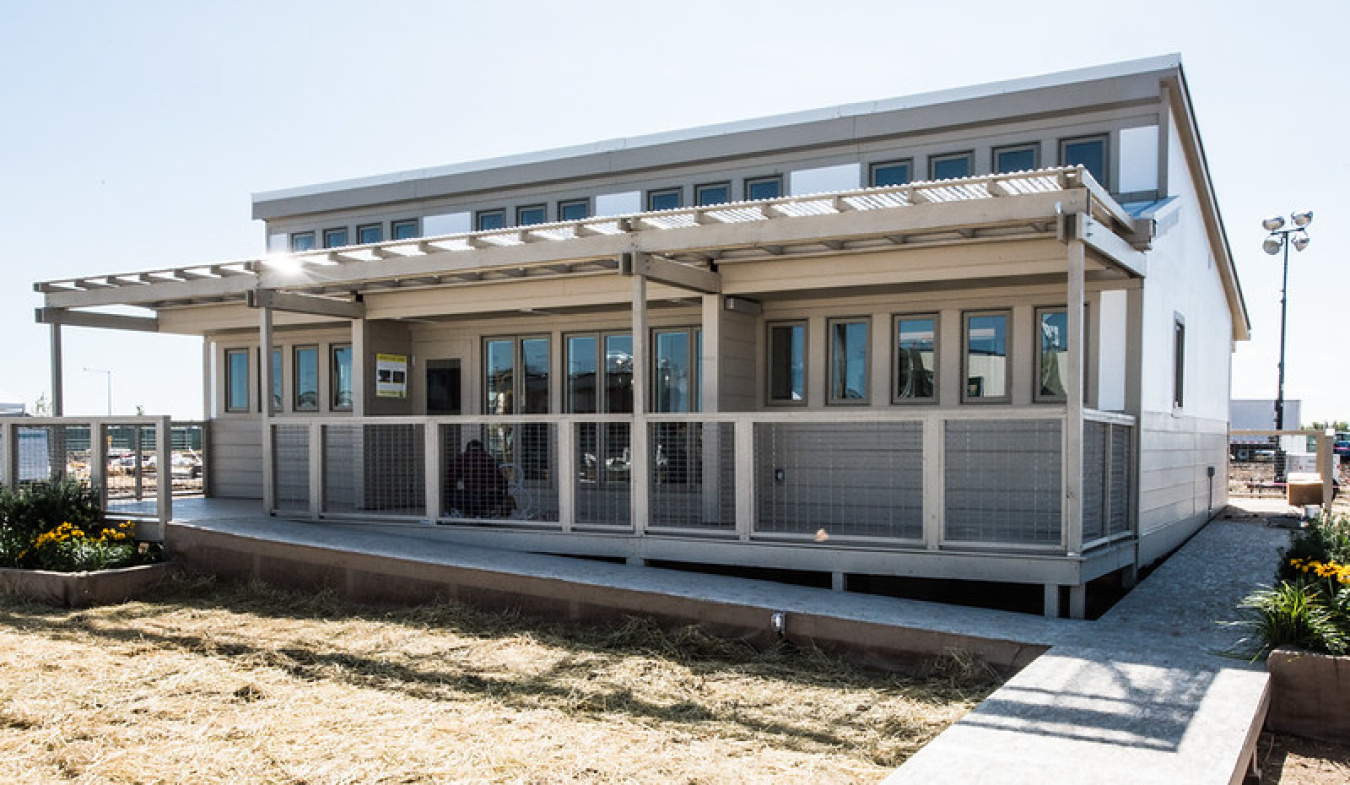
Team Alabama’s s u r v i v ( A L ) House embodies the irrepressible spirit of Southern communities that have pioneered, adapted, survived, and rebuilt. Inspired by the devastating impact of the 2011 tornado super outbreak in the team’s region, s u r v i v ( A L ) combines historical architecture with innovative technology for a house that’s not only comfortable in a hot, humid climate, but also safe enough for residents in a tornado-prone state. It also offers “quick permanence,” a term Team Alabama uses to describe a house that can be quickly rebuilt to provide comfort, security, and energy independence in the aftermath of a disaster.
360 Video Tour | Live Tour | Video | Photos
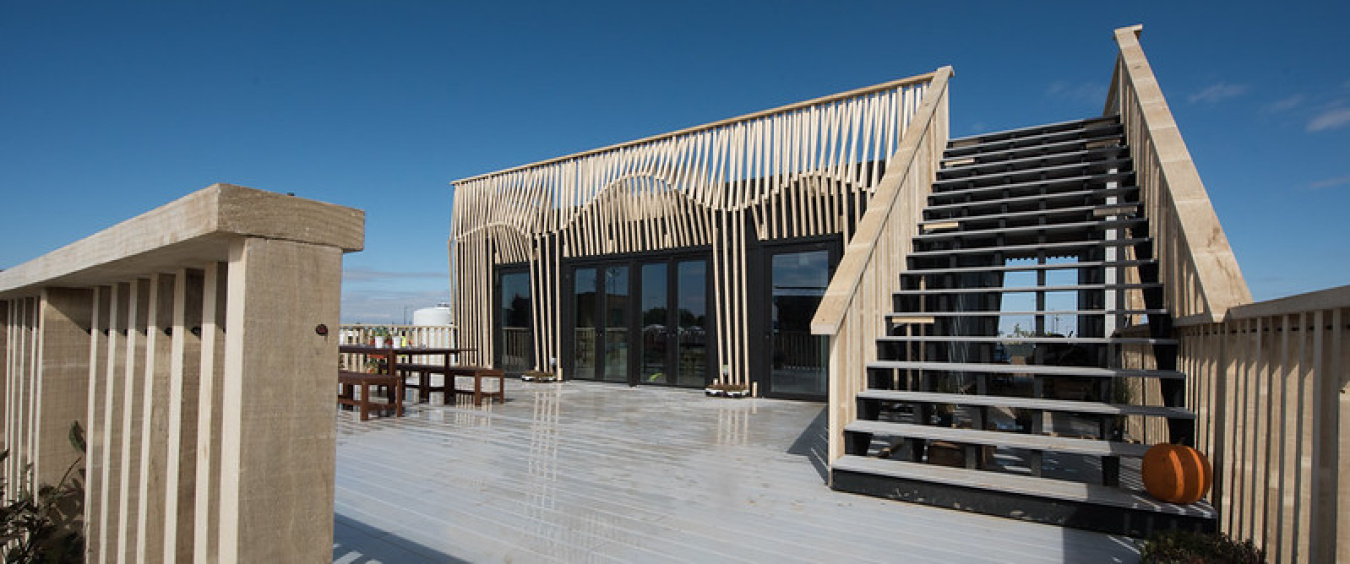
Results: 2017 Build Challenge 3rd Place Overall
The University of California, Berkeley and University of Denver team designed their RISE house specifically for the city of Richmond, California, to support its transition from a city with traditionally suburban neighborhoods to one that is oriented around public transit and community. The team believes affordable housing solutions are absolutely necessary, both in Richmond, and beyond. Although the competition building is a single-family home, ultimately RISE can, well, rise—to include up to three stories and five units of multifamily living. The design focuses on practicality and efficiency, resulting in a flexible floor plan with movable walls and windows that allow ample light into the interior, and roof space for outdoor living. It is also designed to be ultra-energy-efficient, to recycle greywater, and to use innovative materials to improve air quality.
360 Video Tour | Live Tour | Video | Photos
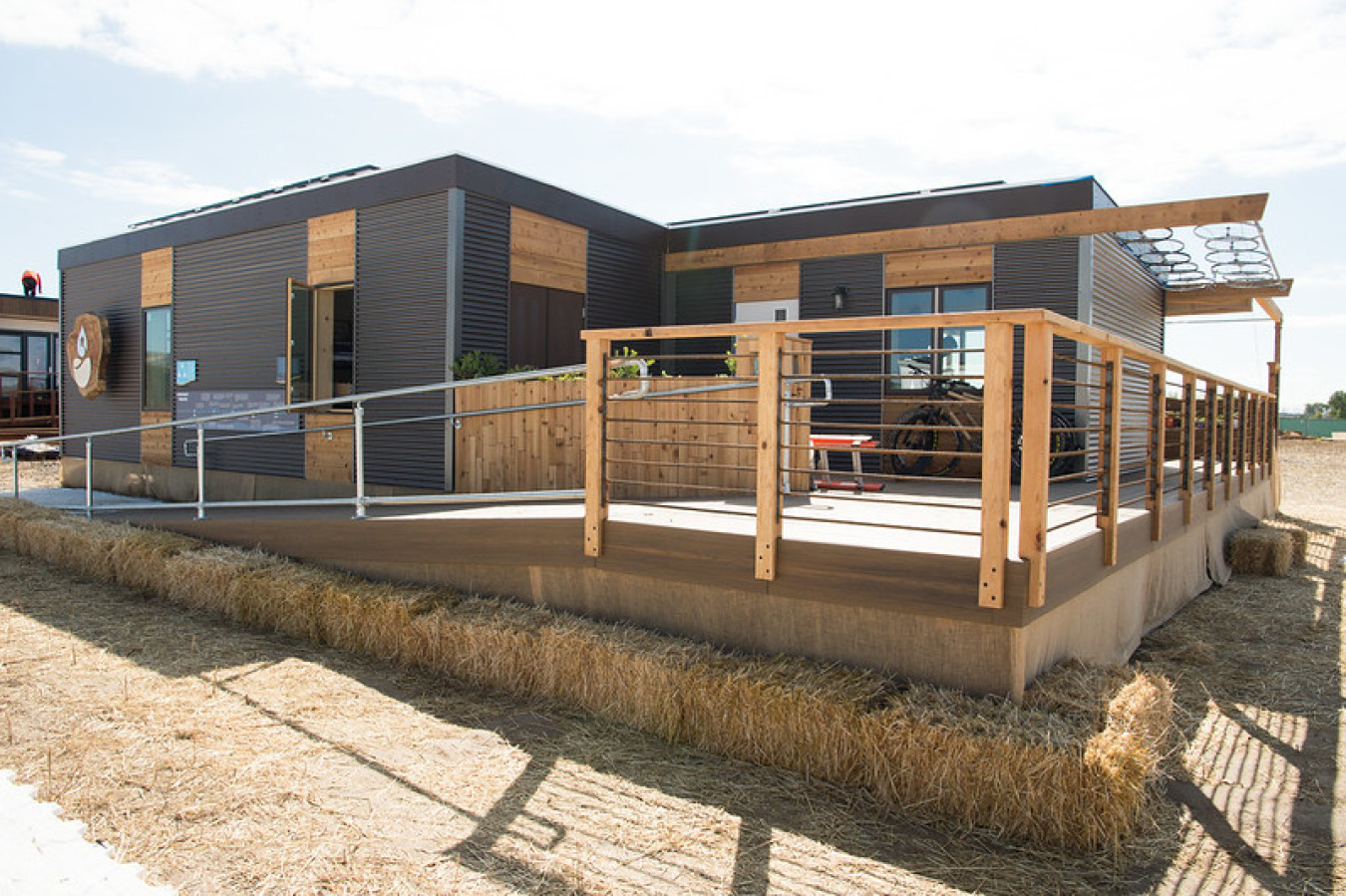
The University of California, Davis team designed Our H2Ouse as a response to the terrible drought that gripped California in recent years. In addition to being ultra-energy-efficient, Our H2Ouse is designed to dramatically reduce potable water use. Our H2Ouse supplements water and energy-efficient technologies with feedback displays to help occupants improve their own end-use behavior. The feedback also compares usage in Our H2Ouse to its larger community, thereby proposing a paradigm shift in which resource conservation is the shared goal of the house, its occupants, and the surrounding community.
360 Video Tour | Live Tour | Video | Photos
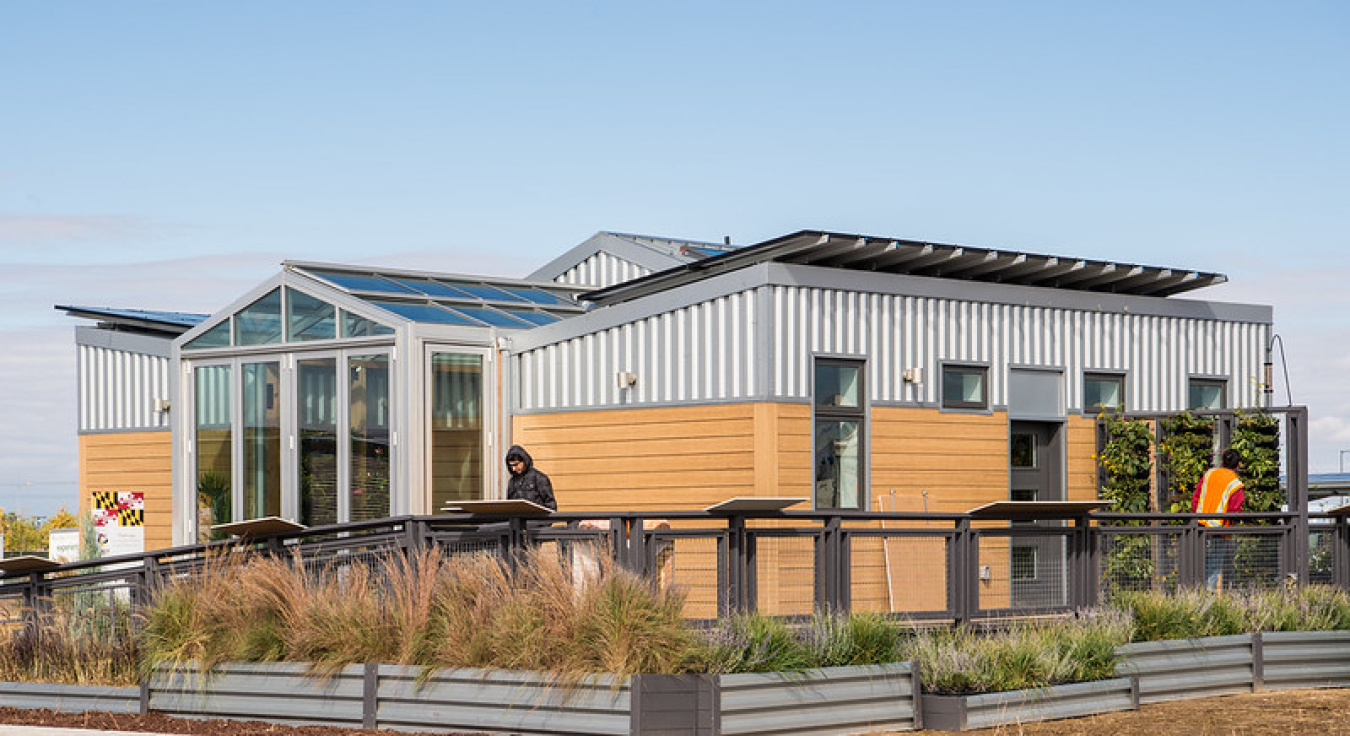
Results: 2017 Build Challenge 2nd Place Overall
The University of Maryland developed reACT for a married couple living in Denver, Colorado, who remain registered members of the Nanticoke Indian Tribe. With reACT these students want to demonstrate that homes can help people live in harmony with nature while at the same time harnessing gifts of energy, water, and food. Designed with influences from Nanticoke and Maryland tribal traditions, reACT includes a composting system, hydroponic garden, vegetable garden, and movable “living walls” covered in plants. The project also demonstrates urban farming—an important facet of self-sufficient living.
360 Video Tour | Live Tour | Video | Photos
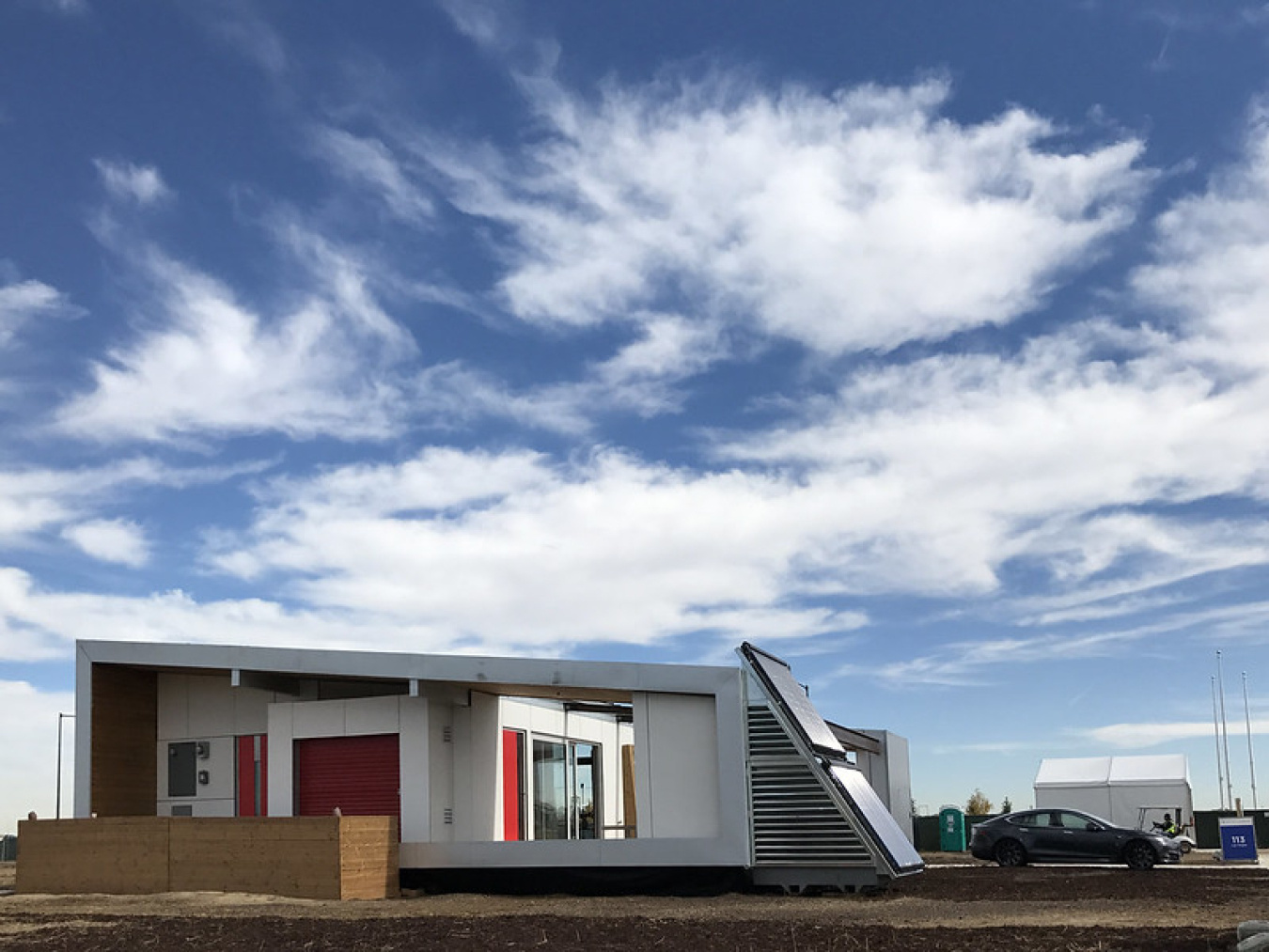
The University of Nevada, Las Vegas set out to design a home that would appeal to aging empty nesters who would like to retire in sunny Las Vegas. To learn which features their target market desired, the students went straight to the source, holding an American Association of Retired Persons (AARP) focus group and using virtual reality to walk people through the home. Called Sinatra Living, their project combines the architecture of the past with technologies of the future. Many features, such as the open layout, adjustable countertops and shelves, slip-resistant flooring, and fall detection sensors, make the house safe and comfortable for any resident with mobility, visual, or cognitive impairments.
360 Video Tour | Live Tour | Video | Photos
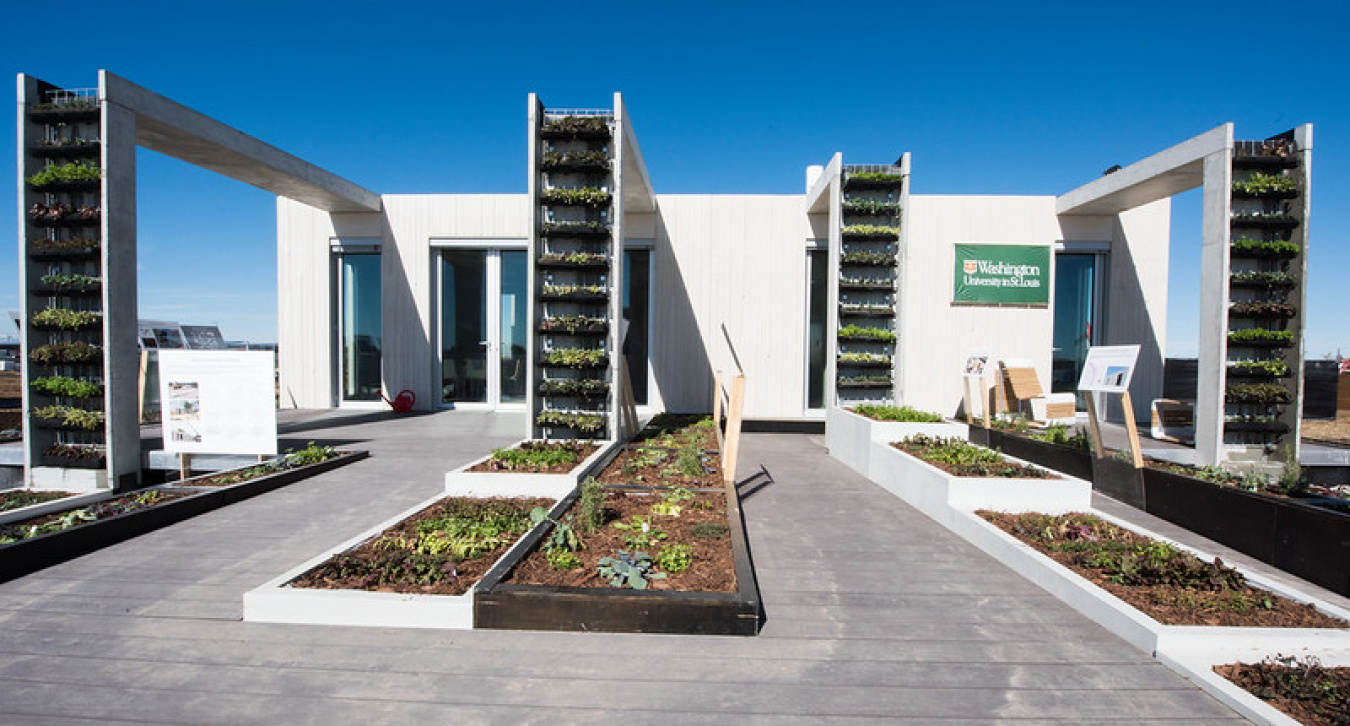
With CRETE house, the team from Washington University in St. Louis, Missouri, wanted to send a message that concrete can be a viable and beautiful alternative to light wood-frame construction. The students designed their house with precast insulated panels that are manufactured in a factory and assembled on-site. Large gutters extend out from the main concrete structure and offer support for shading materials while creating outdoor living space. The gutters also collect and direct rainwater and serve as vertical planters. This hydroponic system is part of a productive landscape that should enable the occupants to grow food all year round. The Wash U – St. Louis team believes that the durable, stormproof, and fire-resistant CRETE house will still be standing a century from now.
360 Video Tour | Live Tour | Video | Photos
2017 Build Challenge Participants
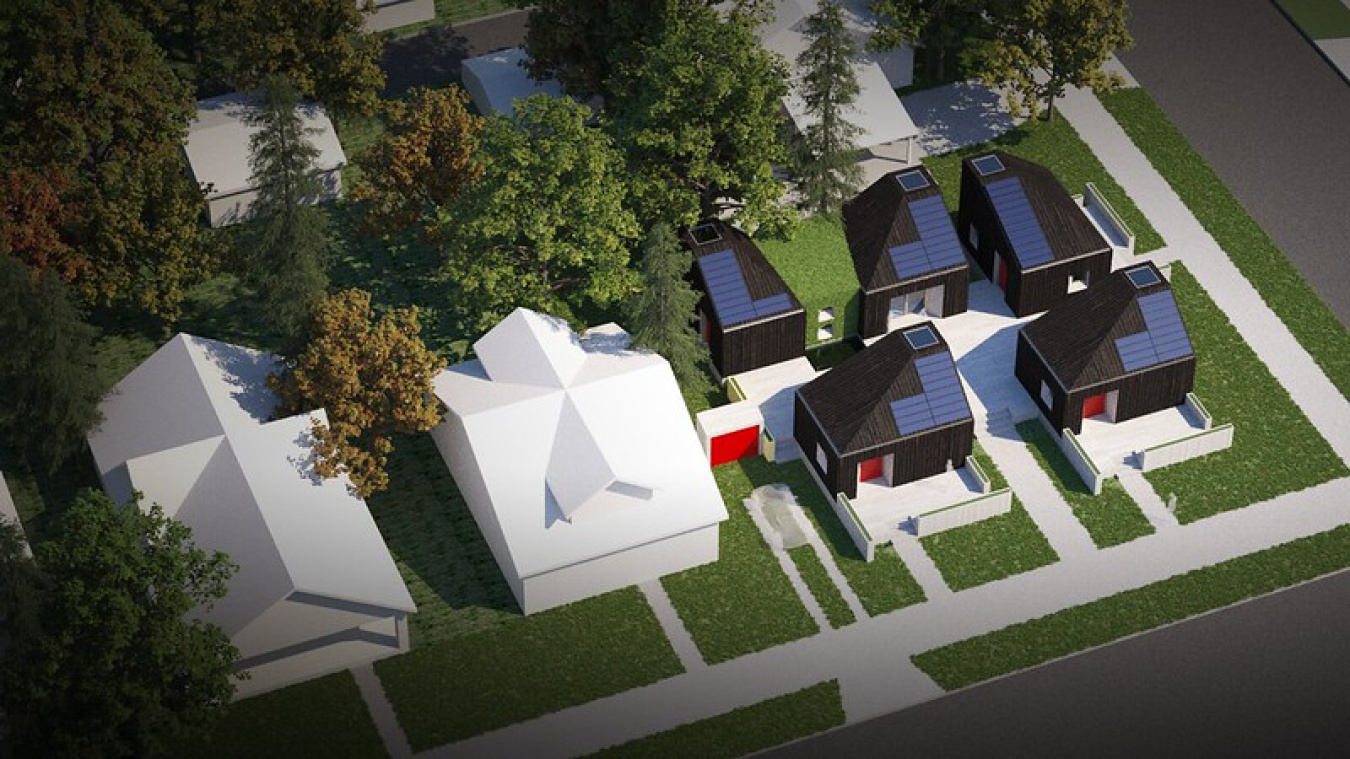
Washington State team’s project, EnCity, is driven by a concept the team calls “tiny living.” Part philosophy, part lifestyle, tiny living includes tiny homes, self-sufficiency, life simplification, sound fiscal plans, and life adventures.
The EnCity project functions within the context of a smart city—or a place where digital technology is integrated with a city's assets. The Washington State house combines machine learning, energy storage, smart grid connectivity, and heat recovery to find efficiencies and reduce energy consumption.
Thinking ahead of the tiny homes’ final destination, the Washington State team designed a “flat pack” system for ease of assembly and transport. Prefabricated modules transform from flat sheets to fully finished buildings, and each component, from roofing to tiling, is designed to connect seamlessly.
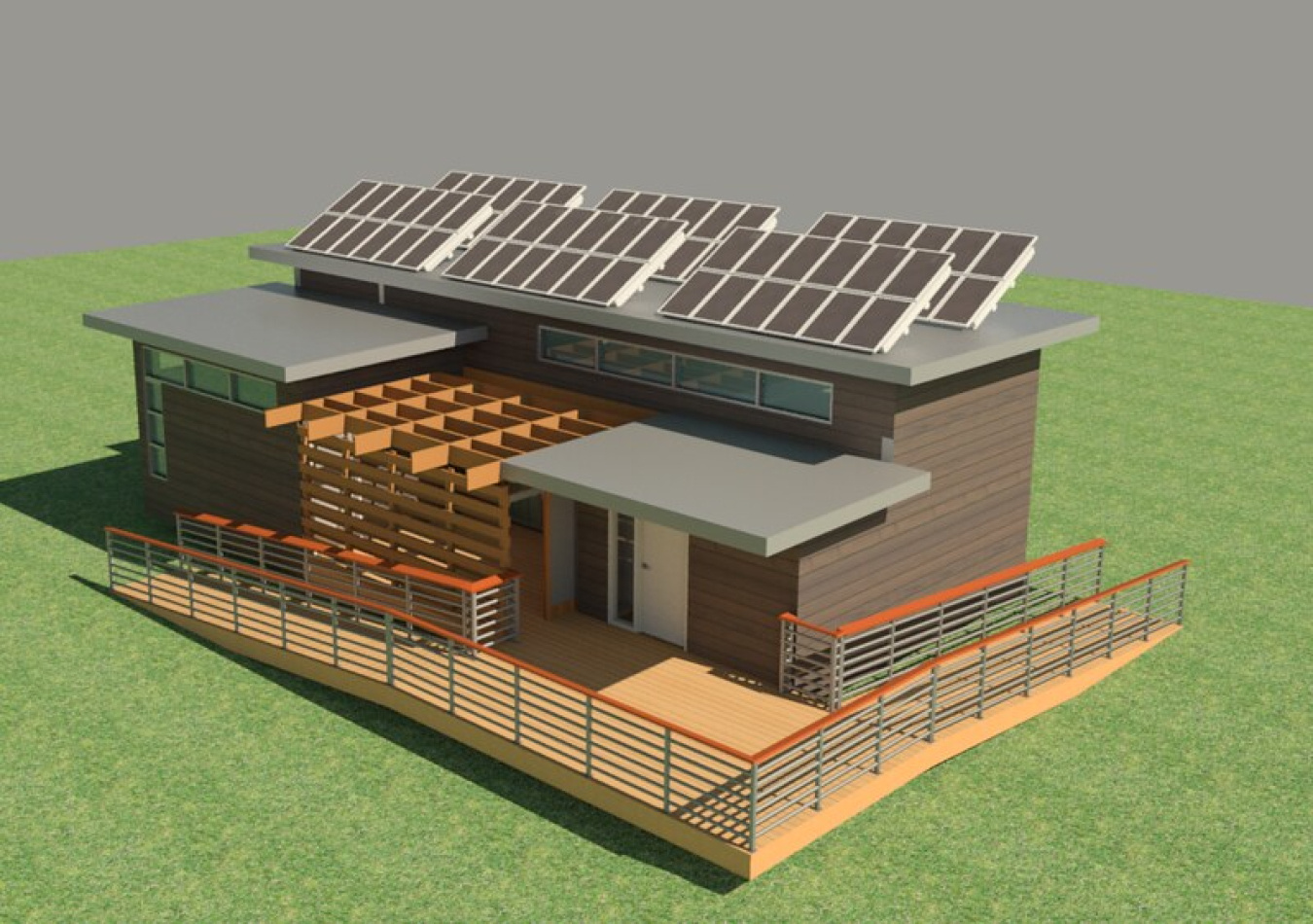
West Virginia's design is called "OASIS”. The design of OASIS embodies purity, privacy, and healthiness. These three core principles were chosen in response to the mix of a rich cultural history rooted in the natural world and the impacts of industry in the Appalachia region. The design of OASIS combines modern technologies, traditional features, and reclaimed materials to create a house that both evokes and improves on the past while fitting right in with West Virginia's increasingly modern, urban architecture.