



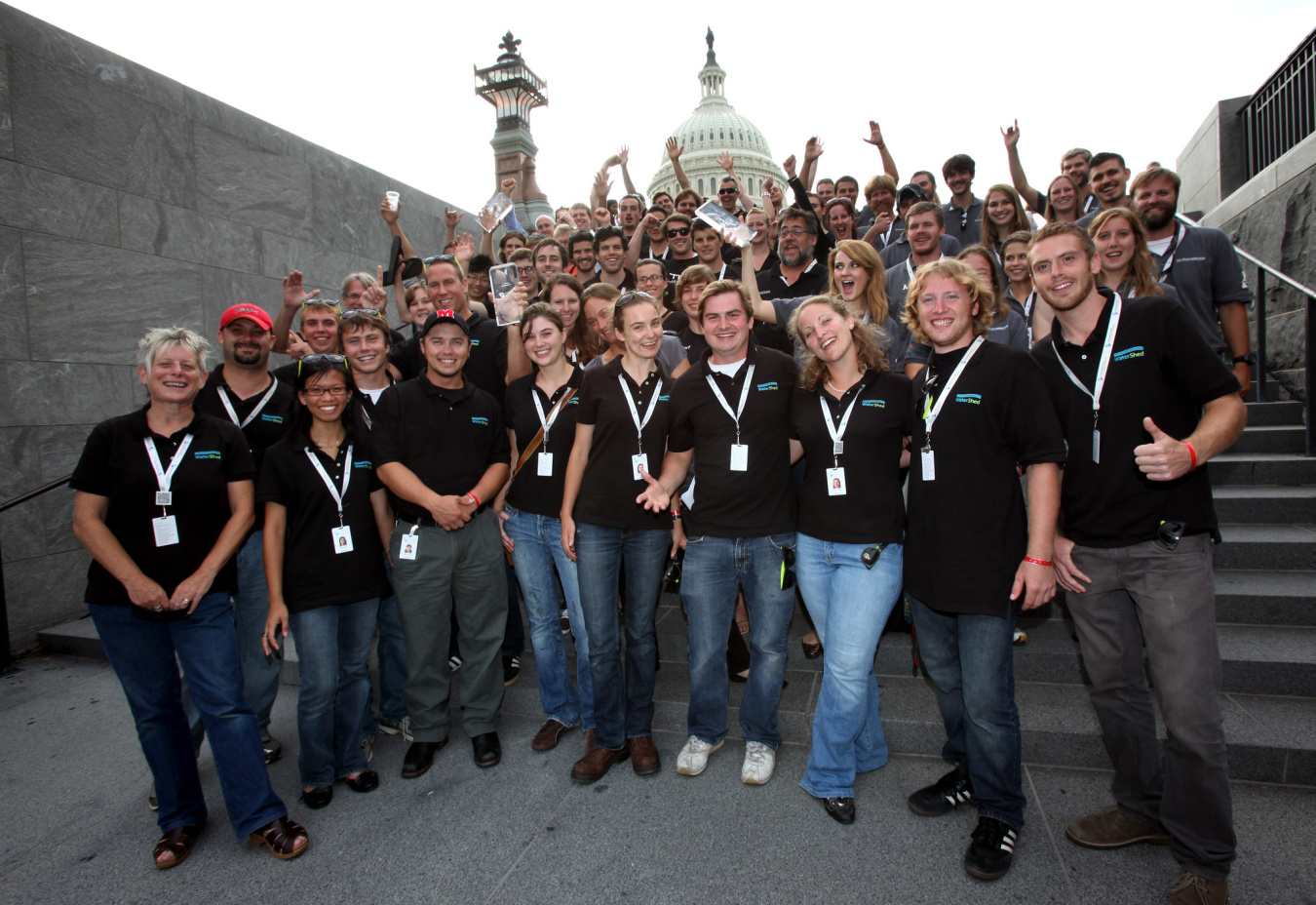
The university-led teams that design, build, and operate the competition's houses are the heart of the Build Challenge. Twenty teams competed in 2011 and 19 teams reached the construction/exhibition stage.
2011 Build Challenge Finalist Teams
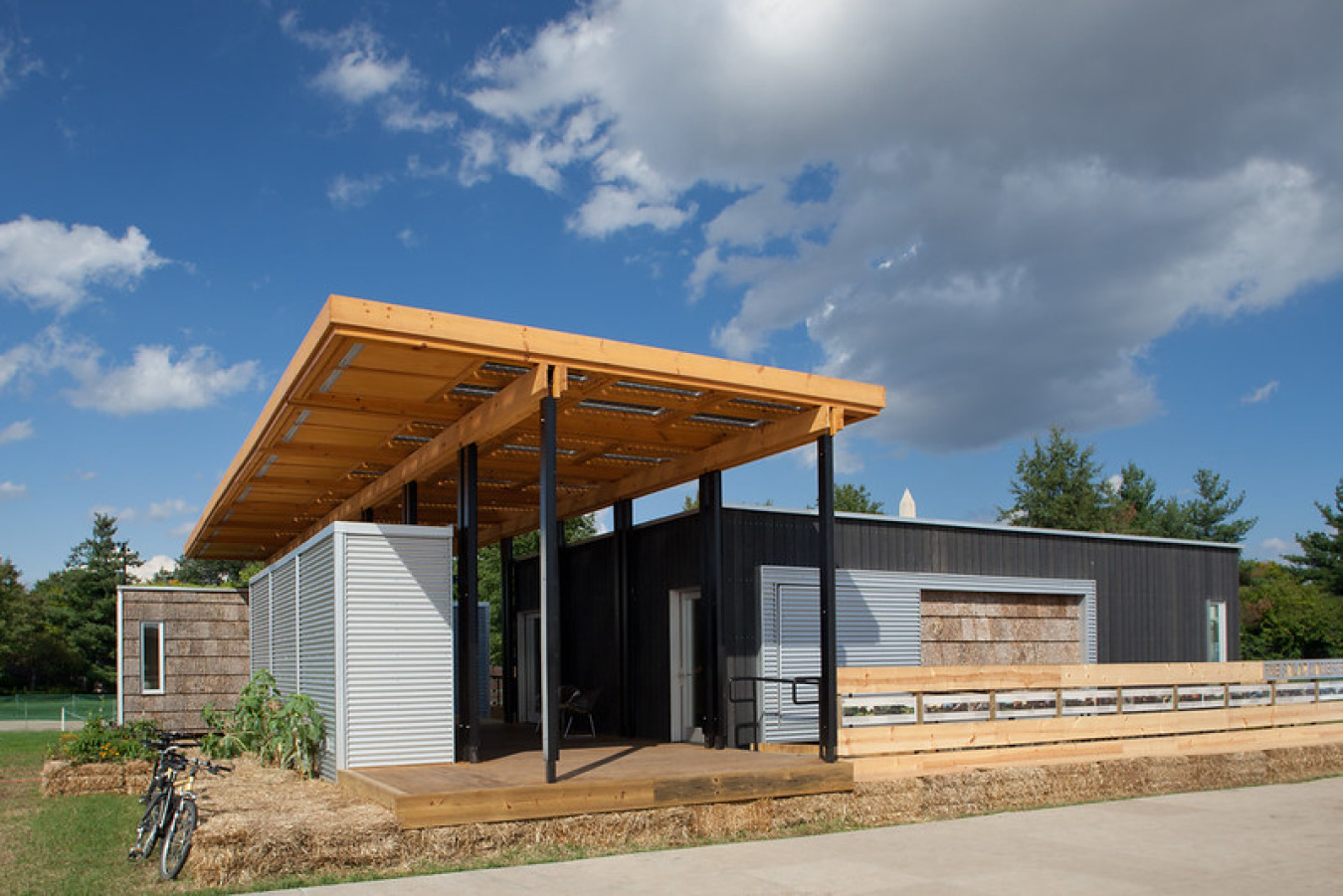
Appalachian State University was inspired by traditional Appalachian settlements for its 2011 Build Challenge entry. It is composed of multiple buildings that form a self-sufficient ensemble. Six outbuilding modules connect to form the Great Porch, an outdoor living space protected by an 8.2-kW trellis of bifacial cells. Inside, the 833-ft2 (77-m2) house features two bedrooms, a day-lit bathroom, energy-efficient appliances, and a versatile living and dining area. The house also includes an independent 120-ft2 (11-m2) Flex Space that can be used as a home office, art studio, or guest quarters.
Architecture presentation, engineering presentation, and photos.
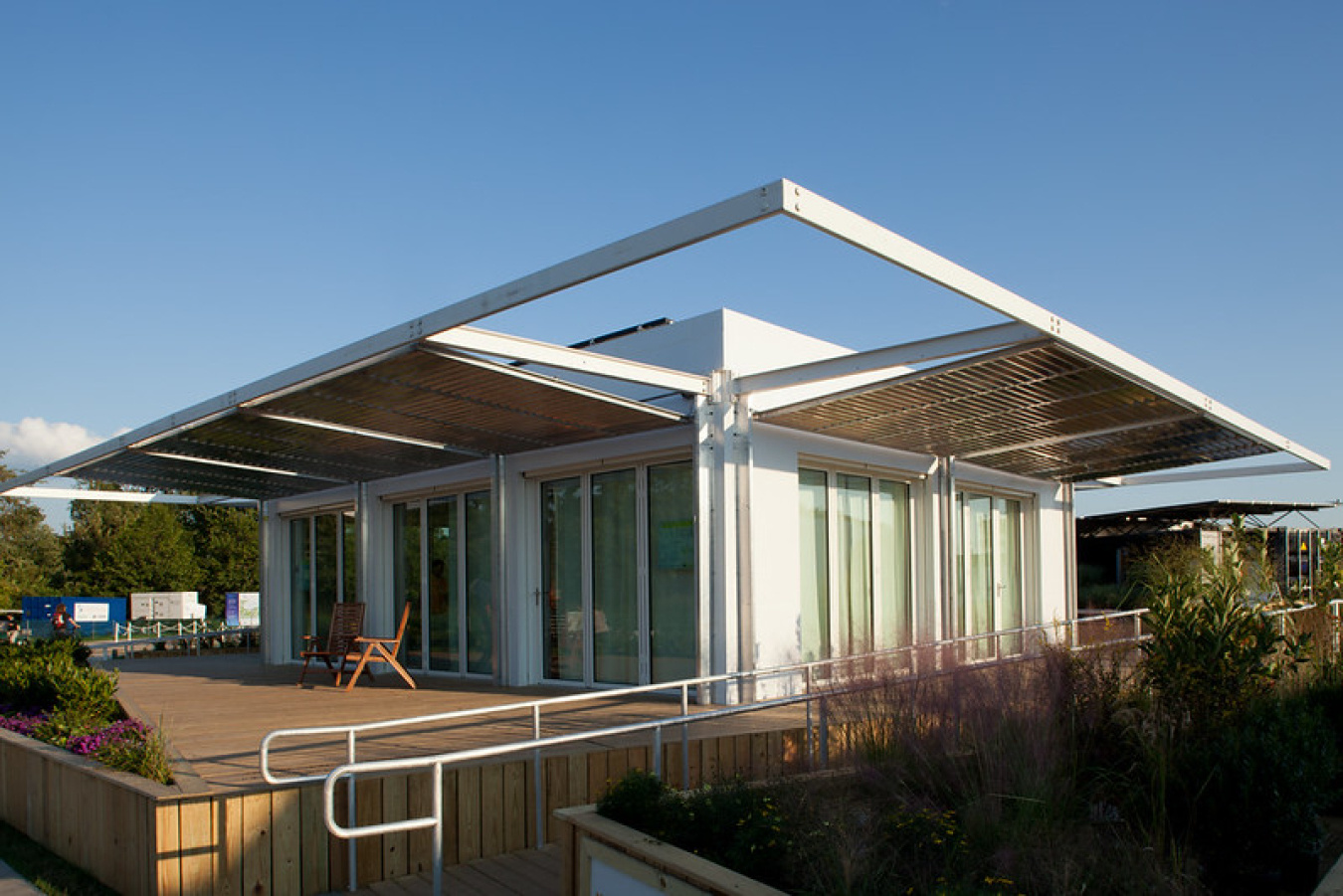
Florida International University's 2011 Build Challenge entry, the perFORM[D]ance House, responds to its environment, its inhabitants, and its use. The open pavilion design links the interior with the exterior through a layered façade and integrated landscape, and operable louver panels open to extend the interior space and expand the livable space to the exterior. The ever-changing configuration is driven by environmental conditions, resulting in an interactive performance that showcases unique strategies and technologies. A fully retractable glazing system on the windows provides relief from the heat and humidity of South Florida and a ductless air conditioning system uses micro-climate zoning to increase comfort while decreasing load.
Architecture presentation, engineering presentation, and photos.
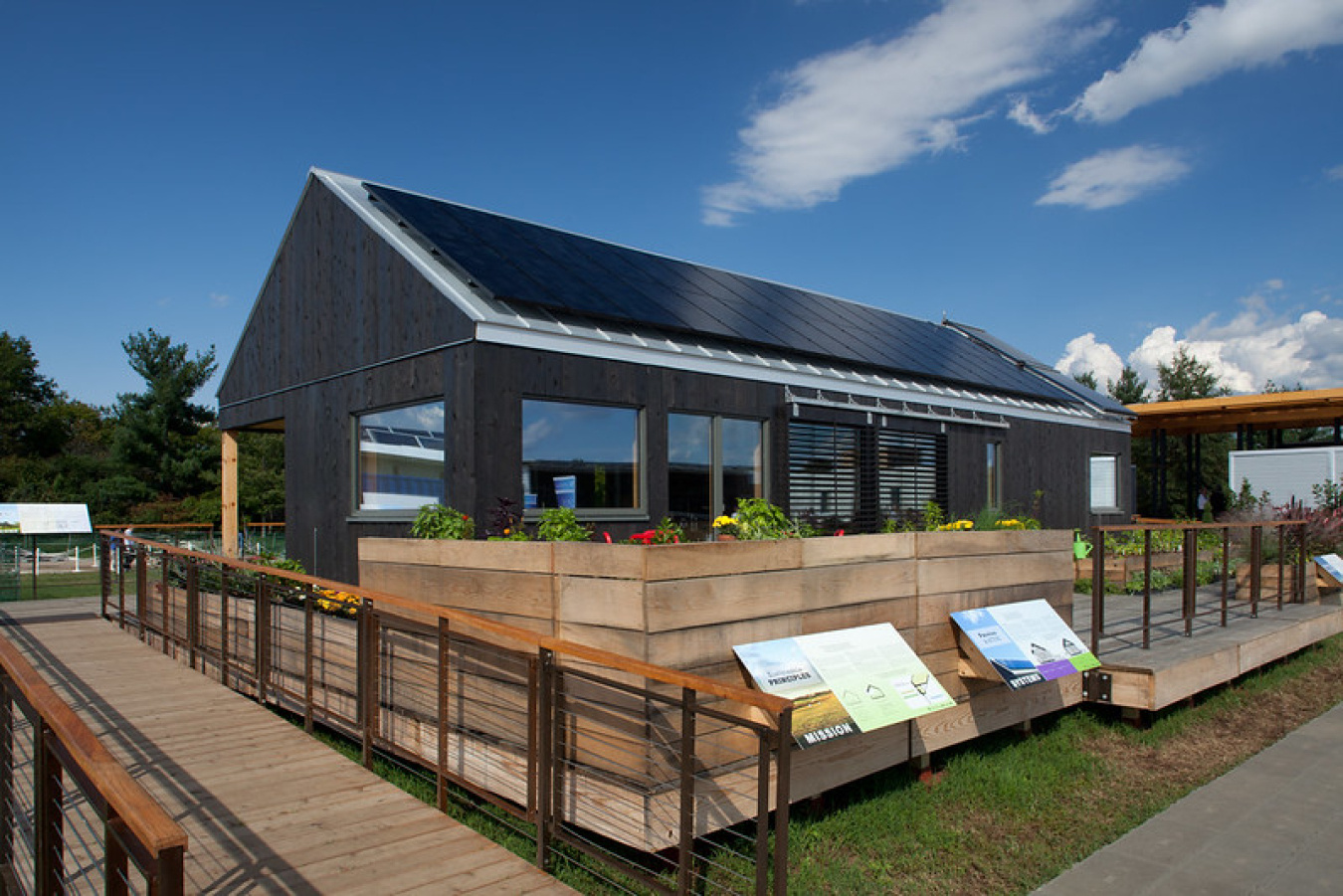
Self-Reliance, Middlebury College's 2011 Build Challenge entry, is a two-bedroom, ultra-efficient, 990-ft2 house designed for a family of four. It features a green wall for growing plants, open family living space, and healthy building materials. Its traditional gable, or peaked roof, is a familiar form that also sheds snow and rain. Triple-paned windows with cork-insulated frames have an R-value of 7, which allows them to provide net heat gain over the course of a year. Stack effect ventilation pulls in cooler air toward the ground and vents out warmer air from the skylights while an air-to-air heat exchanger circulates air through a network of aluminum ducts and feeds the green wall with condensed moisture.
Architecture presentation, engineering presentation, and photos.
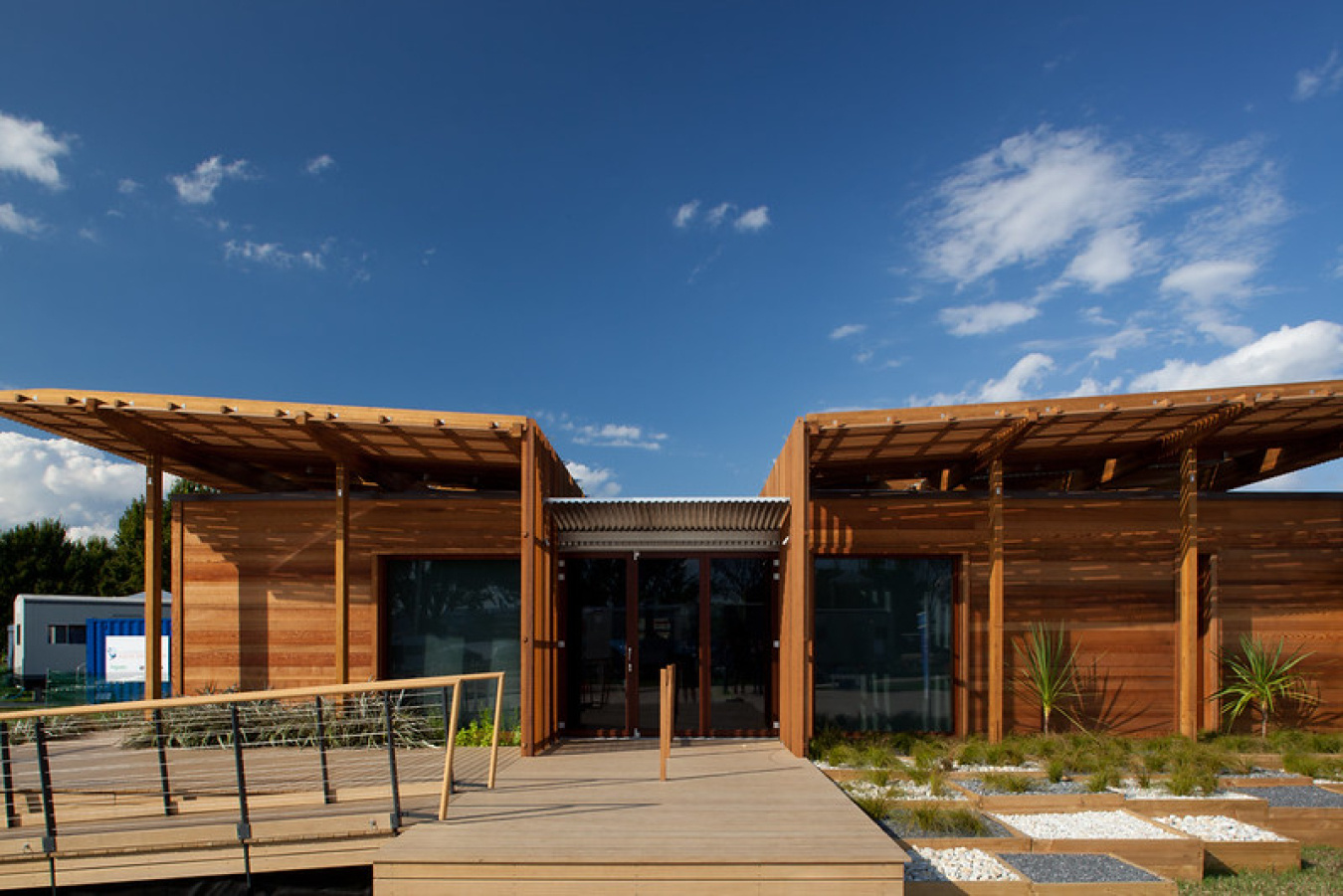
First Light, Victoria University of Wellington's 2011 Build Challenge entry, is inspired by the traditional New Zealand holiday home—the "Kiwi bach." The house is named First Light because New Zealand is the first place morning light shines at the start of a new day. First Light's design reflects a relaxed lifestyle in which socializing and connecting with the outdoors are central to living. At the heart of the design is a glazed central section that functions as a bridge between exterior and interior. The decking runs not only around the house but also through the center, allowing occupants to effectively live outside during summer and bringing a sense of the outdoors inside during winter. The house is clad in western red cedar using an innovative, detachable cladding system and recycled sheep wool is used as insulation.
Architecture presentation, engineering presentation, and photos.
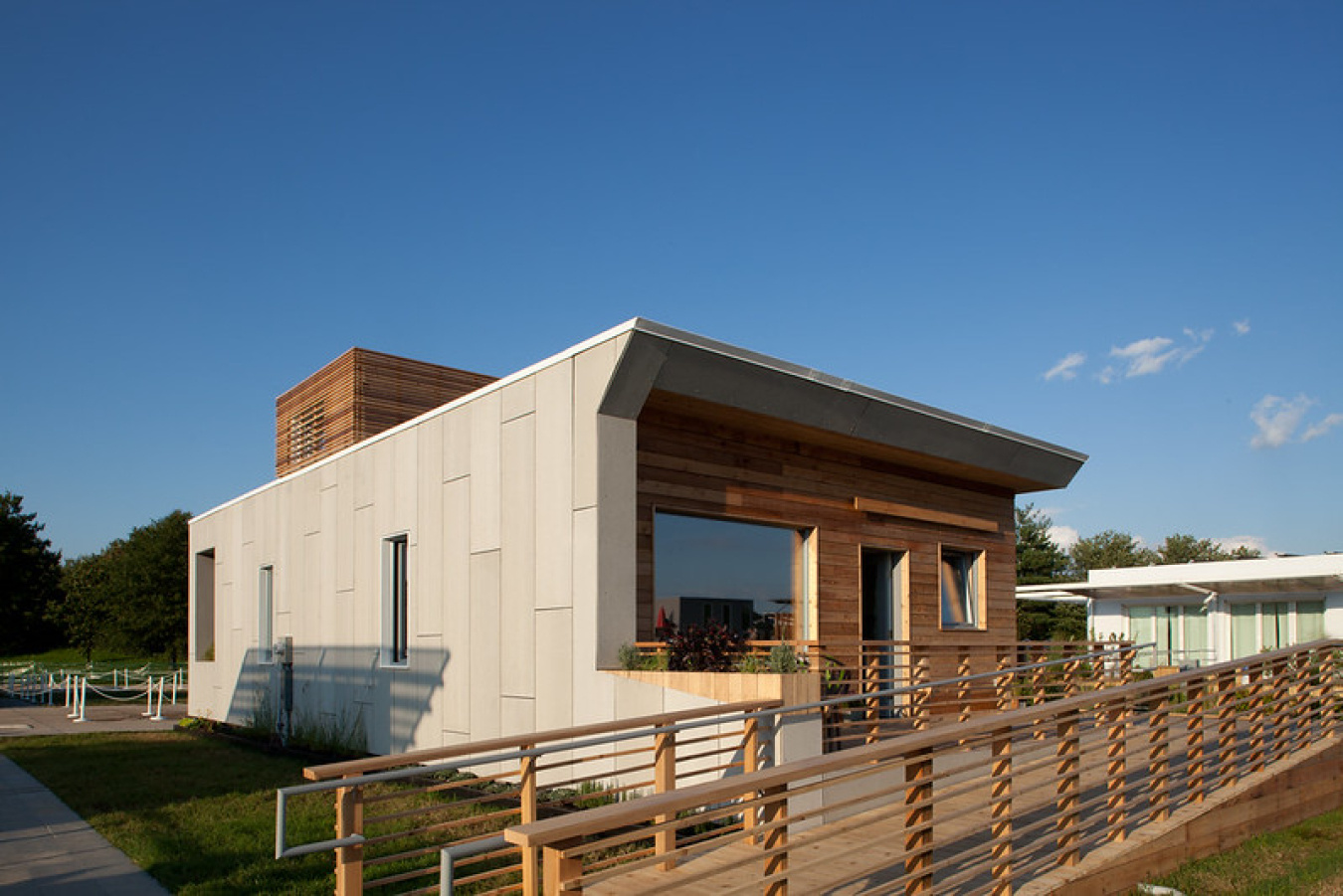
Parsons the New School for Design and Stevens Institute of Technology are developing a house for the 2011 Build Challenge in partnership with Habitat for Humanity of Washington, D.C., and the D.C. Department of Housing and Community Development. The house minimizes energy demand by optimizing the building envelope, using a highly efficient micro-mechanical system, and incorporating strategic lighting and daylighting. The compact 1,000-ft2 (93-m2) one-bedroom structure showcases the whole-life approach while being sensitive to the existing urban fabric. Empowerhouse will consume up to 90% less energy for heating and cooling than a typical home in Washington, D.C., with its use of passive house technologies.
Architecture presentation, engineering presentation, and photos.
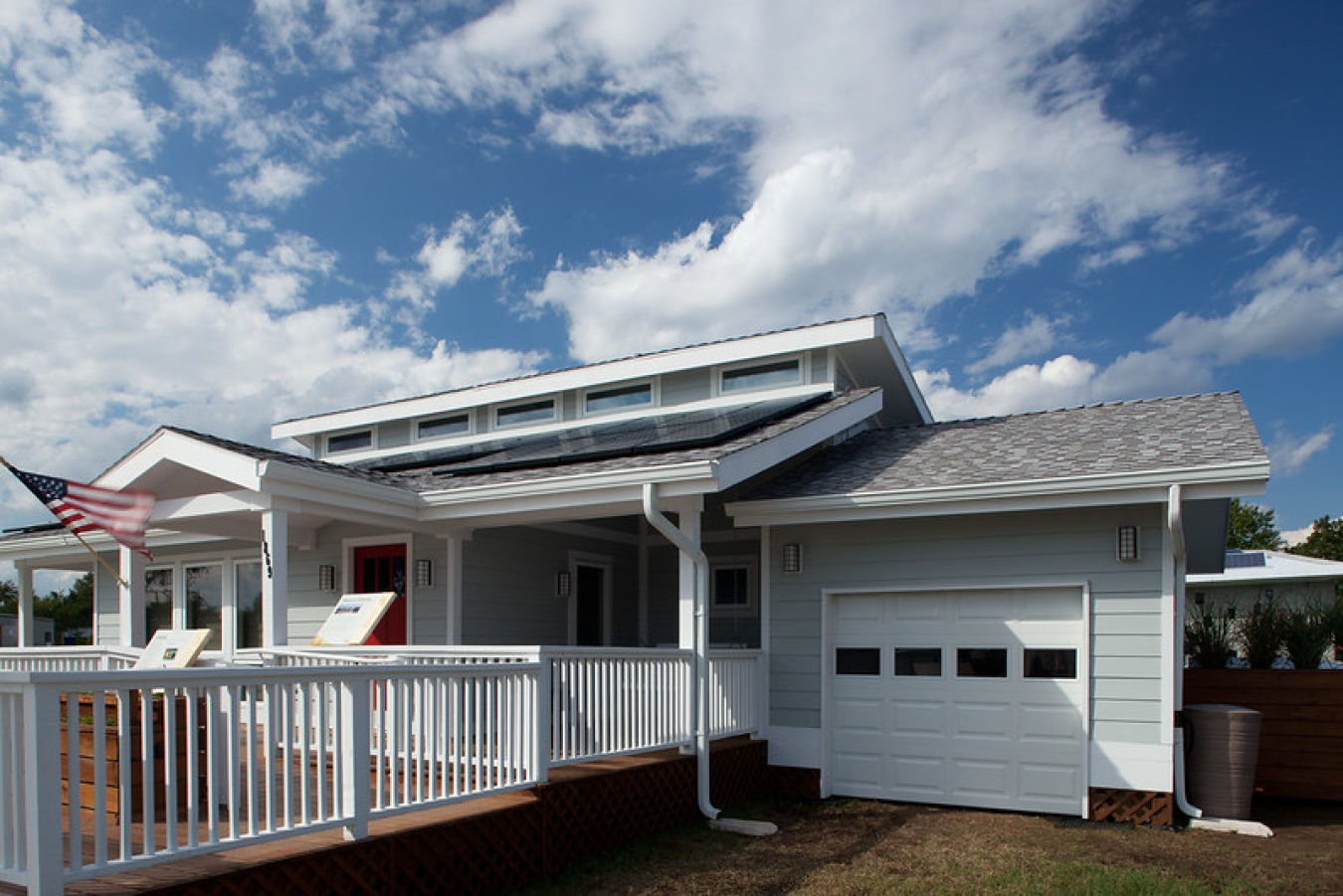
The INhome, Purdue University's entry, offers a realistic and balanced vision for ultra-efficient housing. The INhome—short for Indiana home—is an innovative, yet practical, house that meets the needs of a typical Midwestern consumer in today's cost-competitive residential market. The INhome blends technological innovation with functional aesthetics to create a living space that appeals to homeowners. It is practical and cost-effective because of its reliance on passive design, which uses natural processes to reduce heating, cooling, and lighting needs. Interior finishes contain pre-consumer or post-consumer recycled content and carefully placed ductwork that allows for conservation of warm and cool air as it is distributed throughout the house. A multi-process air purification system also removes airborne contaminants.
Architecture presentation, engineering presentation, and photos.
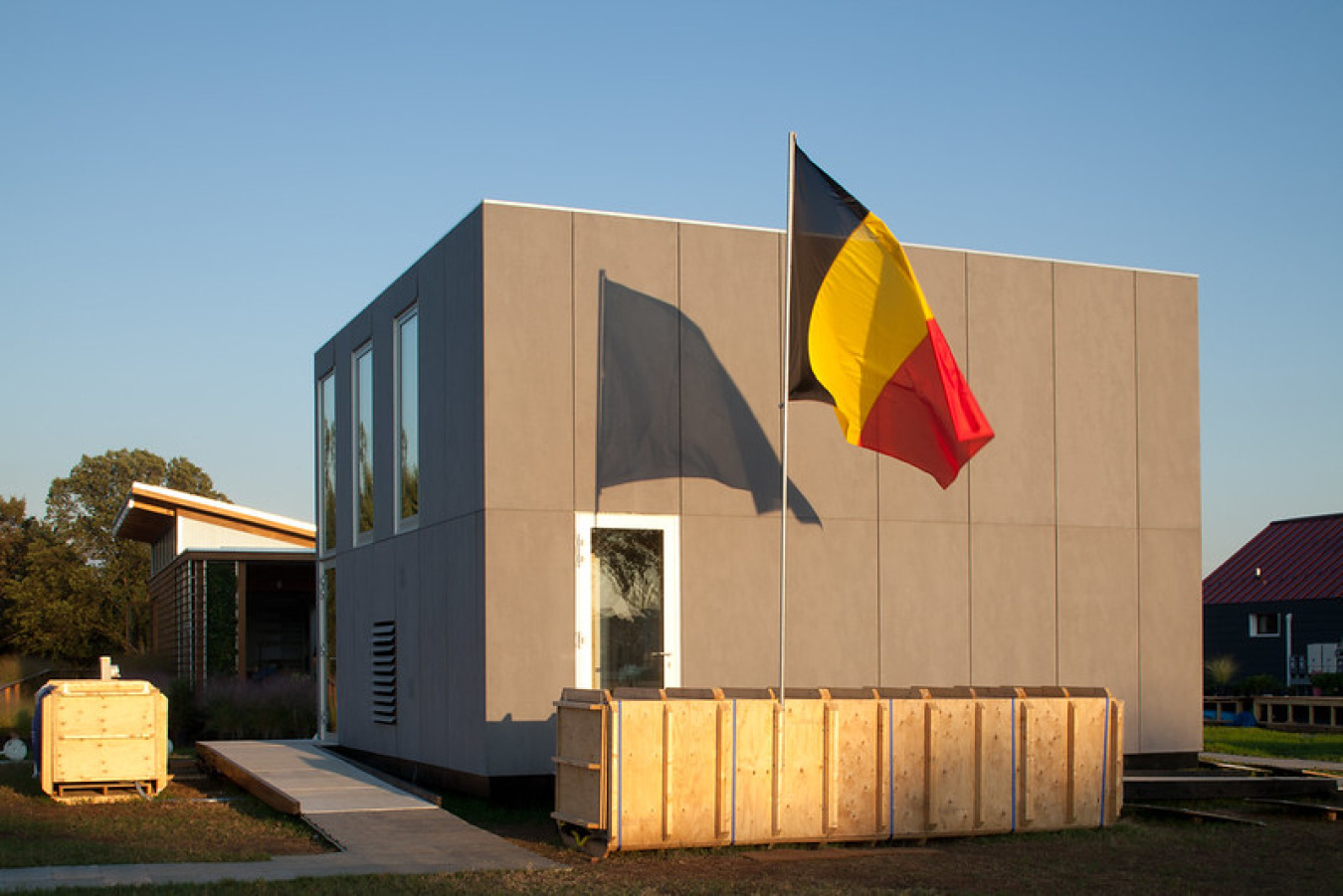
Team Belgium aimed for simplicity with E-Cube, its entry for the 2011 Build Challenge. This approach resulted in a design that is stripped of its nonessential components and finishes, leaving its structure and façade exposed to the interior. The ultra-efficient house is conceived as an affordable building kit that can be assembled in days rather than months. A conscious effort was made to avoid letting gadgetry dominate the overall experience of the house, so technical installations were grouped in a small compartment. The compact shape minimizes thermal energy loss through the building envelope and the façade is made of fiber-cement boards with the same dimensions as the triple-glazed window elements. A standard pallet rack system creates the main structure using a bolt-less assembly process.
Design concept and photos.
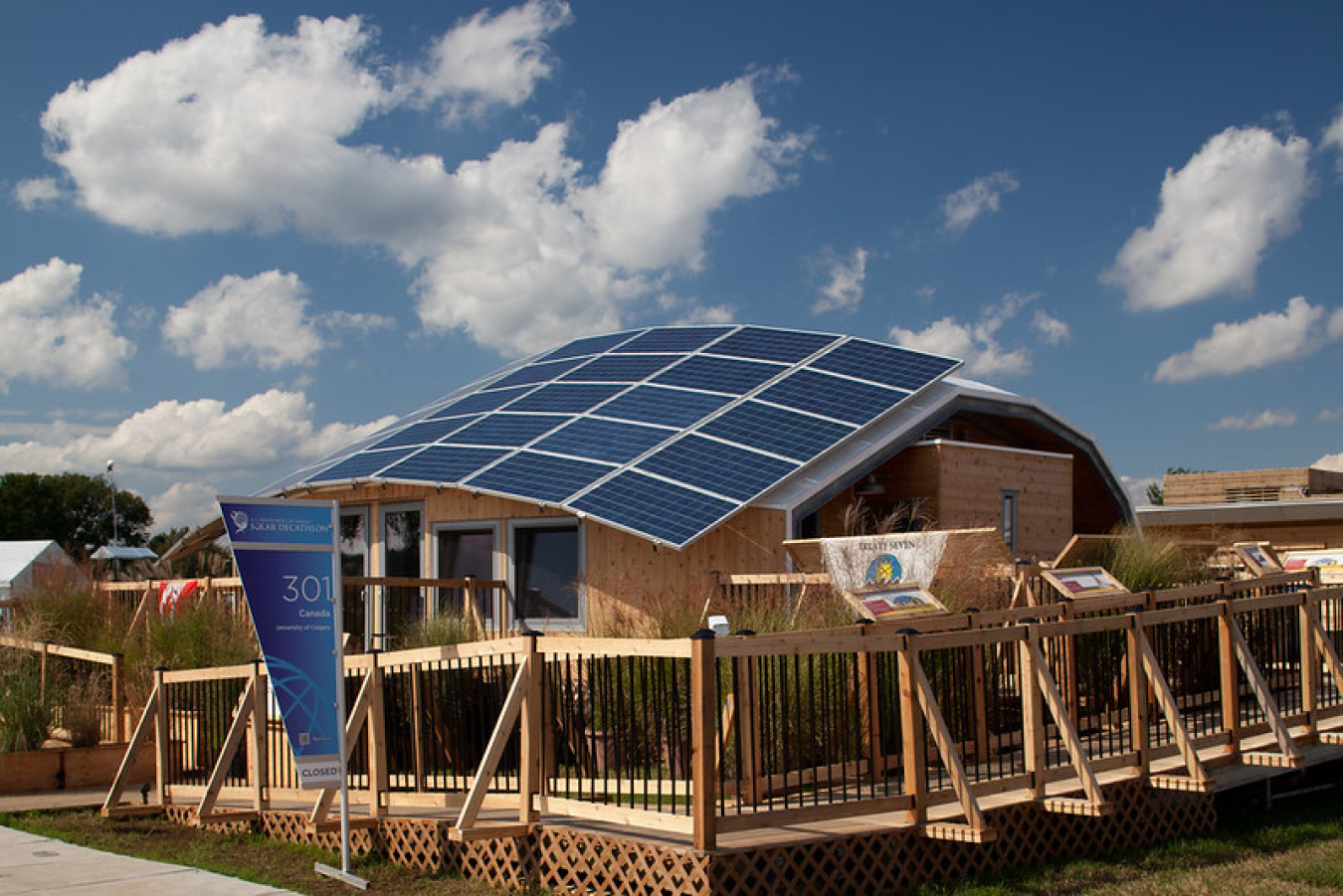
Canada's design integrates technology and tradition. From a technological perspective, varied building materials and energy technologies result in a house that is healthy, safe, durable, and affordable. From a traditional perspective, the design is guided by a holistic view of the home as a living part of a greater natural order. Magnesium oxide-based structural insulated panels are highly resistant to fire and mold. A sophisticated control system also allows for monitoring and long-term optimization.
Architecture presentation, engineering presentation, and photos.
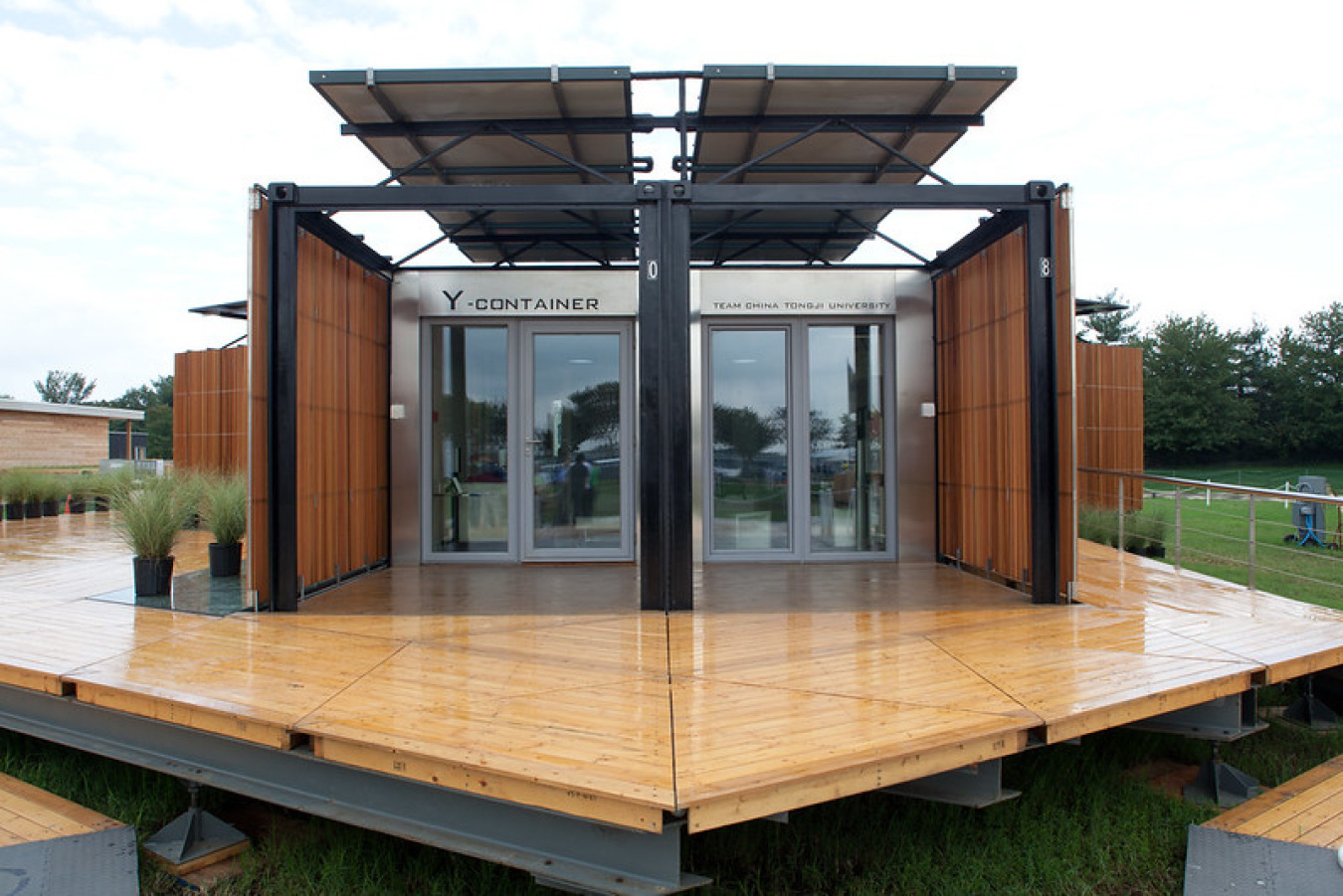
China's 2011 entry, Y Container, combines six recycled shipping containers into a succinct, Y-shaped house. Y Container is easy to transport, assemble, and expand—providing the freedom to live anywhere with low costs. It is a living house that can contain the energy, water, and plants required for an individual to enjoy an independent and natural lifestyle. Vacuum insulation materials and phase-change materials block heat transfer and moderate the interior temperature passively. A natural ventilation tunnel in the middle of the house regulates air distribution and the fresh air supply without energy consumption.
Architecture presentation, engineering presentation, and photos.
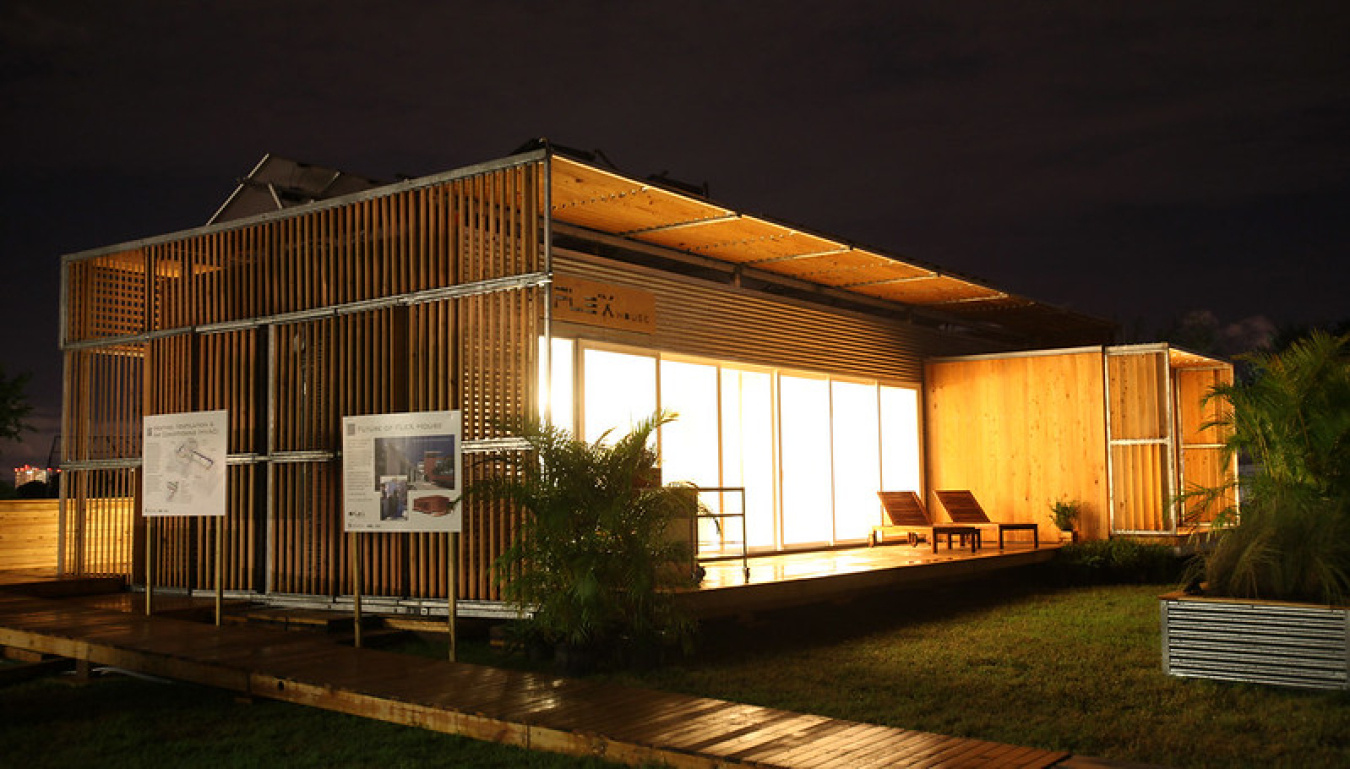
Team Florida's 2011 Build Challenge entry, FLeX House, is a prefabricated prototype that combines the wisdom of Florida residential design with modern technology. The house opens up to take advantage of passive cooling during mild months and closes down to take advantage of the highly efficient mechanical systems during months of temperature extremes. This hybrid open-and-closed building type is conducive to a healthy indoor/outdoor Florida lifestyle. The house can be shipped on one truck and quickly deployed at the building site. Exterior walls with corrugated metal siding were chosen for reflectivity, durability, and economy. A liquid desiccant duct system also connects to an energy recovery ventilator to dehumidify incoming air.
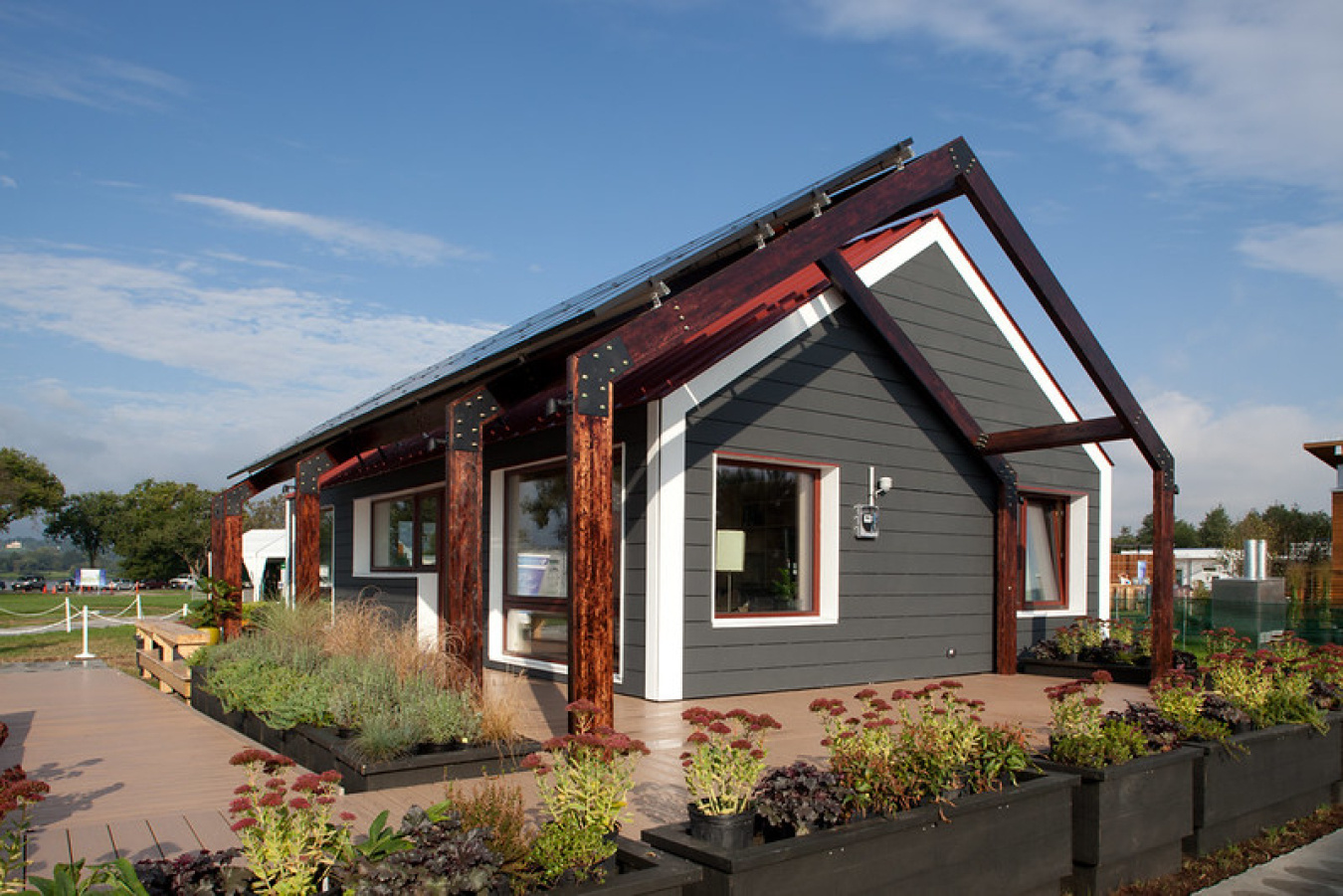
Team Massachusetts designed the New England-inspired 4D Home for the 2011 Build Challenge. This prototype is an affordable, ultra-efficient house that can adapt to a family's changing needs. The 4D Home integrates efficient technology and passive strategies without compromising simplicity. The exterior is composed of fiber cement board and wood-clad windows and blown fiberglass and closed-cell polyurethane spray foam insulation were used for air tightness. Furniture, decor, and housewares were designed and fabricated by student team members. The refrigerator also uses less electricity per year than a 60-W light bulb.
Architecture presentation, engineering presentation, and photos.
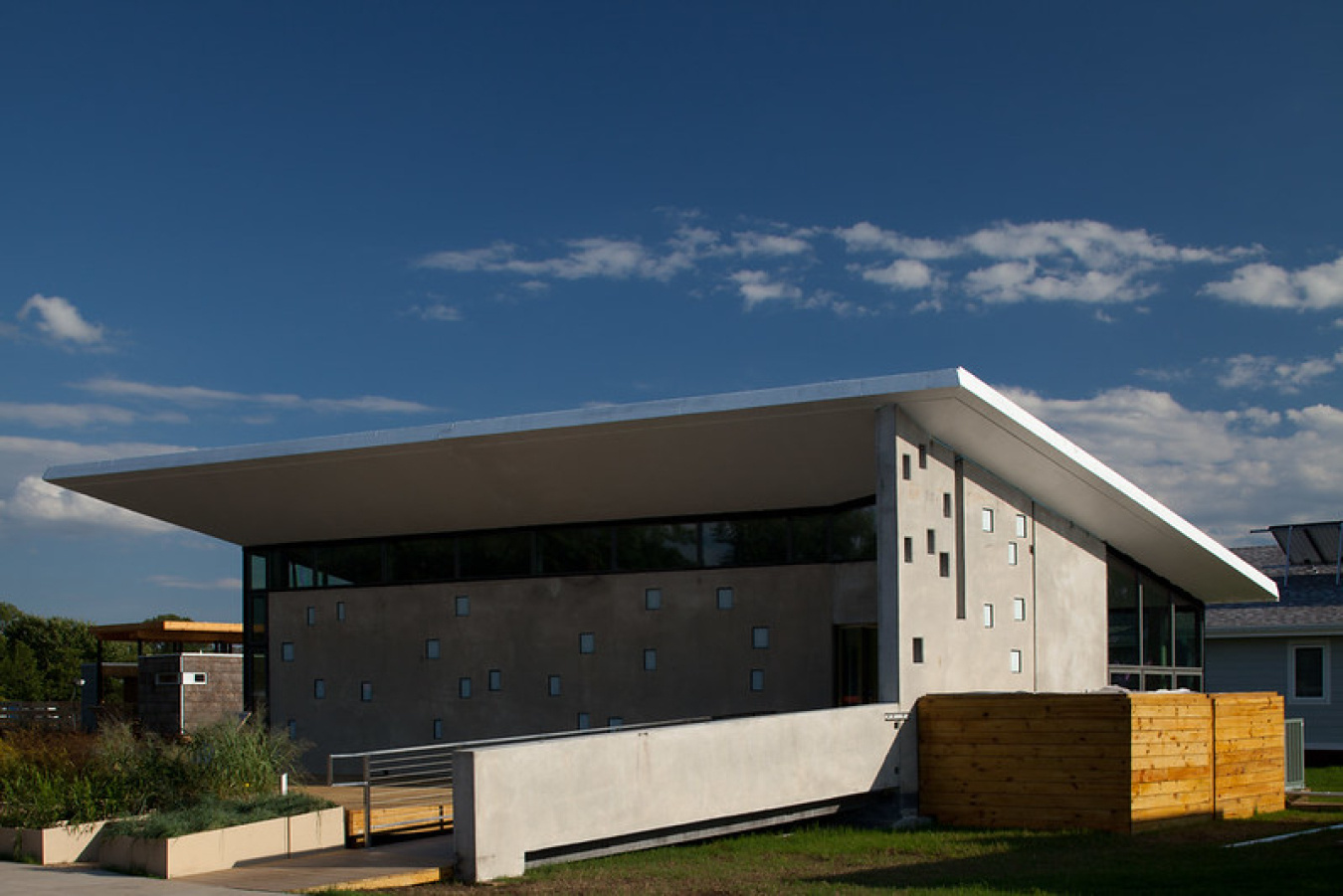
Team New Jersey's entry, ENJOY House, suggests a new way of approaching high‐performance, energy‐efficient residential design. Cutting‐edge fabrication techniques meet the age‐old technology of concrete in its intelligent design. The roof's inverted‐hip shape is calibrated for optimal rainwater collection, contributing to an architecture informed by performance criteria. Built of pre‐cast concrete insulated panels, the house requires little upkeep compared with traditional stick‐frame materials. Perforations allow for daylighting and dramatically improve thermal performance, while fiberglass-framed windows are high-performing, energy-efficient, and durable.
Architecture presentation, engineering presentation, and photos.
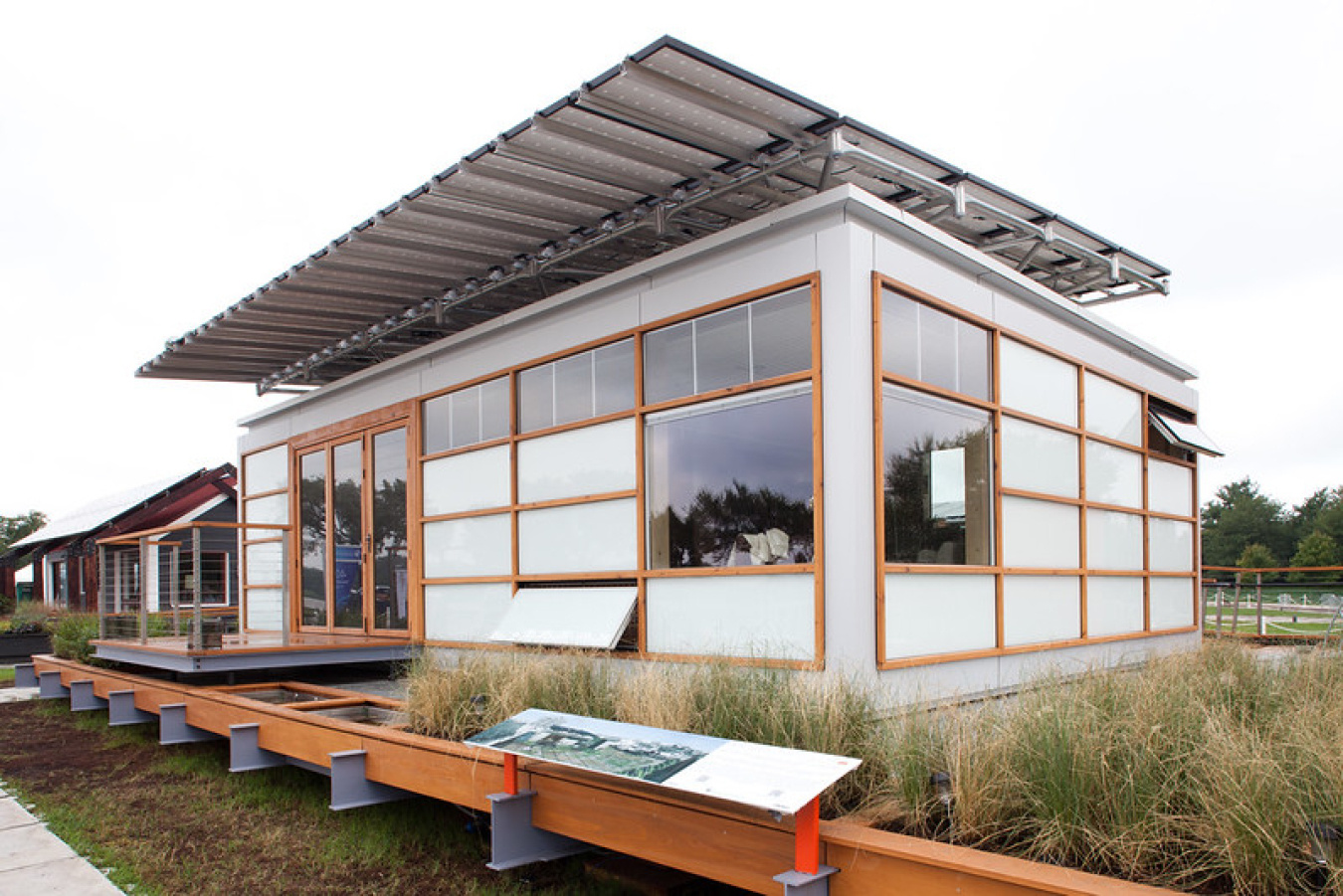
Team New York's design responds to the fact that urban rooftops are largely under-used. Intended for existing mid-rise buildings, the house enables eco-conscious city dwellers to live lightly by producing power, cultivating roof gardens, and retaining and recycling storm water. The one-story penthouse has variable cladding on the 64 poplar wood-framed "building blocks" of the envelope. These building blocks—glazed, opaque, louvered, or screened—can be custom-assembled based on the variables (such as orientation, predominant wind direction, preferred view, and interior layout) of each site.
Architecture presentation, engineering presentation, and photos.
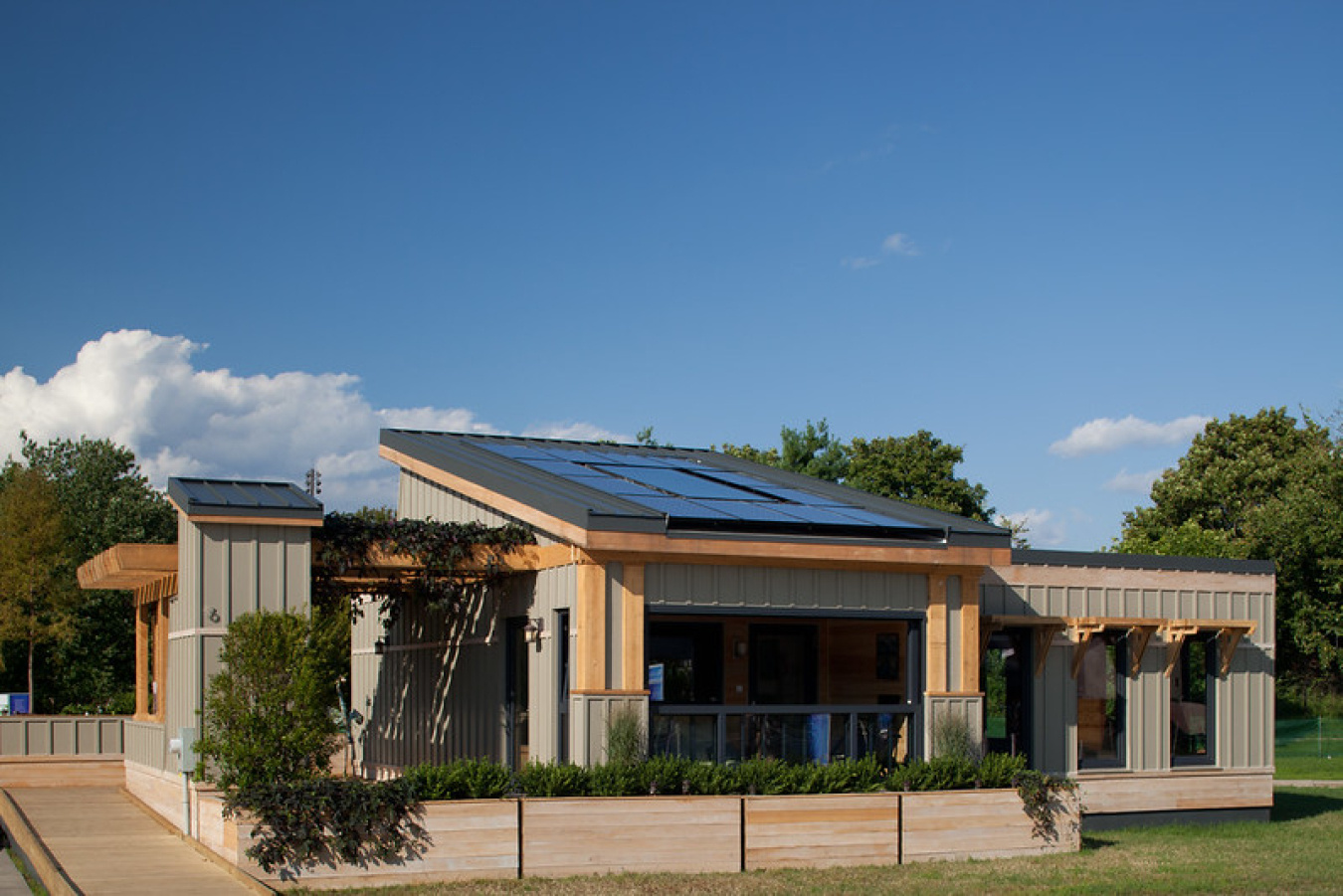
Tidewater Virginia's Unit 6 Unplugged is a modular house that blends seamlessly into a historic center-city neighborhood. Unit 6 is conceived of as part of a larger, six-unit multifamily building. By sharing infrastructure costs between units of the building, this energy-efficient house is made more affordable. The house consists of three sections: a pergola integrated into the utility core, a main module with the porch, and a living space that features nearly floor-to-ceiling windows. A transformable porch with motorized windows allows it to be open to the outside or an enclosed sunspace. Window and door sensors provide security system information and prevent the HVAC system from operating when either is open.
Architecture presentation, engineering presentation, and photos.
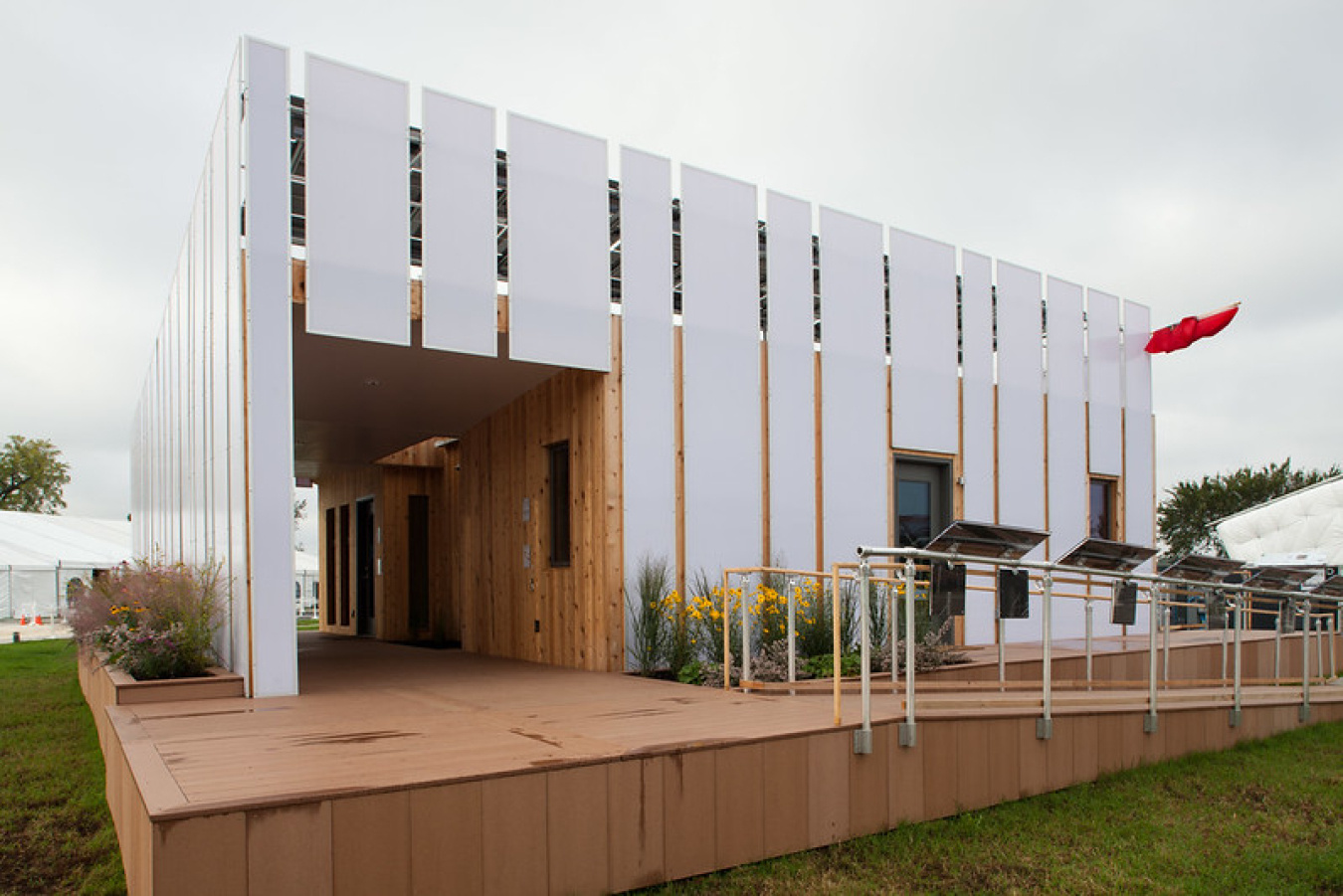
The Ohio State University's entry, enCORE, presents a family-friendly solution for residential needs while addressing the world's growing energy problem. enCORE features living spaces arranged around a central core that contains the house's mechanical and plumbing systems. The flexible, interconnected design gives this 930-ft2 (86-m2) house the same functionality and livability of projects much larger in size and budget. An adjustable exterior screen provides privacy and protection from the sun and a bioremediation system filters rainwater and brings nature close to the house's residents. The house boasts a super-insulated exterior envelope with double the insulation value of conventional homes and state-of-the-art triple-glazed windows.
Architecture presentation, engineering presentation, and photos.
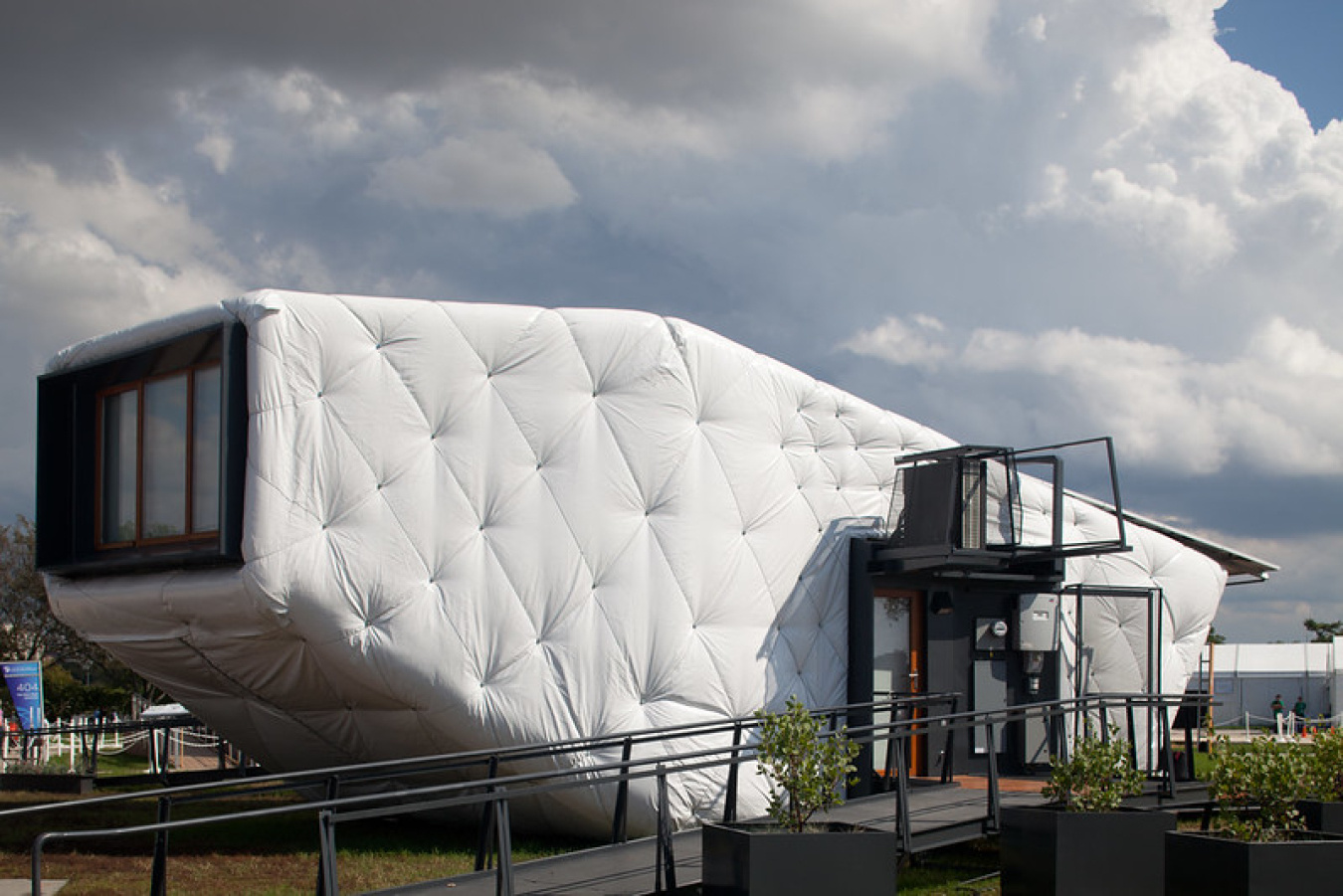
CHIP was created by the Southern California Institute of Architecture and California Institute of Technology for the 2011 Build Challenge. CHIP offers a solution to the challenges of home ownership and energy consumption. CHIP is an affordable dwelling with a small footprint that can be used as infill or placed in zoning that accommodates shared lots. While appearing to be a house of the future, this "prototype to product" is ready to be injected into the Los Angeles landscape after it returns from Washington, D.C. The geometry results from lifting the north side to create a car park and the vinyl-coated fabric mesh (made of low-cost billboard material) that protects the house also contains the "outsulation" that envelops the structure.
Architecture presentation, engineering presentation, and photos.
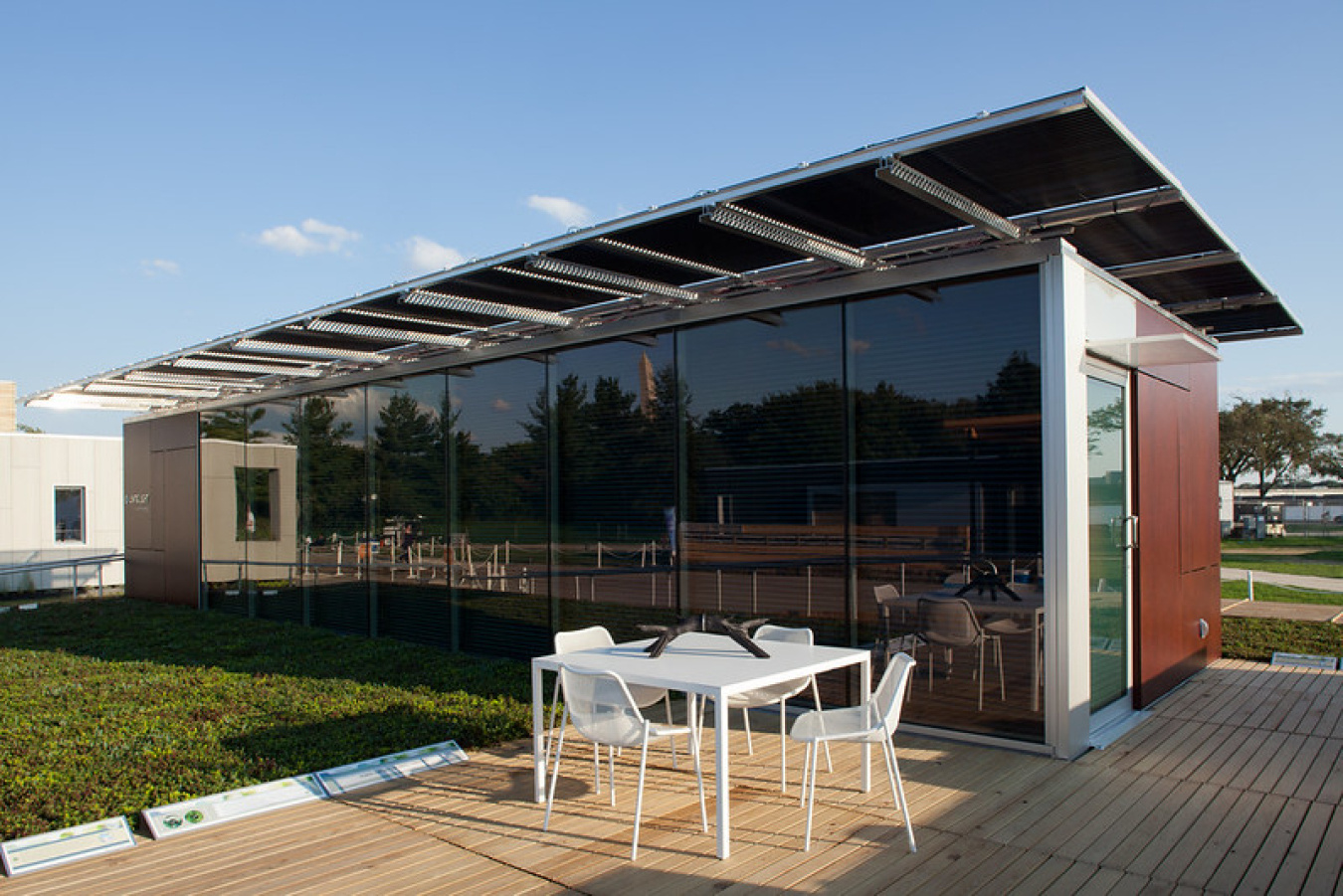
The University of Tennessee's Living Light incorporates the knowledge of Tennesseans past and present. Although the forms and spaces of Living Light were inspired by the cantilever barns of southern Appalachia, the systems in the dynamic façade and integrated roof array are scalable and tunable to a range of climates and applications. Sensors automatically manage the electric lighting, which includes color-changing LED strip lights along the façade. The blind system, sandwiched between two panes of glass, is programmed to provide year-round lighting and shading.
Architecture presentation, engineering presentation, and photos.
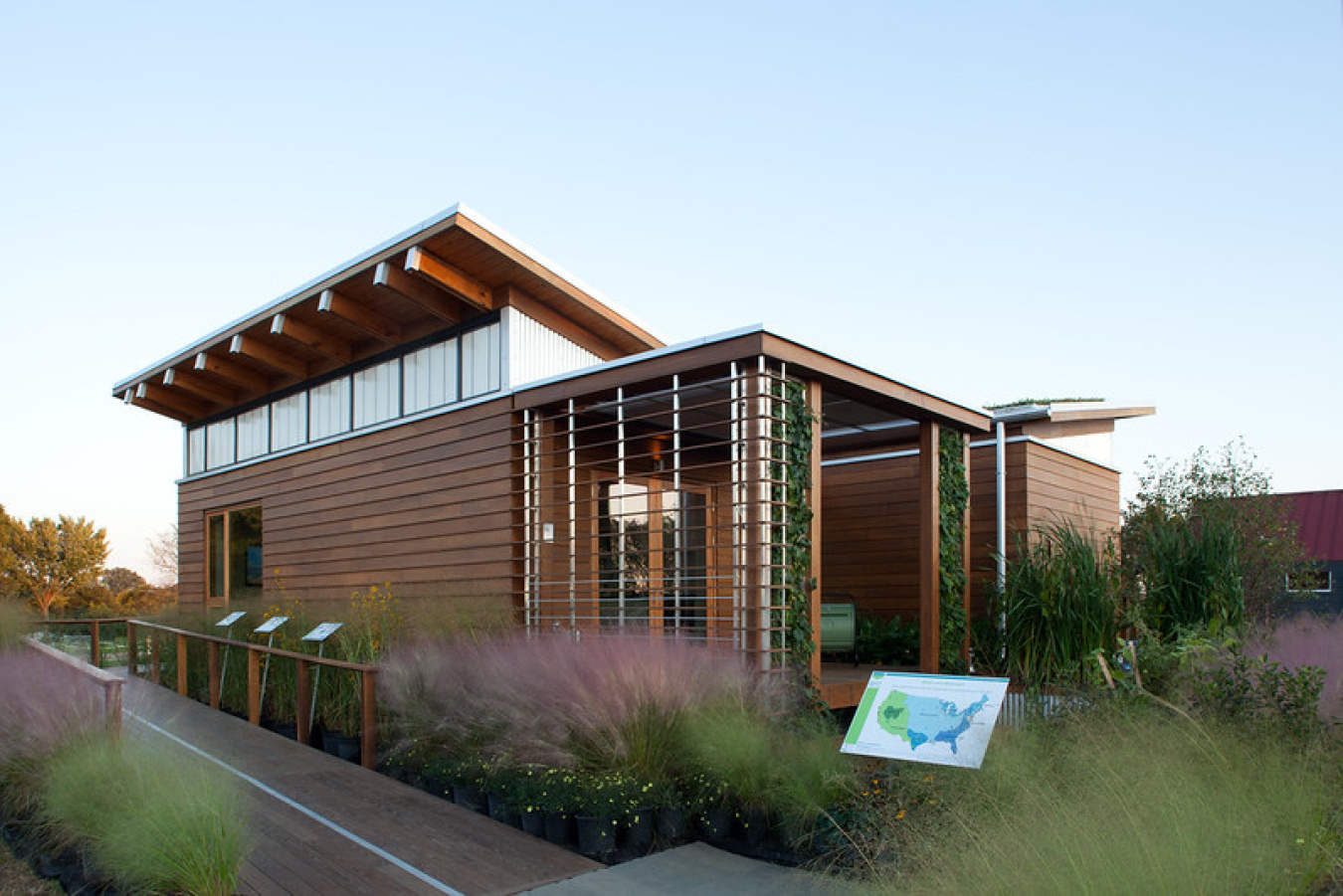
Inspired by the Chesapeake Bay ecosystem, the University of Maryland returns to the 2011 Build Challenge with WaterShed—an entry that proposes solutions to water and energy shortages. The house is a model of how the built environment can help preserve watersheds everywhere by managing storm water onsite, filtering pollutants from greywater, and minimizing water use. The effectiveness of the building envelope and efficiency of the mechanical systems make WaterShed less thirsty than standard homes. A green roof slows rainwater runoff to the landscape while improving the house's energy efficiency. The liquid desiccant waterfall serves as a design feature and also provides humidity control.
Architecture presentation, engineering presentation, and photos.
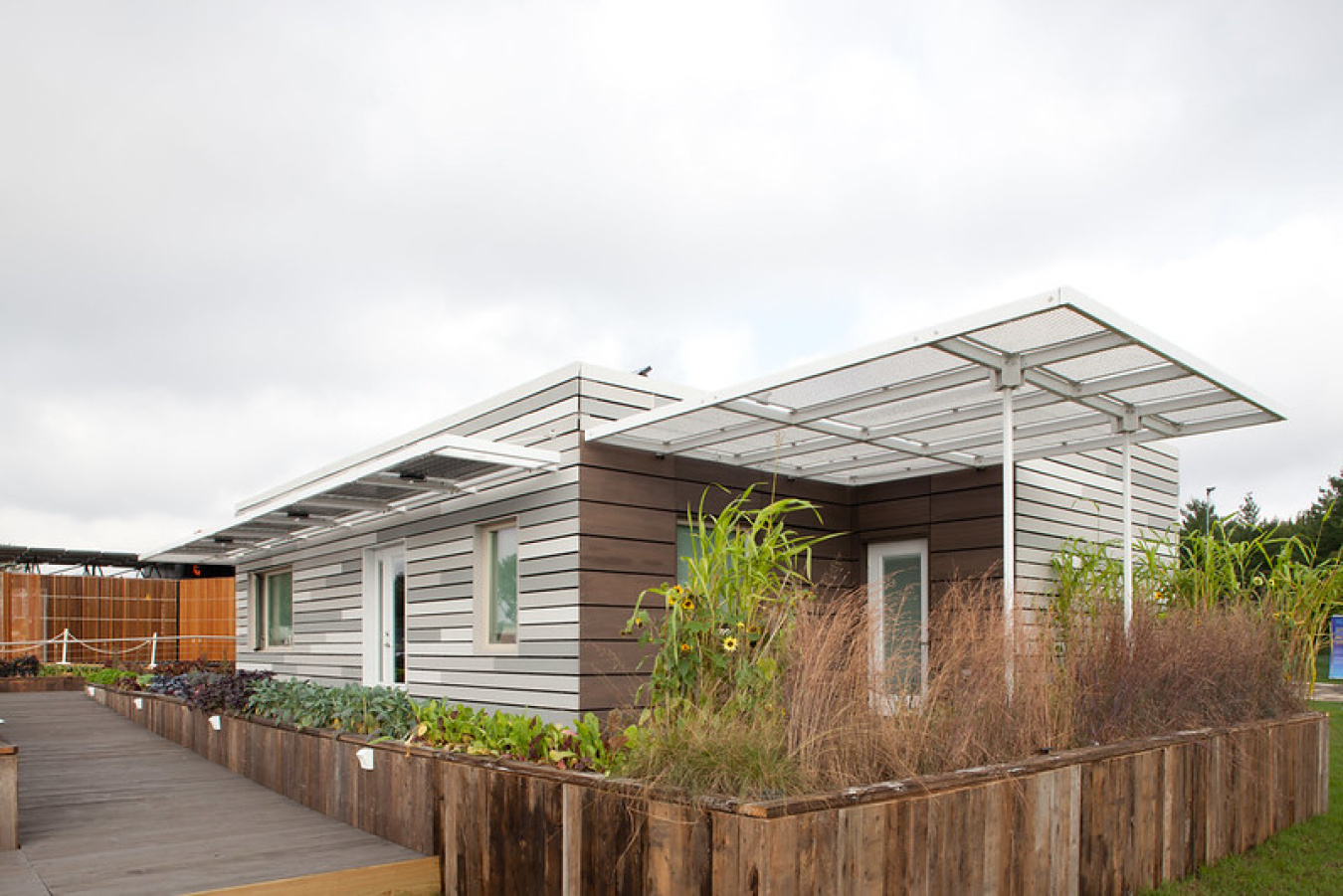
The University of Illinois at Urbana-Champaign’s Re_home is a rapid-response solution for a family affected by natural disaster. By combining good design, smart planning, and low-cost solutions, the Re_ home responds to the physical and emotional needs of impacted families during a community-led recovery effort. Exterior paneling made from 60% rice husks, 22% common salt, and 18% mineral oil can be personalized with different finishes. Conditioning system fans exchange interior and exterior air while energy is recovered across the heat-pump refrigeration cycle.
Architecture presentation, engineering presentation, and photos.
2011 Build Challenge Participants
This team withdrew from the competition before the exhibition but met other rigorous competition requirements through multiple deliverable submissions.

Designed to address residential needs in Hawaii's tropical climate, the University of Hawaii's semi-monocoque house, named Hale Pilihonua, is an affordable solution for middle-income homebuyers. The house's exterior structure consists of louvers that provide daytime shading, while the rest of the house includes phase-change material for thermal storage, intelligent occupancy sensing, and energy-conserving lighting controls and entertainment.
On June 1, 2011, the U.S. Department of Energy received formal notification from the University of Hawaii of its withdrawal from Solar Decathlon 2011.