



RSS

Argonne explores its early lunar research as it anticipates studies at the APS of pristine moon rocks from the final lunar landing missions.
Funding totals $3 million in Fiscal Year 2019 dollars for projects lasting three years in duration.
Scientists are working on ways to run particle accelerators with a diminishing amount of direction from humans.
A collaborative team answers scientific questions that lead to producing chemicals from designer crops and agricultural wastes, not petroleum.
In their roles at the RHIC, Berndt Mueller and Rosi Reed help scientists research the conditions at the very beginning of the universe.
Company embraces supercomputing in quest for viable fusion energy.
Seven Projects Aim to Improve Predictive Understanding of Subsurface Systems
In a new study, Penn Engineers demonstrate a strong, reversible adhesive that uses the same mechanisms that snails do.
Two U.S. Department of Energy (DOE) national laboratories continue to house the fastest supercomputers in the world, according to the new TOP500 List.
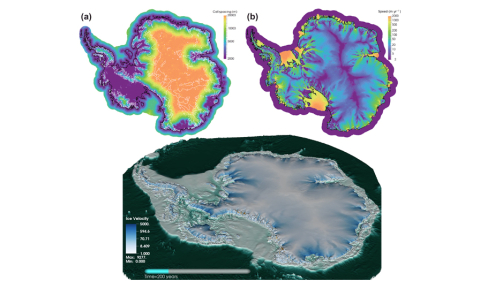
New simulations can help us understand how & why Antarctic ice sheets may retreat in response to climate change.