



RSS
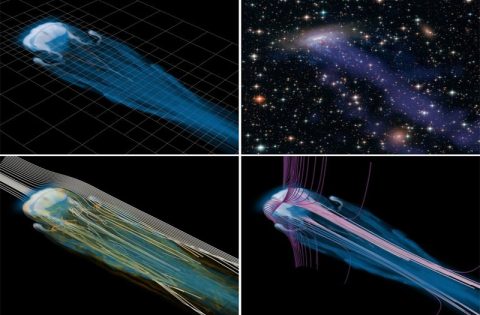
A trio of new and improved cosmological simulation codes heralds a new era of exascale computational astrophysics that promises to advance our understanding of the universe with models of unprecedented scale and resolution.
A team of scientists and engineers designed and tested an electrolyte that keeps battery power delivery high, cycle after cycle.
Scientists have announced a new tin-based catalysts that efficiently convert CO2 into useful chemicals including ethanol, acetic acid or formic acid.
Ben Lenard supports the lab’s Aurora exascale supercomputer, and manages databases in Argonne’s high performance computing systems.
The microbial traits that shape mineral-associated soil carbon formation are not universal but vary in different soil microbial habitats.
Brookhaven researchers explore a single cell using advanced X-ray imaging techniques.
Office of Science Selections from Funding Opportunity Announcements (FOAs) for the Week of July 31, 2024
Quantum simulations proposed to run on superconducting circuits might provide insight into the strong force and how collisions produce new particles.
A new enzymatic synthesis method expands RNA therapeutic capabilities while eliminating toxic byproducts of standard chemical synthesis.
Researchers at Pacific Northwest National Laboratory introduce new strategy for evaluating models of atmospheric aerosol particles.