



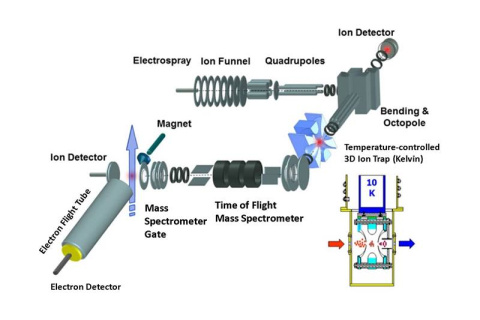
New approach to studying ions accurately predicts behavior, providing insights for biological systems, environmental processes, materials development.
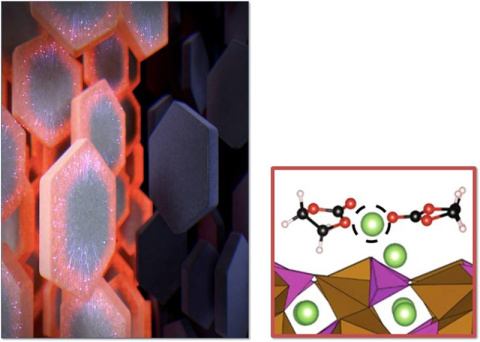
A new path is identified to keep lithium in its place during battery discharge, benefitting efforts to design better energy storage options.
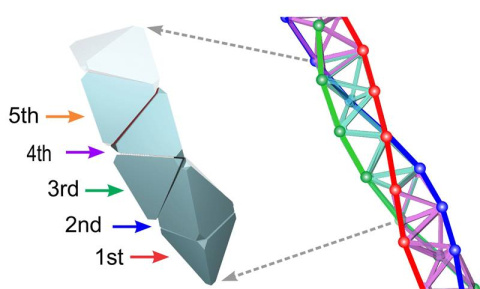
Scientists image complex superstructures self-assembled from tetrahedral quantum dots, expanding our understanding of forming small, complex crystals.
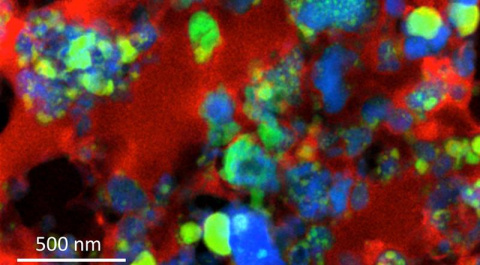
Interplanetary particles offer insights into the chemistry of the cosmos.

Scientists find the weak points to facilitate industrial applications of metallic glasses.
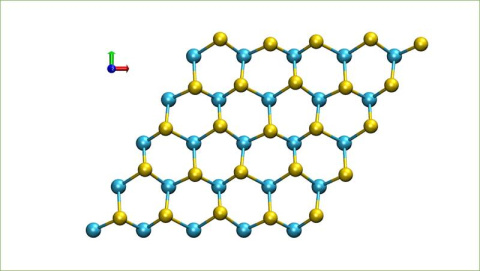
Scientists discover a completely new atomic motion in a 2-D material.
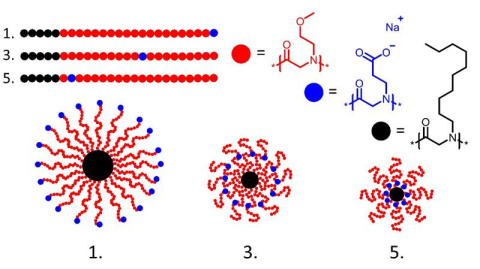
Location, Location, Location… How charge placement can control a self-assembled structure.
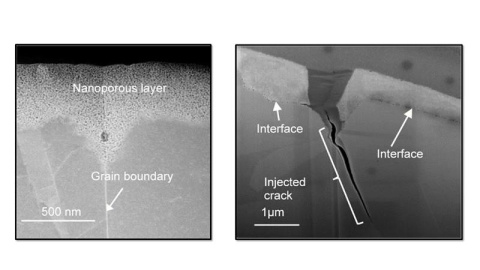
Redefining the mechanisms of stress corrosion cracking for materials in energy generation and industrial systems.
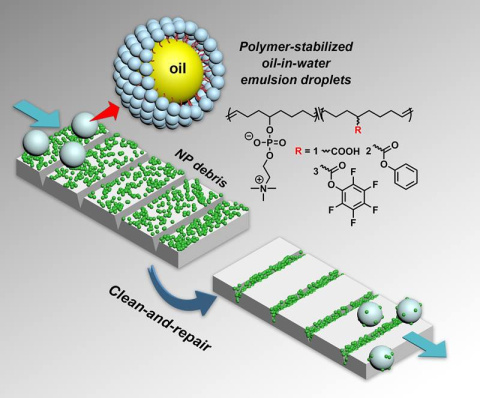
Simple fluid-driven nanoparticle catch-and-release process directs repair of cracks with debris from the damage.
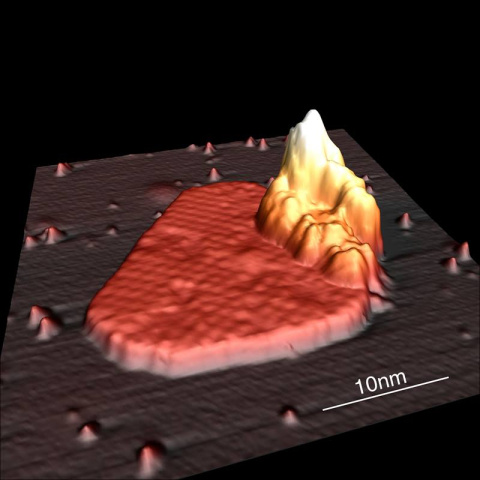
A new route to make metal beneath a layer of graphite opens potentially new applications in solar cells and quantum computing.