



The U.S. Department of Energy’s Hanford Field Office and contractor Navarro-ATL recently hosted a celebration recognizing the 75th anniversary of the 222-S Laboratory. June 30, 2026
Office of Environmental Management
June 30, 2026 Estimated Read Time min
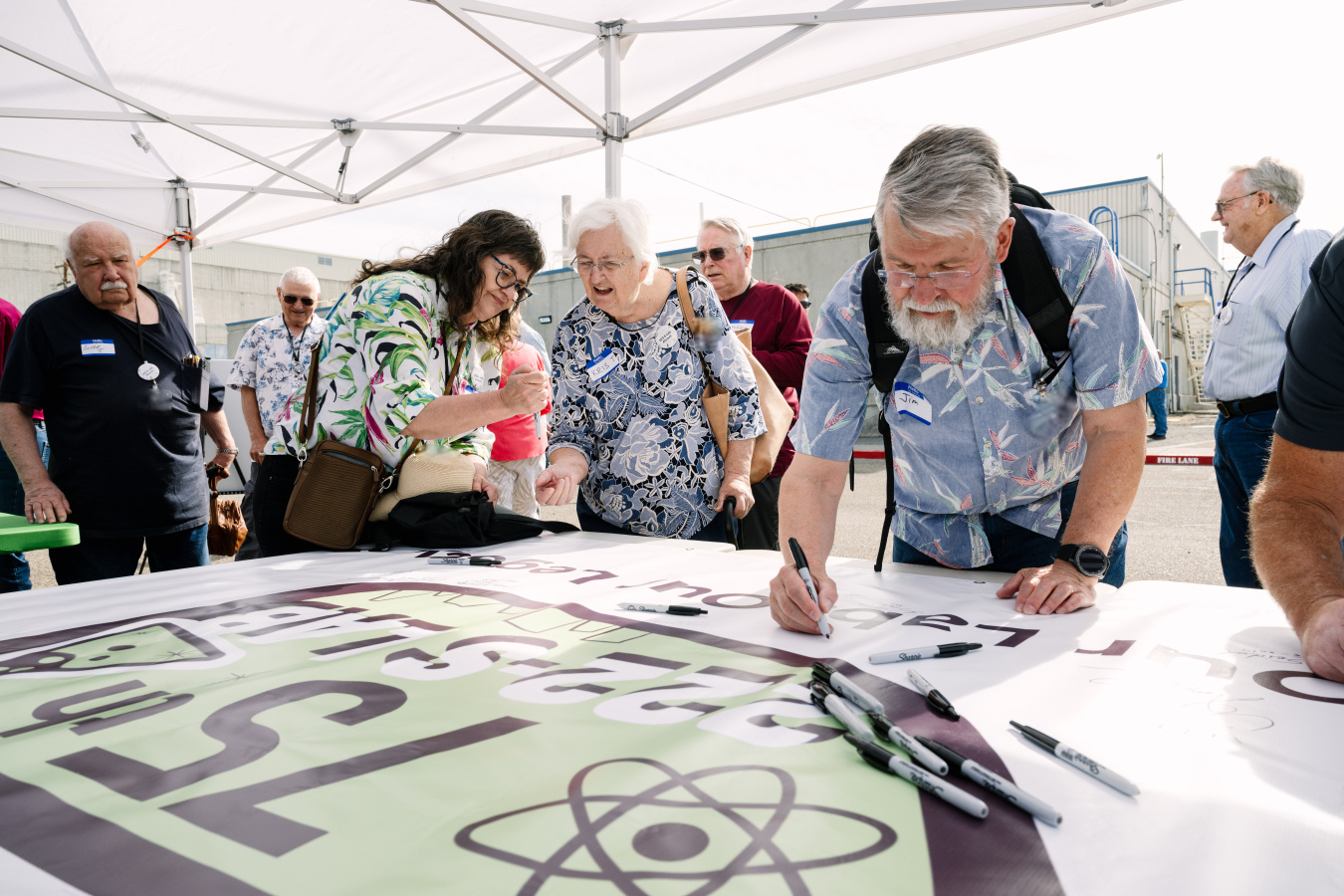
Attendees of the ceremony included special guests, such as staff members of Washington state’s congressional delegation and the Washington State Department of Ecology, along with many retired 222 S Laboratory employees. Some of the retirees are pictured here signing a banner marking the laboratory's 75th anniversary.
RICHLAND, Wash. — The U.S. Department of Energy’s (DOE) Hanford Field Office and contractor Navarro-ATL recently hosted a celebration recognizing the 75th anniversary of the 222-S Laboratory, bringing together employees, nearly 40 retired laboratory alumni, union leadership, regulatory partners, local business representatives, One Hanford organizations and members of Washington state’s congressional delegation to honor the Hanford Site’s longest-serving scientific institution.
Attendees heard remarks from Ricky Bang, deputy assistant manager for Hanford Field Office Tank Waste Operations; Shawn Bills, state director for Sen. Patty Murray; and Ashley Stubbs, deputy chief of staff and district director for Rep. Dan Newhouse. Participation from staff members for Murray and Newhouse underscored the national significance of the laboratory’s role in supporting Hanford cleanup and environmental stewardship.
Bang also read a letter from Assistant Secretary for Environmental Management Tim Walsh.
“On behalf of Environmental Management, I extend my sincere congratulations to the entire 222-S Laboratory team on this remarkable 75-year milestone,” Walsh wrote. “The lab’s longstanding commitment to scientific excellence, innovation and safe operations has been essential to advancing the Hanford cleanup mission and strengthening environmental stewardship across the DOE complex.”
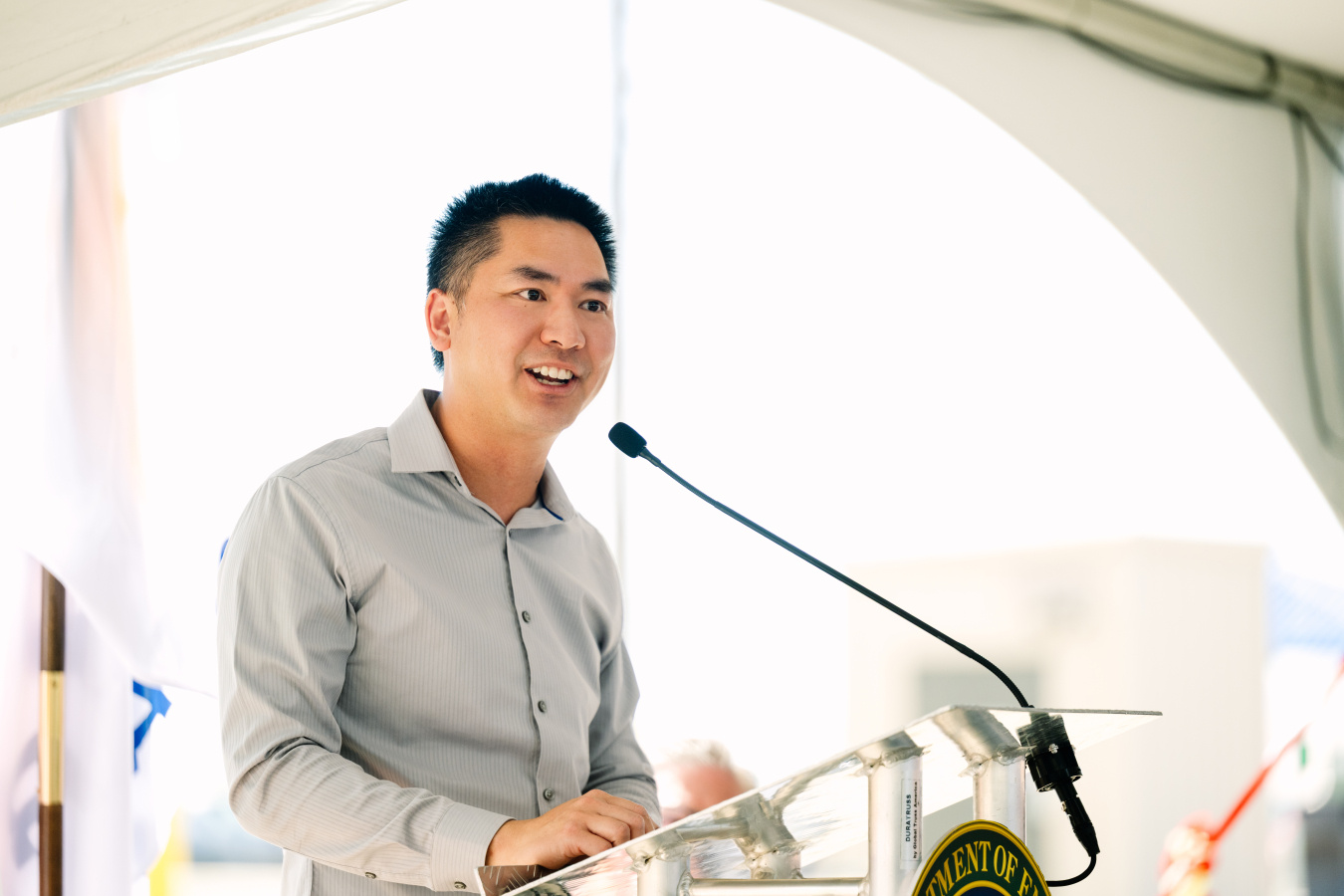
Ricky Bang, deputy assistant manager for Hanford Field Office Tank Waste Operations, addresses participants at the 75th anniversary celebration for the 222-S Laboratory.
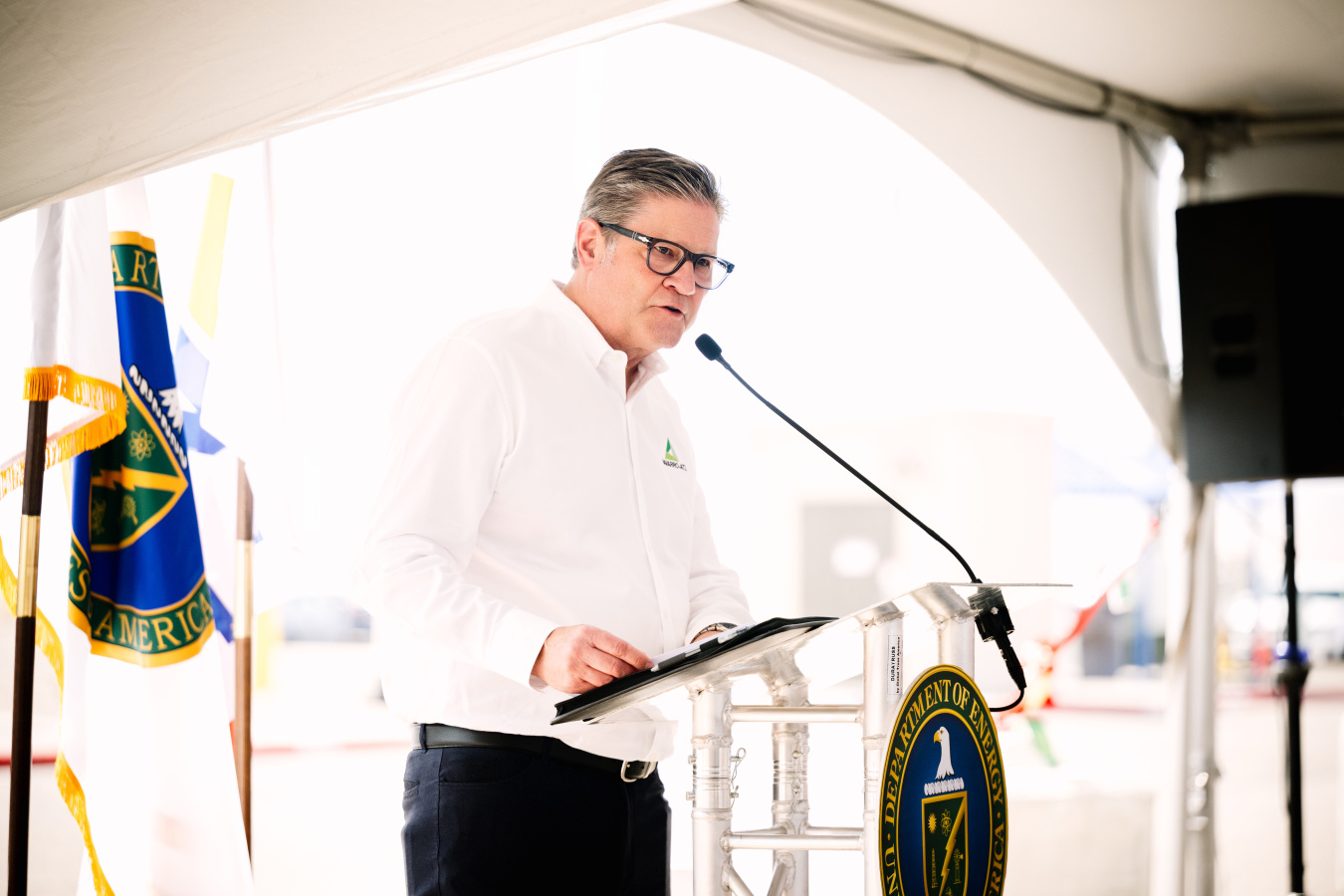
Mark Hughey, general manager of Hanford Field Office contractor Navarro-ATL, speaks during the 75th anniversary celebration for the 222-S Laboratory.
For 75 years, the laboratory has served as the analytical backbone of Hanford’s evolving cleanup mission, providing scientific data that informs critical decisions related to tank waste management, treatment and environmental restoration. Today, the laboratory also helps shape the future of cleanup through innovations that improve efficiency, accelerate decision-making and reduce long-term mission costs.
Long viewed as a small but essential operation at Hanford, the laboratory is emerging from the shadows as Navarro-ATL modernizes its infrastructure and scientific capabilities to build the “Lab of the Future.” This initiative comes as DOE’s Office of Environmental Management advances its dual-path strategy to grout over 3 million gallons of tank waste and ship it out of Washington state for disposal by the end of next year.
“The 222-S Laboratory is one of the most important scientific assets supporting the Hanford cleanup mission,” said Mark Hughey, Navarro-ATL general manager. “We are transforming the laboratory into a modern, high-performing scientific organization that delivers faster analytical results, supports mission-critical cleanup activities and helps reduce risk, schedule and cost for taxpayers.”
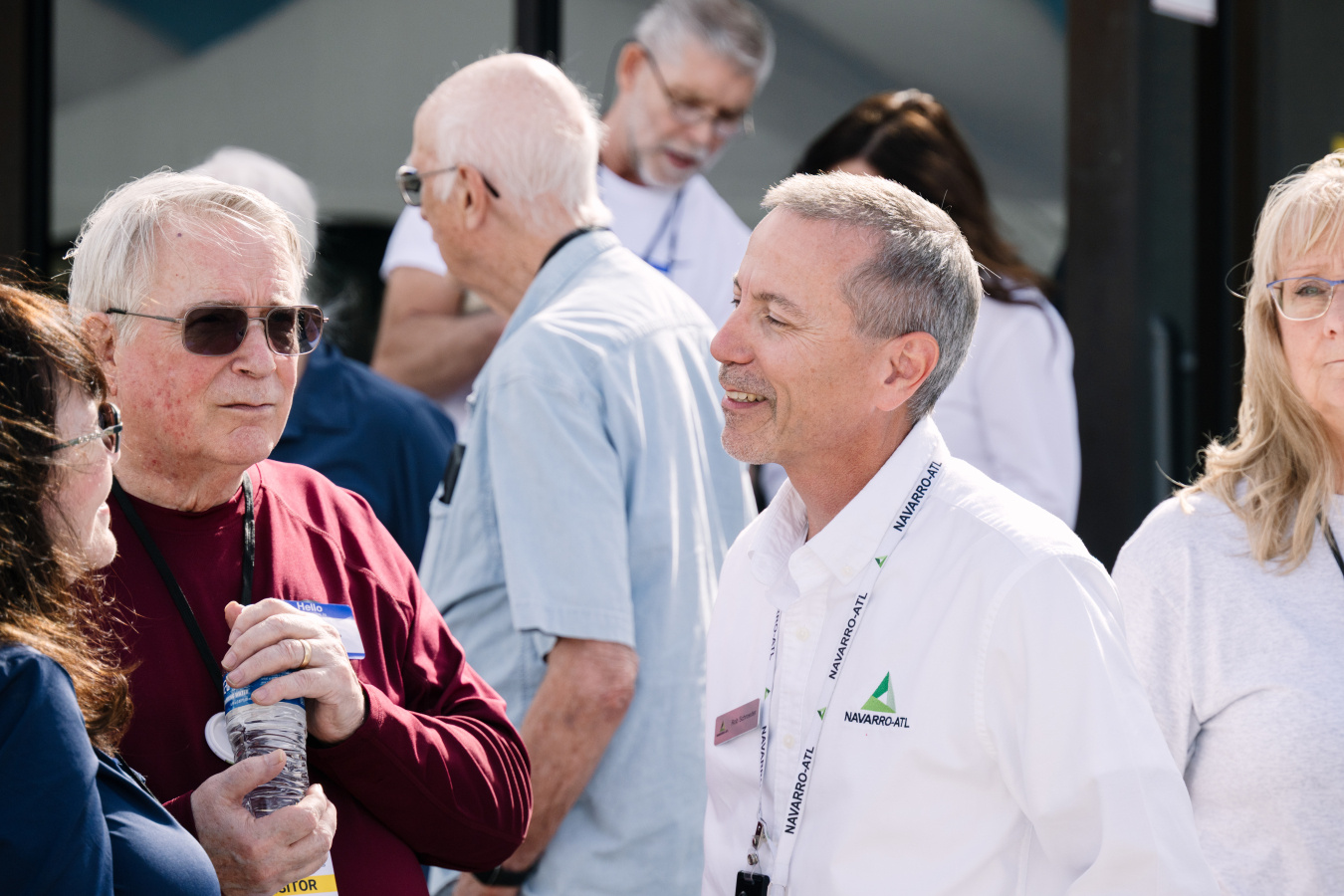
Rob Schroeder, Navarro ATL Analytical Services director, catches up with retired 222 S Laboratory employees during the 75th anniversary celebration.
Bang emphasized that the success of the laboratory is rooted in generations of dedicated employees whose work has supported Hanford’s mission for decades.
“Your efforts and contributions — from scientists and analysts to technicians, finance, safety, quality and environmental professionals — have established the foundation and backbone for what we know about Hanford and how we operate and clean up the site,” Bang said.
Highlighting innovation at the laboratory, Bang pointed to the Twister Stir Bar method Navarro-ATL developed and accredited at the laboratory, which reduced organic sample analysis times from 180 days to 90 days.
“When you save 90 days on every year of work we do here at Hanford, you’re not just improving efficiency, you’re shortening the overall cleanup mission by years and saving billions of dollars in lifecycle costs,” he said. “The same will be true as they support future work in the West Area, where tank waste will be grouted.”
To receive the latest news and updates about the Office of Environmental Management, submit your e-mail address.