



NNSA announced Aires Tide, an NNSA-led proof-of-concept flight test vehicle developed using artificial intelligence, high-performance computing, and additive manufacturing to move from system design to flight testing on a sharply compressed timeline and at lower cost.
National Nuclear Security Administration
June 24, 2026 Estimated Read Time min
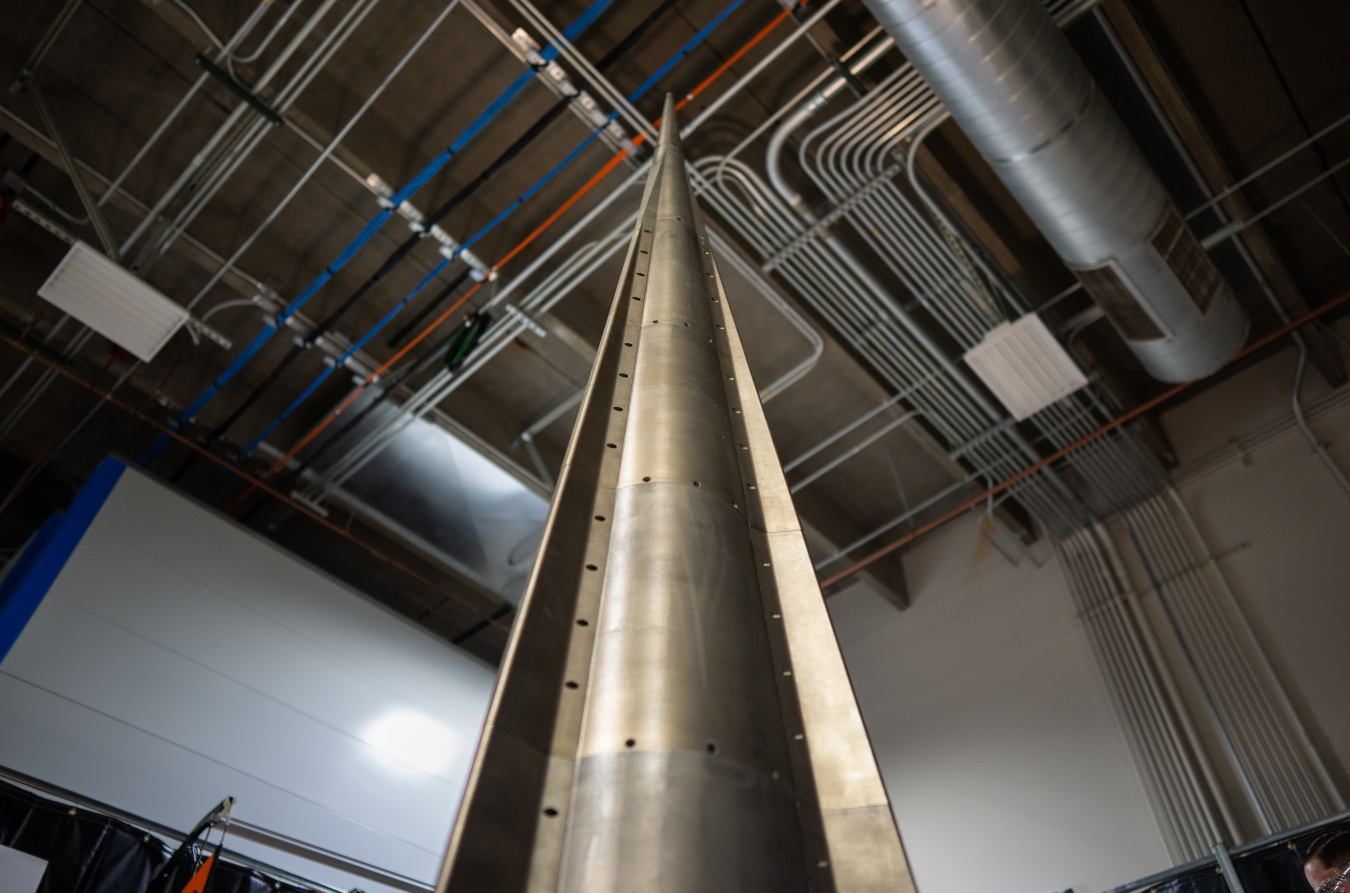
NNSA leveraged Genesis to develop, design, and demonstrate Aires Tide marking the first tangible demonstration of the platform
WASHINGTON — The Department of Energy’s National Nuclear Security Administration (DOE/NNSA) announced Aires Tide, an NNSA-led proof-of-concept flight test vehicle developed using artificial intelligence, high-performance computing, and additive manufacturing to move from system design to flight testing on a sharply compressed timeline and at lower cost.
On November 24, 2025, President Trump issued an Executive Order launching the Genesis Mission, a historic effort led by the Department of Energy to establish an interconnected web of national laboratory supercomputers empowered by AI. NNSA leveraged Genesis to develop, design, and demonstrate Aires Tide, marking the first tangible demonstration of the platform.
Aires Tide illustrates NNSA’s ability to apply advanced tools to rapidly design and deliver national security solutions, leading to a product developed 15 times cheaper and seven times faster than traditional manufacturing. NNSA’s National Laboratories – Los Alamos, Lawrence Livermore, and Sandia – worked in close collaboration with NNSA’s Kansas City National Security Campus, to showcase the Nuclear Security Enterprise’s ability to move faster to meet urgent mission needs.
“Aires Tide is a remarkable early demonstration of how NNSA is putting the Genesis Mission into action,” said NNSA Administrator Brandon Williams. “President Trump has made it clear that America must lead the world in artificial intelligence and use emerging technologies to strengthen our national security. By combining AI, high-performance computing, and additive manufacturing, we are pioneering a faster, more efficient model to design and produce capabilities for national security while keeping human judgment firmly at the center.”
In May, Nuclear Security Enterprise scientists conducted two successful flight tests of Aires Tide, dropping the vehicle from 32,000 feet at the U.S. Army’s Dugway Proving Ground in Utah. Data from the flight tests will be used to optimize future systems developed using the same design and manufacturing model.
Two of NNSA's flagship supercomputers – Venado and El Capitan – were used to enable the design of Aires Tide. The project reflects a broader NNSA effort to use supercomputing platforms and cutting-edge additive manufacturing technologies to shorten development cycles and improve efficiency, strengthening the enterprise’s ability to respond to emerging national security challenges and keeping America safe.