



Supervisory general engineer has supported LM in many capacities since 2019
May 5, 2026 Estimated Read Time min
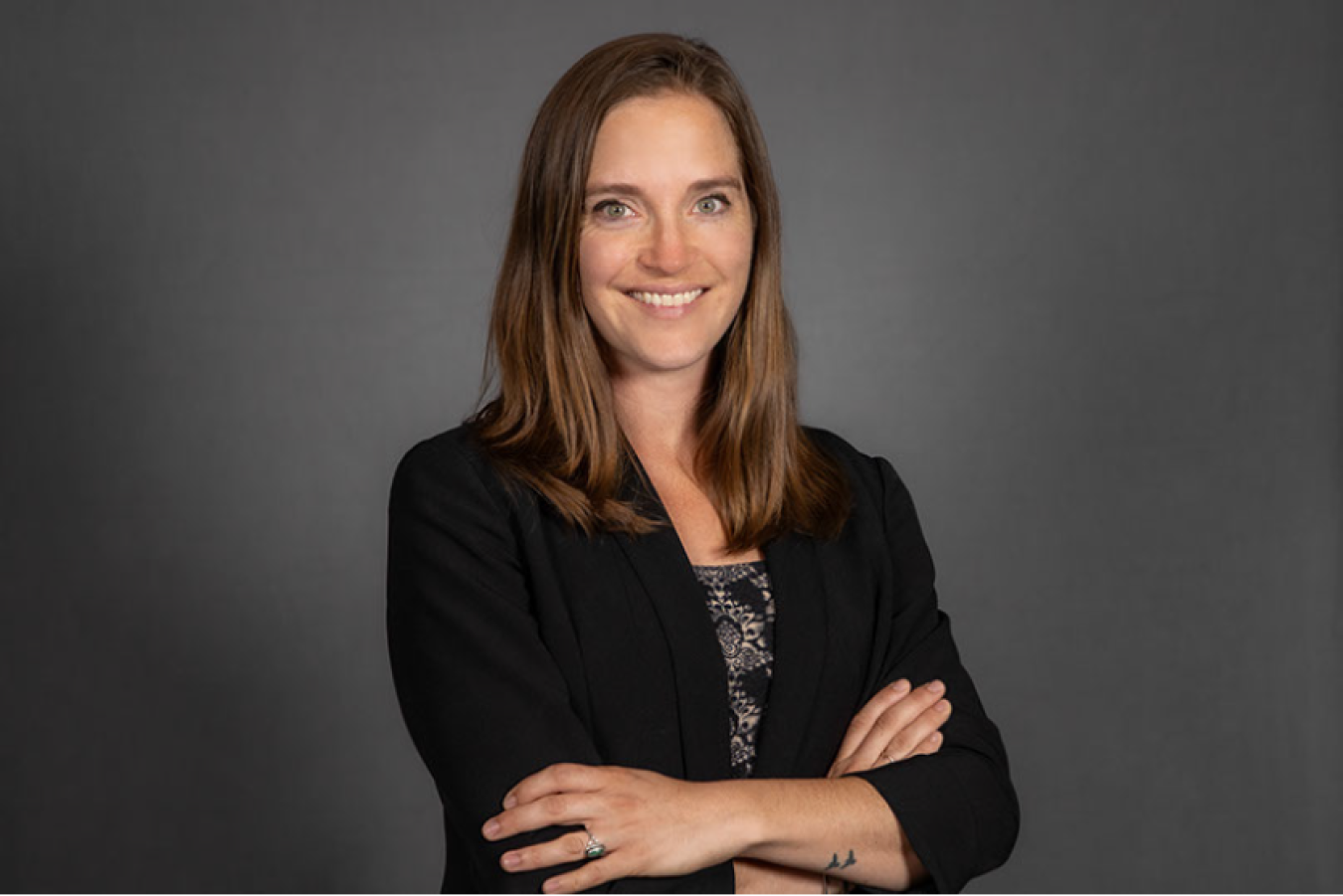
Supervisory General Engineer Kate Whysner has been promoted to lead the Office of Legacy Management’s Environmental Team 2, which includes sites regulated under the Comprehensive Environmental Response, Compensation and Liability Act (CERCLA) and Resource Conservation and Recovery Act (RCRA). The team also manages the Defense Decontamination and Decommissioning (D&D) and site transition programs.
“It is both exciting and humbling to have the privilege to supervise such a fantastic team of scientists and engineers,” Whysner said. “They are incredibly dedicated to LM’s mission to protect human health and the environment – and, we have fun sometimes!”
CERCLA, commonly referred to as Superfund, provides federal authority to clean up uncontrolled hazardous waste sites. RCRA is the principal federal law regulating the disposal of solid and hazardous waste. When sites come to LM, they’ve already been cleaned up and wastes have already been contained. Nevertheless, even after cleanup, it is not uncommon for sites to retain some amount of residual contamination that require looking after and the CERCLA and RCRA rules still apply.
LM’s DOE Defense Decontamination and Decommissioning (D&D) Program primarily looks after decommissioned experimental reactors as well site of Legacy Management’s Field Support Center in Grand Junction, Colorado, where the government processed uranium during the Manhattan Project and early Cold War.
Paul Kerl, office manager for the Field Support Center in Grand Junction, Colorado, has watched Whysner’s professional growth since she joined the organization as a contractor in 2019, supporting the Shiprock, New Mexico, Site on the Navajo Nation.
“Kate has proven herself to be one of LM’s top performers while always eager to help others in their development journey along the way,” Kerl said. “She has continually demonstrated a phenomenal commitment to supporting mission requirements and goals, fostering teamwork in all she does, and supporting her fellow teammates and taking on challenges with a sense of making a difference.”
Over the years, Whysner has supported diverse efforts, including National Lab Network initiatives, major construction projects, interpretive center exhibit development, and agreements with the U.S. Army Corps of Engineers. She’s managed sites ranging from the CERCLA-regulated Laboratory for Energy-Related Health Research (LEHR), Site in Davis, California, to the Tonawanda Landfill Formerly Utilized Sites Remedial Action Program Site in New York.
“She is the epitome of a professional and a pleasure to have on the LM team,” Kerl said. “We collectively are grateful for her steadfast leadership as she embarks upon this new journey.”
Whysner’s training in the field goes back to her undergraduate research on the environmental effects of open pit mining when she conducted while earning a B.A in Environment and Development from McGill University School of Environment in Montreal, Quebec. She headed west to continue her education, receiving a master’s degree in environmental science and engineering from the Colorado School of Mines in Golden, Colorado. After graduation, she worked as a project engineer and project manager in private sector environmental remediation and became a registered Professional Engineer in the state of Colorado.
“Environmental Team 2 has some of the most complex LM sites,” said Whysner, “and I am committed to helping the team effectively execute the LM mission and serve their LM communities.”