



The U.S. Department of Energy’s Office of Environmental Management is taking a big step forward in its tank waste cleanup effort in the 200 West Area of the Hanford Site. April 28, 2026
Office of Environmental Management
April 28, 2026 Estimated Read Time min
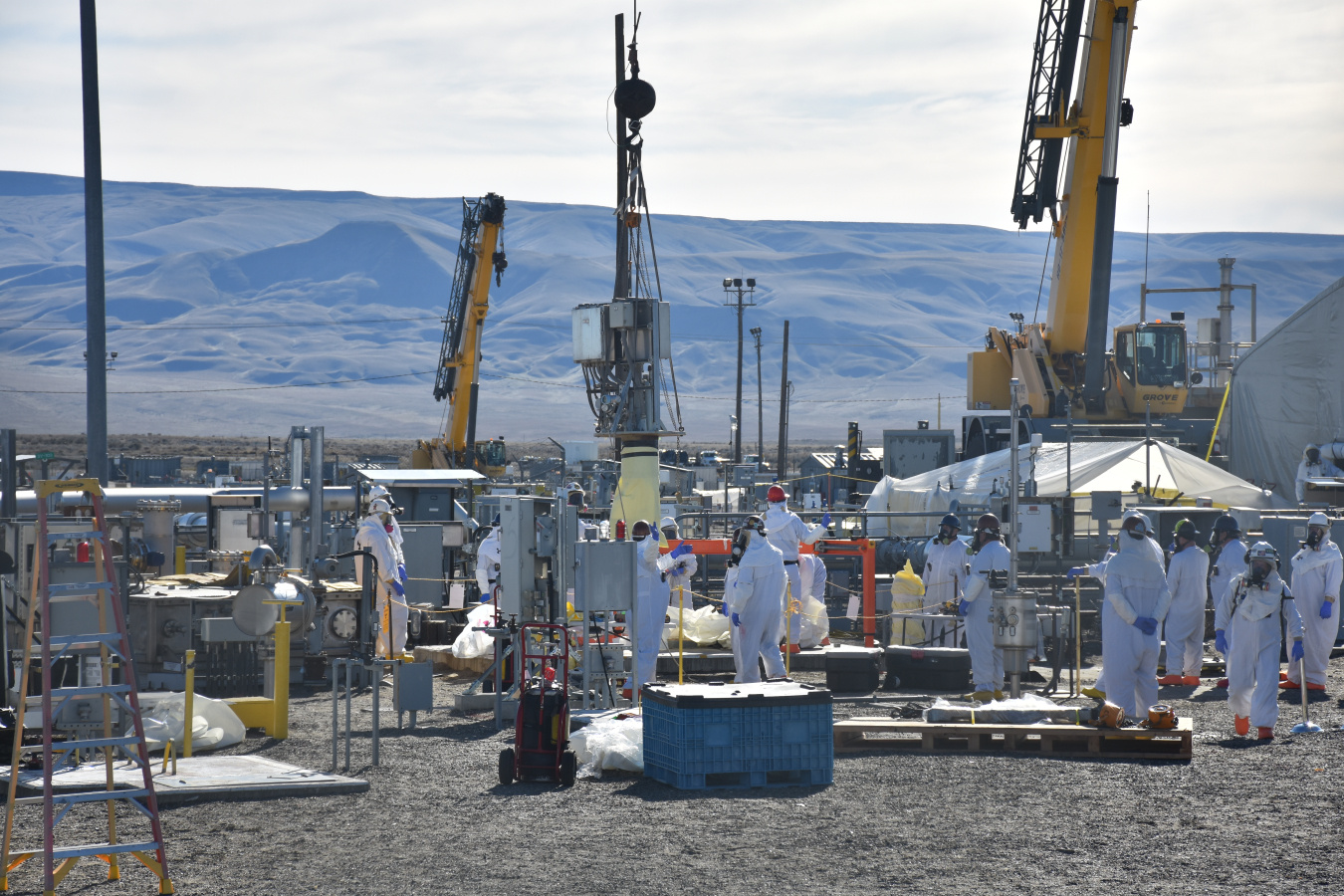
Workers remove a portion of an old pump in Tank SY-101 in the Hanford Site’s 200 West Area.
RICHLAND, Wash. — The U.S. Department of Energy’s (DOE) Office of Environmental Management is taking a big step forward in its tank waste cleanup effort in the 200 West Area of the Hanford Site.
Contractors are upgrading infrastructure, utilities, offices and other essential equipment as they prepare to remove radioactive and chemical tank waste left from decades of national security missions.
The 200 West Area has seven groups of underground waste storage tanks called tank farms. For years, most cleanup and retrieval activities focused on the 200 East Area, where the largest and most radioactive amount of Hanford’s tank waste is stored. Now, work is shifting west, where the other large volume of this waste remains. Crews are starting from scratch in 200 West, upgrading and installing the infrastructure needed to retrieve and treat waste in an area that hasn’t seen large-scale progress before.
“The work happening now in 200 West moves us from planning to putting real solutions in action,” said Ricky Bang, the Hanford Field Office’s deputy assistant manager for Tank Waste Operations. “By updating infrastructure and using technology that’s already proven effective elsewhere at Hanford, we’re making sure the site is ready for safe waste retrieval and treatment.”
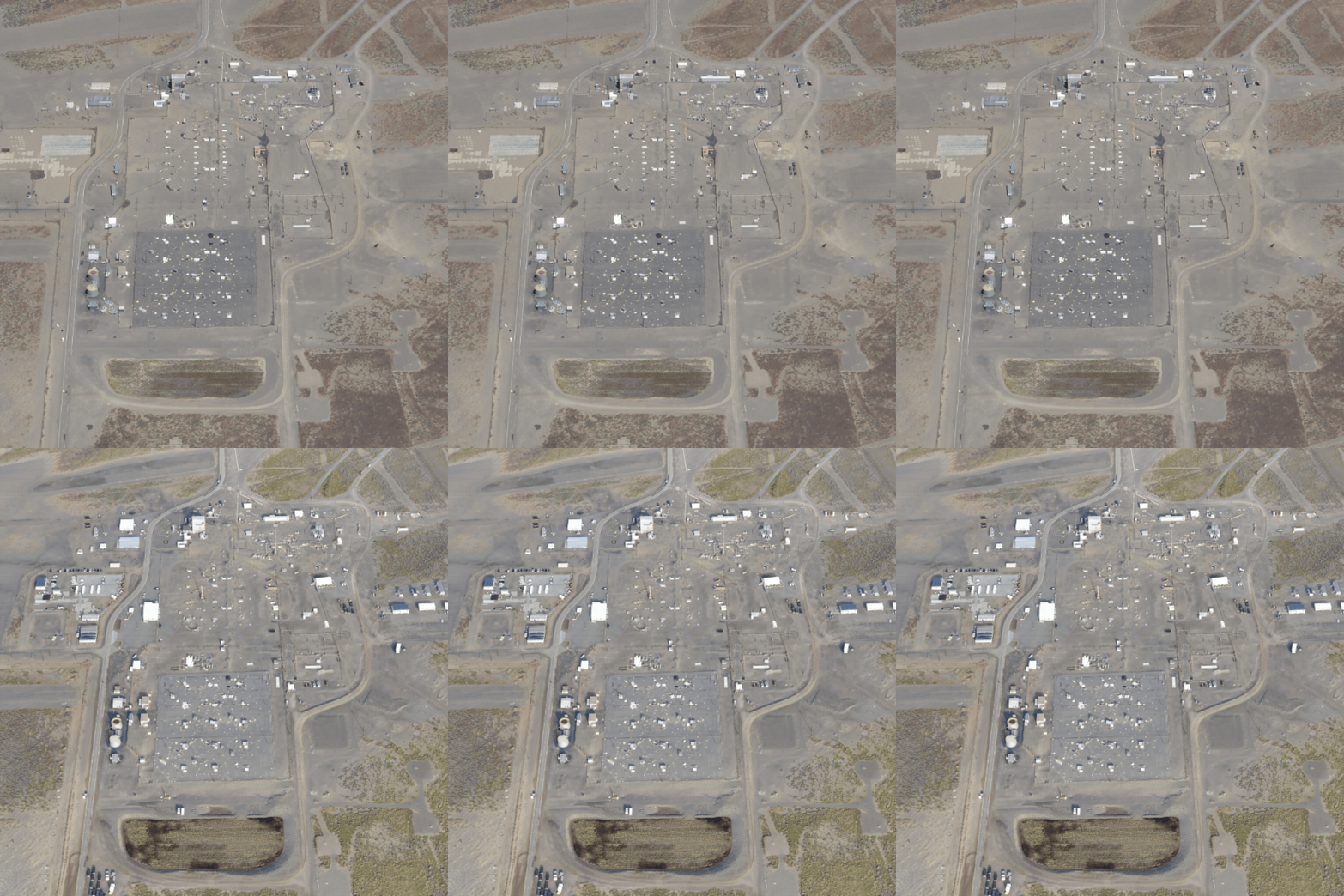
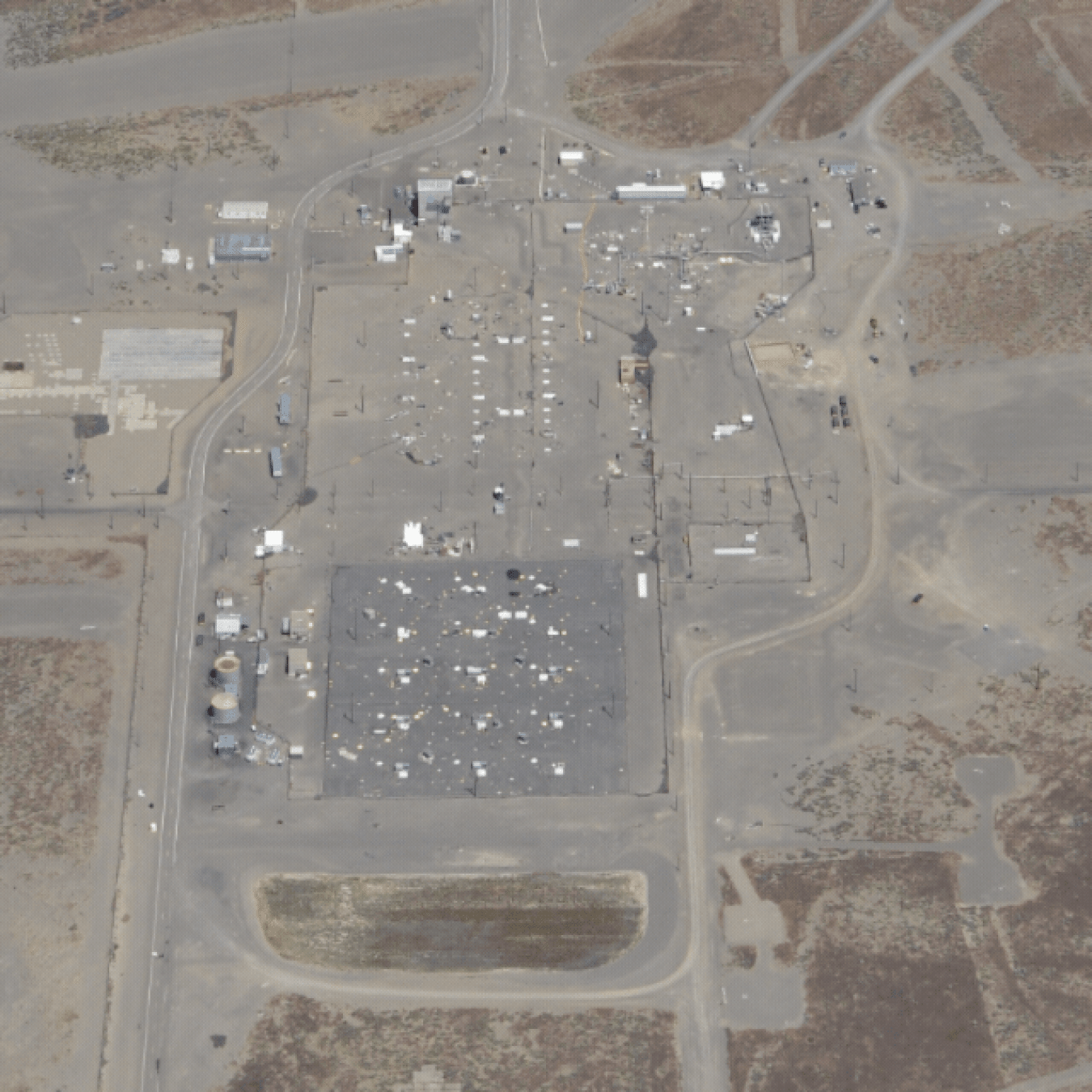
Aerial views of the Hanford Site’s 200 West Area in 2024 and 2026. The S, SX and SY tank farms are visible. In 2026, new office trailers and support buildings for SY Farm can be seen in the upper right.
Crews with contractor Hanford Tank Waste Operations & Closure (H2C) are constructing major upgrades at SY Farm, the only double-shell tank location in 200 West. Some of the projects include improving ventilation, removing outdated equipment and testing a seven-mile pipeline connecting SY Farm to the 200 East Area, making sure waste can be moved if needed.
A major focus is the West Area Risk Management System. This new system will treat waste using modular technology proven in the 200 East Area as a key step before safe disposal. An option for disposal is to stabilize waste in grout, much like the recent Test Bed Initiative project demonstrated. This approach is outlined in the 2025 Holistic Agreement between DOE, the state of Washington and the U.S. Environmental Protection Agency.
“We’re proud to help turn plans into progress,” said Max Ehrhardt, project manager for H2C. “By putting the right systems in place, we’re getting 200 West ready for cleanup and keeping the mission moving forward.”
To receive the latest news and updates about the Office of Environmental Management, submit your e-mail address.