



The Oak Ridge Office of Environmental Management recently achieved a priority for the U.S. Department of Energy’s nuclear cleanup program by reaching the halfway mark in its uranium-233 processing campaign. March 24, 2026
Office of Environmental Management
March 24, 2026 Estimated Read Time min
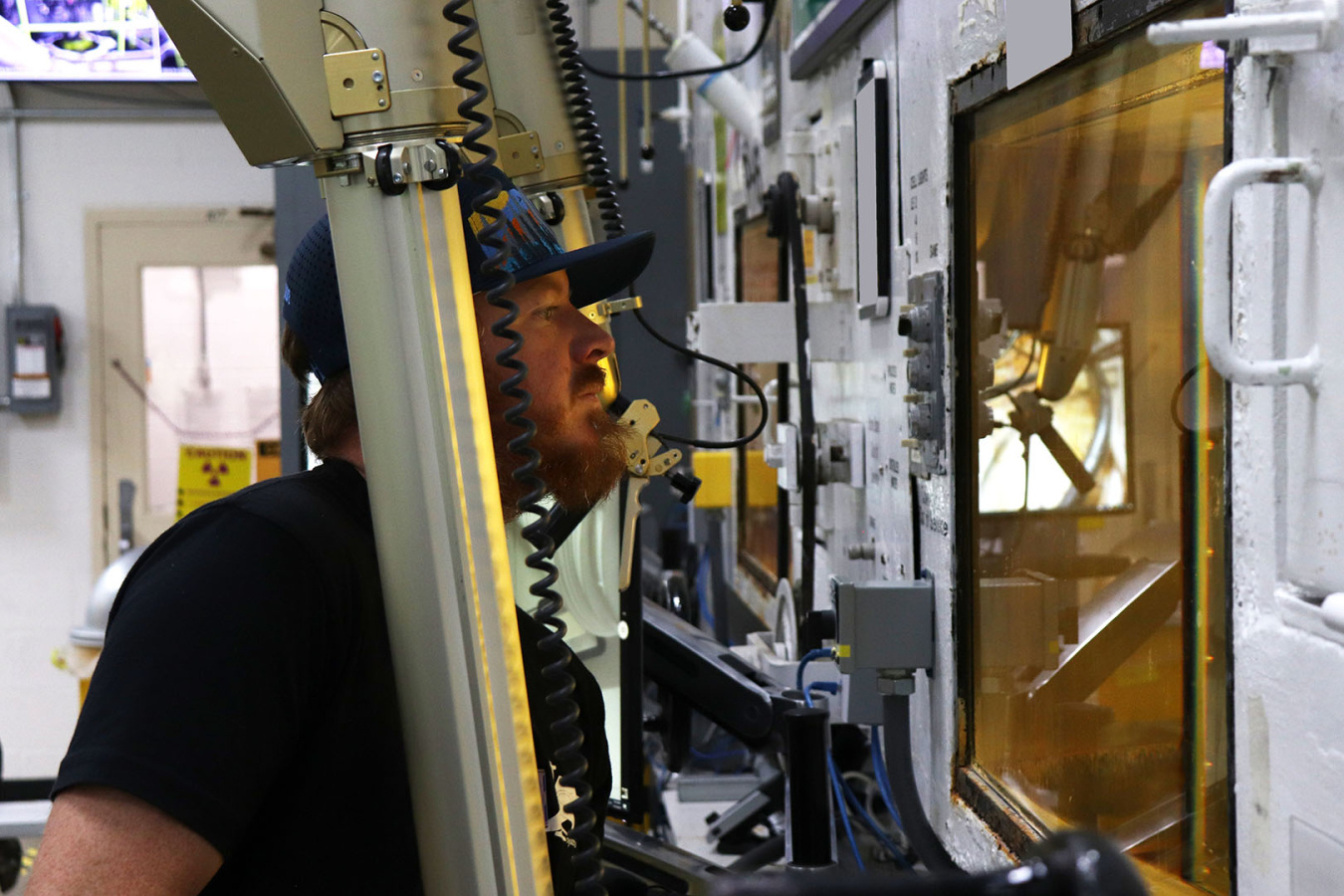
Isotek employees have surpassed Office of Environmental Management annual processing goals since 2019, disposing of nearly 650,000 pounds of solidified uranium-233 waste in total.
OAK RIDGE, Tenn. — The Oak Ridge Office of Environmental Management (OREM) recently achieved a priority for the U.S. Department of Energy’s nuclear cleanup program by reaching the halfway mark in its uranium-233 (U-233) processing campaign.
Since the campaign began in 2019, contractor Isotek Systems has exceeded OREM processing goals, disposing of nearly 650,000 pounds of solidified U-233 waste in total.
This project advances OREM’s highest-priority cleanup project at Oak Ridge National Laboratory (ORNL) by steadily eliminating the nation’s inventory of U-233 from storage in the world’s oldest operating nuclear facility. Processing is required to convert the material into a form safe for transportation and disposal.
“Processing and disposing of half of the U-233 is a tremendous milestone — one that brings us significantly closer to eliminating a major legacy risk at ORNL,” said Sarah Schaefer, Isotek president and project manager. “This achievement reflects the dedication and grit this Isotek team brings every day.”
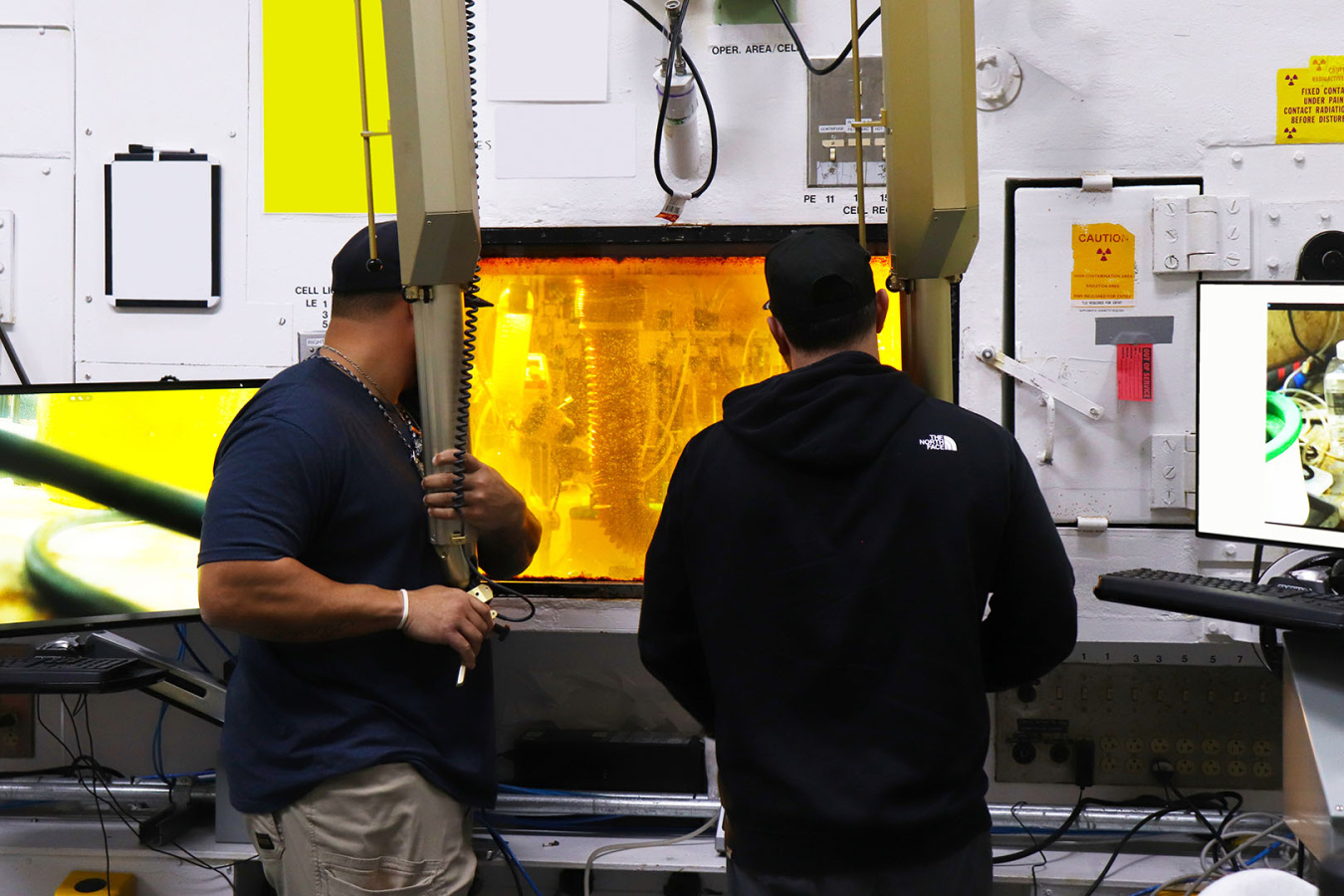
Operators use hot cells to process higher-dose uranium-233.
Eliminating the material will remove a major risk, avoid significant costs associated with keeping the inventory safe and secure and enable demolition of the storage facility to transform ORNL’s central campus, supporting the national laboratory’s research and innovation missions.
U-233 was created in the 1950s and 1960s for potential use in nuclear reactors but proved unviable as a fuel source. The material, sent from nuclear facilities around the country to ORNL for storage, takes different forms.
“There is no such thing as routine when it comes to the challenges presented by the variety and uniqueness of the material we are processing,” Isotek Operations Manager Dale Caquelin said.
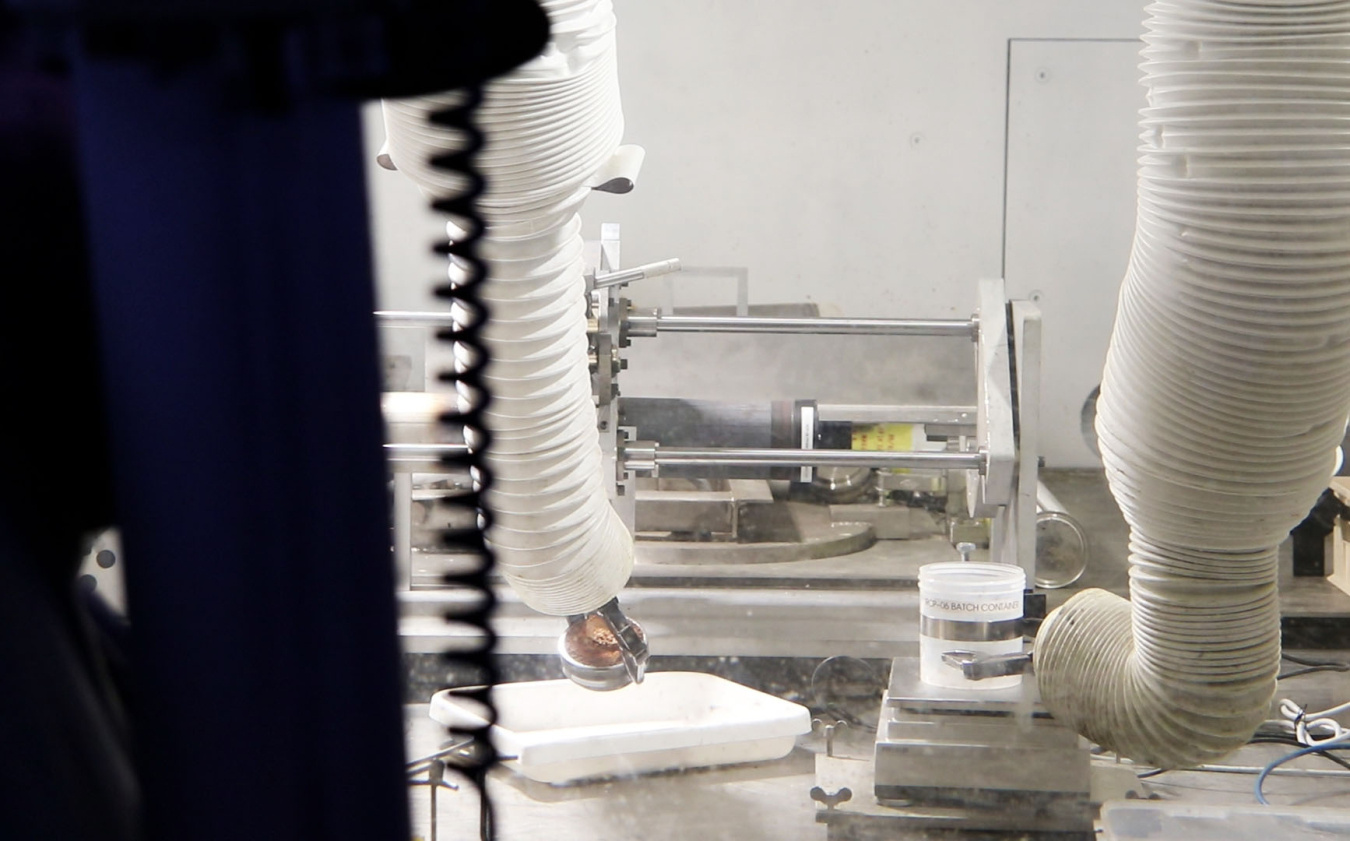
Employees use remote manipulators to open canisters of uranium-233 in a hot cell.
The contractor has disposed of 75% of the U-233 inventory stored at ORNL. Team members finished disposing of half the inventory in 2017. That material was solidified, and didn’t require processing. They started processing lower-dose U-233 material in gloveboxes in 2019 before transitioning to higher-dose U-233 material in hot cells in 2022.
Isotek is also extracting rare medical isotopes, thorium-229, from the U-233 material prior to processing and disposal. Through an innovative public-private partnership with nuclear innovation company TerraPower, these isotopes are helping advance next-generation cancer treatment research.
“The isotopes that Isotek is preserving is paving the way for safer, more effective cancer treatments,” Schaefer added.
TerraPower recently announced it has enough thorium-229 to produce cancer treatment material commercially, providing sustained access to the global pharmaceutical community. Isotek has already increased the global supply by almost 2,000%, and the first treatments using this material are expected to enter the marketplace in 2027.
-Contributor: John Gray
To receive the latest news and updates about the Office of Environmental Management, submit your e-mail address.